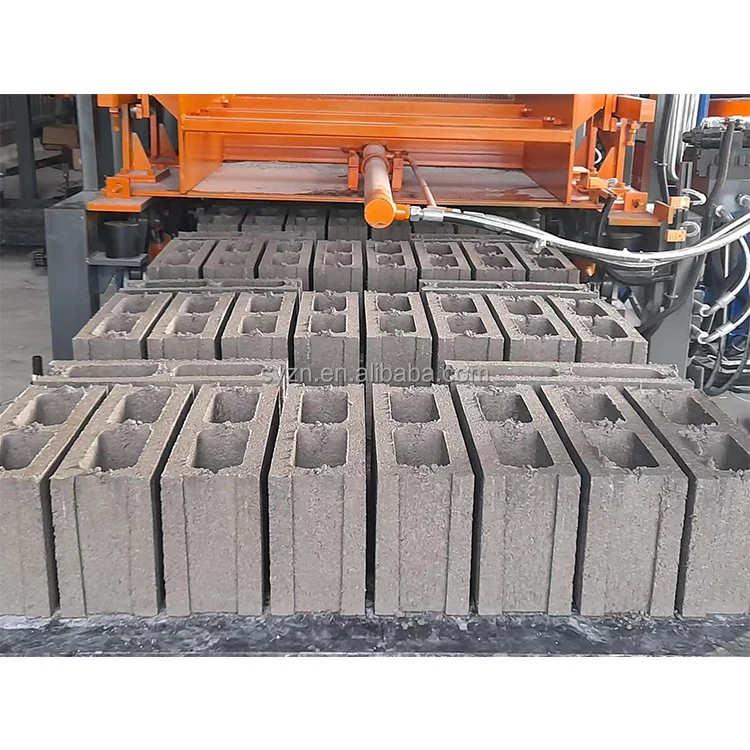
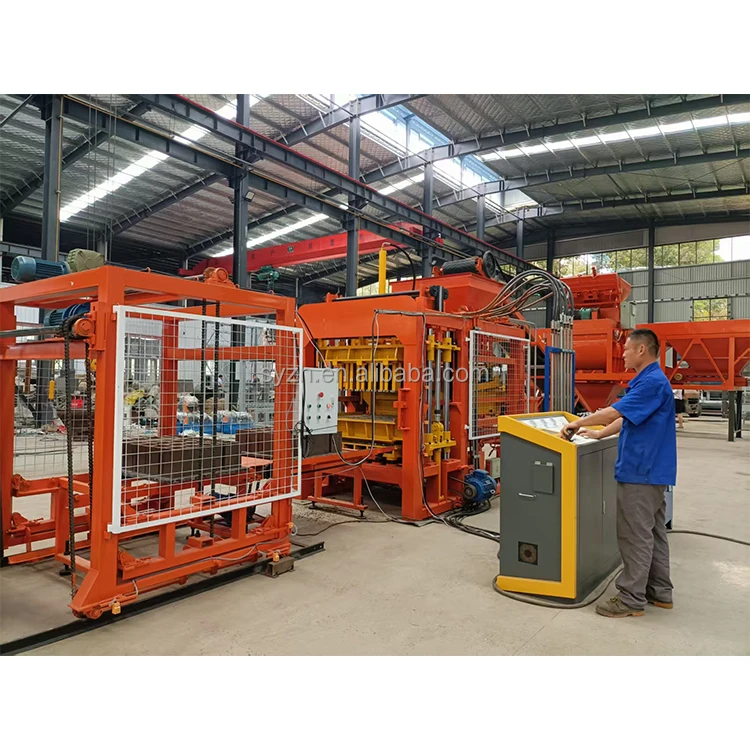
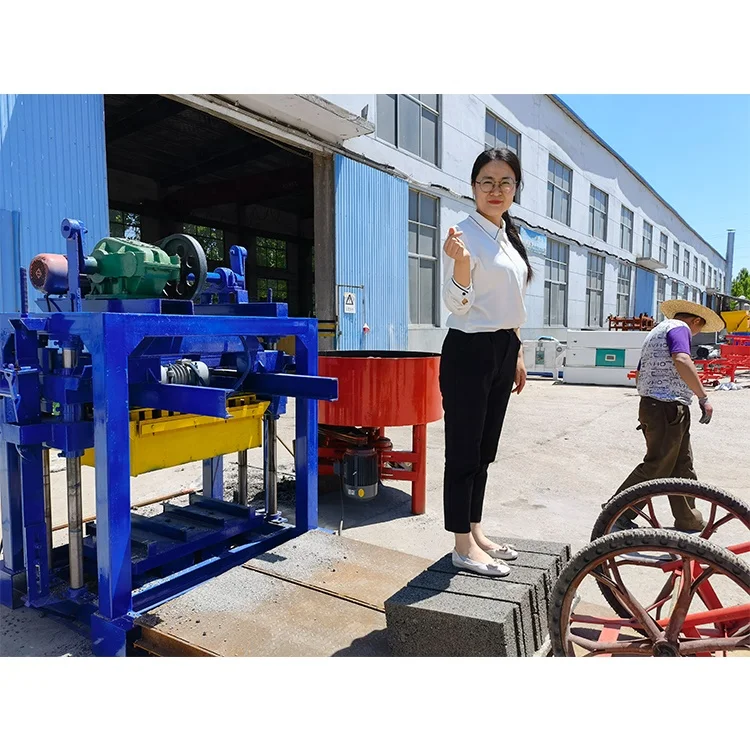
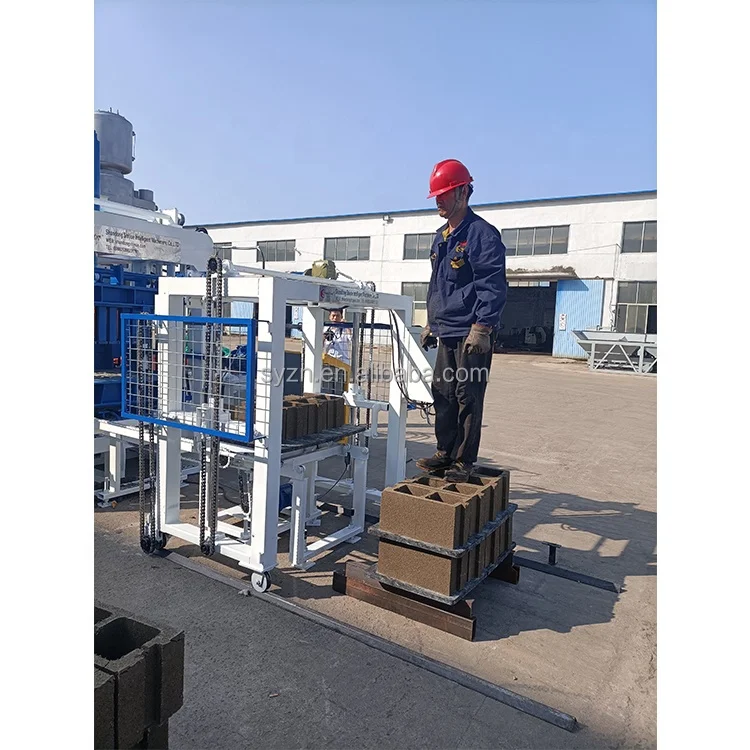
Matched System Specification — the QTJ4-35 is positioned as a complete entry-level block production unit where press, mould, pallet, and handling requirements are documented together rather than sourced independently.
Technical Specifications
| Parameter |
Value |
| Model |
QTJ4-35 |
| Product Type |
Semi-Automatic Concrete Block Making Machine |
| Overall Dimensions (L×W×H) |
1350×1460×1800 mm |
| Molding Cycle |
35 s |
| Vibration Frequency |
2800 r/min |
| Exciting Power (Vibration Force) |
30 kN |
| Total Power |
11.15 kW |
| Mixer Model |
JQ350 |
| Pallet Size |
850×450×20 mm |
| Net Weight |
1500 kg |
| Applied Products |
Concrete hollow blocks (8 inch, 6 inch), solid bricks, pavers |
| Raw Materials |
Crushed stone, sand, cement, fly ash, dust |
| Output Capacity (Hollow Block 400×200×200 mm) |
4 pcs/mould, 408 pcs/hr, 3264 pcs/8hr |
| Output Capacity (Hollow Block 400×150×200 mm) |
5 pcs/mould, 510 pcs/hr, 4080 pcs/8hr |
| Output Capacity (Solid Brick 240×115×53 mm) |
18 pcs/mould, 2100 pcs/hr, 17000 pcs/8hr |
| Automation Level |
Semi-automatic |
| Hydraulic System |
Equipped (high pressure, stable operation) |
| Control System |
(basis to be confirmed) |
| Voltage & Frequency |
(basis to be confirmed) |
| PLC Language Options |
(basis to be confirmed) |
Application Suitability
| Application |
Material or Output |
| Small to medium-scale block plants |
Standard hollow blocks (400×200×200 mm) and solid bricks |
| On-site construction block manufacturing |
Pavers and kerbstones using locally available crushed stone |
| Entrepreneurs establishing a first block plant |
Mixed formats from 8-inch hollow blocks to 53mm solid bricks |
| Contractors producing blocks for housing projects |
Fly ash and cement blends for load-bearing and partition walls |
| Building material distributors |
Expanding existing product ranges with standard concrete formats |
Why Cycle Time Claims Often Mislead First-Time Buyers
A molding cycle quoted in isolation ignores the format being produced and the raw material behavior at the site.
Many buyers see a Semi-Automatic Block Making Machine manufacturer quote a cycle time and multiply it against an eight-hour shift, only to find actual output significantly lower once production starts. The gap usually comes from material inconsistencies, pallet handling delays, or vibration force mismatches with local aggregate. I have stood on sites in West Africa where machines ran at rated cycle speed but produced blocks that crumbled during stacking because the vibration force was not calibrated to the high-clay sand available locally [NEED_CITE: aggregate testing standards for concrete block production].

Where the Semi-Automatic Tier Fits in the Range
The QTJ4-35 occupies the semi-automatic tier, meaning the press operates with hydraulic and vibration systems while pallet movement and block stacking remain manual or semi-assisted. This positions it for buyers who need consistent block quality without the capital outlay of a fully automatic line with integrated stackers and cubing systems. The investment level suits entrepreneurs entering block production or contractors who need reliable on-site output for a specific housing or infrastructure project.
Understanding Output by Block Format
Output figures on this page are stated per specific block format because the QTJ4-35 produces different quantities depending on the mould installed. With a 400×200×200 mm hollow block mould, the machine completes 4 pieces per cycle at a 35-second interval, yielding 408 pieces per hour. Switching to a 400×150×200 mm hollow block mould increases that to 5 pieces per cycle, and a solid brick mould at 240×115×53 mm produces 18 pieces per cycle. These figures assume consistent material feed and uninterrupted pallet supply [NEED_CITE: block production efficiency factors in semi-automatic operations].
How Vibration Force and Pallet Size Interact
The 30 kN exciting power combined with a 2800 r/min vibration frequency determines how densely the concrete mix is compacted in the mould. Higher vibration force produces stronger blocks, but only if the hydraulic pressure matches and the mix design suits the local aggregate. The 850×450×20 mm pallet size is part of a matched system — it must align with the curing area dimensions and the forklift or handling equipment the buyer already has on site. Mismatched pallet sizes create bottlenecks in curing rack handling and force manual repositioning that slows the entire line.
The Cost of Skipping Raw Material Testing
When a buyer orders without sending aggregate samples, the vibration parameters and mould clearances are set to default values that may not suit high-clay sand, oversized crushed stone, or fly ash blends with unusual moisture retention. The result is blocks that look acceptable on the production table but crack during curing or fail compressive strength tests at the construction site. Reconfiguring vibration settings and ordering replacement moulds after the machine arrives costs far more than testing samples before shipment [NEED_CITE: common causes of concrete block cracking in tropical climates].
Why Configuration Matters More Than Catalog Price
Every QTJ4-35 configuration is set against the buyer’s actual mix design and target block format rather than a catalog default. The machine, mould, pallet, and handling requirements are specified as one matched system, eliminating the situation where a buyer receives a press that cannot run their local materials. Voltage, frequency, and control display language are confirmed before production begins, preventing commissioning delays when the machine arrives on site. Mould designs are available for the specific block formats that sell in the buyer’s market, including custom drawings when standard sizes do not match local building codes.
Documentation & Verification
- Line layout showing QTJ4-35 footprint with pallet circulation path marked
- Capacity calculation document stating block format assumption for each output figure
- Machine specification sheet with confirmed voltage, frequency, and control language
- Mould drawing and format list covering block sizes for buyer’s market
- Factory test record with photographs taken before container loading
- Packing photographs showing dismantling state and securing method for shipment
Installation, Commissioning & Support
- Foundation requirements based on 1500 kg net weight and vibration load distribution
- Electrical connection matching confirmed voltage and frequency before machine dispatch
- Machine arrives partially dismantled for container loading with reassembly guidance
- First production run supervised with vibration parameters adjusted to local aggregate
- Operator training covering mould change procedure and hydraulic system maintenance
- Wear parts list with hydraulic seals and vibration motor bearings identified
What Information Speeds Up Your Inquiry
To move from initial inquiry to configuration proposal, buyers should provide the specific block formats they intend to produce, the daily output target, and details about locally available raw materials including aggregate type and moisture content. Site conditions such as available curing area, existing forklift capacity, and local voltage and frequency standards help determine the correct pallet size and electrical configuration. Specifying the control display language needed by operators on site prevents delays during commissioning.
Frequently Asked Questions
Q: How is the QTJ4-35 output capacity calculated for each block format?
A: Output figures are based on the 35-second molding cycle applied to the number of pieces per mould for each specific block size. The hollow block 400×200×200 mm figure assumes 4 pieces per mould, the 400×150×200 mm assumes 5 pieces, and the solid brick 240×115×53 mm assumes 18 pieces per cycle. These calculations assume uninterrupted material feed and pallet supply.
Q: Where does the semi-automatic tier sit compared to fully automatic machines?
A: The semi-automatic tier provides hydraulic pressing and vibration systems with consistent block quality while pallet movement and stacking remain manual or semi-assisted. This reduces initial investment compared to fully automatic lines with integrated stackers and cubing systems, making it suitable for first-time plant buyers or contractors with moderate daily output requirements.
Q: What voltage and control options must be confirmed before shipment?
A: Voltage, frequency, and PLC display language should be confirmed during the quotation stage to match the buyer’s local electrical standards and operator requirements. This prevents commissioning delays when the machine arrives on site and ensures the control system can be operated by local staff without translation barriers.
Q: Can automation level be increased after the semi-automatic machine is installed?
A: The QTJ4-35 platform allows buyers to start with semi-automatic operation and add automatic pallet feeding, stacking, or cubing systems later as production volume grows. This upgrade path means the initial press investment is protected while the plant expands toward higher automation levels.
Q: What supporting equipment does a complete QTJ4-35 line require?
A: A complete line includes the JQ350 mixer for material preparation, pallet feeding and circulation systems, curing racks sized to match the 850×450×20 mm pallet dimensions, and handling equipment appropriate for the curing area layout. The exact configuration depends on daily output targets and available site space.

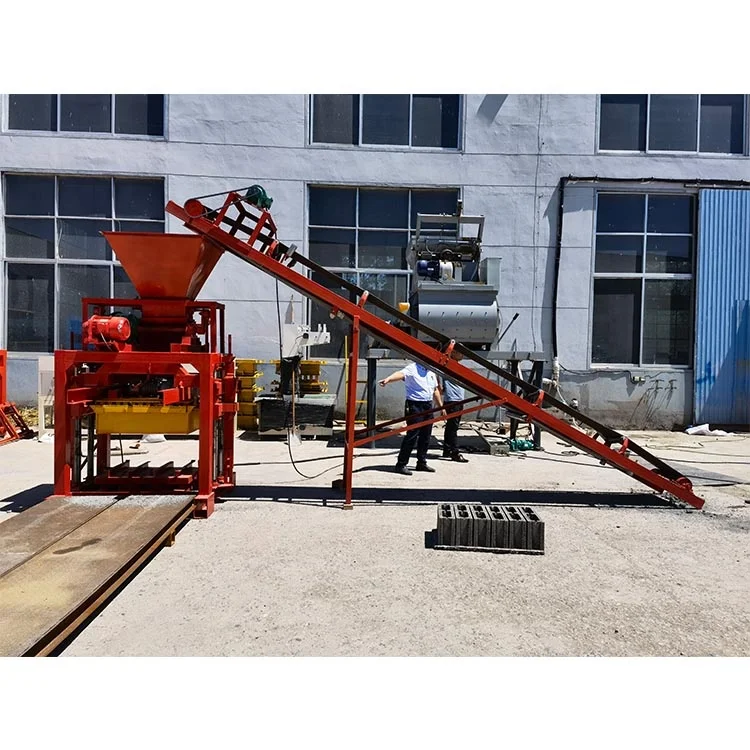
 High quality block machine