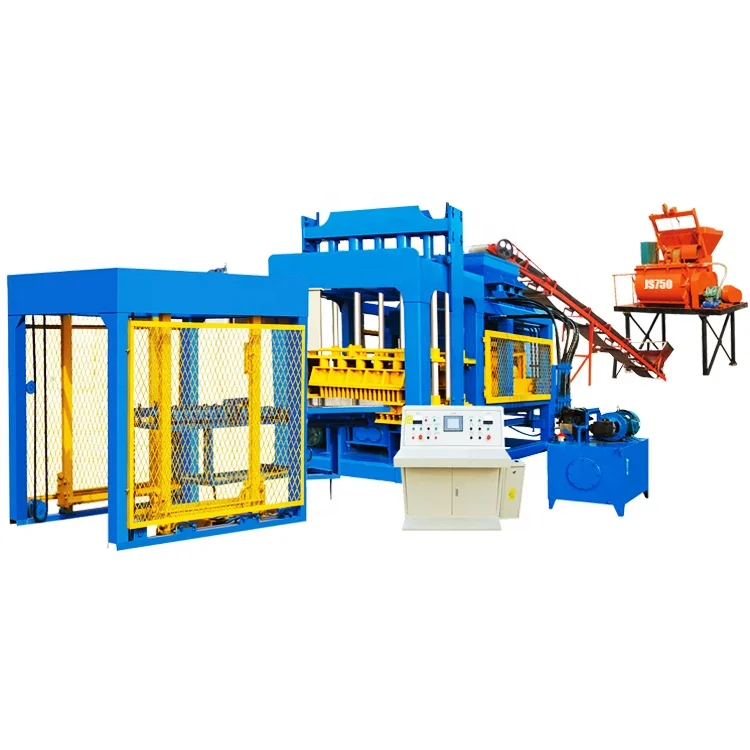
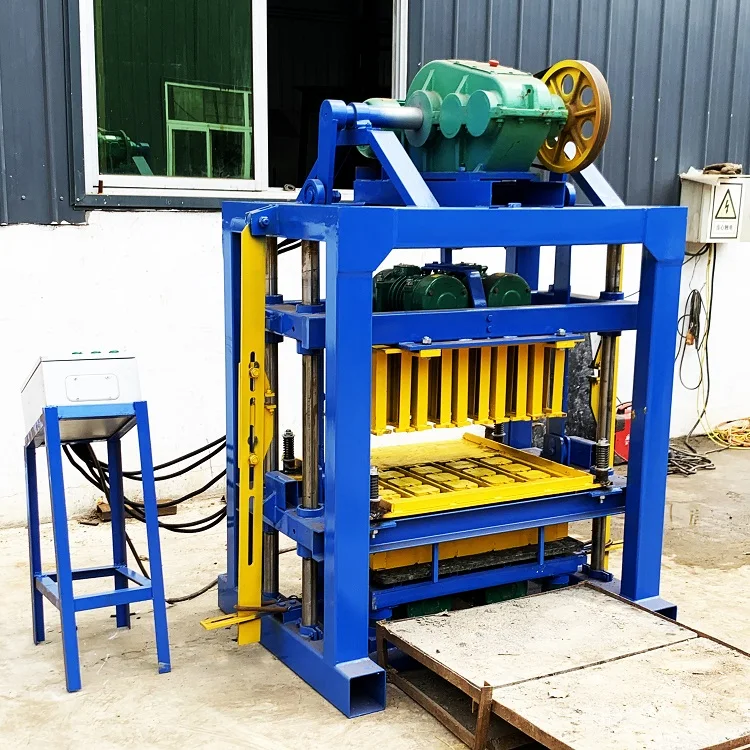
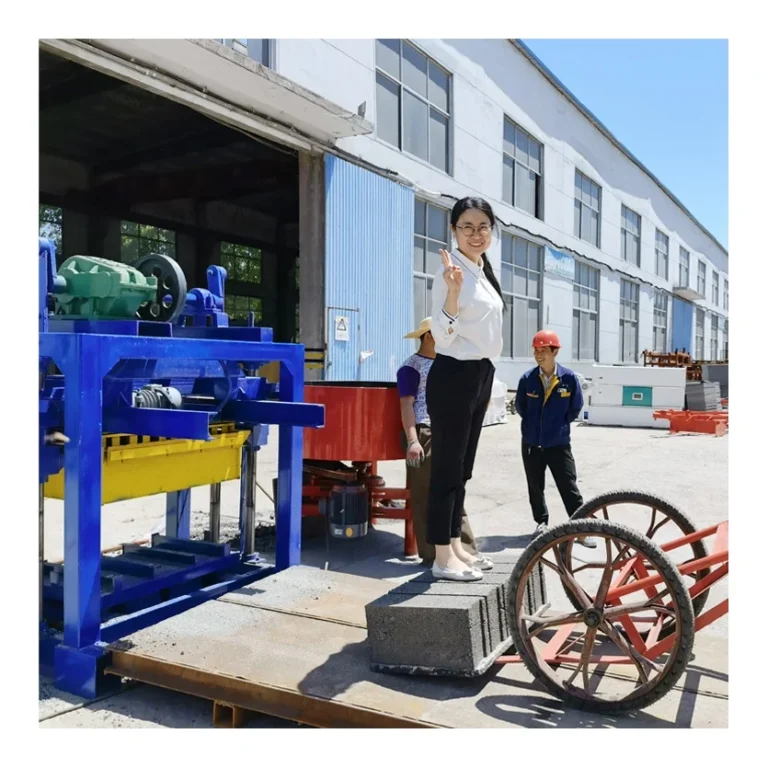
Matched System Specification — the QTJ4-26 hollow block making machine manufacturer configures press, mould, pallet, mixer and conveyor as one verified line rather than shipping a standalone unit expecting the buyer to fill the gaps.
Technical Specifications
| Parameter |
Value |
| Model |
QTJ4-26 |
| Product Type |
Semi-Automatic Concrete Block Making Machine |
| Molding Type |
Platform Vibration |
| Overall Dimensions (L×W×H) |
3600mm × 1700mm × 2560mm (working state) |
| Total Mass |
1750 kg |
| Overall Power |
14.25 kW |
| Pallet Size |
850mm × 450mm |
| Standard Mould Format |
390×190×190mm (4 pcs/mold) / 240×115×53mm (21 pcs/mold) |
| Vibration System |
Lower platform (2 × 3kW motors) + Upper 1.5kW attached device |
| Elevating System |
Cone-shape motor with JZQ250 reducer, V-belt drive |
| Delivery Device |
Cycloidal pin wheel reducer with chain and V-belt |
| Material Storage |
Releasing hopper + storing hopper (bolted to frame) |
| Frame Construction |
Dragon gate style, four wear-resisting vertical shafts |
| Production Line Configuration |
Machine + JQ350 pan mixer + 6m belt conveyor |
| Stacking Method |
Manual trolley (included); optional auto stacker available |
Application Suitability
| Application |
Material or Output |
| Hollow block production for small masonry plants |
Crushed stone, sand, cement blends |
| Solid brick manufacturing on project sites |
Local aggregate and cement mixtures |
| First-time block plant startups |
Standard concrete masonry unit formats |
| Distributors expanding block product range |
Common hollow and solid block dimensions |
What "4 Pieces Per Mold" Actually Means for Your Daily Run
Real output depends on your local aggregate, not a catalogue default.
The QTJ4-26 is rated for 390×190×190mm hollow blocks at 4 pieces per mold, but that number assumes a specific mix design and cycle rhythm. When the sand available near your site carries high clay content or the cement ratio differs from the test standard, the vibration cycle extends and daily volume drops noticeably. I have seen buyers receive machines configured for a river sand profile they could not source locally, forcing a material substitution that cut effective throughput in half. Before confirming an order, we match the vibration force and cycle timing against your actual aggregate sample and target block format [NEED_CITE: common aggregate variations affecting block machine cycle times].

Positioning Within the Small-Plant Range
The QTJ4-26 sits at the entry tier for stationary block production, targeting buyers who need a complete working line without the capital outlay of a fully automatic plant. As a hollow block making machine manufacturer, we specify this model for daily volumes where manual pallet handling and trolley transport to the curing yard remain practical. The semi-automatic configuration keeps the initial investment contained while preserving a clear upgrade path toward automatic stacking once production volume justifies the added automation.
Matching the Pallet to Your Curing Yard
The 850mm × 450mm pallet size is fixed for this press, which means your curing area, trolley dimensions and any forklift you already operate must accommodate that footprint. Buyers who overlook this detail arrive at commissioning with a curing rack system that does not align with the pallet output. Confirming pallet compatibility before production starts avoids a costly yard reconfiguration after the container arrives [NEED_CITE: pallet handling integration in block plant layout].
How the Vibration System Affects Block Density
The dual 3kW motors on the lower platform deliver the primary compaction force, while the 1.5kW upper vibration device settles the top surface. This two-part arrangement matters most for hollow block formats where wall thickness is narrow and uneven density causes breakage during demolding. The dragon gate frame with four wear-resisting vertical shafts keeps the mold box aligned through thousands of cycles, which directly affects whether your blocks cure with consistent dimensions. The JQ350 pan mixer and 6m belt conveyor are included so the material feed rhythm matches the press cycle rather than leaving the operator waiting between batches.
The Hidden Cost of Skipping Voltage Confirmation
Arriving at commissioning to discover the PLC display language is unreadable or the motor winding does not match the local grid frequency is a delay that sits entirely on the buyer’s timeline. Voltage, frequency and control language are confirmable details, yet they frequently get finalized after the machine is already in production. A hollow block making machine manufacturer should lock these values before the frame is welded, not after the container is booked [NEED_CITE: international voltage and frequency standards for industrial machinery].
Why Source This Line Here
Block machinery is the single focus of our production, so the QTJ4-26 arrives with its mixer, conveyor, pallet specification and mould set verified as a matched system. The mold formats — 390×190×190mm hollow and 240×115×53mm solid — are chosen against the formats your local market actually sells, and custom mold designs can be produced from your drawings. Configuration is set against your mix design and local aggregate, not pulled from a generic catalogue default. Automation level is selectable: you can start with manual trolley handling and add an auto stacker later without replacing the press. Installation includes operator training so your team understands mold change procedures and daily maintenance from the first shift.
Documentation & Verification
- Line layout showing QTJ4-26 footprint with mixer and conveyor placement
- Capacity calculation stating the block format each output figure assumes
- Mold drawing and format list for 390×190mm hollow and 240×115mm solid brick
- Pallet specification confirming 850×450mm dimensions and material grade
- Factory test record run on your specified block format before dispatch
- Operation and maintenance manual covering mold change and lubrication intervals
Installation, Commissioning & Support
- Foundation must support 1750 kg total mass plus dynamic vibration loads from dual 3kW motors
- Dedicated electrical circuit required for 14.25 kW overall power draw with confirmed voltage and frequency
- Machine ships in working-state dimensions of 3600×1700×2560mm; verify container and site access clearance
- First-run commissioning includes cycle timing adjustment against your local aggregate and mix design
- Operator training covers JQ350 pan mixer loading sequence and belt conveyor feed rhythm
- Wear parts list identifies shaft bushings, V-belts and vibration motor bearings for first replacement order
What to Include in Your Inquiry
Tell us the block format your market sells most — hollow, solid, or both — and the daily volume you need to sustain. Share your local aggregate type and any existing mix design you have tested, along with your site voltage and frequency. If you already have a curing yard or trolley system in place, send the dimensions so we can confirm pallet compatibility before the proposal stage.
Frequently Asked Questions
Q: How is daily output calculated for the QTJ4-26?
A: Output is calculated per block format, not as a single universal number. The 390×190×190mm hollow mold produces 4 pieces per cycle, while the 240×115×53mm solid mold produces 21. We provide a capacity sheet that states the assumed format, mix design, and cycle time so you can cross-reference against your actual production target.
Q: Can I add an auto stacker later without replacing the machine?
A: Yes. The QTJ4-26 supports an optional auto stacker capable of 3 to 6 layers depending on block height. The press frame and control system accommodate the upgrade, so you can start with the included manual trolley and add automated stacking when your daily volume justifies the investment.
Q: What voltage and control language options are confirmed before shipping?
A: Voltage, frequency and PLC display language are confirmed during the proposal stage and locked before production begins. This prevents commissioning delays that occur when electrical specifications are left to default settings that may not match your local grid or operator language.
Q: Can custom molds be made for block formats outside the standard set?
A: Custom molds are produced from buyer-supplied drawings or developed jointly based on your market requirements. The mold drawing and format list are included in the documentation package, and each custom mold is factory-tested with the press before dispatch.
Q: What supporting equipment arrives with the machine?
A: The line includes the JQ350 pan mixer and a 6m belt conveyor alongside the QTJ4-26 press. The material releasing and storing hoppers are bolted to the frame, and a trolley for transporting blocks to the curing yard is included. You source pallets and curing racks locally based on the confirmed pallet specification.

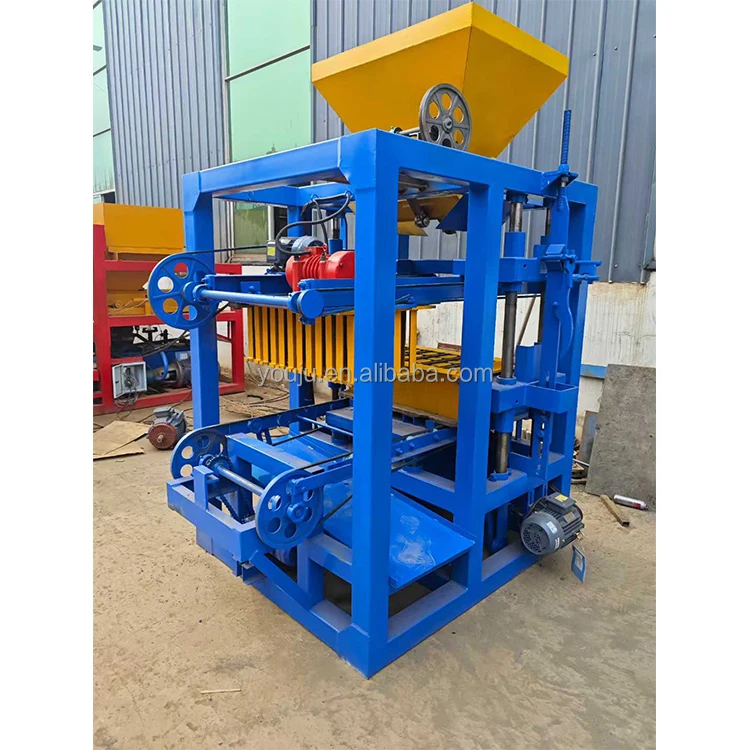
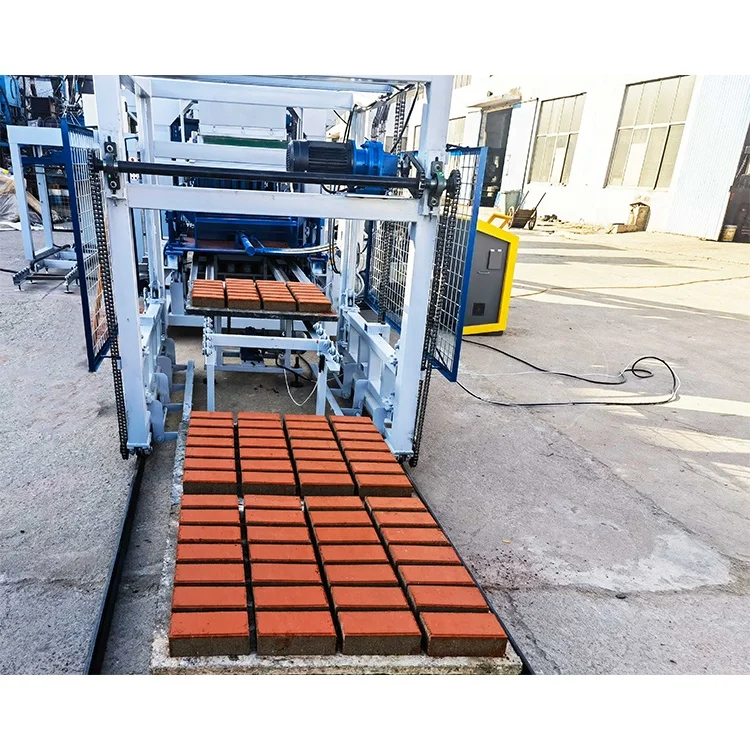 Stationary block machine