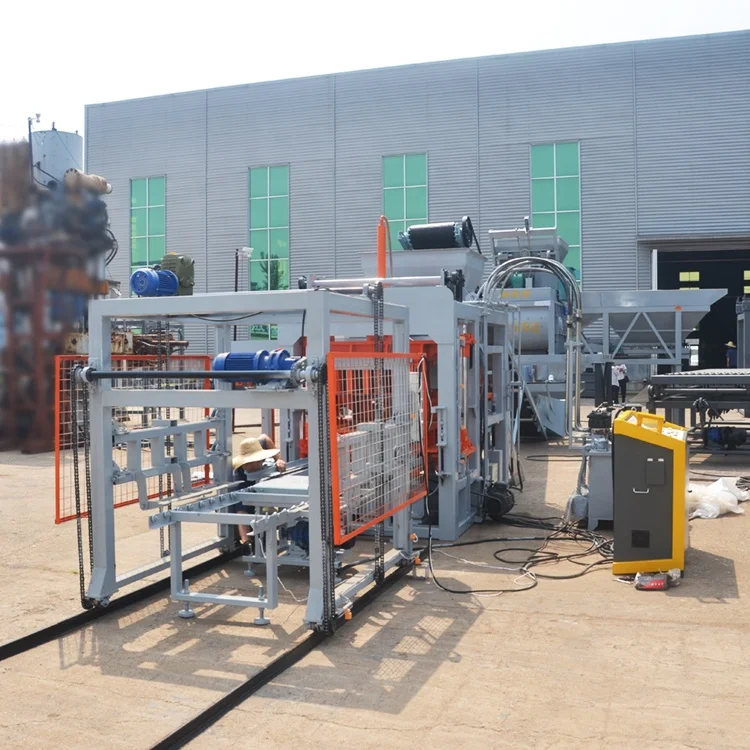
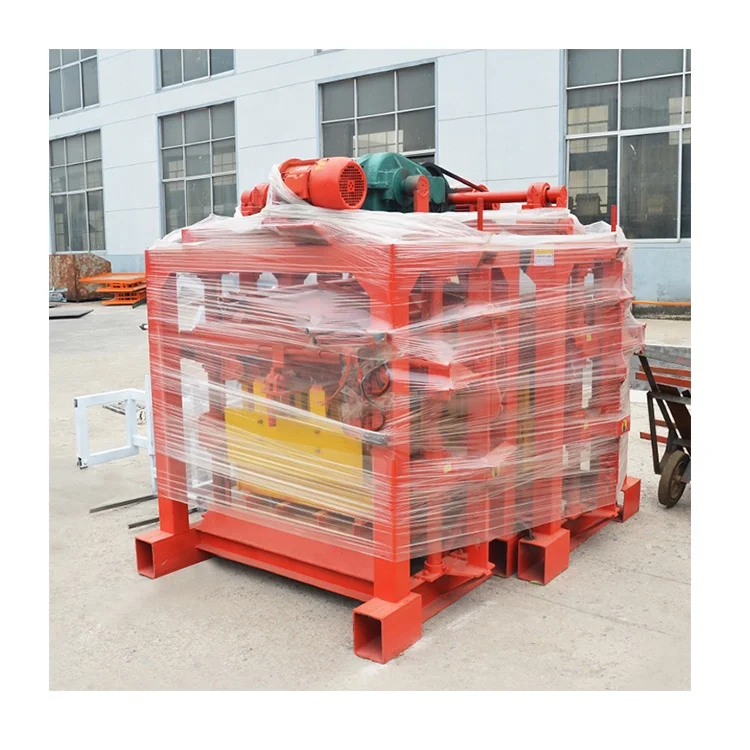
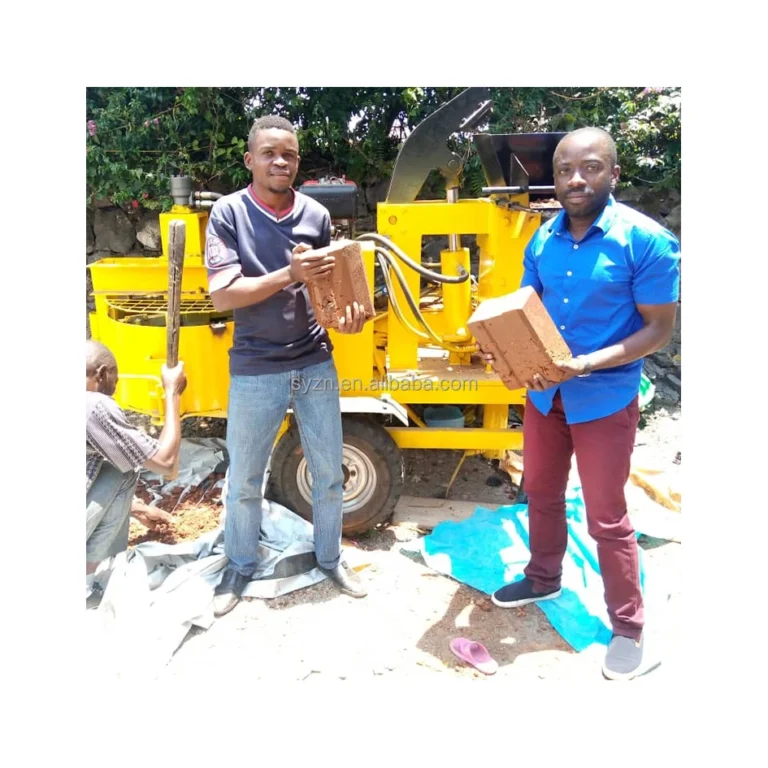
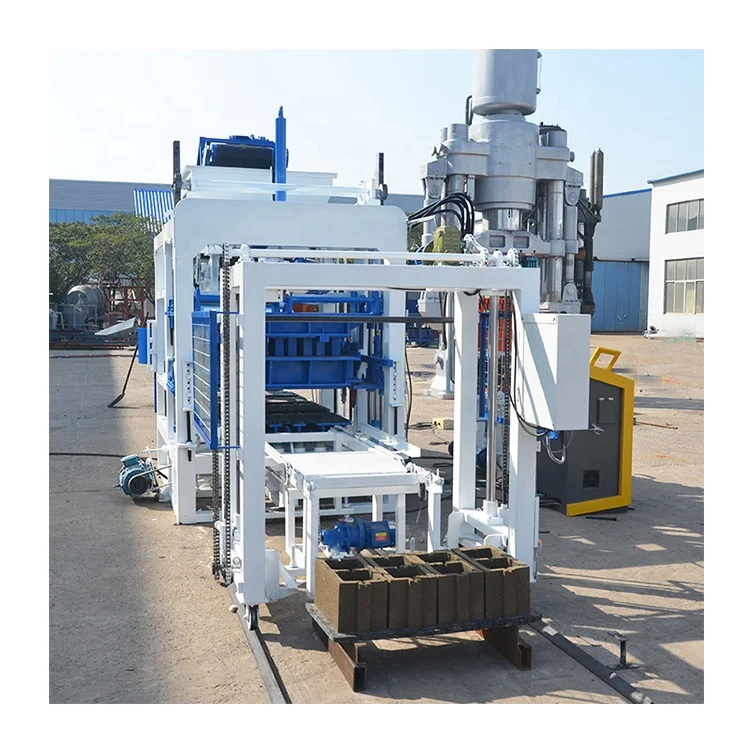
Matched Machine, Mould and Pallet — The QTJ4-26 is specified as one coordinated system where vibration force, pallet size and mould cavity count are balanced for your target block format before production begins.
Technical Specifications
| Parameter |
Value |
| Model |
QTJ4-26 |
| Product Type |
Semi-Automatic Concrete Block Making Machine |
| Overall Dimensions (L×W×H) |
2060×1730×2580 mm |
| Moulding Cycle |
26 s |
| Vibration Frequency |
4200 r/min |
| Vibration Force |
35.5 kN |
| Total Power |
14.25 kW |
| Mixer Model |
JQ350 |
| Pallet Size |
850×450×20 mm |
| Net Weight |
1800 kg |
| Guide System |
Four guide pillars with automatic mould movement |
| Vibration Type |
Dual vibrating motors under mould with upper mould pressing |
| Automation Level |
Semi-automatic |
| Applied Products |
Concrete hollow blocks (8 inch, 6 inch), solid bricks |
| Output Capacity (Hollow Block 390×190×190 mm) |
480 pcs/h, 3800 pcs/8 hr (4 pcs/mould) |
| Output Capacity (Hollow Block 400×150×200 mm) |
600 pcs/h, 4800 pcs/8 hr (5 pcs/mould) |
| Output Capacity (Solid Brick 240×115×53 mm) |
2100 pcs/h, 17000 pcs/8 hr (18 pcs/mould) |
| Raw Materials |
Crushed stone, sand, cement, dust, fly ash |
| Key Features |
Semi-automatic operation, dual-motor vertical vibration, four-pillar guidance |
Application Suitability
| Application |
Material or Output |
| First block plant for entrepreneurs |
Hollow blocks and solid bricks from locally sourced crushed stone, sand and cement |
| On-site production for construction contractors |
8-inch and 6-inch hollow blocks using project-site aggregates including fly ash |
| Supplementing higher-capacity automatic lines |
Solid brick runs at 2100 pcs/h (240×115×53 mm, 18 pcs/mould) for format diversification |
| Small to medium block production plants |
Mixed daily schedules switching between hollow block and solid brick formats |
What a Semi-Automatic Block Making Machine Manufacturer Should Tell You Before Quoting
Capacity figures that omit the block format are meaningless in real production planning.
I spent years answering service calls from buyers who received machines configured for aggregate grades they could not source locally, or pallets that did not fit their existing curing racks. A semi-automatic block making machine manufacturer who skips the raw material conversation is leaving you to discover those mismatches on commissioning day [NEED_CITE: aggregate grading and vibration force compatibility in block pressing]. The QTJ4-26 is not quoted from a catalogue default — vibration force, cycle time and mould cavity count are confirmed against your specific block format and local material before the build order is placed.

Where the QTJ4-26 Sits Across the Block Machine Range
The complete block machine lineup spans mobile egg-laying units at the entry level, through semi-automatic presses like this model, up to high-capacity fully automatic lines with stacking and cubing. The QTJ4-26 occupies the mid-tier position, suited to buyers who need consistent output without the investment footprint of a fully automated plant. Understanding where each tier sits helps a buyer match machine class to actual daily volume requirements and available workshop space.
Positioning the Semi-Automatic Tier for First-Plant Buyers
For an entrepreneur setting up a first block plant, the semi-automatic block making machine manufacturer typically recommends this tier because it balances output volume with manageable capital outlay and simpler operator training. The four-pillar guide system and dual-motor vibration deliver forming consistency that entry-level mobile machines cannot hold across long shifts. Buyers who start here can add pallet feeding automation or stacker modules later, extending the line’s capability without replacing the press itself [NEED_CITE: block plant upgrade paths from semi-automatic to automatic].
Reading the Specifications That Matter on the Shop Floor
The 35.5 kN vibration force paired with the 4200 r/min frequency means the dual motors under the mould deliver vertical compaction while the upper mould applies mechanical pressure — this combined action is what produces uniform density across both hollow block and solid brick formats. The 850×450×20 mm pallet dimension is not arbitrary; it was chosen to match the mould cavity layout and to remain compatible with standard curing rack widths and small forklift tine spacing. At 14.25 kW total power draw, the machine can run from a moderate-capacity three-phase supply without requiring a dedicated transformer in most small-plant settings. The 26-second moulding cycle sets the rhythm for the entire line, meaning manual pallet handling and block stripping must be paced to avoid the press standing idle between strokes.
The Hidden Cost of a Mismatched Pallet and Curing Layout
When a buyer selects a pallet size without checking their curing area dimensions and forklift capacity, blocks end up stacked by hand on the floor while waiting for space to open up. This bottleneck cancels out the output advantage the machine was supposed to deliver. Mould changes that consume most of a shift make format flexibility theoretical rather than practical [NEED_CITE: pallet handling bottlenecks in semi-automatic block plants]. Confirming pallet material and thickness against your curing rack system before shipment prevents these costly rescheduling moments after installation.
Why Buyers Source This Semi-Automatic Press Here
Block machinery is our single focus, so the QTJ4-26 arrives with mould, pallet and handling accessories specified as one matched system rather than assembled from separate suppliers. Configuration is set against your actual mix design and local aggregate, not a catalogue default, so the vibration force and hydraulic behaviour align with what your raw materials demand. Mould design covers the block formats your market actually sells, with custom drawings available when standard cavities do not match local building codes. Automation level is selectable, meaning a buyer can begin with manual pallet handling and upgrade modules over time. Installation support includes operator training on your specific block format, reducing the learning curve at first production run.
Documentation & Verification
- Line layout with capacity calculation stating the block format assumed for each output figure
- Machine specification sheet confirming vibration force, pallet size and moulding cycle
- Mould drawing and format list showing all cavity configurations for the QTJ4-26
- Voltage, frequency and control language confirmation sheet signed before production
- Factory test record captured on your target block format before dispatch
- Operation and maintenance manual with wear parts and mould replacement schedule
Installation, Commissioning & Support
- Foundation pad sized to the 2060×1730 mm footprint with vibration isolation provisions
- Three-phase power circuit rated for the 14.25 kW total draw with dedicated breaker
- Machine arrives partially assembled; guide pillars and vibration motors require on-site alignment
- First-run commissioning includes moulding cycle tuning to your local aggregate and cement ratio
- Operator training covers mould change procedure, pallet handling rhythm and daily lubrication points
- Wear parts list provided with reorder intervals based on your production volume and material abrasiveness
What We Need to Configure Your QTJ4-26 Correctly
To prepare an accurate machine and mould proposal, we need your target block format and daily output requirement so the capacity calculation reflects what you will actually produce. Share your local raw material details — aggregate type, maximum particle size, cement availability — so the vibration and pressure settings are matched from the start. Confirm your site voltage, frequency and preferred control display language to avoid delays once the machine arrives [NEED_CITE: voltage and frequency standards by export market].
Frequently Asked Questions
Q: How is the output capacity of the QTJ4-26 calculated, and which block format does each figure assume?
A: Every capacity figure is tied to a specific mould and block dimension. For example, 480 pieces per hour assumes the 390×190×190 mm hollow block mould with four cavities, while 2100 pieces per hour assumes the 240×115×53 mm solid brick mould with eighteen cavities. The capacity calculation document you receive states the format behind each number, so daily planning is based on real production conditions.
Q: Where does the QTJ4-26 sit compared to fully automatic and mobile block machines in the range?
A: It occupies the semi-automatic mid-tier, offering more forming consistency and higher output than mobile egg-laying units while requiring less capital and floor space than a fully automatic line with stacking and cubing. Buyers who need steady daily volume without full automation infrastructure typically start at this tier.
Q: What pallet size is specified, and how does it match my curing area?
A: The standard pallet measures 850×450×20 mm, chosen to align with common curing rack widths and small forklift tine spacing. If your existing curing system uses different dimensions, pallet specifications are confirmed during the proposal stage so the handling workflow fits your site layout from day one.
Q: Can I start with the QTJ4-26 semi-automatic and upgrade to higher automation later?
A: Yes. The machine platform supports adding automatic pallet feeding, stacking or cubing modules as production volume grows. Starting semi-automatic lets a first-plant buyer control initial investment while preserving the upgrade path to a more automated line without replacing the core press.

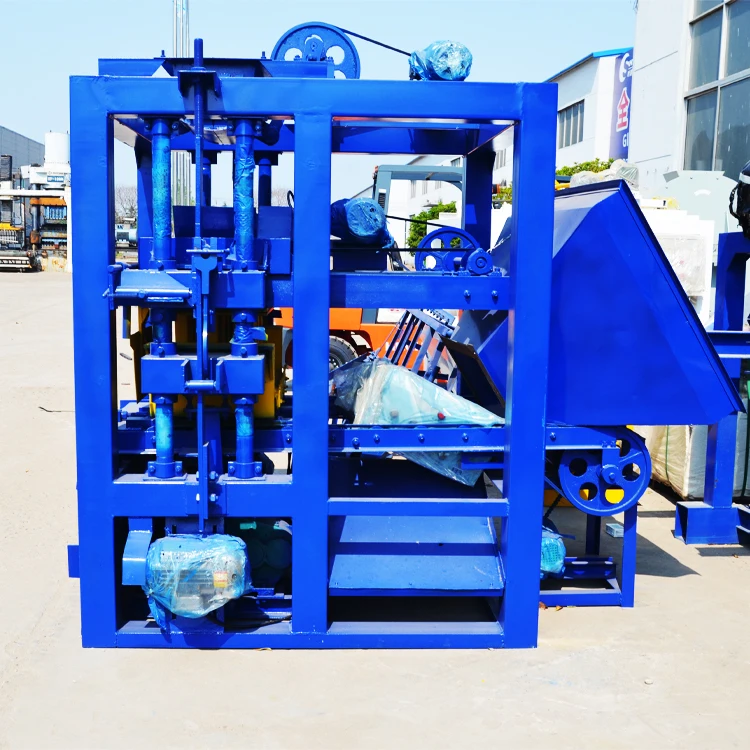
 High quality block machine