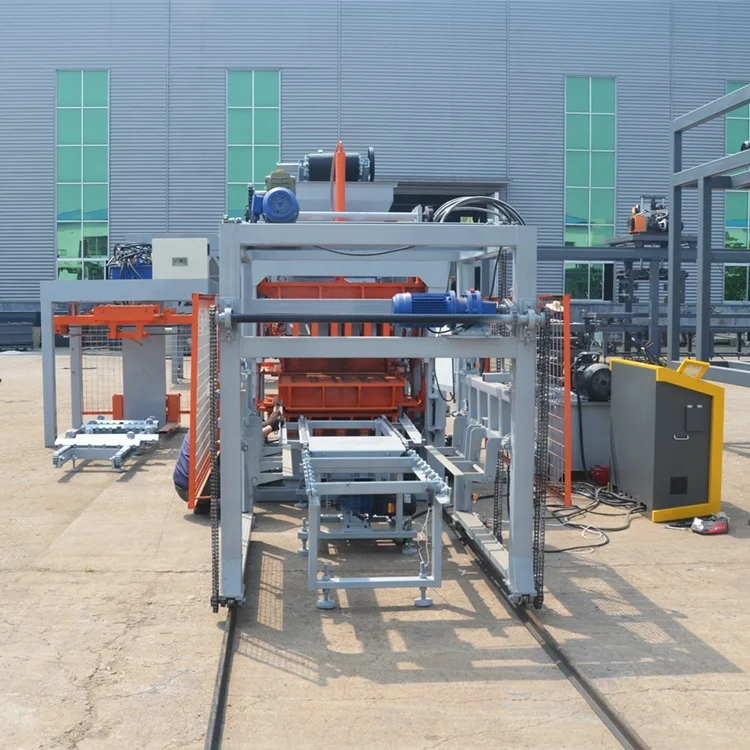
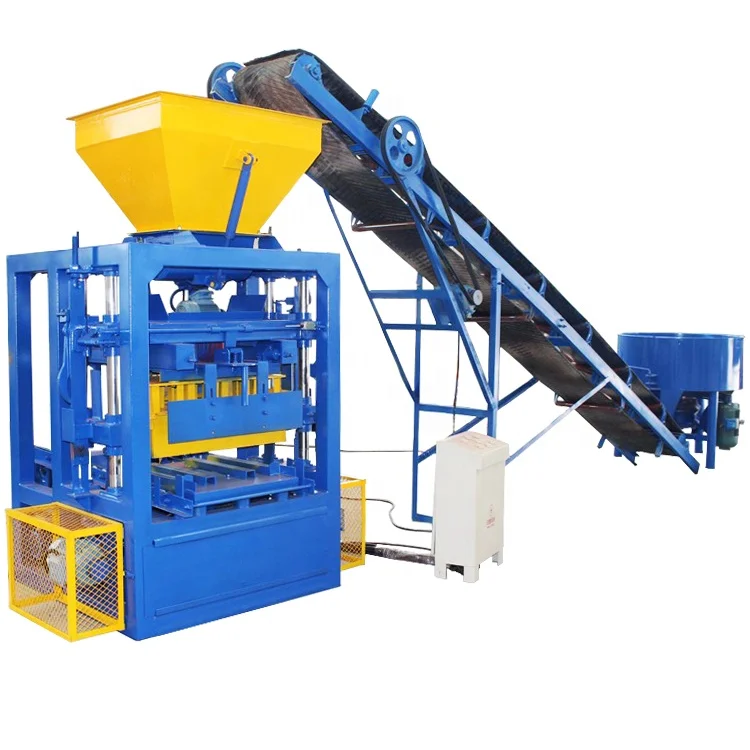
Matched System Specifying — the QTJ4-25 is configured as one integrated block making unit with mixer, pallet and hydraulic station aligned, not assembled from separate suppliers.
Technical Specifications
| Parameter |
Value |
| Model |
QTJ4-25 |
| Product Type |
Semi-Automatic Concrete Block Making Machine |
| Overall Dimensions (L×W×H) |
6400×1500×2700 mm |
| Molding Cycle |
25 s |
| Vibration Frequency |
2800–5100 r/min |
| Exciting Force |
60 kN |
| Rated Power |
17.9 kW |
| Mixer Model |
JQ350 |
| Pallet Size |
850×550×20 mm |
| Net Weight |
2500 kg |
| Automation Level |
Semi-automatic |
| Hydraulic Station |
Equipped |
| Vibration Type |
Bed mould vertical vibration + upper mould compression vibration |
| Output Capacity |
480 pcs/h (basis: 390×190×190 mm hollow block, 4 pcs/mould) |
| Output Capacity |
600 pcs/h (basis: 400×150×200 mm hollow block, 5 pcs/mould) |
| Output Capacity |
2100 pcs/h (basis: 240×115×53 mm solid brick, 18 pcs/mould) |
| Daily Output |
3800 pcs/8 hr (basis: 390×190×190 mm hollow block) |
| Daily Output |
4800 pcs/8 hr (basis: 400×150×200 mm hollow block) |
| Daily Output |
17000 pcs/8 hr (basis: 240×115×53 mm solid brick) |
| Applied Products |
Concrete hollow blocks (8 inch, 6 inch), solid bricks |
| Raw Materials |
Crushed stones, sand, cement, dust, fly ash |
Application Suitability
| Application |
Material or Output |
| Small to medium block plant startup |
390×190×190 mm hollow blocks from crushed stone and cement |
| On-site contractor production |
6–8 inch hollow blocks for housing and commercial builds |
| Product range expansion via mould change |
240×115×53 mm solid bricks using fly ash and sand mixes |
| Regional building material supply |
Multiple formats from a single host machine on 850×550 mm pallets |
What "Pieces per Hour" Actually Means on a Semi-Automatic Block Machine
Every capacity figure here is tied to a specific block size and mould cavity count, so the number you plan against is the number you get on the floor.
Catalogue sheets often quote a single cycle speed and leave the buyer to multiply it by whatever block they intend to run. In practice, a mould producing four 8-inch hollow blocks per cycle delivers a very different daily total than one pressing eighteen solid bricks. When the format is not stated, the Semi-Automatic Block Machine manufacturer output claim becomes meaningless. On African job sites I have watched crews arrive expecting a certain pallet count, only to discover the quoted capacity assumed a smaller brick they do not even sell locally. [NEED_CITE: block format impact on daily throughput calculations]
Where the QTJ4-25 Sits in the Full Shiyue Range
The Shiyue line spans mobile egg-laying units for remote site work, semi-automatic presses like the QTJ4-25 for fixed small plants, and fully automatic lines with stacking and cubing for high-volume production. This model occupies the entry point of the fixed-plant tier, giving buyers a proven host machine with hydraulic station and dual vibration without the capital outlay of a fully automated setup. For a first block plant or a contractor who needs steady daily volume, it provides a clear position on the range before committing to higher tiers.
Positioning Investment Against Plant Footprint
A semi-automatic tier machine requires a simpler supporting layout than a fully automatic line. The QTJ4-25 at 6400×1500×2700 mm fits inside a modest workshop alongside a JQ350 mixer and manual pallet return area. Buyers moving up from mobile machines gain a fixed production station with better block consistency, while those comparing downward from automatic lines save on stacking equipment and PLC complexity. The 2500 kg net weight means a standard concrete slab foundation is sufficient, keeping site preparation cost moderate. [NEED_CITE: foundation requirements for semi-automatic block presses]
Vibration, Pressure and What They Mean for Block Density
The 60 kN exciting force combined with a bed mould vertical vibration and upper mould compression vibration ensures that the concrete mix is compacted from two directions during the 25-second molding cycle. This dual action produces a denser block wall than single-axis vibration alone, which matters when local aggregates vary in gradation. The hydraulic station delivers consistent pressing pressure across every cycle, reducing the strength scatter that operators often see on purely mechanical machines. Vibration frequency adjustable between 2800 and 5100 r/min lets the crew tune the shake to different mix designs — a stiffer fly ash blend needs a different frequency than a wet sand mix. Pallet size of 850×550×20 mm is chosen to match common curing rack dimensions, so fresh blocks can move straight to the yard without re-handling.

The Hidden Cost of a Pallet Size Nobody Checked
When the pallet dimensions are decided without checking the curing racks and forklift tines already on site, the result is double handling. Crews unload blocks from non-standard pallets and restack them onto the racks they have, adding labour and breakage before the product even enters the curing cycle. The 850×550 mm pallet format on the QTJ4-25 aligns with widely used rack widths, but this only helps if the buyer confirms their existing setup before the machine ships. Mismatched pallets also cause uneven vibration transfer, producing weaker blocks at the edges. [NEED_CITE: pallet compatibility and block handling losses]
Why Procurement Here Reduces Configuration Risk
Block machinery as a single focus means the QTJ4-25 press, JQ350 mixer, moulds and pallets are specified as one matched system. Configuration is set against the buyer’s actual mix design and target block format rather than a catalogue default. Mould design covers the hollow and solid formats the buyer’s market sells, with custom drawings available for non-standard sizes. Automation level remains selectable, so a buyer can start semi-automatic and move to higher tiers as demand grows. Installation includes operator training so the crew understands mould change procedure and vibration tuning from day one.
Documentation & Verification
- Machine specification sheet confirming QTJ4-25 vibration force and hydraulic pressure ratings
- Line layout with capacity calculation stating block format for each output figure
- Mould drawing and format list covering 8-inch, 6-inch hollow and solid brick sizes
- Voltage, frequency and control language confirmation recorded before production
- Factory test record on buyer’s target block format prior to dispatch
- Operation and maintenance manual with wear parts and mould replacement schedule
Installation, Commissioning & Support
- 17.9 kW rated power requires a dedicated circuit with correct breaker sizing at site
- 6400×1500 mm footprint needs a level concrete slab with anchor bolt provisions
- Machine arrives dismantled for container loading; reassembly guided by hydraulic and electrical schematics
- First-run commissioning includes molding cycle tuning to the buyer’s local aggregate and mix
- Operator training covers mould change, vibration frequency adjustment and daily lubrication points
- Wear parts list and mould inventory provided so replacements are ordered before the first change-out
Preparing Your Inquiry
To size the QTJ4-25 correctly within the full Shiyue range, share the block formats your market actually buys and the daily volume you need to hit. Confirm your local voltage and frequency, the raw materials you can source, and the curing area layout you plan to use. This lets the Semi-Automatic Block Machine manufacturer configuration proposal match your real conditions rather than a generic default.
Frequently Asked Questions
Q: Where does the QTJ4-25 sit in the Shiyue machine range compared to automatic and mobile tiers?
A: It occupies the semi-automatic fixed-plant tier, above mobile egg-laying machines in output consistency and below fully automatic lines in capital cost. Buyers who need a reliable daily volume from a fixed station without investing in stacking and cubing equipment typically land here. It also offers an upgrade path to higher automation tiers as production grows.
Q: How is daily output calculated and which block format does each figure assume?
A: Each output number is tied to a specific block size and mould cavity count. For example, 3800 pieces per 8-hour shift is based on 390×190×190 mm hollow blocks at 4 per mould. Switching to solid bricks changes the cavity count and cycle yield, so the daily total shifts accordingly. Always confirm the format you intend to run.
Q: What plant footprint and supporting equipment does this semi-automatic tier require?
A: The QTJ4-25 at 6400×1500×2700 mm fits a compact workshop with a JQ350 mixer and manual pallet return area. A level concrete slab foundation is sufficient for the 2500 kg machine weight. Supporting equipment stays simpler than a fully automatic line, with no automatic stacker or cubing system required at this tier.
Q: Can I start with the QTJ4-25 semi-automatic and upgrade later?
A: Yes, the Shiyue range is designed so buyers can begin at the semi-automatic tier and move to higher automation as demand increases. The host machine principles remain consistent across tiers, so operator skills transfer. Mould compatibility also carries forward, protecting your initial tooling investment.
Q: What investment level separates semi-automatic from a fully automatic block line?
A: The gap comes from additional stations — automatic pallet feeding, stacking, cubing and PLC-controlled batching — that a fully automatic line includes. The QTJ4-25 keeps these manual or semi-manual, reducing upfront capital while still delivering consistent block quality through its hydraulic station and dual vibration system.

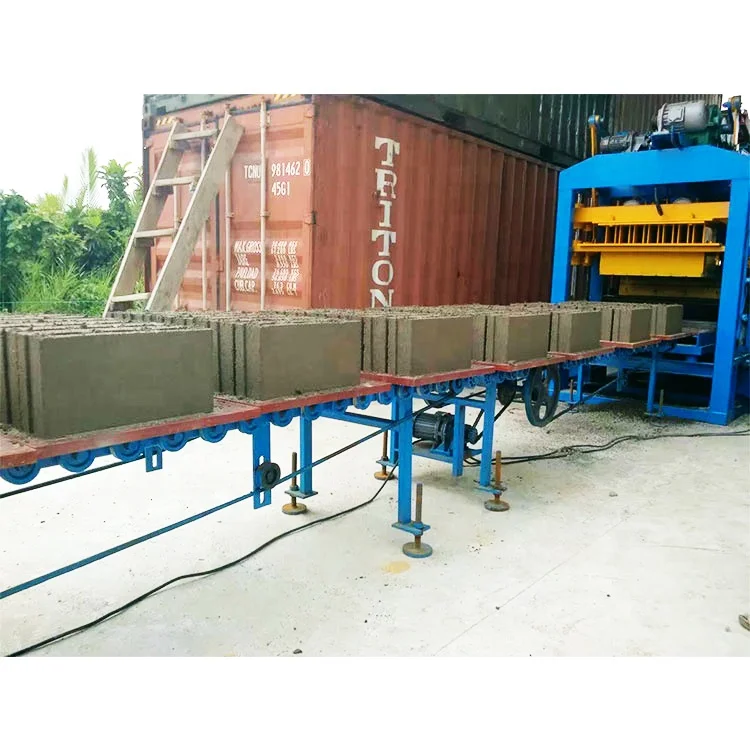
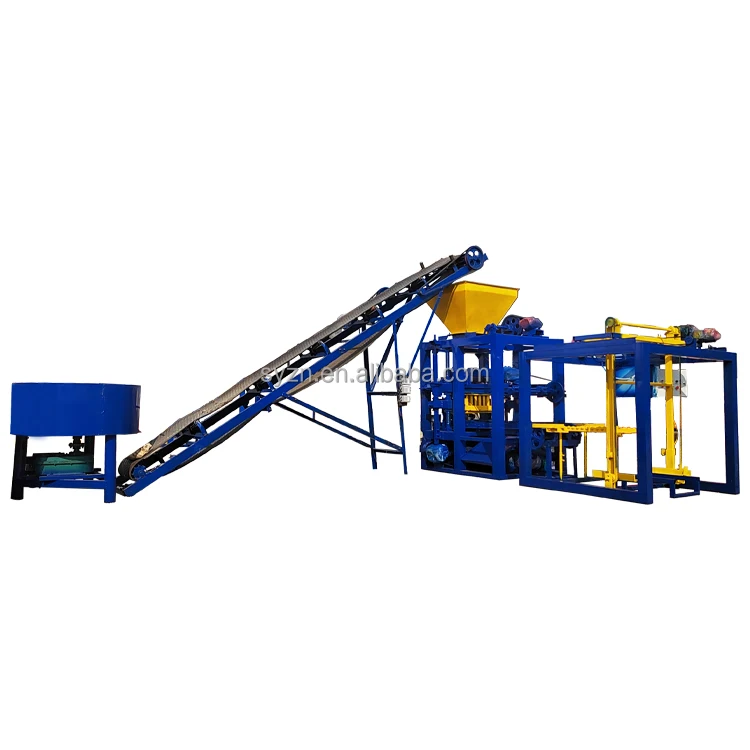 High quality block machine