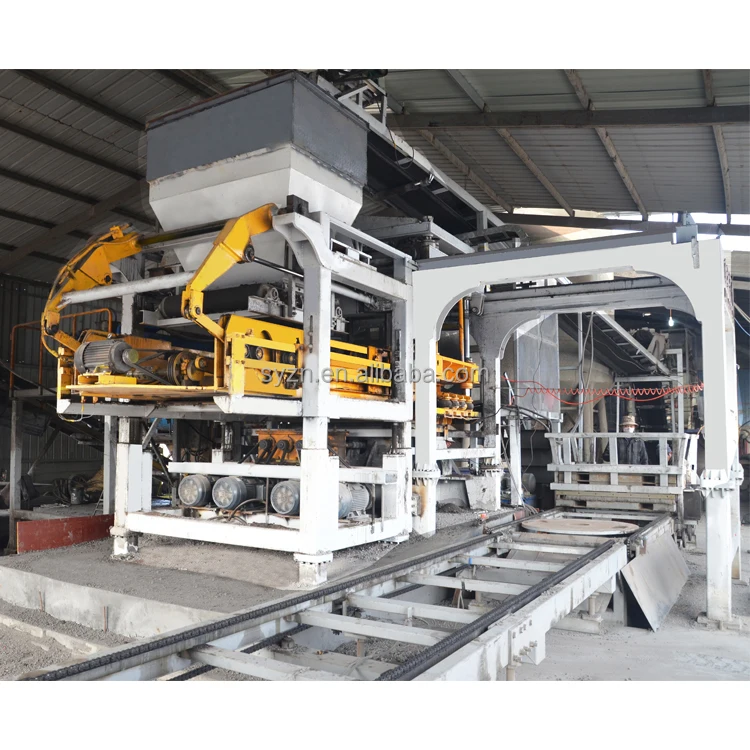
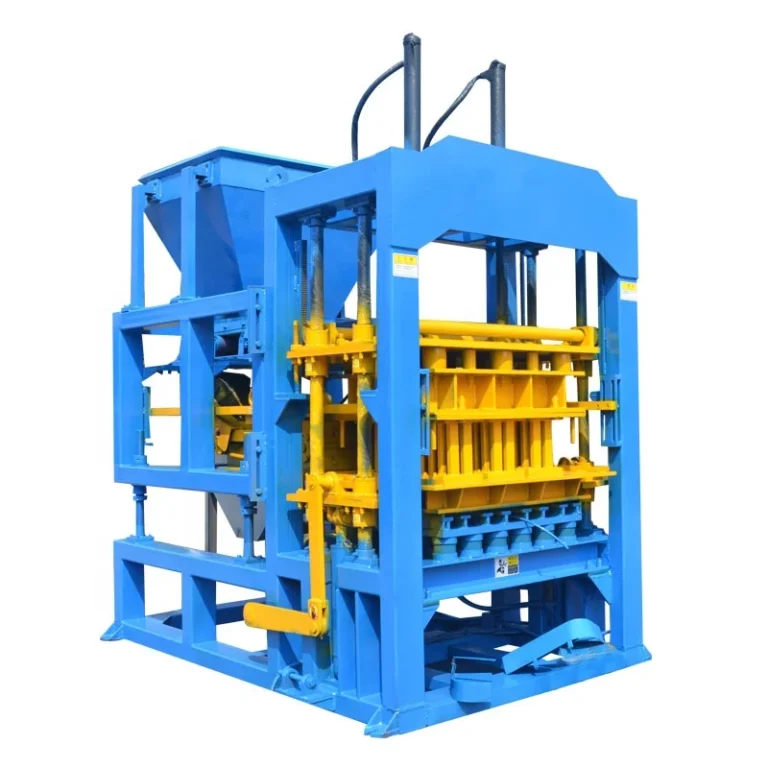
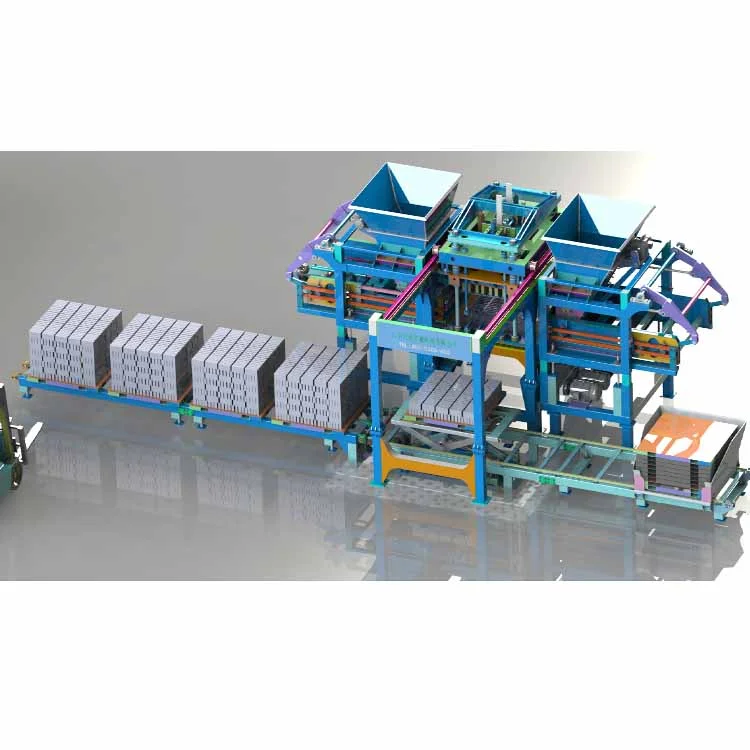
Matched System Design — QTJ4-24 ships as a press, mixer, conveyor, pallet, and optional stacker configured together, not assembled from disconnected supplier quotes.
Technical Specifications
| Parameter |
Value |
| Model |
QTJ4-24 |
| Product Type |
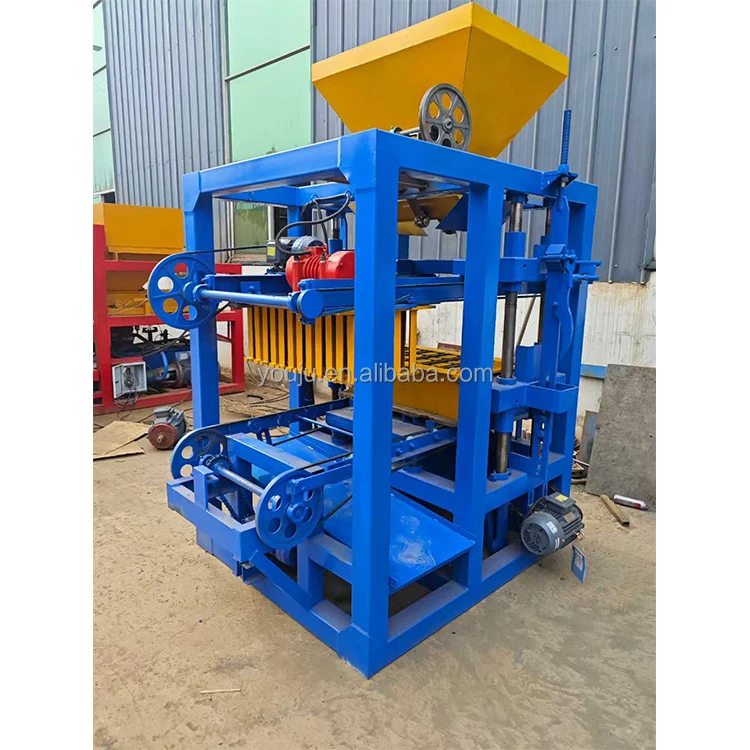
Semi-Automatic Stationary Concrete Block Making Machine |
| Machine Frame |
Dragon gate style, super steel construction, four wear-resisting vertical shafts |
| Molding Type |
Platform vibration (mechanical, non-hydraulic) |
| Lower Vibration |
Dual high-speed motors, 3 kW each, vertical excitation via vibration box |
| Upper Vibration |
Attached vibration device, 1.5 kW |
| Elevating System |
Cone-shape motor with JZQ250 speed reducer, V-belt drive |
| Delivery Device |
Cycloidal pin wheel speed reducer, chain and V-belt drive, self-conveying frame |
| Material Storing Device |
Material releasing hopper + material storing hopper, bolt-fixed to frame |
| Pallet Size |
850 mm × 450 mm |
| Mould Format |
390 mm × 190 mm × 190 mm (4 pcs/mould); 240 mm × 115 mm × 53 mm (21 pcs/mould) |
| Cycle Time |
24 seconds (basis not stated in source — confirm block format / material / thickness) |
| Overall Dimensions |
3600 mm × 1700 × 2560 mm (working state) |
| Total Mass |
1750 kg |
| Overall Power |
14.25 kW |
| Control System |
Electronic controlling part (mechanical-electronic combination; PLC or relay to be confirmed) |
| Automation Level |
Semi-automatic |
| Voltage & Frequency |
To be confirmed before shipment |
| PLC Display Language |
To be confirmed before shipment |
| Supporting Equipment (Basic) |
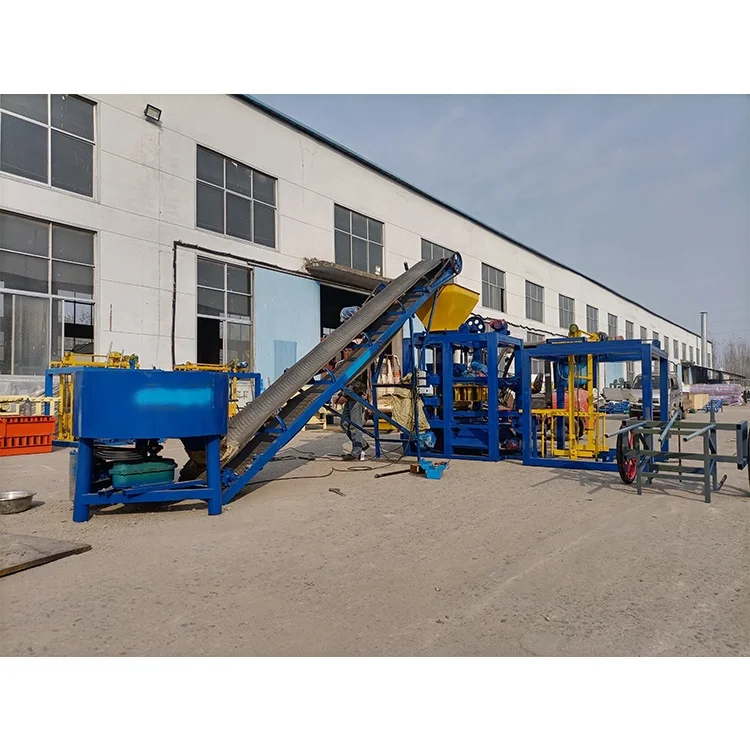
JQ350 pan mixer, 6 m belt conveyor |
| Supporting Equipment (Optional) |
Auto stacker (3–6 layers), trolley, block clamper, diesel generator, wheel loader, forklift |
Application Suitability
| Application |
Material or Output |
| Small-scale concrete block production plants |
Hollow blocks and solid bricks from crushed stone, sand, cement, and fly ash |
| First-time block plant entrepreneurs |
Lower investment entry with room to add automation as demand grows |
| Fixed-site production for construction contractors |
On-site hollow block and solid brick manufacturing for housing or development projects |
| Format diversification for existing producers |
Interlocking pavers, kerbstones, and porous bricks available through mould change |
What "One Mould Every 24 Seconds" Actually Means for Your Output
A cycle time printed in a brochure only becomes a real daily figure once the block format, mix design, and pallet handling method are locked in.
I have watched buyers sign contracts based on a single cycle number, then arrive on site to find their local aggregate carries high clay content, the vibration profile needs recalibration, and the daily tally drops well below the original projection. When a semi-automatic block machine range lists a 24-second cycle, that figure must be tied to a specific block size and a confirmed mix — otherwise the number is just a starting point for negotiation, not a production guarantee [NEED_CITE: block cycle time assumptions by format and material]. The stationary block machine for sale category is full of quotations that leave this connection unstated, and the buyer absorbs the shortfall.

Where the QTJ4-24 Sits in the Full Machine Range
The QTJ4-24 occupies the entry tier of the semi-automatic block machine range, aimed at buyers who need a fixed-plant press without the capital outlay of a fully automatic line. It pairs a mechanical platform vibration system with a JQ350 pan mixer and a 6 m belt conveyor, keeping the supporting equipment within the same quotation so the press is never waiting on a mismatched upstream feed. For a first-time plant operator, this positioning means the learning curve stays manageable while the hardware leaves room to add an auto stacker once volume justifies the investment.
Vibration Force Meets Mix Design on the Shop Floor
Platform vibration on this stationary block machine for sale comes from dual 3 kW lower motors driving vertical excitation through a vibration box, supplemented by a 1.5 kW upper vibration device attached to the mould head. The two forces must be balanced against the buyer’s actual aggregate grading and cement ratio — a mix that is too dry will not consolidate under the stated force, while a mix that is too wet will cause the block to slump before curing [NEED_CITE: vibration force and mix design correlation in concrete block production]. I have seen operators spend entire shifts chasing density targets because the original configuration assumed a clean river sand that the local quarry simply could not supply.
Reading the Specs Beyond the Brochure Numbers
The dragon gate frame with four wear-resisting vertical guide shafts is designed to resist the lateral drift that continuous vibration imposes on lighter structures. When guide shafts wear unevenly, mould alignment shifts and block dimensions drift outside tolerance — a problem that shows up as rejected batches rather than a visible machine fault. The 850 mm × 450 mm pallet size dictates the curing area layout and the forklift capacity the buyer must already have on site; specifying pallets without checking the curing yard dimensions is a mismatch that surfaces only after the first production run. The 14.25 kW overall power draw is modest enough for a small workshop supply, but the voltage and frequency must still be confirmed in writing before the motor windings are wound [NEED_CITE: voltage and frequency standards by export market].
The Hidden Cost of Skipping Configuration Checks
When a buyer orders a semi-automatic block machine range model without confirming the pallet material against their curing environment, wooden pallets warp in humid yards while bamboo pallets crack under dry heat — both failures halt the line and force an unplanned reorder. If the control display language is not specified before production, the operator faces an interface they cannot read, delaying commissioning while a new PLC program is sourced and shipped. These are not catastrophic failures; they are the slow, expensive friction of assumptions that were never written into the contract [NEED_CITE: common commissioning delays in exported block machinery].
Why Source This Tier Here
Block machinery is the single focus of this operation, so the press, mould, pallet, and handling equipment are specified as one matched system rather than assembled from separate suppliers who each optimise for their own component. Configuration is set against the buyer’s actual mix design, local aggregate, and target block format — not a catalogue default that assumes conditions the buyer cannot replicate. Mould design covers the formats the buyer’s market actually sells, and custom drawings are accepted when standard formats do not match local building codes. The automation level is selectable, so a buyer can start with manual pallet handling and add an auto stacker as volume grows, without replacing the press itself. Installation and commissioning support includes operator training on the specific controls and mould change procedure of this machine.
Documentation & Verification
- Line layout and capacity calculation stating the exact block format assumed for the QTJ4-24 cycle time
- Machine specification sheet with pallet size, vibration ratings, and overall power confirmed for your site
- Mould drawing and format list matching the hollow block and solid brick dimensions your market requires
- Voltage, frequency, and control display language confirmation signed off before production begins
- Factory test record run on your specified mix design where sample material is available
- Wear parts and mould list supplied with quotation so first replacements are on hand at startup
Installation, Commissioning & Support
- Foundation pad must accommodate 3600 mm × 1700 mm working footprint plus mixer and conveyor clearance
- Dedicated circuit rated for 14.25 kW total draw with voltage and frequency confirmed before motor winding
- Machine ships in working-state assembly; vertical shafts and vibration box require on-site alignment check
- First-run commissioning includes vibration force calibration against buyer’s local aggregate and mix ratio
- Operator training covers mould change procedure, pallet feeding sequence, and electronic control interface
- Wear parts list identifies guide shafts, vibration motor bearings, and mould liner replacement intervals
What to Include with Your Inquiry
Provide the block formats your local market sells most — hollow block, solid brick, paver, or kerbstone — along with the daily output you need to meet contract obligations. Share the grading and source of your local aggregate, the cement type available, and any existing curing area dimensions so the 850 mm × 450 mm pallet can be checked against your yard. Confirm your site voltage, phase, and frequency, and state the control display language your operators will read. If you plan to start with manual pallet handling and add an auto stacker later, mention that timeline so the semi-automatic block machine range configuration leaves the upgrade path open.
Frequently Asked Questions
Q: How is daily output calculated for the QTJ4-24, and which block format does the cycle time assume?
A: The 24-second cycle figure must be tied to a specific block size, mix design, and pallet handling method. Without that context, it is a machine speed, not a production rate. Request a capacity calculation document that states the assumed format — for example, 390 × 190 × 190 mm hollow blocks at four pieces per cycle — so your daily target can be verified against real shift conditions.
Q: Where does the QTJ4-24 sit in the stationary block machine range, and when should I move up?
A: It occupies the entry semi-automatic tier, suited to first plants or contractors producing at a fixed site with lower initial investment. Move to a higher tier when daily volume demands automatic pallet feeding and stacking, or when your market requires formats that need larger pallet sizes and higher vibration force ratings than this frame can deliver.
Q: What electrical and control details must I confirm before the machine leaves the factory?
A: Voltage, phase, and frequency must match your site supply, and the PLC or relay display language must be specified so operators can read the interface at commissioning. These details affect motor winding and control programming; changing them after production adds lead time and cost that a written confirmation avoids entirely.
Q: Can I add an auto stacker to the QTJ4-24 after the plant is already running?
A: The semi-automatic configuration supports an optional auto stacker upgrade handling three to six layers. Planning the upgrade path at the quotation stage ensures the press frame and pallet return system are prepped for the addition, so the stacker integrates without requiring structural modification to the existing line.
Q: What is the total plant footprint including the mixer, conveyor, and curing area?
A: The press itself occupies 3600 mm × 1700 mm in working state, but the JQ350 pan mixer, 6 m belt conveyor, pallet return path, and curing rack area add to the total. Request a line layout drawing that places every station against your available floor space so the footprint is verified before the foundation is poured.

 Stationary block machine