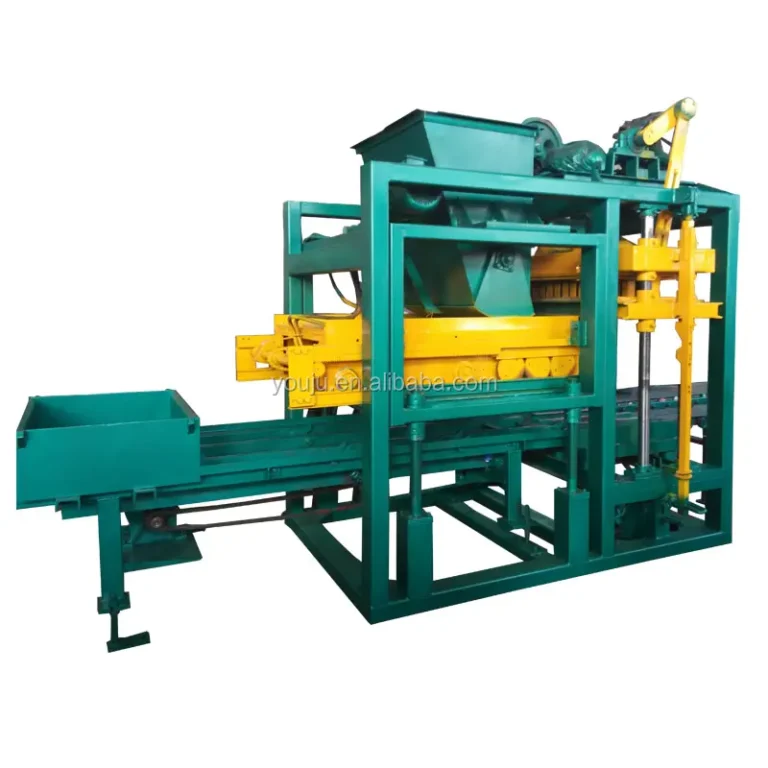
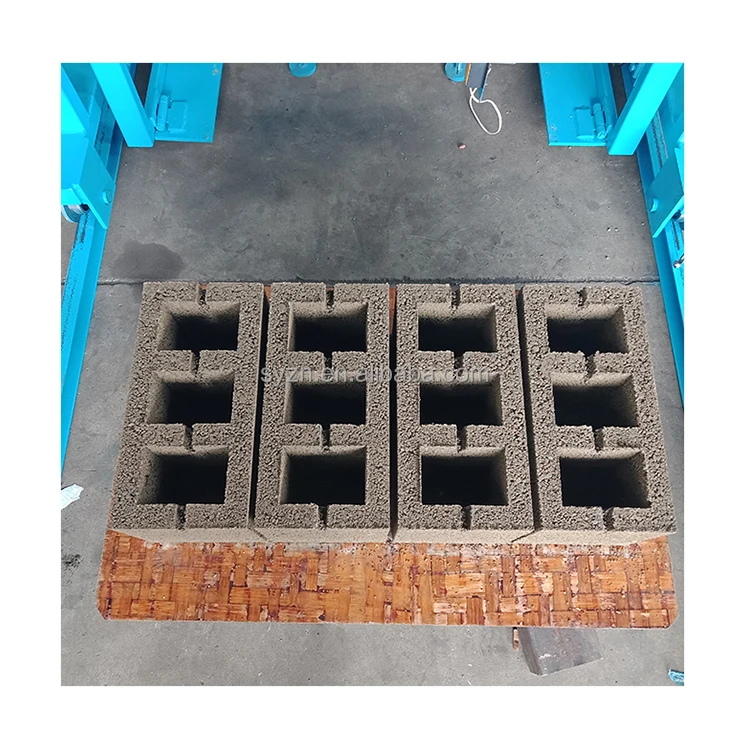
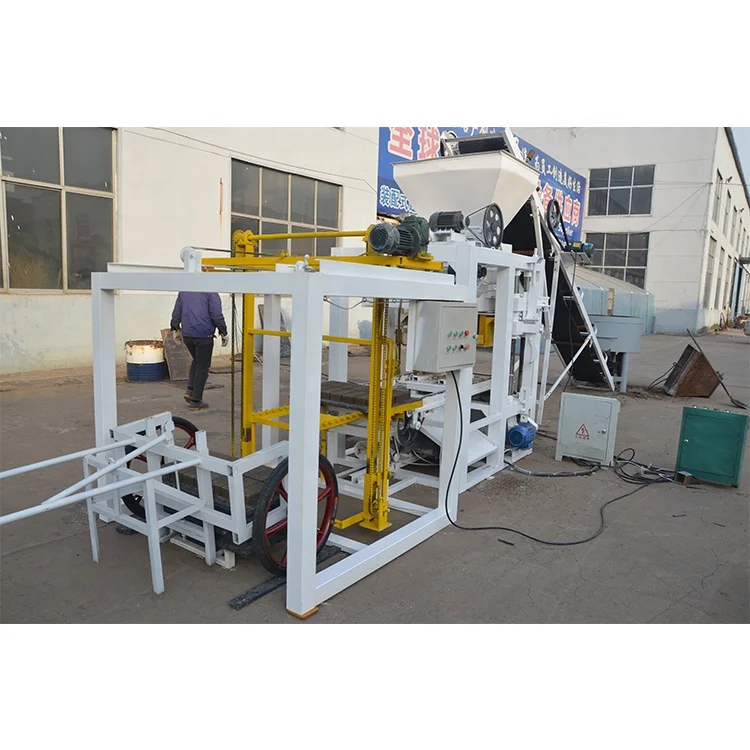
Matched System Approach — The QT8-15 is specified as press, mould, pallet, and handling equipment designed together, preventing the mismatched component failures that plague standalone machine purchases.
Technical Specifications
| Parameter |
Value |
| Model |
QT8-15 |
| Product Type |
Hydraulic Block Making Machine |
| Overall Dimensions |
8300×1860×3000 mm |
| Rated Pressure |
21 MPa |
| Main Vibration Form |
Platform Vibration |
| Vibration Frequency |
2800~4500 r/min |
| Vibration Force |
60 kN |
| Pallet Size |
950×900 mm |
| Molding Cycle |
15-25 s (basis to be confirmed) |
| Overall Power |
55.5 kW |
| Total Mass |
9 T |
| Demolding Method |
Hydraulic |
| General Water Consumption |
12 T/Day |
| Factory Area Required |
600 m² |
| Control System |
PLC with human-machine interface |
| Cloth System |
Semi-closed screen reticular rotational feeding |
| Automation Level |
Automatic |
Application Suitability
| Application |
Material or Output |
| Hollow block production plants |
Crushed stone, sand, cement, fly ash mixes |
| Solid block manufacturing |
Gravel, slag, dust aggregates with cement binder |
| Paver and interlocking brick facilities |
Colored concrete mixes for decorative surfaces |
| Kerbstone and curb production |
High-density concrete requiring 21 MPa pressure |
| On-site contractor block making |
Local aggregate sources matched to regional availability |
Why "15-25 Second Cycle Times" Mislead Buyers
Cycle time without block format context is meaningless for daily output planning.
The QT8-15 hydraulic block making machine manufacturer quotes molding cycles in ranges, but that figure shifts dramatically depending on whether you’re producing hollow blocks, solid pavers, or interlocking bricks. A thin paver completes its press cycle faster than a tall hollow block requiring deeper vibration penetration. Buyers who calculate daily output using the fastest cycle time in the range face production shortfalls when their actual format demands longer press durations. The machine’s platform vibration must fully consolidate the specific mix and thickness you’re running, not the catalogue example [NEED_CITE: block format impact on cycle time calculations].

Positioning Within the Complete Stationary Range
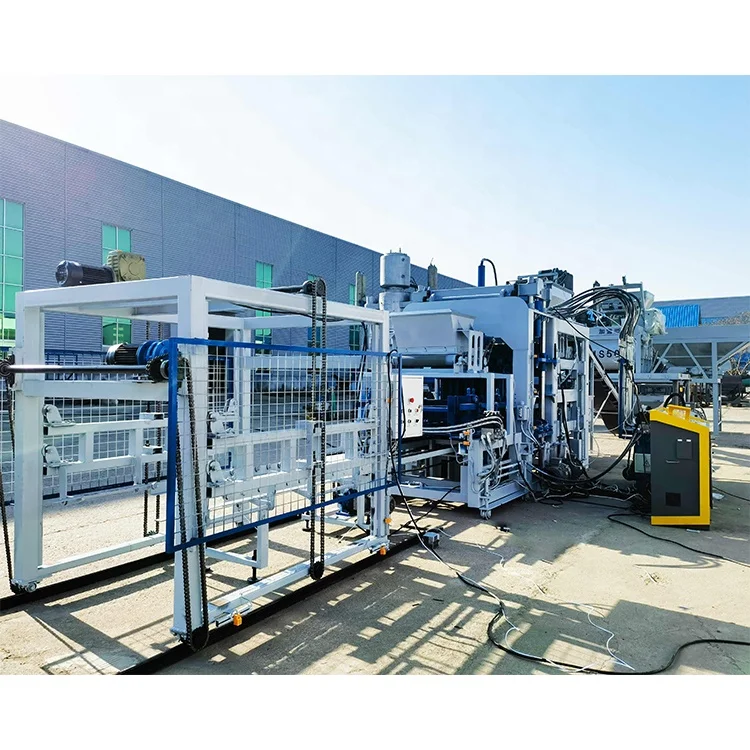
The QT8-15 occupies the mid-to-high output tier among stationary block machines, bridging semi-automatic workshop setups and fully automatic high-capacity lines. This hydraulic block making machine serves plants that have outgrown manual pallet handling but aren’t ready for the footprint and capital commitment of maximum-capacity automatic systems. The 55.5 kW power requirement and 9-ton mass demand dedicated electrical supply and reinforced foundations that smaller machines don’t require.
Automation Level and Upgrade Path
Starting with automatic operation means the PLC control handles cycle sequencing, vibration timing, and hydraulic pressure application without operator intervention during each press stroke. The human-machine interface displays cycle status and fault signals in your specified language, reducing commissioning delays caused by untranslated error codes. Plants can integrate the QT8-15 into existing semi-automatic lines where pallet feeding and stacking remain manual, or build out complete automatic material handling from raw material feeding through finished block cubing [NEED_CITE: automation level selection criteria for block plants].
Pressure, Vibration, and Pallet Specifications Explained
The 21 MPa rated pressure combined with 60 kN vibration force at up to 4500 r/min determines achievable block density and strength for your specific mix design. Higher pressure alone creates surface compaction without internal consolidation; vibration alone produces loose blocks without structural integrity. The semi-closed screen reticular rotational feeding unit distributes material evenly across the mould box before pressing, preventing density variations that cause weak spots in finished blocks. The 950×900 mm pallet size must align with your curing rack dimensions and forklift capacity—pallets too large for existing infrastructure force facility modifications or manual repositioning during the curing phase.
Configuration Errors That Stop Production
Ordering a machine configured for aggregate gradations you cannot source locally forces either costly material import or machine reconfiguration after installation. Pallet specifications chosen without verifying your curing area layout and forklift specifications create handling bottlenecks that negate the press’s cycle speed. Voltage and frequency confirmed after production rather than before causes weeks of delay when transformers or motor replacements arrive at the job site [NEED_CITE: electrical specification verification before shipment].
Why Sourcing the Complete Line Matters
Block machinery as a single focus means the QT8-15 arrives with mould, pallet, and handling equipment specified as one system rather than assembled from separate suppliers who shift blame when interfaces fail. Configuration against your actual mix design and local aggregate prevents the common failure where machines run catalogue test mixes that your region cannot reproduce. Mould design covers the specific formats your market demands, including custom drawings when standard hollow and solid blocks don’t match regional construction preferences. The automation level remains selectable, allowing future upgrades from your current semi-automatic operation without replacing the entire press.
Documentation & Verification
- Line layout showing QT8-15 placement with pallet flow and curing rack spacing
- Capacity calculation stating which block format the cycle time assumes
- Mould drawing and format list confirming quoted moulds match your product range
- Voltage, frequency, and PLC language confirmation signed before production begins
- Factory test record on your specified block format before dispatch
- Packing photographs documenting machine condition at container loading
Installation, Commissioning & Support
- 600 m² factory area requirement with reinforced foundation for 9-ton machine mass
- 55.5 kW total power demand requiring dedicated circuit and voltage verification at site
- Machine arrives partially dismantled for container transport, requiring reassembly and alignment
- PLC parameter setup for your specific block format during commissioning week
- Operator training covering mould change procedures and fault signal interpretation
- Wear parts list including hydraulic seals and mould springs shipped with initial order
What to Prepare Before Requesting Quotation
Share your target block formats with dimensions, daily output requirements, and local raw material sources including aggregate type and cement availability. Provide your facility’s existing voltage and frequency, PLC display language preference, and current pallet handling equipment specifications. Specify whether you need the QT8-15 as a standalone press or as part of a complete line with material feeding, mixing, and automatic stacking integration.
Frequently Asked Questions
Q: What block format is the QT8-15 cycle time of 15–25 s based on, and how does output change across formats?
A: The cycle range covers different formats, but your specific hollow block, solid block, or paver dimensions determine actual press time. Taller hollow blocks require longer vibration penetration than thin pavers. Request capacity calculations stating your exact target format rather than using the range midpoint for output planning.
Q: Where does the QT8-15 sit in the full machine range compared to smaller and larger models?
A: The QT8-15 serves plants transitioning from semi-automatic to fully automatic operation, sitting above workshop-scale machines and below maximum-capacity automatic lines. The 55.5 kW power and 600 m² space requirement distinguish it from smaller options while remaining below high-capacity system demands.
Q: How is the machine configured to match my local raw material rather than a catalogue default?
A: Configuration starts with your aggregate gradation, cement type, and available water quality rather than test mixes sourced for factory demonstration. Vibration frequency and hydraulic pressure adjust to achieve target block density with your specific material combination, preventing strength inconsistencies that arise from catalogue settings applied to unfamiliar aggregates.
Q: What plant footprint and supporting equipment are needed alongside the QT8-15?
A: Beyond the 8300×1860 mm machine footprint and 600 m² total factory area, plan for raw material storage, mixer placement, pallet return conveyors, and curing rack space sized for daily output volume. Pallet handling and stacking systems integrate based on your automation level selection and available forklift capacity.

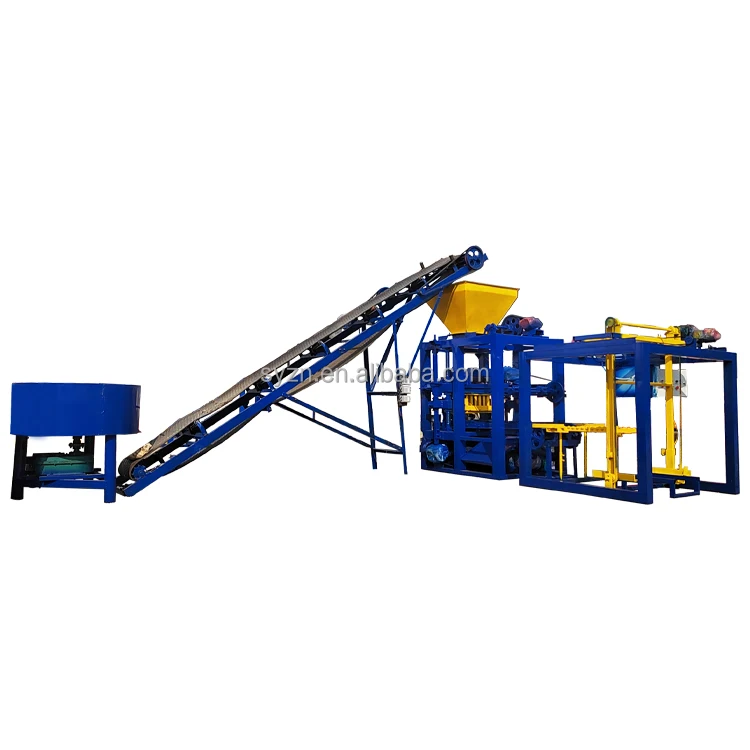 Stationary block machine