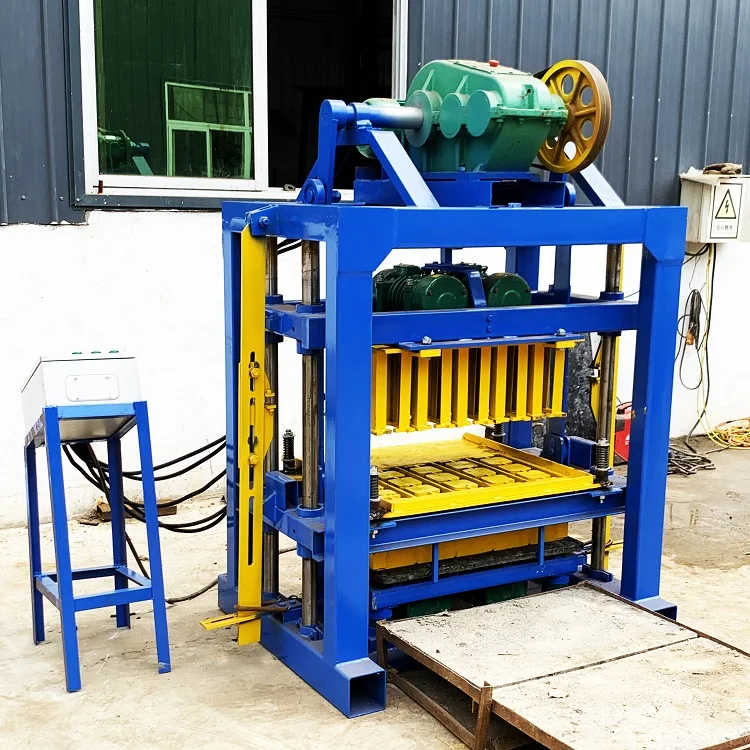
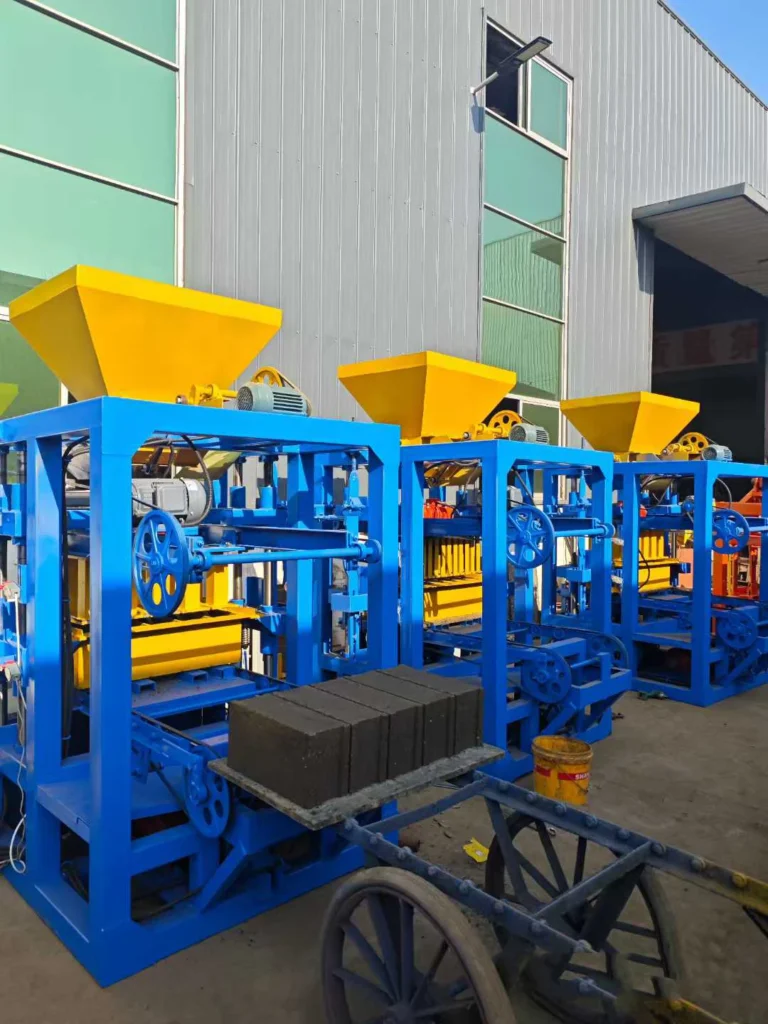
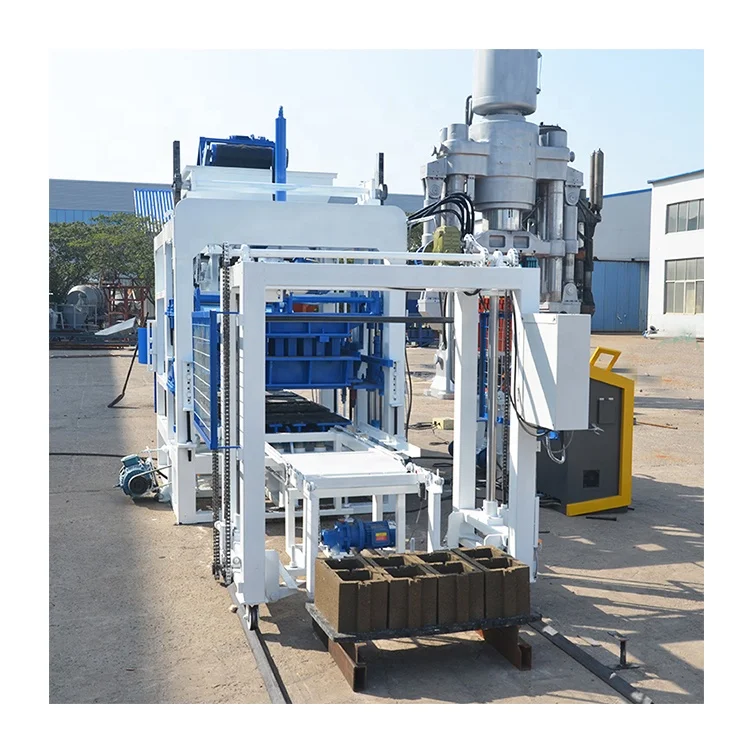
Matched system configuration — The QT8-15 automatic block making machine is specified with mould, pallet and handling as one integrated line, not assembled from separate suppliers, ensuring vibration force and hydraulic pressure align with your actual mix design.
Technical Specifications
| Parameter |
Value |
| Model |
QT8-15 |
| Product Type |
Fully Automatic Hydraulic Block Making Machine |
| Overall Dimensions (L×W×H) |
8300×1860×3000 mm |
| Rated Pressure |
21 MPa |
| Main Vibration Form |
Platform vibration |
| Vibration Frequency |
2800~4500 r/min |
| Vibration Force |
45 kN |
| Pallet Size |
950×900 mm |
| Molding Cycle |
15–25 s (basis not stated in source) |
| Overall Power |
55.5 kW |
| Total Mass |
9 T |
| Demolding Method |
Hydraulic |
| Factory Area |
500 m² |
| Control System |
Computer controlled, fully automatic |
| Automation Level |
Fully automatic |
| Applied Products |
Concrete blocks, hollow/solid blocks, pavers, interlocking blocks, curbstone, colored pavers |
| Raw Material |
Crushed stone, sand, cement, dust, fly ash, gravel, slag |
| Voltage & Frequency |
Configurable (basis to be confirmed) |
| Warranty |
1-year guarantee for the whole machine |
| Standards |
CE, ISO 9001 |
Application Suitability
| Application |
Material or Output |
| Stationary block production plants |
Hollow blocks from crushed stone, sand, and cement |
| Solid block manufacturing |
Solid blocks utilizing fly ash, gravel, or slag |
| Paving and landscaping projects |
Pavers and interlocking blocks with colored face mix |
| Infrastructure and road works |
Kerbstones and heavy-duty curb units |
Why "Cycles Per Hour" Fails the QT8-15 automatic block making machine manufacturer Search
Cycle time is meaningless without stating the block format, thickness, and material it assumes.
Many quotations list a single cycles-per-hour figure for the QT8-15 automatic block making machine manufacturer, leaving buyers to discover on-site that their specific hollow block or paver format runs at a different speed. When the vibration frequency and hydraulic pressure are not matched to your local aggregate — whether it is lightweight volcanic scoria or dense crushed granite — the press either struggles to reach full compaction or wastes energy over-pressing a soft mix. I once spent weeks recalibrating a mid-sized hydraulic press because the sample blocks were made with standard quartz sand, while the customer’s local quarry supplied a highly abrasive basalt dust that changed the entire rheology of the mix [NEED_CITE: effect of aggregate abrasiveness on concrete block compaction]. Without a format-specific capacity calculation, daily output projections remain guesses.

Where the QT8-15 Sits in the Stationary Range
The QT8-15 occupies the mid-to-high output tier of the fully automatic stationary block machine lineup. Buyers moving from a semi-automatic egg-laying machine or a smaller QT6-15 press choose this model when daily pallet volume justifies the investment in automatic stacking but does not yet require the footprint of a QT10-15 line. The 950×900 mm pallet size defines the upper limit of block area per cycle, which in turn determines how many standard hollow blocks or pavers fit on each board.
Matching the Press to the Complete Line
A stationary press never operates in isolation. The QT8-15 must synchronize with the raw material batcher, the pallet feeder, and the stacker so that the press is never left waiting for an empty pallet or a finished batch of concrete. When the cycle time for a thick kerbstone approaches the upper end of the 15–25 s range, the entire upstream and downstream sequence must accommodate that longer dwell. Failing to specify the line as one system leads to bottlenecks that no amount of press speed adjustment can resolve [NEED_CITE: stationary block plant line synchronization principles].
Pressure, Vibration, and Pallet Alignment
The 21 MPa rated hydraulic pressure and 45 kN vibration force work together to compact the concrete mix into the mould cavity. The multiaxis synchronizer vibration mode directs force vertically downward across the entire 950×900 mm pallet area, preventing uneven density that would cause one side of the block to crumble during demolding. The long-period over-length guide bearing keeps the upper mould and mould box aligned throughout every stroke, which is critical when running thin-walled hollow blocks where a millimeter of drift causes wall collapse. Platform vibration, rather than table-only vibration, ensures the energy reaches the bottom of deep mould cavities for kerbstones and tall interlocking blocks. The 55.5 kW overall power rating must be matched to the available supply; running this QT8-15 automatic block making machine on an undersized transformer causes voltage sag that disrupts the computer-controlled sequence mid-cycle.
The Cost of Skipping Format-Specific Configuration
Ordering a stationary block press on catalogue specs alone invites problems that surface only after the machine is bolted to the floor. If the pallet size is chosen without checking the buyer’s existing curing racks and forklift capacity, the plant ends up handling boards that do not fit the rack slots, forcing a costly rack replacement. If the mould change system is not specified for quick-release clamping, switching from hollow blocks to pavers consumes most of a shift, eliminating the format flexibility the buyer paid for. A control panel shipped with the wrong display language delays commissioning until a translator can be found, and voltage mismatch can burn out the PLC board before the first block is produced [NEED_CITE: common causes of block machine commissioning delays].
Why Buyers Source the QT8-15 Here
The machine, mould, pallet, and handling equipment are specified as one matched system rather than assembled from separate suppliers, eliminating interface mismatches. Every configuration is set against the buyer’s actual mix design and local aggregate, not a catalogue default, so the vibration force and hydraulic pressure are verified before production. Mould design covers the specific formats the buyer’s market sells, including custom drawings for non-standard interlocking profiles. The automation level is selectable, allowing a buyer to start with the QT8-15 in a semi-automatic pallet-handling mode and add automatic stacking and cubing later without replacing the press. Installation support includes operator training on the computer-controlled system, ensuring the crew can run the full molding cycle and perform routine mould maintenance from day one.
Documentation & Verification
- Line layout and capacity calculation stating the block format assumed for the QT8-15 cycle time
- Machine specification sheet confirming 21 MPa hydraulic pressure, 45 kN vibration force, and 55.5 kW power
- Voltage, frequency, and PLC display language confirmation document signed before production begins
- Mould drawing and format list covering each block type the buyer’s market requires
- Factory test record on the buyer’s specified block format before dispatch
Installation, Commissioning & Support
- Foundation plan detailing load points for the 9 T total mass and 8300 mm frame length
- Dedicated power circuit specification for the 55.5 kW overall power draw and confirmed voltage
- Dismantling and container loading plan for shipment, with reassembly sequence on arrival
- On-site parameter tuning matching 21 MPa pressure and 2800–4500 r/min vibration to local aggregate
- Operator training on the computer-controlled panel covering mould change, fault diagnosis, and daily lubrication
- Wear parts list identifying hydraulic seals and vibration motor bearings with replacement intervals
What to Prepare Before Requesting a Quotation
To configure the QT8-15 for your plant, provide the target block formats with dimensions, the daily output you need per format, and a sample or analysis of your local raw materials including aggregate type and grading. Share your site voltage, frequency, and preferred PLC display language, along with the curing area dimensions and forklift capacity so the pallet size and stacking system can be matched.
Frequently Asked Questions
Q: What is the realistic daily output of the QT8-15 for each block format?
A: The molding cycle ranges from 15 to 25 seconds, but the actual cycle for your specific hollow block, solid block, or paver depends on block height, mix design, and compaction requirements. A format-specific capacity calculation is prepared during the proposal stage, stating the exact block dimensions and material assumed, so daily output figures reflect your real production conditions rather than a generic catalogue number.
Q: How does the QT8-15 compare to smaller and larger tiers in the range?
A: The QT8-15 sits between the smaller QT6-15 and the larger QT10-15 in the stationary range. It offers a wider 950×900 mm pallet and higher vibration force than the QT6-15 for buyers scaling up output, while requiring a smaller factory area and lower power supply than the QT10-15, making it suitable for plants that need increased capacity without a major infrastructure expansion.
Q: What automation level does the QT8-15 include, and can it be upgraded?
A: The QT8-15 ships as a computer-controlled fully automatic machine. Buyers can start with semi-automatic pallet handling and later add automatic pallet feeding, stacking, and cubing modules without replacing the press, allowing the automation investment to grow with production volume and labor availability.
Q: Which pallet size is matched to the QT8-15, and how does it affect planning?
A: The standard pallet size is 950×900 mm. This dimension determines how many blocks fit per cycle and must align with the buyer’s curing rack slots and forklift tine width. Confirming the curing area layout before ordering prevents costly mismatches between pallet boards and the existing handling infrastructure at the plant.
Q: What voltage and control language options are available?
A: Voltage and frequency are configurable to match the target market’s electrical grid. The PLC display language is confirmed before production so operators can read fault codes and cycle parameters in their working language, avoiding commissioning delays caused by untranslated control interfaces.

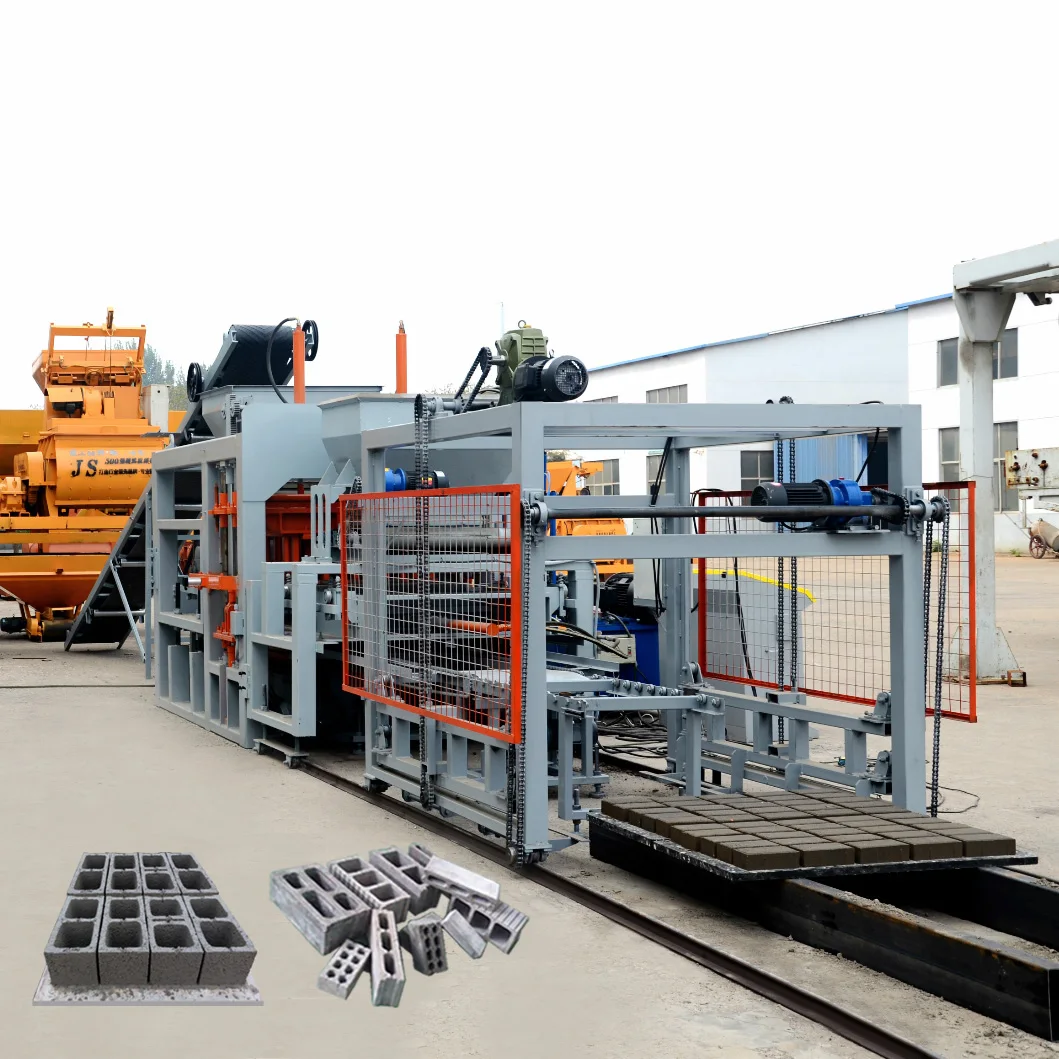
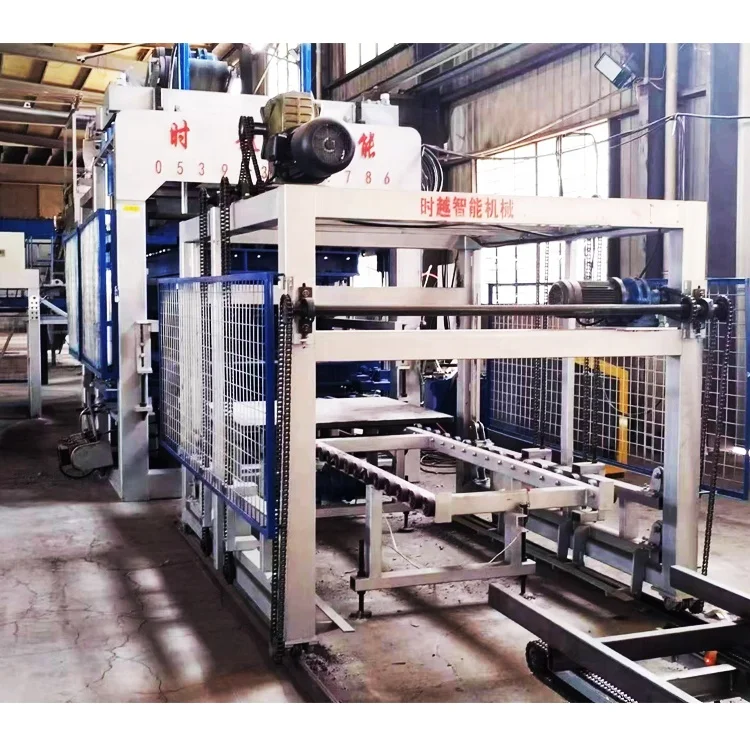 Stationary block machine