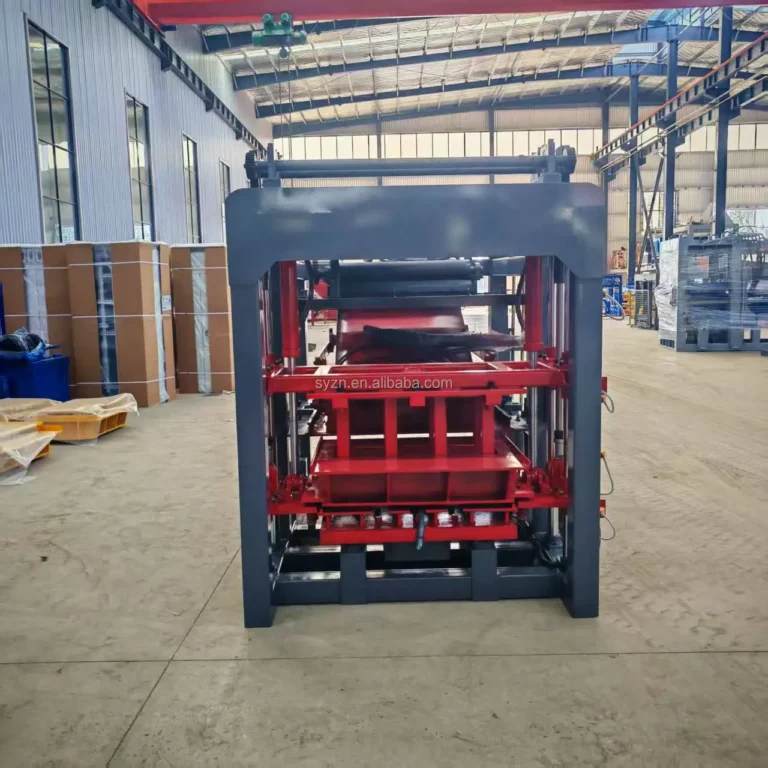
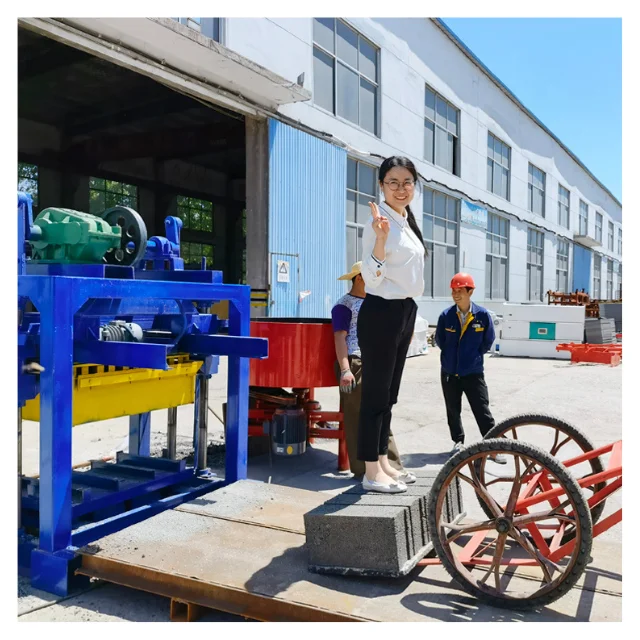
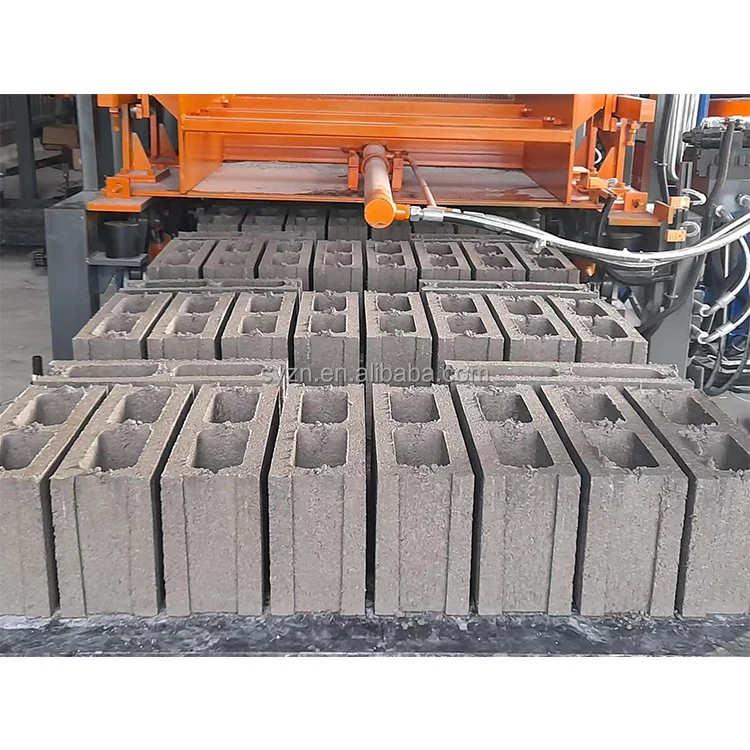
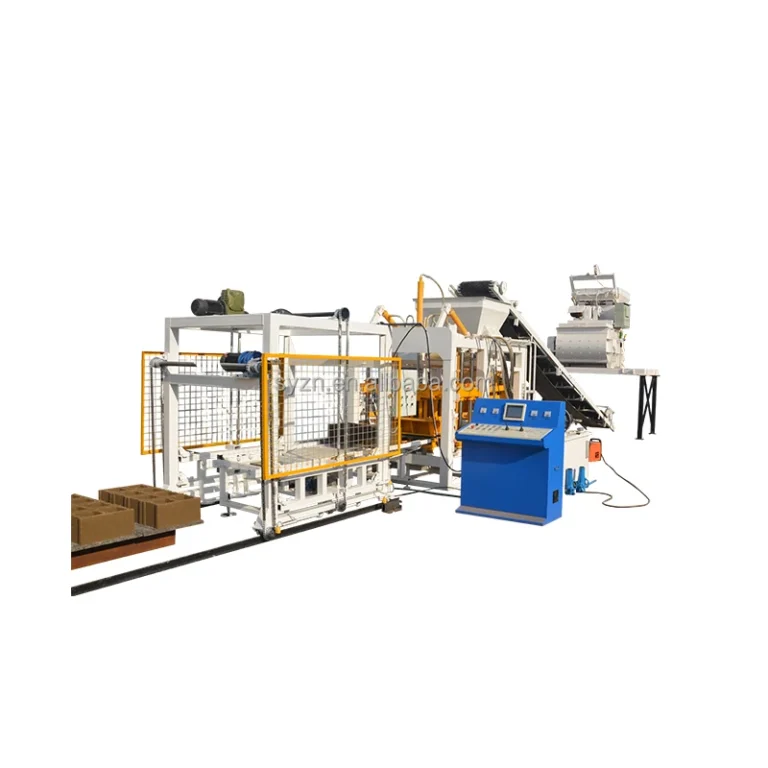
Matched System Specification — The QT8-15 block making machinery is positioned as a complete matched system where mould, pallet, and handling equipment are engineered together, preventing the output gaps that occur when buyers assemble components from separate suppliers.
Technical Specifications
| Parameter |
Value |
| Model |
QT8-15 |
| Product Type |
Hydraulic Block Making Machine |
| Overall Dimensions (L×W×H) |
8300×1860×3000mm |
| Rated Pressure |
21 MPa |
| Vibration Form |
Platform Vibration |
| Vibration Frequency |
2800-4500 r/min |
| Vibration Force |
45 kN |
| Pallet Size |
950×900mm |
| Molding Cycle |
15-20s (basis not stated in source — confirm block format / material / thickness) |
| Overall Power |
55.5 kW |
| Total Mass |
8T |
| Demolding Method |
Hydraulic |
| Factory Area |
300m² |
| Container Loading |
1x40HQ (for basic equipment) |
| Warranty |
1 year |
Application Suitability
| Application |
Material or Output |
| Hollow & Solid Block Production |
Crushed stone, sand, cement, fly ash, gravel, slag |
| Paving & Interlocking Brick |
Colored concrete mixes, standard aggregates |
| Curbstone Manufacturing |
High-strength concrete mixes with coarse aggregates |
The Hidden Reality Behind "15-20 Second" Cycle Times
Cycle time claims often ignore the specific block format and material density required, leading to massive shortfalls in actual daily production.
When you see an automatic block making machine for sale listed with a fast cycle time, you have to ask which block format that number assumes. A 15-second cycle for a thin paver is very different from the same cycle for a dense, load-bearing hollow block. I have seen buyers invest in a block machine manufacturer’s equipment only to find that their target product requires a longer vibration duration to achieve the necessary strength, effectively doubling the time per pallet [NEED_CITE: importance of matching vibration frequency to aggregate density].

Placing the QT8-15 Within Your Production Tier
The QT8-15 sits in the mid-to-high output tier, bridging the gap between small workshop semi-automatic setups and the massive high-capacity lines. For a buyer surveying options, this model provides a balance where the 55.5 kW power and 21 MPa pressure allow for consistent density in standard commercial blocks without the massive footprint of a tier-one plant.
Matching the Press to the Peripheral Line
A press does not operate in a vacuum; the cycle of the QT8-15 must synchronize with the raw material feeding, pallet circulation, and stacking systems. We focus on the block machine manufacturer’s role in ensuring that the 950×900mm pallet size aligns with your existing curing racks and forklift capacities. If the press is faster than the mixer can supply or the stacker can remove, the line bottlenecks [NEED_CITE: synchronization of block line stations for maximum efficiency].
Engineering Density: Pressure and Vibration Synergy
The core of this automatic block making machine for sale is the interaction between the 21 MPa hydraulic pressure and the 45 kN platform vibration. In my experience with African volcanic ash aggregates, standard settings often fail to compact the material correctly, leading to weak bricks. The 2800-4500 r/min frequency range allows us to adjust the resonance to your specific raw material, ensuring the cement matrix fully encapsulates the aggregate particles.
The Cost of Ignoring Site-Specific Configuration
Choosing a machine based solely on the "15-20s" cycle claim often results in a factory full of equipment that produces low-strength blocks that crack during curing. Buyers who skip the raw material testing phase often face the hidden cost of replacing the entire pallet inventory because the standard size didn’t fit their local kiln or drying rack system. These misalignments turn a flexible production asset into a constant source of downtime [NEED_CITE: common causes of block cracking during curing and handling].
Why Source Your Next Line Here
- Single-Focus Engineering: We only make block machinery, meaning the QT8-15’s hydraulic and vibration systems are calibrated specifically for masonry products, not adapted from generic presses.
- Format-Specific Mould Design: We provide mould drawings for the exact formats your market sells, including custom designs for interlocking or specialized paver profiles.
- Local Aggregate Matching: We configure the vibration force and pressure based on your local sand and stone samples, ensuring the 8T mass of the machine is utilized for maximum compaction.
- Upgradeable Architecture: You can start with a semi-automatic QT8-15 configuration and add automatic stacking or cubing later as your production volume grows.
Documentation & Verification
- Line layout showing capacity calculations for your specific block format.
- Machine specification sheet with confirmed voltage and frequency for your site.
- Factory test records demonstrating performance with your raw material type.
- Mould drawings and pallet specifications matched to your curing infrastructure.
- Customs documentation support for smooth international shipping.
Installation, Commissioning & Support
- Site preparation guidance for the 300m² factory area and 8T machine load.
- Electrical setup for the 55.5 kW total power requirement and specific voltage needs.
- On-site commissioning to tune the 2800-4500 r/min vibration to your mix.
- Operator training on the hydraulic demolding system and mould changeover.
- Wear parts lists for the platform vibration components and hydraulic seals.
Starting the Specification Process
To ensure the QT8-15 is the right tier for your project, please provide your target daily output, the specific dimensions of the blocks you intend to produce, and samples or descriptions of your local raw materials. We also need to know your available factory dimensions and the voltage standards at your facility to finalize the automatic block making machine for sale configuration.
Frequently Asked Questions
Q: What is the QT8-15’s realistic daily output for hollow blocks versus paving blocks?
A: The 15-20s molding cycle is a baseline that varies by format; a standard hollow block may hit that mark, but a thick interlocking paver requires a longer vibration duration for strength. We provide a capacity calculation based on your specific block dimensions and local aggregate type, ensuring you know the true daily output before ordering.
Q: Where does the QT8-15 sit on the full range — automatic, semi-automatic, or mobile?
A: The QT8-15 is a stationary hydraulic press in the mid-to-high tier. It is more capable than mobile egg-laying machines and entry-level semi-automatic models, but it requires a smaller footprint and investment than the largest fully automatic high-capacity lines in our range.
Q: What plant footprint and factory area does the QT8-15 require?
A: This model typically requires around 300m² for the machine, mixer, and basic pallet circulation. It sits between the small workshop setups and the large-scale automatic plants, making it suitable for buyers who have a dedicated production building but are not yet at the industrial-park scale.
Q: Can I start with a semi-automatic QT8-15 and upgrade to full automatic later?
A: Yes, the QT8-15 is designed with an upgrade path. You can begin with manual pallet handling or semi-automatic stacking and later integrate automatic cubing and rack handling systems as your market demand and labor costs justify the investment.

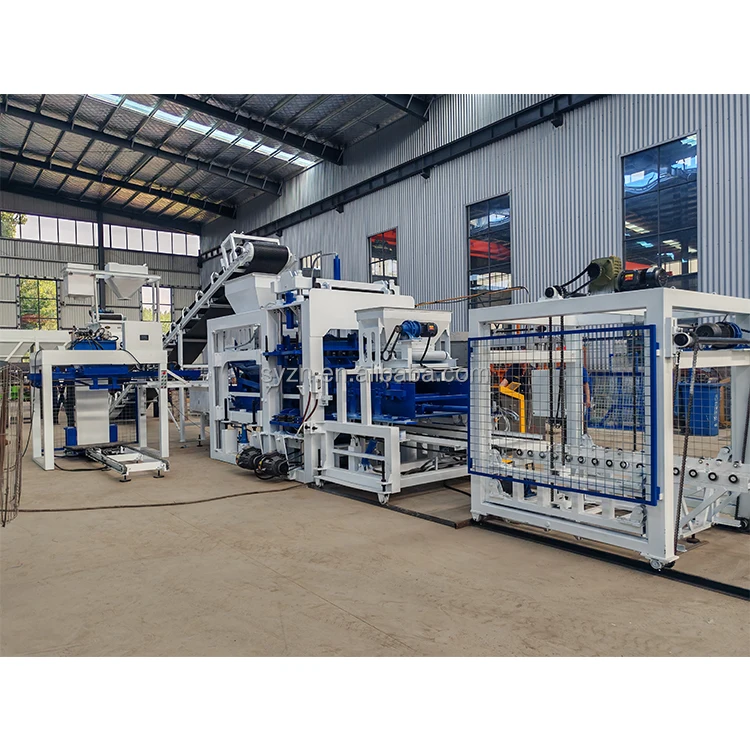
 High quality block machine