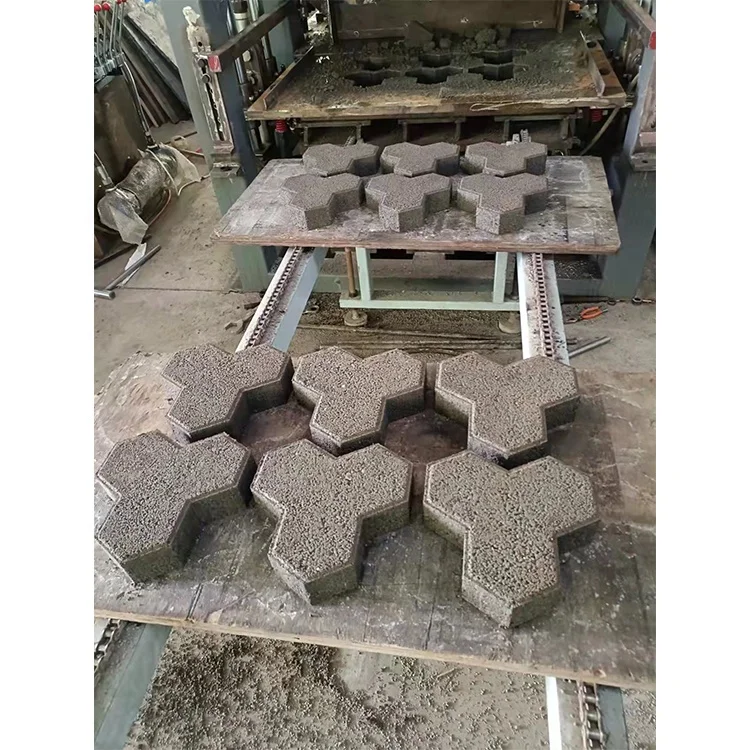
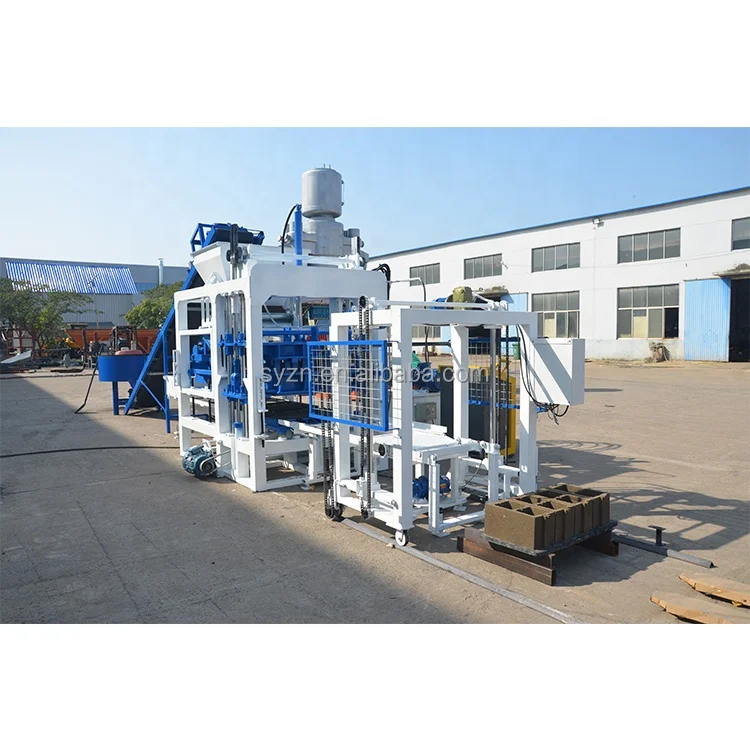
Matched System Design — QT8-15 configured with moulds, pallets, and handling as one coordinated line, not assembled from separate suppliers hoping the pieces fit on arrival.
Technical Specifications
| Parameter |
Value |
| Model |
QT8-15 |
| Product Type |
Hydraulic Concrete Block Making Machine |
| Overall Dimensions (L×W×H) |
8300 × 1860 × 3000 mm |
| Total Mass |
8 T |
| Rated Hydraulic Pressure |
21 MPa |
| Vibration Force |
45 kN |
| Vibration Frequency Range |
2800–4500 r/min |
| Main Vibration Form |
Platform Vibration |
| Pallet Size |
950 × 900 mm |
| Molding Cycle |
15–20 s (basis to be confirmed per block format) |
| Overall Power |
55.5 kW |
| Demolding Method |
Hydraulic |
| Recommended Factory Area |
300 m² |
| Raw Materials |
Crushed stone, sand, cement, fly ash, gravel, slag |
| Applied Products |
Hollow blocks, solid blocks, pavers, interlocking bricks, curbstones, colored pavers |
| Warranty |
1 year |
Application Suitability
| Application |
Material or Output |
| Hollow block production for residential and commercial walls |
Crushed stone, sand, cement, fly ash blends |
| Solid block manufacturing for load-bearing structures |
Gravel, sand, cement mixes |
| Paving block and colored paver runs for walkways and driveways |
Fine aggregate with pigment additives |
| Interlocking brick and kerbstone formatting for landscaping |
Sand, cement, slag combinations |
| On-site production for housing development contractors |
Locally sourced aggregate with cement binder |
Why "Cycle Time" Means Nothing Without the Block Format Attached
A quoted molding cycle only matters when you know which block it was measured on.
Buyers regularly receive a single headline number — fifteen to twenty seconds — and assume that pace holds across every format they plan to run. In reality, a hollow block and a dense paver demand very different vibration profiles and pressure holds. I once watched a QT8-15 block making machine manufacturer quote a daily output figure that looked strong on paper, but the calculation assumed standard hollow blocks while the buyer’s primary product was a thick interlocking paver requiring a longer press cycle. The actual daily volume fell noticeably short. Without a format-specific capacity sheet, the buyer has no way to verify the claim before the machine arrives. [NEED_CITE: block format impact on cycle time and daily output]

Placing the QT8-15 Within the Full Machine Range
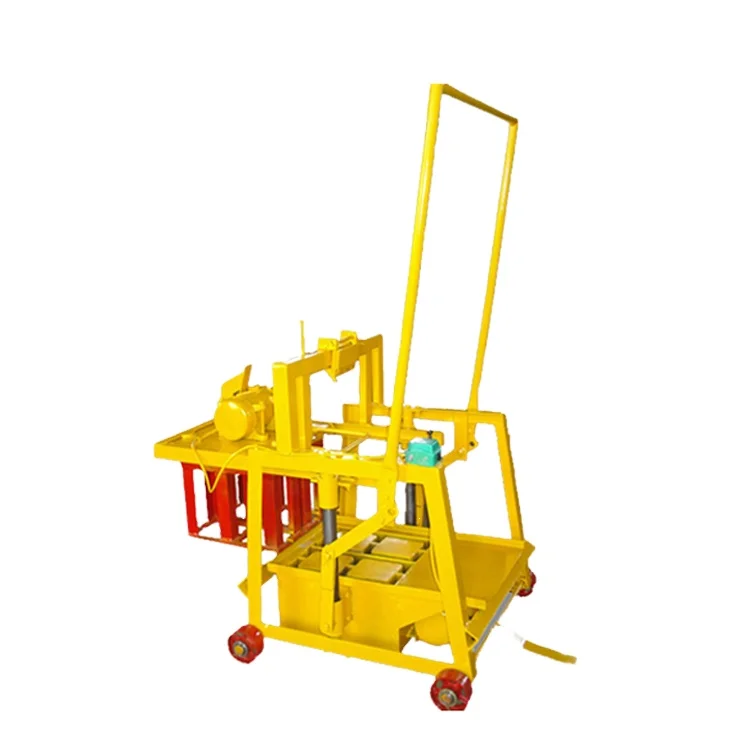
The QT8-15 occupies the mid-to-high output tier, sitting above small workshop models and below the largest automatic lines designed for continuous three-shift operation. For a first-time plant owner, it offers enough capacity to supply a regional block market without the capital outlay and footprint of a high-volume system. For a contractor replacing an older press, it represents a step up in both automation capability and format flexibility.
Understanding Plant Footprint Before You Commit
A 300 m² factory area recommendation covers the press itself plus the immediate pallet return and stacking zone, but the full line extends further when you include raw material feeding, mixing, curing racks, and forklift travel lanes. Buyers planning a complete block production setup need to map the entire flow from aggregate bins to finished product storage before the QT8-15 block making machine manufacturer confirms the layout. [NEED_CITE: typical block plant layout and space allocation]
Reading the Core Parameters Against Your Actual Production
The 21 MPa hydraulic pressure and 45 kN vibration force work together to compact the mix into a dense, consistent block — pressure alone does not guarantee strength if the vibration frequency is mismatched to the aggregate particle size. The adjustable 2800–4500 r/min range lets the operator tune vibration to the specific material, whether that is fine sand for pavers or coarse crushed stone for hollow blocks. Platform vibration distributes force evenly across the 950 × 900 mm pallet, which is important because uneven compaction shows up immediately as weak corners or density variation. The 55.5 kW total power draw reflects the combined demand of the hydraulic pump, vibration motor, and conveyor drives, so buyers should verify their site electrical supply can handle sustained load at the local voltage and frequency.
What Happens When Pallet Size and Curing Area Do Not Align
The 950 × 900 mm pallet dimension determines not only what fits inside the press but also what fits on the curing racks and what the existing forklift can handle. Buyers who select a pallet size without checking their curing area dimensions end up rearranging racks or, worse, discovering that loaded pallets cannot be transported by the forklift they already own. This kind of mismatch does not stop the machine from running, but it creates a bottleneck downstream that cancels out the cycle speed the buyer paid for. [NEED_CITE: pallet handling mismatch in block production]
Why the QT8-15 Is Specified as a Complete System
Every QT8-15 configuration leaves the factory with moulds, pallets, and handling equipment selected together rather than sourced independently. The capacity calculation provided with each quotation states the block format assumed, so there is no ambiguity about expected daily output. Mould drawings and format lists show every block type the machine can produce, along with the cycle time for each. Voltage, frequency, and PLC display language are confirmed before production begins, eliminating the commissioning delays that occur when electrical standards are assumed rather than verified. The configuration is set against the buyer’s actual mix design and local aggregate, not a catalogue default that may not match materials available at the job site.
Documentation & Verification
- Line layout drawing showing QT8-15 placement with format-specific capacity calculations
- Mould drawing and complete format list with cycle time per block type
- Pallet specification matched to buyer’s curing area and forklift capacity
- Hydraulic and electrical schematic with confirmed voltage and frequency
- Factory test record run on buyer’s target block format before dispatch
Installation, Commissioning & Support
- 300 m² minimum factory area with level concrete foundation for 8 T machine mass
- 55.5 kW total power requires dedicated circuit matching confirmed voltage and frequency
- Machine ships dismantled for container loading with reassembly guide included
- On-site commissioning includes vibration frequency tuning to local aggregate sample
- Operator training covers mould change procedure and hydraulic pressure adjustment
- Wear parts and mould list provided for first replacement planning
What We Need From You to Prepare a Configuration
To build an accurate QT8-15 proposal, we need your target block formats with dimensions, the daily output you are aiming for per format, and samples or specifications of the aggregate and sand available locally. Please also confirm your site voltage and frequency, the PLC display language your operators require, and the dimensions of your curing area and existing material handling equipment. If you are replacing a press within an existing line, let us know what upstream and downstream equipment stays in place so the QT8-15 block making machine manufacturer can match the interface points.
Frequently Asked Questions
Q: What output tier does the QT8-15 represent compared to smaller or larger models?
A: The QT8-15 sits in the mid-to-high tier of the range, offering more capacity than small workshop machines while requiring a smaller footprint and lower investment than high-volume automatic lines. It suits buyers who need reliable daily output for a regional market without committing to a continuous three-shift production setup. The exact position on the range depends on your target block format and automation level.
Q: How is daily capacity calculated, and which block format is assumed?
A: Every capacity calculation we provide states the specific block format, dimensions, and mix design assumed in the figure. The 15–20 second molding cycle varies by format — a dense paver requires a longer cycle than a standard hollow block. We provide output per format so you can compare quoted numbers against your actual product mix rather than relying on a single headline figure.
Q: What plant footprint does the QT8-15 require including supporting equipment?
A: The press itself operates within a recommended 300 m² factory area, but the full production line — including raw material feeding, mixing, pallet return, curing racks, and stacking — extends beyond that. We provide a complete line layout drawing that maps every station so you can verify the total space requirement against your available site before confirming the order.
Q: Can I start semi-automatic and add automatic stacking later?
A: Yes, the QT8-15 configuration is selectable across automation levels. A buyer can begin with manual pallet handling and semi-automatic operation, then add automatic stacking and cubing modules as production volume grows. The upgrade path is planned into the initial line layout so that later additions do not require repositioning the press or modifying the foundation.
Q: What electrical and control details are confirmed before shipment?
A: Voltage, frequency, and PLC display language are confirmed in writing before production begins. This step prevents the common problem where a machine arrives on site and cannot be commissioned because the electrical supply does not match or the operators cannot read the control interface. These details are included in the quotation and production documentation.

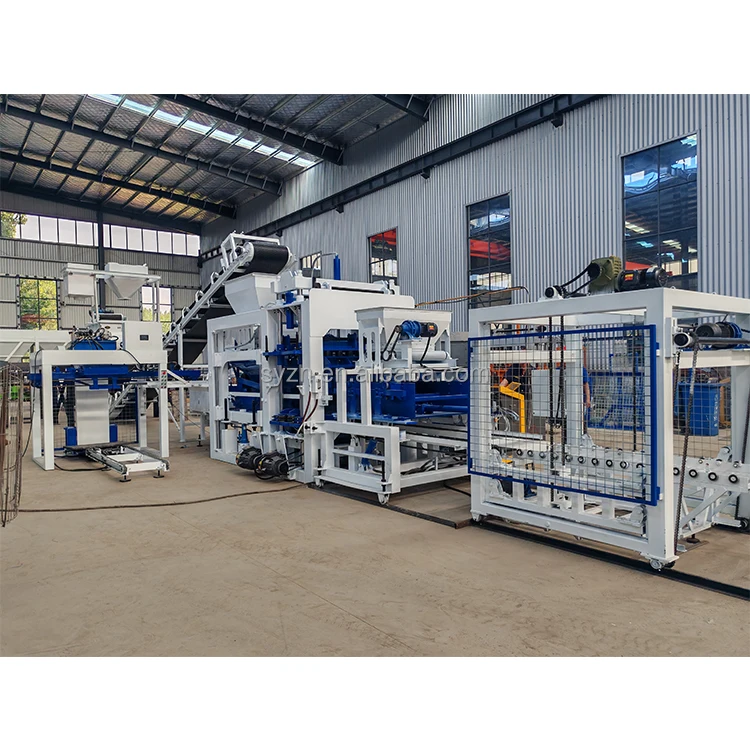
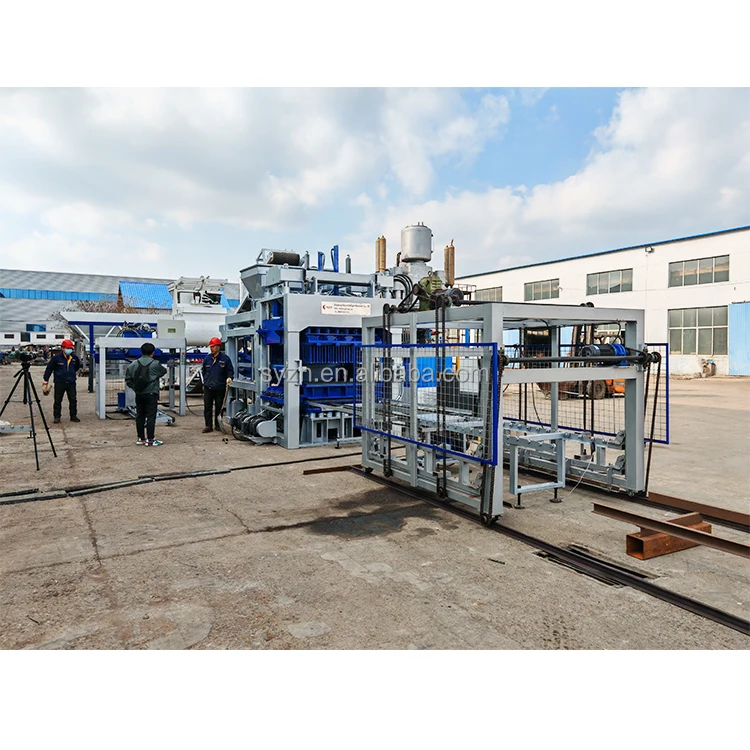 High quality block machine