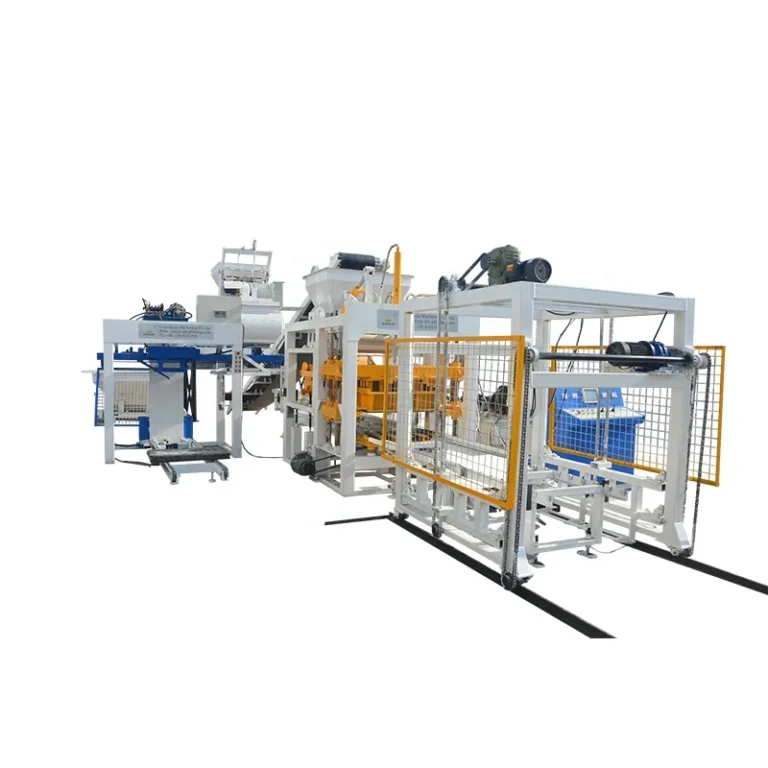
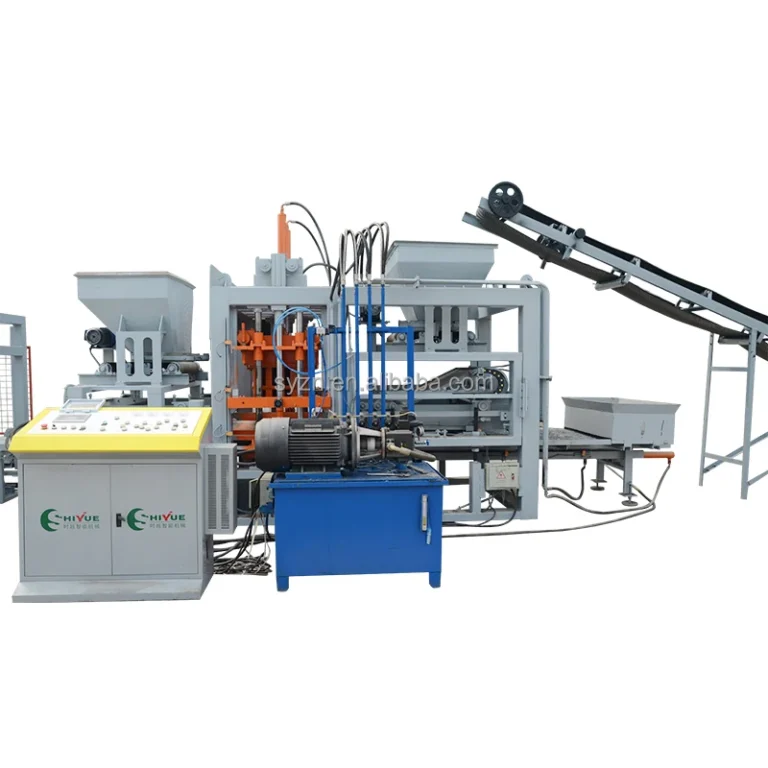
Mid-to-high tier positioning — The QT8-15 sits where semi-automatic workshop presses leave off and high-capacity continuous lines begin, bridging investment levels without forcing a buyer to jump straight to a fully automatic plant.
Technical Specifications
| Parameter |
Value |
| Model |
QT8-15 |
| Product Type |
Automatic Concrete Block Making Machine |
| Overall Dimensions (L×W×H) |
8300 × 1860 × 3000 mm |
| Total Mass |
9 T |
| Rated Pressure |
21 MPa |
| Vibration Force |
60 kN |
| Vibration Form |
Platform Vibration |
| Vibration Frequency |
2800 ~ 4500 r/min |
| Pallet Size |
950 × 900 mm |
| Molding Cycle |
15–25 s (basis to be confirmed — cycle varies by block format and mix) |
| Overall Power |
55.5 kW |
| Demolding Method |
Hydraulic |
| Control System |
PLC with human-machine interface |
| Automation Level |
Fully automatic (automatic raw material feeding and block stacking) |
| General Water Consumption |
12 T/Day |
| Factory Area Required |
600 m² |
| Applied Products |
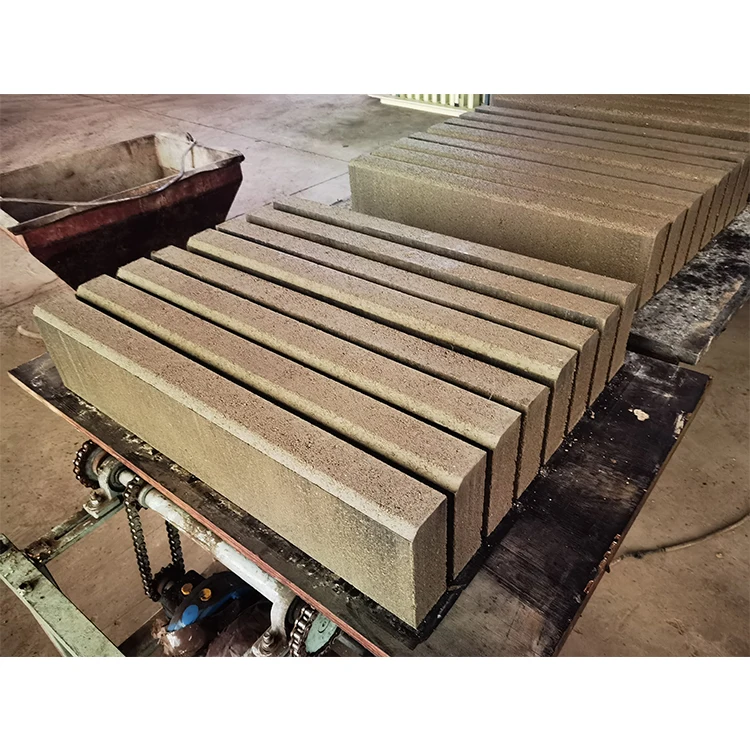
Concrete blocks, hollow blocks, solid blocks, pavers, interlocking blocks, curbstone, colored pavers |
| Raw Materials |
Crushed stone, sand, cement, dust, fly ash, gravel, slag |
| Output Capacity |
Stated as 20% higher than similar products (basis not stated in source — confirm block format, material, and thickness) |
| Voltage & Frequency |
Not stated in source — confirm before ordering |
| PLC Display Language |
Not stated in source — confirm before ordering |
Application Suitability
| Application |
Material or Output |
| Hollow block production for residential and commercial walls |
Crushed stone, sand, cement, fly ash |
| Solid block manufacturing for load-bearing structures |
Gravel, sand, cement blends |
| Paver and interlocking block runs for roads and walkways |
Fine aggregate with pigment additives |
| Curbstone production for municipal infrastructure |
Coarse aggregate with high cement content |
| On-site block production for housing developments |
Locally sourced aggregate and cement |
What "15–25 Seconds per Cycle" Actually Means for Your Daily Output
A molding cycle range is only meaningful when tied to the exact block format and mix design you plan to run.
When buyers compare stationary block machines, the cycle time often becomes the single number that drives the purchase decision. Yet a QT8-15 concrete block making machine manufacturer will quote that 15–25 second window without specifying whether it was measured on a standard 400×200×200 mm hollow block in clean river sand, or on a thin interlocking paver in a fly-ash-heavy mix. I have watched lines stall because the local aggregate — volcanic ash in one case, crushed coral in another — demanded longer vibration and higher water content, pushing every cycle toward the upper end of the range and cutting realistic daily output in half. Before you size your curing area or order pallets, the cycle time needs to be re-confirmed against your actual material [NEED_CITE: aggregate grading standards for concrete masonry units].

Where the QT8-15 Sits Across the Full Machine Range
The QT8-15 concrete block making machine manufacturer positions this model as the bridge between semi-automatic workshop presses and high-volume continuous lines. Buyers who have outgrown manual pallet handling but are not yet ready for a fully automated cubing and rack system find the 950×900 mm pallet format and 55.5 kW power draw manageable within a 600 m² factory footprint. The PLC-controlled operation removes the guesswork from feed timing and vibration duration, which matters when you are running multiple block formats in the same shift.
Automation Level and the Upgrade Path
A plant can start with the QT8-15 in its standard fully automatic configuration — automatic raw material feeding and block stacking included — or scale back to semi-automatic pallet handling if the initial investment budget is tight. The PLC and human-machine interface remain the same across configurations, so upgrading later does not require a control system replacement. This flexibility matters in markets where labour costs are still low enough that manual stacking makes financial sense at the outset, but are expected to rise within a few years [NEED_CITE: labour cost trends in concrete product manufacturing across Southeast Asia].
Reading the Specs That Actually Shape Block Quality
The 21 MPa rated pressure and 60 kN vibration force work together to compact the mix; pressure alone without sufficient vibration leaves voids, while vibration without adequate hydraulic pressure produces blocks that crumble at the edges. The variable vibration frequency from 2800 to 4500 r/min lets operators tune compaction to the block height — lower frequencies for tall hollow blocks that need deeper penetration, higher frequencies for thin pavers where surface finish matters. The platform vibration form transmits force through the mold base rather than the side walls, which reduces wear on the mold liner and keeps dimensional tolerance consistent across a production run. The 950×900 mm pallet size dictates the maximum mold footprint, so any custom mold design must stay within those boundaries. Water consumption of 12 T per day covers both mix water and equipment cleaning, and should be factored into site utility planning alongside the 55.5 kW electrical draw.
The Hidden Cost of Skipping Pallet and Curing Alignment
A pallet specification that ignores the buyer’s existing forklift capacity and curing rack dimensions creates a bottleneck that no amount of press speed can solve. If the 950×900 mm pallets do not match the curing racks already on site, every block must be re-stacked by hand before curing — eliminating the very automation the buyer paid for. Mismatched pallets also warp under repeated vibration cycles if the material and thickness were chosen without regard to the 60 kN vibration force, leading to uneven block bases and rising rejection rates [NEED_CITE: pallet material selection criteria for high-vibration block presses].
Why Source This Machine Through a Block-Line Specialist
Every QT8-15 concrete block making machine leaves the factory with the mold, pallet, and handling equipment specified as a matched system rather than assembled from separate suppliers. The configuration is set against the buyer’s actual mix design and local aggregate, not a catalogue default, so the vibration frequency and hydraulic pressure arrive tuned to the material you will actually feed. Custom mold design is available to buyer drawings, meaning format flexibility is engineered in before the machine ships. Voltage, frequency, and PLC display language are confirmed during the order stage — not discovered at commissioning. Installation includes operator training on the specific block formats the buyer’s market demands, not a generic overview.
Documentation & Verification
- Line layout and capacity calculation stating which block format the output assumes
- Machine specification sheet with confirmed voltage, frequency, and PLC language
- Mold drawing and format list showing included and optional mold investments
- Pallet specification matched to the buyer’s curing area and forklift capacity
- Factory test record run on the buyer’s target block format before dispatch
- Operation and maintenance manual with wear parts and mold replacement intervals
Installation, Commissioning & Support
- 600 m² factory area required; confirm floor leveling and drainage before the 9 T machine arrives
- 55.5 kW total power draw needs a dedicated circuit; confirm local voltage and frequency before production
- Machine ships in dismantled sections for container loading; plan crane access at the site
- First commissioning includes PLC parameter tuning to the buyer’s mix design and block format
- Operator training covers mold change procedure, vibration frequency adjustment, and daily maintenance checks
- Wear parts list and mold replacement schedule provided at handover for long-term planning
What to Share Before Requesting a Quote
Send your target block formats with dimensions, the daily output you need per format, and the local aggregate type you plan to source. Include your workshop dimensions, existing curing rack setup, and the voltage and frequency standard at your site. If you already operate forklifts or handling equipment, share the pallet dimensions those systems accept so the QT8-15 can be configured around your existing infrastructure rather than the other way around.
Frequently Asked Questions
Q: How is the QT8-15 daily output calculated, and which block format is assumed?
A: The quoted output is based on a molding cycle of 15–25 seconds, but the exact block format, mix design, and thickness behind that figure must be confirmed before the number is meaningful. We recalculate capacity against your specific hollow block, paver, or solid block dimensions and local aggregate to give a realistic daily target.
Q: Can the QT8-15 start semi-automatic and upgrade later?
A: Yes. The PLC and human-machine interface remain identical across automation levels. A buyer can begin with manual pallet handling and add automatic stacking or cubing later without replacing the control system, keeping the initial investment aligned with early-stage production volumes.
Q: How does the QT8-15 compare in footprint to smaller and larger tiers?
A: The QT8-15 requires approximately 600 m² of factory area including raw material storage and curing space. It sits above small workshop machines that fit in half that area but below high-capacity lines needing double or more. The 950×900 mm pallet format is the key dimension to check against your existing layout.
Q: What voltage, frequency, and PLC language options are available?
A: Voltage and frequency must be confirmed before production begins to match your local power grid. The PLC display language is also set during the order stage. Both are documented on the machine specification sheet so there are no surprises at commissioning.
Q: Which pallet size does the QT8-15 require, and how does it fit existing systems?
A: The QT8-15 uses a 950×900 mm pallet. Before ordering, we verify that this size matches your curing racks and forklift capacity. If your existing handling equipment uses a different dimension, the pallet specification and mold layout are adjusted during the configuration stage to avoid manual re-stacking after pressing.

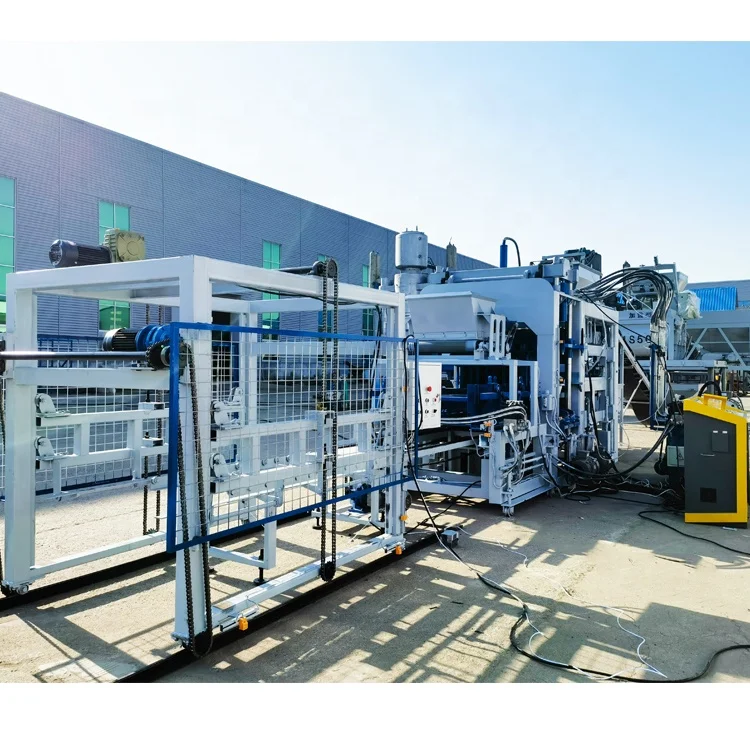
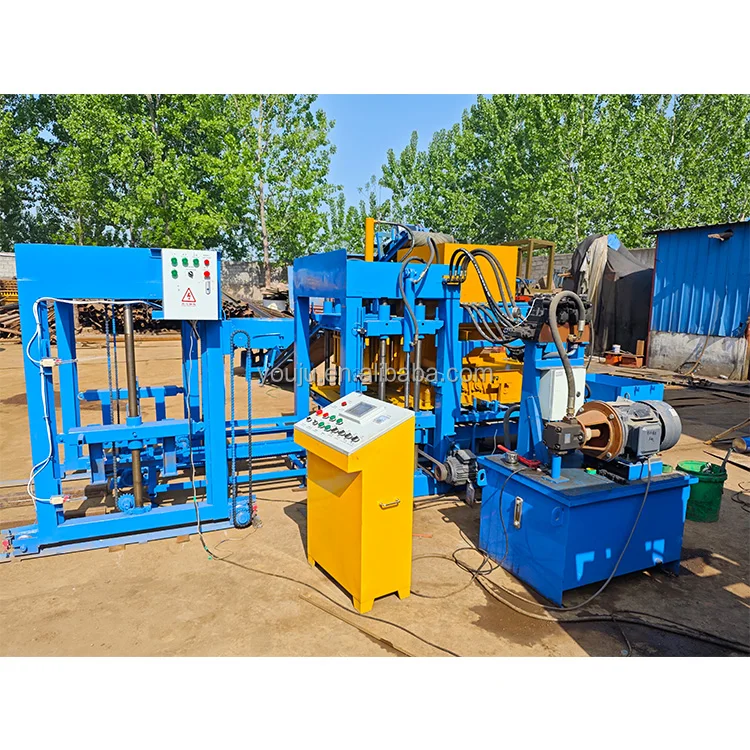 Stationary block machine