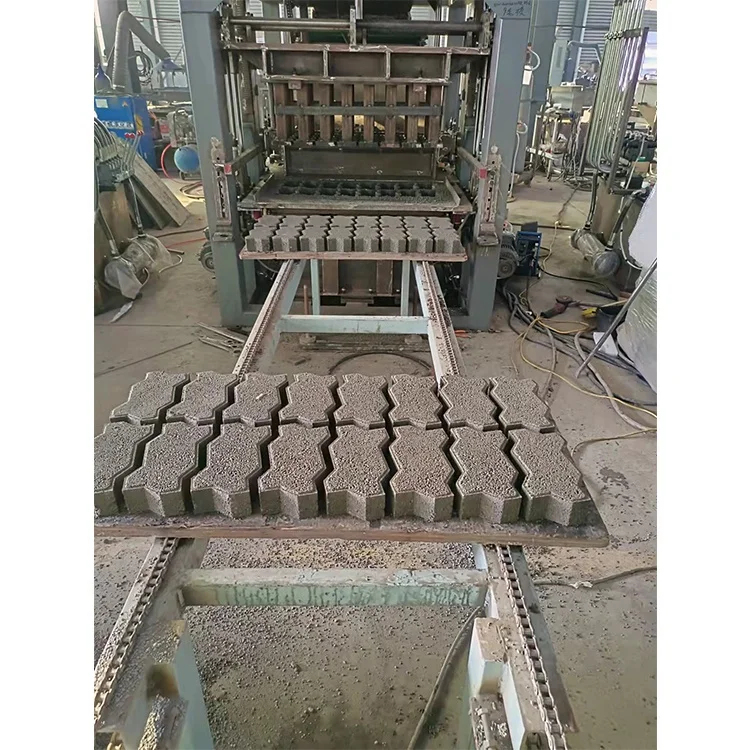
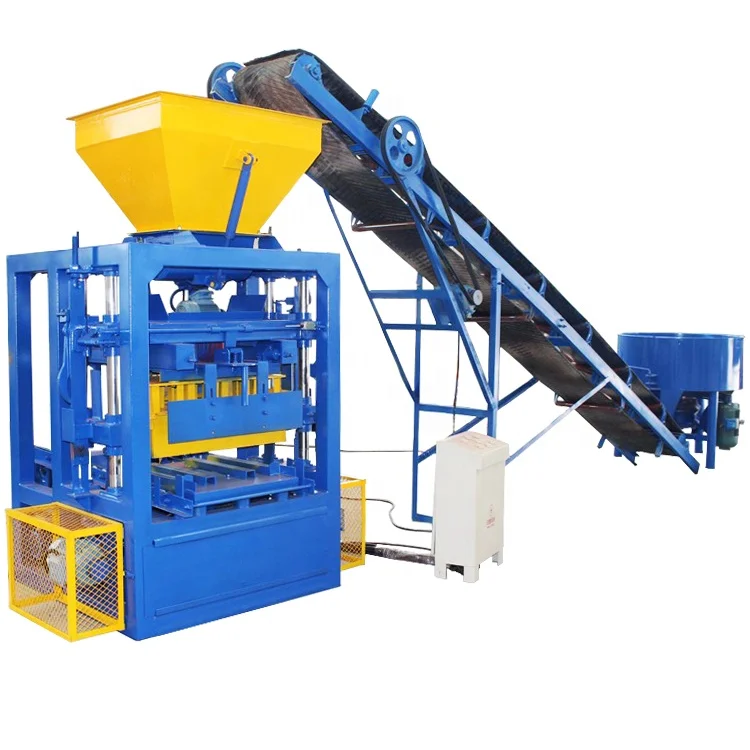
Matched System Configuration — The QT7-15 is specified as one integrated line where press, pallet, mould, and handling are sized together, not assembled from unrelated suppliers.
Technical Specifications
| Parameter |
Value |
| Model |
QT7-15 |
| Product Type |
Automatic Concrete Block Making Machine |
| Pallet Size |
1150 × 700 mm |
| Molding Cycle |
15–20 s |
| Overall Power |
45 kW |
| Vibration Force |
100 kN |
| Vibration Frequency |
0–60 Hz |
| Vibration Form |
Platform Vibration |
| Demolding Method |
Hydraulic |
| Total Mass |
8 t |
| Output Capacity |
1,260–1,680 pcs/h (based on 400×200×200 mm hollow block, 7 pcs/mould, 15–20 s cycle) |
| Output Capacity |
1,440–1,920 pcs/h (based on 400×150×200 mm hollow block, 8 pcs/mould, 15–20 s cycle) |
| Output Capacity |
3,888–4,860 pcs/h (based on 200×100×60 mm rectangular brick, 27 pcs/mould, 20–25 s cycle) |
| Control System |
PLC intelligent control with touch screen interface |
| Key Components |
Pallet feed machine, block making machine, storage hopper, conveyor, hydraulic unit, PLC control cabinet |
| Automation Level |
Automatic (basis not stated in source) |
| Warranty |
1 year for the whole machine (excluding spare parts) |
Application Suitability
| Application |
Material or Output |
| Hollow block production (400×200×200 mm) |
Concrete mix with crushed stone, sand, and cement |
| Hollow block production (400×150×200 mm) |
Lightweight or standard aggregate blends |
| Rectangular paving brick (200×100×60 mm) |
Dense concrete with fine aggregate finish |
| Multi-format block and paver manufacturing |
Mould change capability across formats above |
| Fixed-plant concrete product manufacturing |
Continuous production with pallet circulation |
What "Pieces per Hour" Actually Means for the QT7-15
Output figures only matter when the block format behind them is named.
I have watched buyers sign contracts for an automatic concrete block making machine manufacturer quoted at a single hourly number, only to discover on commissioning day that the figure assumed a small paver they never intended to produce. The real daily tonnage of hollow blocks fell far short of what the plant business plan required. Capacity must be stated per format, per cycle time, with the mould count visible — that is the only way a buyer can check whether the press fits the market they actually sell into. [NEED_CITE: block plant capacity calculation standards by format]

Where the QT7-15 Sits in the Full Range
The QT7-15 occupies the mid-tier of the automatic block machine lineup, positioned between semi-automatic workshop presses and high-capacity fully automatic lines with integrated cubing. Buyers evaluating a first fixed plant or replacing an ageing semi-automatic unit typically land here because the 1150×700 mm pallet size supports a practical mould range without demanding a large curing yard. The platform vibration system and PLC control are standard at this tier, while the automation level around the press — pallet return, stacking, cubing — remains selectable.
How the Line Connects Around the Press
A block press does not run in isolation; the raw material feed, mixer discharge, pallet circulation, and stacking stations must all match its cycle time so the press is never left waiting. With a 15–20 second molding cycle, the QT7-15 demands a pallet feed and return system that can keep pace, and a mixer batch size that aligns with the storage hopper capacity. When any upstream or downstream station is undersized, the press sits idle and the quoted output becomes theoretical. [NEED_CITE: block production line station synchronization principles]
Reading the Core Parameters
The 100 kN vibration force and 0–60 Hz frequency range work together with hydraulic pressure to compact the concrete mix into the mould cavity; too little force on a dense aggregate blend leaves voids, while excessive frequency on a dry mix can cause segregation. The 1150×700 mm pallet dimension dictates not only the mould footprint but also the curing rack spacing and the forklift tine width the buyer already has on site. The 45 kW overall power rating means the electrical supply must include a dedicated circuit with adequate breaker sizing, confirmed against local voltage and frequency before the machine leaves the factory. Hydraulic demolding, rather than mechanical ejection, gives consistent block release across both hollow and solid formats, reducing edge damage during the first critical hours of curing.
The Cost of Skipping Configuration Details
When voltage and frequency are left unconfirmed, the machine arrives and the local electrician cannot energize the PLC cabinet — commissioning stalls for weeks while a transformer is sourced. When pallet material and size are chosen without checking the buyer’s existing curing racks, new racks must be fabricated or old ones scrapped. When the mould list does not include the format the local market actually buys, the press runs but revenue does not follow. These are not warranty issues; they are specification gaps that surface only after the container is opened. [NEED_CITE: common block machine commissioning delays from unconfirmed specifications]
Why Source This Machine Here
Block machinery is the single focus of this operation, so the QT7-15 press, its moulds, pallets, and handling equipment are specified as a matched set rather than sourced from separate vendors. Machine configuration is set against the buyer’s actual mix design and local aggregate, not pulled from a catalogue default. Mould design covers the formats the buyer’s market demands, including custom drawings when standard options do not fit. Automation level is selectable, meaning a buyer can start with semi-automatic pallet handling and add stacking or cubing later. Installation support includes operator training so the crew understands mould change procedure, PLC fault codes, and daily maintenance intervals from the first shift.
Documentation & Verification
- Line layout and capacity calculation stating the block format assumed for each output figure
- Machine specification sheet confirming voltage, frequency, and PLC display language
- Mould drawing and format list verifying coverage of target block dimensions
- Pallet specification matched to curing rack spacing and forklift capacity
- Factory test record on buyer’s selected block format before dispatch
- Hydraulic and electrical schematic for local maintenance team reference
Installation, Commissioning & Support
- Dedicated electrical circuit sized for the 45 kW overall power draw, confirmed before machine arrival
- Foundation pad leveled to tolerance for the 8 t total mass and platform vibration loads
- PLC touch screen language and fault diagnosis labels set to operator preference during commissioning
- Mould change procedure trained on-site using buyer’s actual format set, not a generic demo mould
- Spare hydraulic seals and vibration motor brushes shipped with the machine to cover early replacement needs
- Pallet feed and return alignment verified against the 1150×700 mm pallet spec before full-speed run
Before You Send an Inquiry
To match the QT7-15 to your plant, specify the block formats your market buys, the daily volume you need per format, and the raw materials available locally including aggregate type and cement grade. Confirm your site voltage, frequency, and preferred PLC display language. State whether you need a complete line with raw material feeding and stacking, or a press replacement into existing upstream and downstream equipment.
Frequently Asked Questions
Q: Where does the QT7-15 sit compared to semi-automatic machines in the range?
A: The QT7-15 is a mid-tier automatic press with PLC control and hydraulic demolding, above semi-automatic models that rely on manual pallet handling. Buyers starting with semi-automatic operation can later add automatic pallet feeding and stacking to the same press footprint, avoiding a full machine replacement when volume grows.
Q: How is output capacity calculated for each block format?
A: Each output figure is based on a specific mould cavity count and cycle time. For example, 1,260–1,680 pieces per hour assumes a 400×200×200 mm hollow block with 7 cavities per mould and a 15–20 second cycle. Different formats have different cavity counts and cycle times, so capacity must be recalculated per product.
Q: What plant footprint should I plan for at this tier?
A: The QT7-15 press itself sits within a line that includes raw material feed, mixer, pallet circulation, and stacking stations. The 1150×700 mm pallet size determines curing rack layout and yard space. A complete line layout document is provided during the proposal stage so the buyer can confirm building dimensions before order.
Q: Which voltage and PLC language options are available?
A: Voltage and frequency are configured to the buyer’s site electrical standard before production. The PLC touch screen interface supports multiple language options, confirmed during the quotation stage so operators can read fault codes and parameter menus in their working language from commissioning day.
Q: How do I compare this model against larger or smaller machines?
A: Compare the pallet size, mould cavity count per format, and cycle time rather than a single hourly output number. The QT7-15 mid-tier pallet supports a broad mould range suitable for most building block and paver formats, while larger machines use bigger pallets for higher volume on single-format production runs.

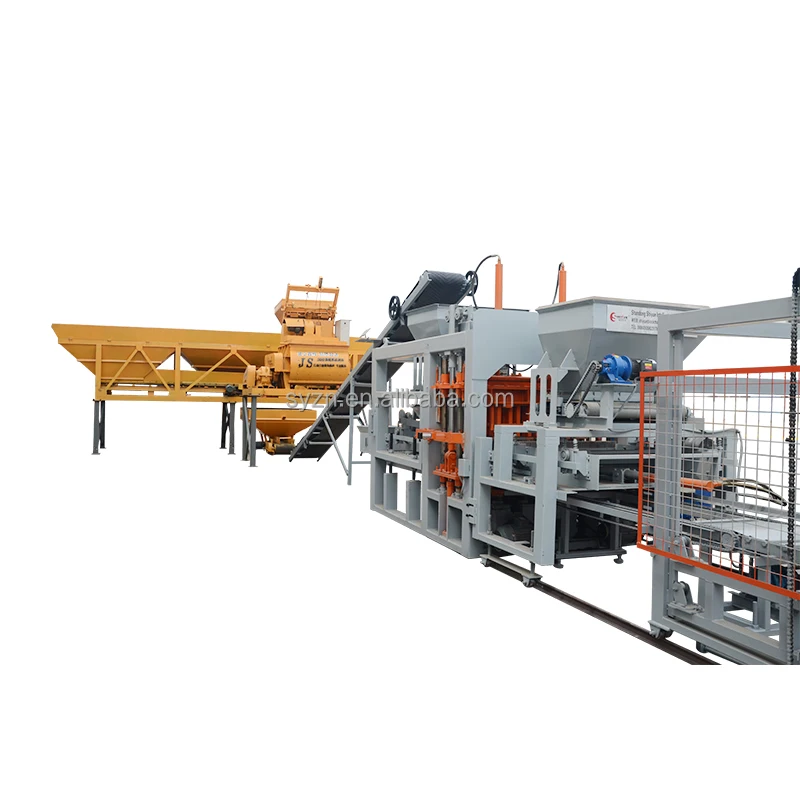
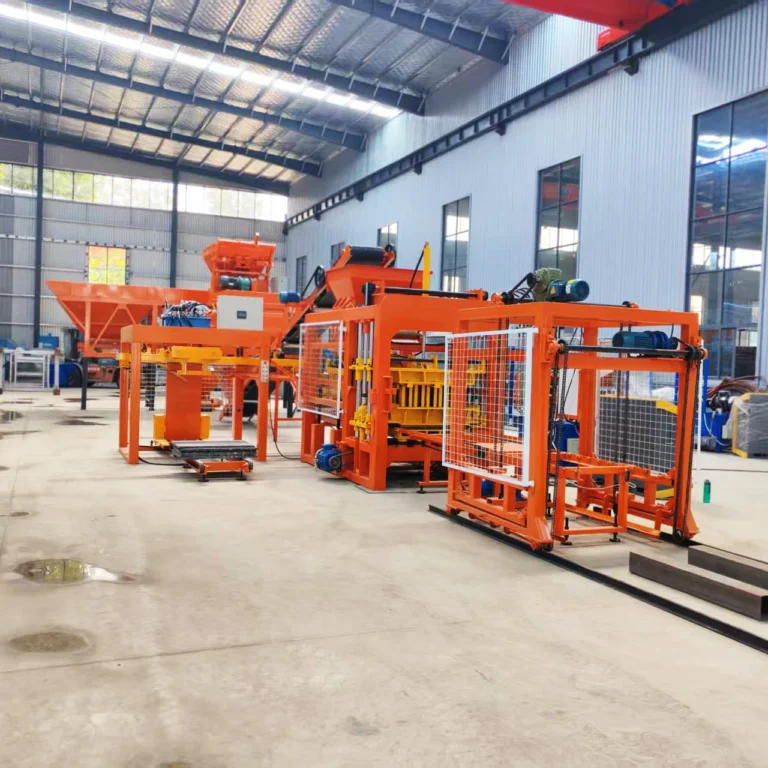 High quality block machine