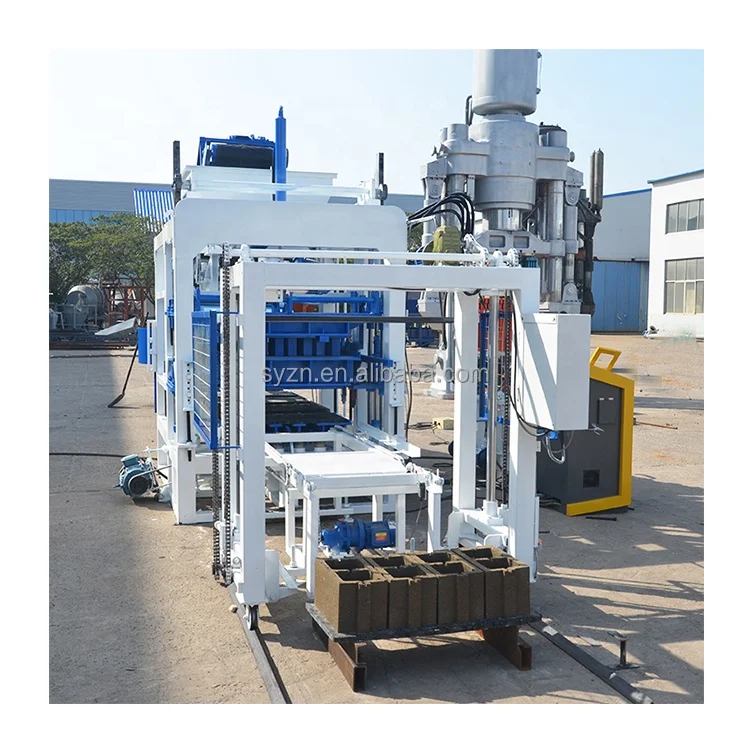
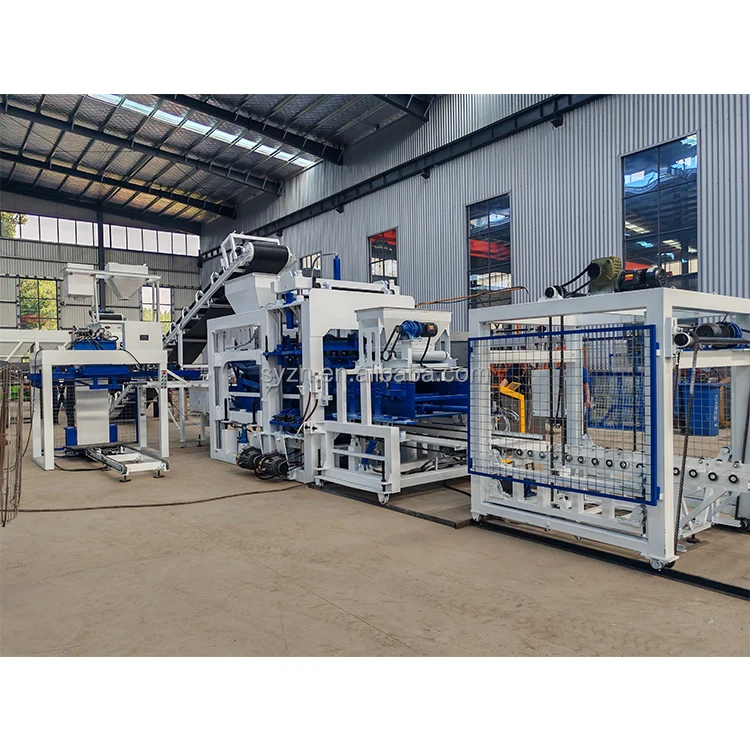
Mid-Tier Automatic Positioning — the QT6-15 sits between entry-level semi-automatic presses and high-capacity lines, giving first-plant buyers automatic output without the footprint of a top-tier system.
Technical Specifications
| Parameter |
Value |
| Model |
QT6-15 |
| Product Type |
Automatic Concrete Block Making Machine |
| Overall Dimensions (L×W×H) |
7350 × 1780 × 2950 mm |
| Rated Hydraulic Pressure |
16 MPa |
| Main Vibration System |
Platform vibration |
| Vibration Frequency |
4600 r/min |
| Pallet Size |
880 × 700 mm |
| Molding Cycle Range |
15–20 s |
| Total Installed Power |
30.5 kW |
| Voltage & Frequency |
Configurable to buyer’s local supply (basis to be confirmed) |
| Control System |
PLC-based, language configurable (basis to be confirmed) |
| Automation Level |
Automatic |
| Mould Change System |
Interchangeable moulds, custom designs available |
| Standards & Certification |
CE, SGS, ISO 9001 |
Application Suitability
| Application |
Material or Output |
| Hollow block production for residential and commercial walls |
Crushed stone, sand, cement, fly ash blends |
| Porous brick manufacturing for load-bearing masonry |
Cement with slag, gangue, or cinder aggregate |
| Standard solid brick output for infill and partition work |
Sand, gravel, perlite, and industrial waste mixes |
| Paving stone and interlocking block for roads and landscapes |
Face-mix or single-layer concrete formulations |
| Kerbstone, grass block, and slope protection units |
Coarse aggregate with cement binder |
| On-site production for housing development projects |
Locally sourced raw materials confirmed by mix trial |
What "8,640 Blocks per Day" Actually Means for Your Plant
Capacity figures only hold weight when the block format, cycle time, and shift length are stated alongside them.
Many automatic block making machine manufacturer catalogues quote a single daily output number without revealing which mould was in the press during the test. A buyer comparing three machines on that one number may be looking at hollow block output on one quote and standard brick on another — making the comparison meaningless. I have watched buyers sign off on a purchase, then discover on commissioning day that the format they actually sell was never part of the capacity calculation.
The QT6-15 hollow block figure of 8,640 pcs/day assumes the 400×200×200 mm mould, a 16–20 second cycle, six pieces per mould, and an eight-hour shift. Switch to the 240×115×53 mm standard brick mould and the same machine delivers 54,400 pcs/day on a 14–17 second cycle with thirty pieces per mould. Those two numbers describe the same press — the difference is entirely the format [NEED_CITE: block format impact on cycle-based capacity calculations]. Stating the format behind every capacity claim is how an automatic block making machine manufacturer earns buyer trust before the order is placed.

Placing the QT6-15 Within the Full Shiyue Range
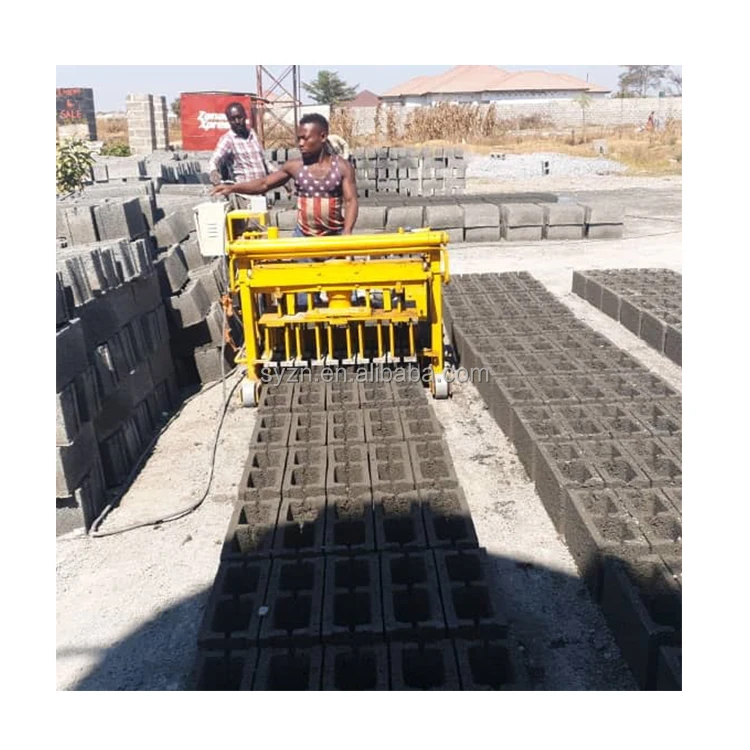
The Shiyue lineup spans mobile egg-laying machines for on-site work, semi-automatic presses for smaller workshops, and fully automatic lines with integrated stacking and cubing. The QT6-15 occupies the mid-tier automatic segment — it delivers automatic pallet feeding and PLC-controlled cycles without the extended conveyor network and larger curing rack system that a higher-output line demands. Buyers moving up from a manual or semi-automatic press find this tier removes the heaviest labour steps while keeping the plant footprint manageable.
For entrepreneurs setting up a first block plant, the QT6-15 represents a point where automatic block making machine manufacturer support covers the full press cycle, yet the investment and floor space remain within reach of a single-production-hall layout. The pallet size of 880×700 mm was selected to match standard curing rack dimensions and common forklift fork widths, so existing warehouse equipment can handle output without modification.
Matching Automation Level to Your Workforce and Budget
Choosing the right automation tier is not about picking the highest option — it is about aligning the machine with the workforce you can recruit and the volume your market absorbs. The QT6-15 automates the mould fill, press cycle, and pallet advance, but the degree of downstream automation — stacking, curing rack transfer, and cubing — remains configurable. A buyer in a market with low labour costs may prefer manual stacking at first and add an automatic stacker later as volumes grow.
This upgrade path matters because locking into a fully automatic cubing system on day one means paying for capacity that may sit idle during the first year of market development. The automatic block making machine manufacturer configures the QT6-15 so that the PLC and mechanical interfaces accept downstream modules without replacing the core press [NEED_CITE: modular automation upgrade paths in concrete block production]. Starting semi-automatic and upgrading preserves capital while keeping the production target achievable.
How Pressure, Vibration, and Pallet Size Shape Block Quality
The 16 MPa rated hydraulic pressure and 4600 r/min platform vibration work together to compact the concrete mix into a dense, uniform block. Pressure alone pushes particles together, but without high-frequency vibration the mix does not flow into the mould corners — resulting in weak edges and inconsistent face finish. The platform vibration system transmits energy through the pallet rather than the mould walls, which reduces mould wear and keeps dimensional tolerance tight across long production runs.
The 880×700 mm pallet is sized so that standard hollow blocks, porous bricks, and paving formats all fit within the vibration table’s effective zone. If the pallet were larger, blocks near the edges would receive less vibration energy and cure to lower strength. The 30.5 kW total installed power must be matched to the buyer’s local voltage and frequency before production begins — running a 50 Hz motor on 60 Hz supply changes vibration frequency and alters compaction results. The molding cycle of 15–20 seconds gives the hydraulic system time to reach full pressure and hold it through the vibration phase, which is critical when using lightweight aggregates like perlite or expanded clay.
When the Wrong Configuration Reaches Your Site
A machine specified for standard sand aggregate that instead receives volcanic ash or crusher dust will produce blocks with lower compressive strength and higher breakage during handling. I once saw a mid-tier press shipped to a region where the buyer switched to a lightweight volcanic aggregate — the blocks cracked well below the expected output level because the vibration frequency and pressure had been set for a denser mix [NEED_CITE: aggregate substitution effects on block compressive strength].
Voltage mismatch is another silent cost. If the frequency and voltage are not confirmed before the motor is wound, the press may arrive and sit unpowered while transformers are sourced or motors are rewound. PLC display language is equally practical — operators who cannot read the alarm screen will respond slower to faults, extending downtime on every stoppage. Mould change time also affects real flexibility: a buyer who paid for six interchangeable moulds but faces a lengthy changeover procedure will produce fewer formats per shift than planned.
Why Source the QT6-15 From This Automatic Block Making Machine Manufacturer
Block machinery is the single focus of Shiyue, so the press, mould, pallet, and handling equipment are specified as one matched system rather than assembled from unrelated suppliers. Every QT6-15 configuration is set against the buyer’s actual mix design and local aggregate, not a catalogue default — this is the same principle I apply when asking buyers what material they will feed before we lock in a model.
Mould design covers every format the buyer’s market demands, and custom moulds can be produced from buyer-supplied drawings. Automation level is selectable, so a buyer can commission the QT6-15 in a basic automatic layout and add stacking or cubing modules as volume grows. Documentation arrives with the machine: line layout with capacity per format, electrical schematics, factory test records, and a wear parts list — so the first replacement order is straightforward. Installation support includes on-site commissioning and operator training, ensuring the crew understands cycle adjustment and mould change before the service engineer leaves.
Documentation & Verification
- Line layout and capacity calculation stating the block format assumed for each output figure
- Machine specification sheet with voltage, frequency, and PLC language confirmed before production
- Mould drawing and format list covering every interchangeable mould including custom designs
- Factory test record and packing photographs provided before container loading
- CE declaration and compliance documentation included where applicable to destination market
Installation, Commissioning & Support
- Foundation must support 7350×1780 mm footprint with level tolerance for platform vibration alignment
- Dedicated power circuit sized for 30.5 kW total draw at confirmed voltage and frequency
- Machine ships as a full production line dismantled for container loading and reassembled on site
- Commissioning includes cycle parameter tuning against buyer’s actual mix and target block format
- Operator training covers PLC interface, mould change procedure, and daily maintenance checklist
- Wear parts list and hydraulic spare parts shipped alongside the unit for first-year coverage
Preparing Your Inquiry
To size the QT6-15 correctly, share the block formats your market sells most, the daily volume you need for each format, and the raw materials available locally — including any industrial waste or lightweight aggregate you plan to use. Confirm your site’s voltage, frequency, and the PLC display language your operators require. If you already have curing racks and forklifts on site, provide the rack dimensions and fork width so the 880×700 mm pallet configuration can be verified against your existing equipment.
Frequently Asked Questions
Q: How do I verify the capacity figures for each block format?
A: Every output figure we quote states the mould format, pieces per mould, cycle time range, and shift length behind it. For the QT6-15, hollow block output is based on the 400×200×200 mm mould at a 16–20 second cycle over an eight-hour shift. We provide a written capacity calculation document with your quotation so you can cross-check each format against your production target.
Q: Where does the QT6-15 sit compared to other Shiyue models?
A: The QT6-15 is the mid-tier automatic press — above the semi-automatic and mobile models in output and automation, below the high-capacity lines that include full cubing and rack handling. It suits buyers who need automatic production without the plant footprint and investment of a top-tier system, and it can be upgraded with downstream modules later.
Q: What electrical and control options can be configured?
A: Voltage and frequency are set to match your local grid before the motor and transformer are specified. The PLC brand and display language are confirmed during the quotation stage so your operators can read alarms and adjust cycle parameters without translation. We verify all electrical details before production begins, not after the machine arrives.
Q: What supporting equipment does the QT6-15 need to run at full output?
A: The press requires a mixer, raw material feeder, pallet feeding system, and a curing area sized for the 880×700 mm pallet. Downstream stacking can be manual or automatic depending on your labour and volume plan. We provide a line layout showing how each station connects so the press cycle is not interrupted by bottlenecks upstream or downstream.
Q: How long does an order typically take before dispatch?
A: Lead time depends on mould configuration and whether custom moulds are included. Standard models with common mould sets ship faster than units requiring bespoke mould designs. We quote the dispatch timeline at the order stage and provide packing photographs before the container is sealed so you can verify the configuration matches your specification.

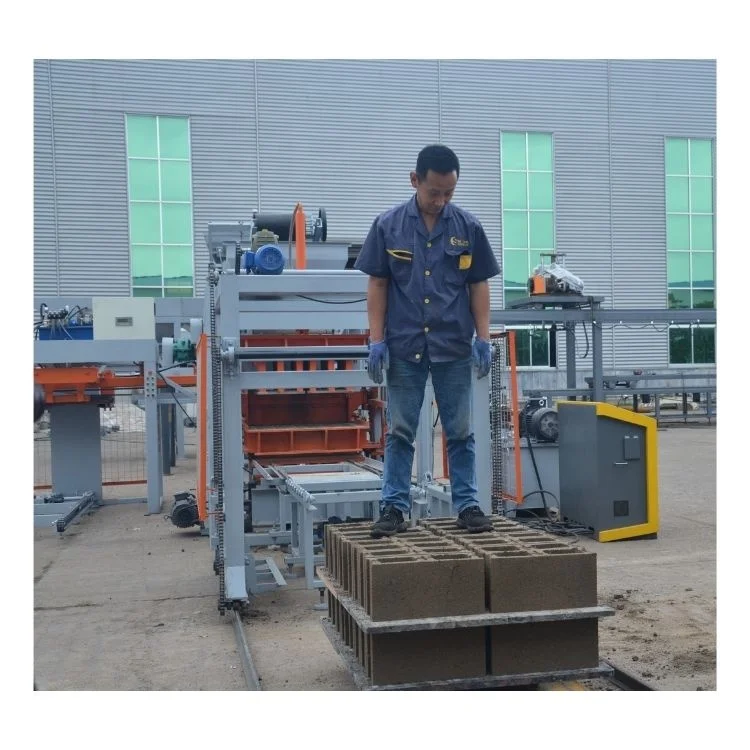
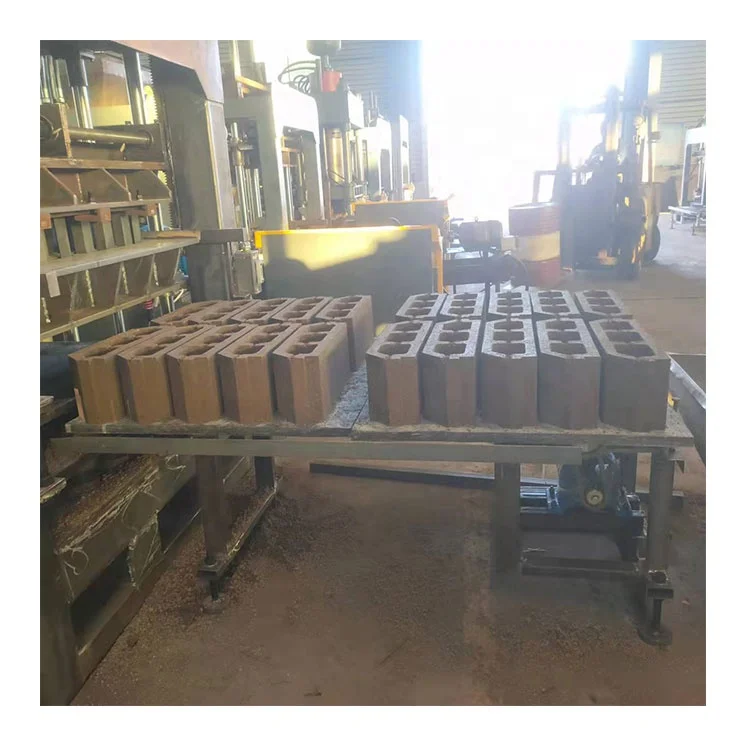 High quality block machine