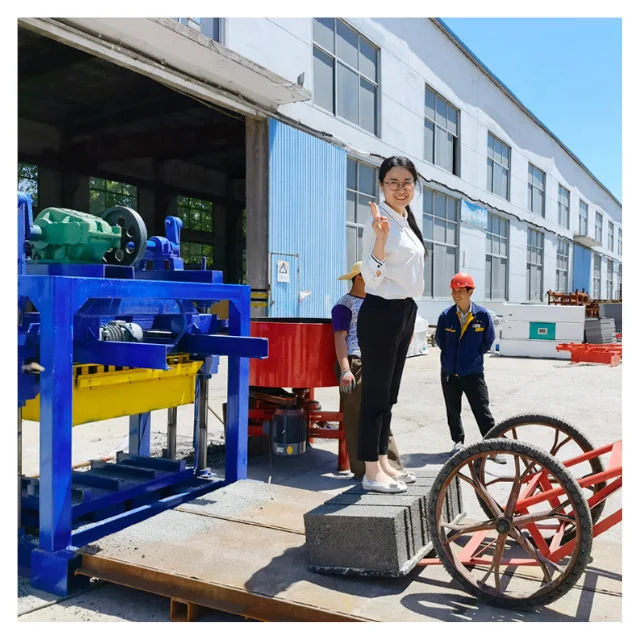
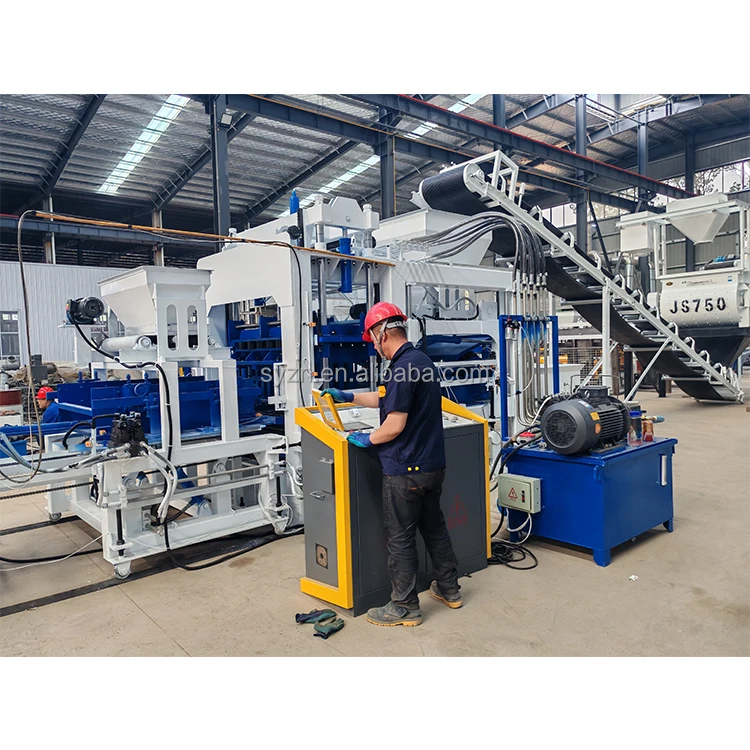
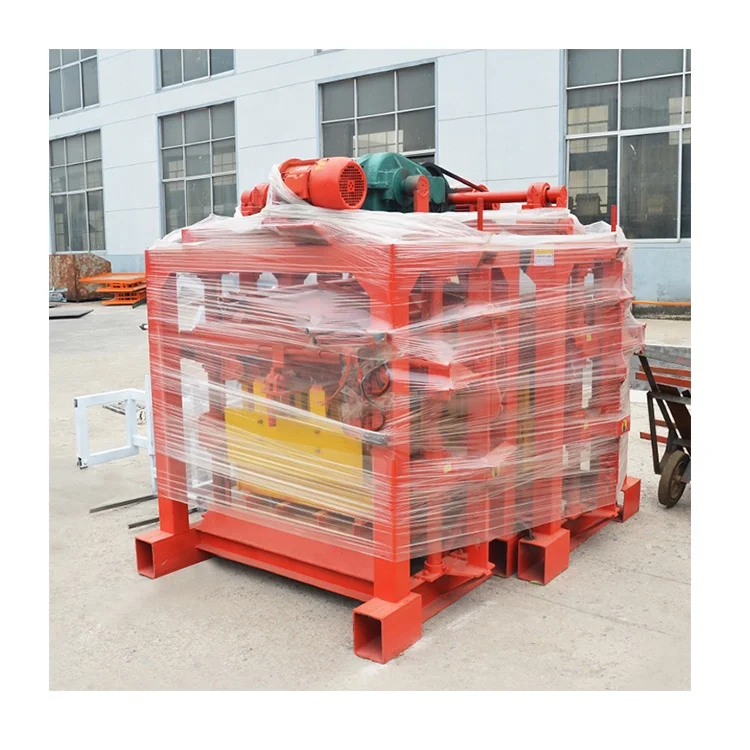
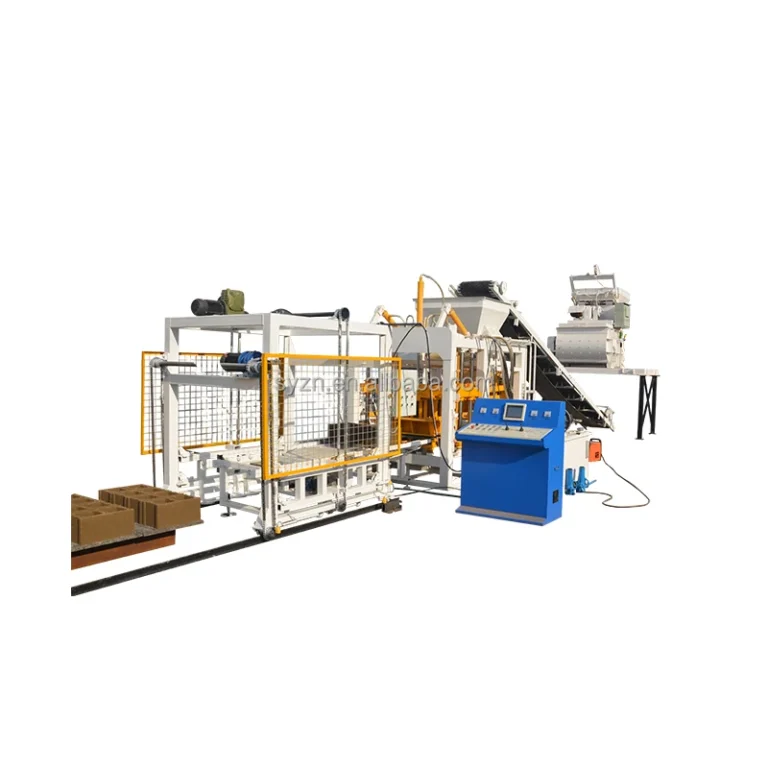
Mid-tier automatic press — the QT6-15 anchors the middle of Shiyue’s automatic range, configured after your raw material is tested rather than shipped from a catalogue default.
Technical Specifications
| Parameter |
Value |
| Model |
QT6-15 |
| Product Type |
Hydraulic Automatic Concrete Block Making Machine |
| Overall Dimensions (L×W×H) |
8200 × 1700 × 2950 mm |
| Total Mass |
7 T |
| Overall Power |
37 kW |
| Vibration Form |
Platform Vibration |
| Vibration Frequency |
0–60 Hz |
| Vibration Force |
45 kN |
| Moulding Mode |
Automatic loading, vibration moulding |
| Demolding Method |
Hydraulic |
| Pallet Size |
880 × 850 mm |
| Molding Cycle |
15–20 s (basis to be confirmed per block format and mix) |
| Control System |
PLC with touch screen HMI, fault diagnosis, safe logic interlock circuit |
| Hydraulic System |
Independent integrated station, isolated from dust and press vibration |
| Recommended Factory Area |
1200 m² |
| Raw Material Adaptability |
Waste ash, slag, and various aggregates; cement dosage adjustable |
| Block Compressive Strength |
>15 MPa (verify against local mix design and aggregate) |
| Output: 400×200×200 mm hollow block |
1080–1440 pcs/h (6 pcs/mould, 15–20 s cycle) |
| Output: 400×150×200 mm hollow block |
1440–1920 pcs/h (8 pcs/mould, 15–20 s cycle) |
| Output: 240×115×53 mm solid brick |
5760–7680 pcs/h (32 pcs/mould, 15–20 s cycle) |
| Output: 200×100×60 mm rectangular paver |
2160–2880 pcs/h (21 pcs/mould, 20–25 s cycle) |
| Output: 225×112.5×60 mm zigzag paver |
2160–2880 pcs/h (15 pcs/mould, 20–25 s cycle) |
| Mould Format Range |
Hollow block, solid brick, rectangular paver, zigzag (interlocking) paver |
| Automation Level |
Automatic (PLC-controlled, intelligent electronic control) |
| Voltage & Frequency |
To be confirmed before quotation |
| PLC Display Language |
To be confirmed before commissioning |
| Standards |
CE (documentation available where applicable) |
| Warranty |
1 year for whole machine (excluding spare parts) |
Application Suitability
| Application |
Material or Output |
| Hollow block production for load-bearing and partition walls |
Crushed stone, fly ash, or slag aggregate with Portland cement |
| Solid brick for masonry infill and boundary walls |
Sand, stone dust, and cement blends |
| Rectangular paving brick for roads and walkways |
Fine aggregate with cement, high-density vibration compaction |
| Zigzag interlocking paving brick for yards and driveways |
Graded aggregate with cement, interlocking mould geometry |
| Industrial waste utilisation in block production |
Fly ash, slag, and recycled construction waste as partial aggregate replacement |
Why "Cycles per Hour" Tells Only Half the Story
Capacity means nothing until you know which block it was measured on.
Most quotations list a single hourly number pulled from the fastest cycle the press can achieve, typically on a thin solid brick. When that machine arrives and the buyer runs the 400×200×200 mm hollow block their market actually demands, output can drop to a fraction of what was promised. The frustration is not a defect — it is a specification that was never tied to a format [NEED_CITE: block machine capacity quotation practices].
The QT6-15 hydraulic block machine manufacturer addresses this by stating output per format: hollow block at six or eight cavities per mould, solid brick at thirty-two, and pavers at fifteen or twenty-one. Each figure carries the mould count and cycle range it assumes. Before the contract is signed, the target format is confirmed so the buyer sees the daily production they will actually achieve.

Where the QT6-15 Sits in the Automatic Range
The QT6-15 occupies the mid-tier automatic position. Below it, semi-automatic models require manual pallet handling and suit first-time plants with lower capital. Above it, high-capacity automatic lines run larger pallets, faster cycles, and fully automated stacking and cubing systems for continuous production. The QT6-15 hydraulic block machine manufacturer positions this model for buyers whose daily volume sits between small workshop output and full industrial line capacity, with room to add automation stages later without replacing the press.
Matching the Machine to the Block Your Market Sells
A block plant earns revenue from the formats its customers actually order. The QT6-15 covers hollow blocks in two standard wall thicknesses, solid bricks for infill, and both rectangular and zigzag paving bricks. Mould changes are part of the operating routine, so the machine is specified with the buyer’s format list in hand [NEED_CITE: mould change frequency in multi-format block plants]. If the local market shifts toward a new paver profile, a custom mould can be designed to buyer drawings and fitted to the same press, protecting the initial investment.
How Vibration Force and Hydraulic Pressure Shape Block Density
Platform vibration at up to 60 Hz with 45 kN of vibration force compacts the aggregate mix inside the mould cavity. Hydraulic demoulding then lifts the mould box without disturbing the freshly formed block. These two forces must be balanced against the buyer’s mix design. When local aggregate carries high clay or silt content, the vibration energy is absorbed by fines rather than transmitted to the coarse particles, and block strength drops. That is why raw material testing before configuration is not optional — it determines whether the vibration frequency and hydraulic pressure need adjustment to achieve the target compressive strength above 15 MPa [NEED_CITE: effect of aggregate clay content on block compressive strength].
When the Wrong Pallet Size Reaches Your Yard
Pallet dimensions are decided before the machine ships, yet buyers sometimes discover on arrival that the 880×850 mm pallets do not match the curing racks or forklift tines already in their yard. Curing area layout then has to be redesigned, or new pallets ordered, delaying first production. The pallet specification must be confirmed against the buyer’s existing handling equipment and curing space during the proposal stage, not after the container is loaded.
Why Configuration Before Contract Matters
Block machinery as a single focus means the QT6-15 is specified as one matched system — press, mould, pallet, and handling — rather than assembled from separate suppliers. Configuration is set against the buyer’s actual mix design and local aggregate, not a catalogue default. Mould design covers the formats the buyer’s market sells, including custom drawings when a new profile is needed. The automation level is selectable, so a buyer can start with semi-automatic pallet handling and upgrade stacking and cubing later. Installation support includes operator training, and mould and wear parts are listed from day one so replacements are available when first needed.
Documentation & Verification
- Line layout and capacity calculation stating output per block format assumed
- Machine specification sheet covering QT6-15 power, dimensions, and vibration ratings
- Mould drawing and format list showing exact cavity dimensions for each supplied mould
- Pallet specification matched to the buyer’s curing rack spacing and forklift
- Voltage, frequency, and PLC display language confirmation signed before production
- Factory test record demonstrating cycle performance on agreed block format
Installation, Commissioning & Support
- Foundation plan based on the 8200 × 1700 mm footprint and 7 T operating mass
- Dedicated power circuit sized for the 37 kW total load at confirmed voltage and frequency
- Hydraulic station isolated from press vibration, reducing seal wear during commissioning
- PLC touch screen HMI loaded with confirmed language before the machine leaves the factory
- Operator training covering mould change procedure, cycle adjustment, and fault diagnosis
- Wear parts and mould list provided so first replacements can be ordered in advance
What to Include in Your Inquiry
Provide the block format your market sells most — dimensions, wall thickness, and target compressive strength. State your planned daily output and the raw materials available locally, including any industrial waste such as fly ash or slag. Confirm your site voltage, frequency, and preferred PLC display language so the QT6-15 hydraulic block machine manufacturer can prepare a configuration that matches your yard from the first day of production.
Frequently Asked Questions
Q: How is output capacity stated, and which block format does each figure assume?
A: Every capacity figure on this page is tied to a specific block format, mould cavity count, and cycle range. For example, 1080–1440 pieces per hour assumes a 400×200×200 mm hollow block with six cavities per mould and a 15–20 second cycle. Your actual output is confirmed during the proposal against your chosen format and mix design.
Q: Where does the QT6-15 sit in the full Shiyue range?
A: It occupies the mid-tier automatic position. Below it are semi-automatic models with manual pallet handling for smaller plants. Above it are high-capacity automatic lines with larger pallets and fully automated stacking and cubing. The QT6-15 serves buyers whose daily target falls between workshop volume and full industrial line output.
Q: What automation level does this model include, and can I upgrade later?
A: The QT6-15 ships as a PLC-controlled automatic press with touch screen HMI, fault diagnosis, and safe logic interlock. Pallet handling and stacking can start at a semi-automatic level and be upgraded to full automatic stacking and cubing as production volume grows, without replacing the press itself.
Q: What voltage, frequency, and PLC language options are available?
A: Voltage and frequency are confirmed to match the buyer’s local supply before production begins. The PLC display language is set to the operator’s preference and loaded before dispatch. Both details are documented in the pre-production confirmation sheet to avoid commissioning delays.
Q: What plant footprint and supporting equipment should I plan for?
A: The recommended factory area is approximately 1200 m² to accommodate the press, raw material storage, curing racks, and pallet circulation. Supporting equipment — mixer, pallet feeder, and stacking system — should be sized so cycle times match the press and the QT6-15 is never left waiting between moulds.

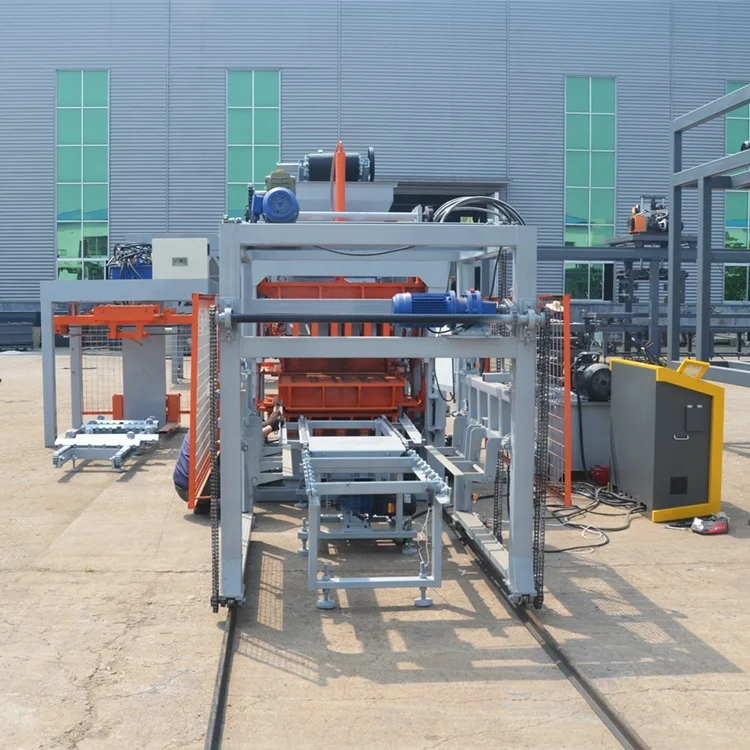
 High quality block machine