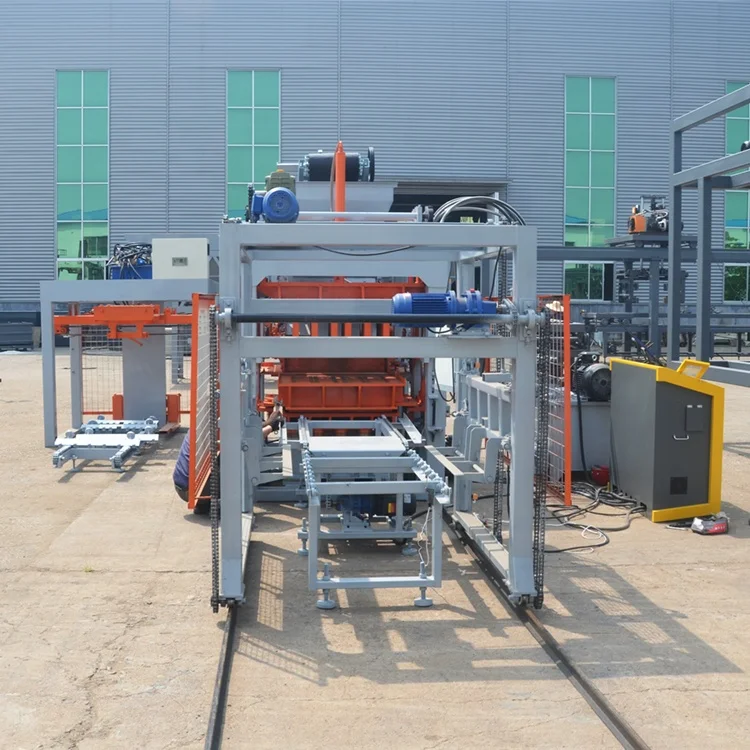
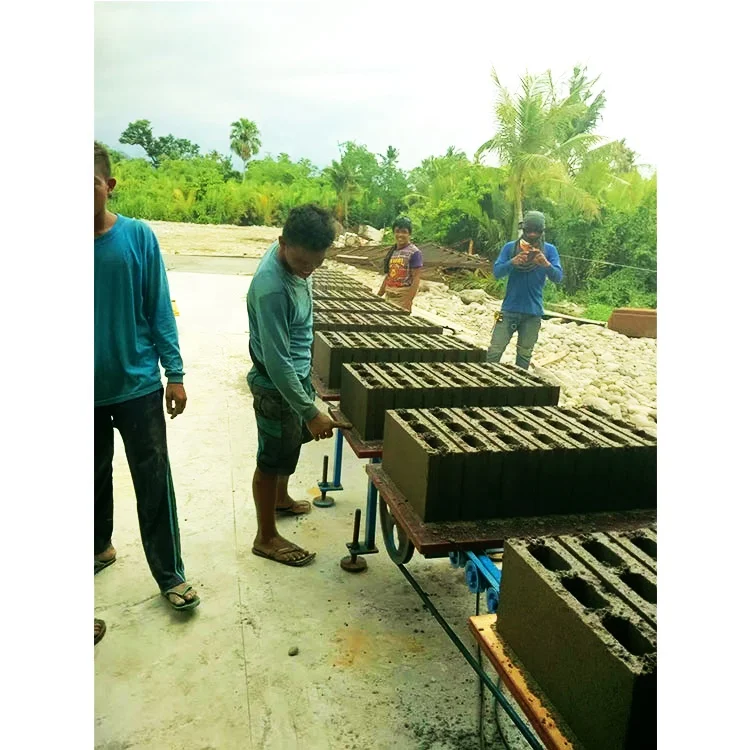
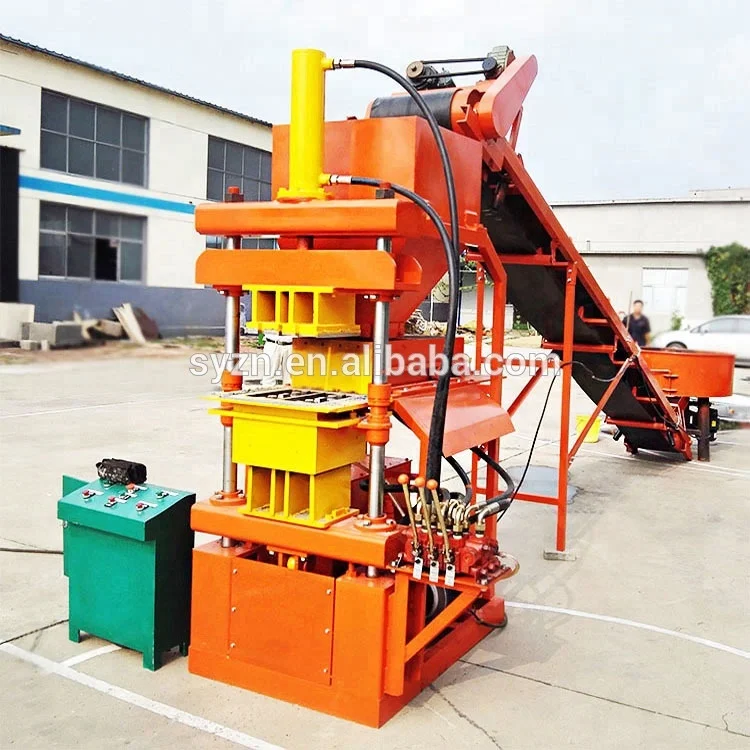
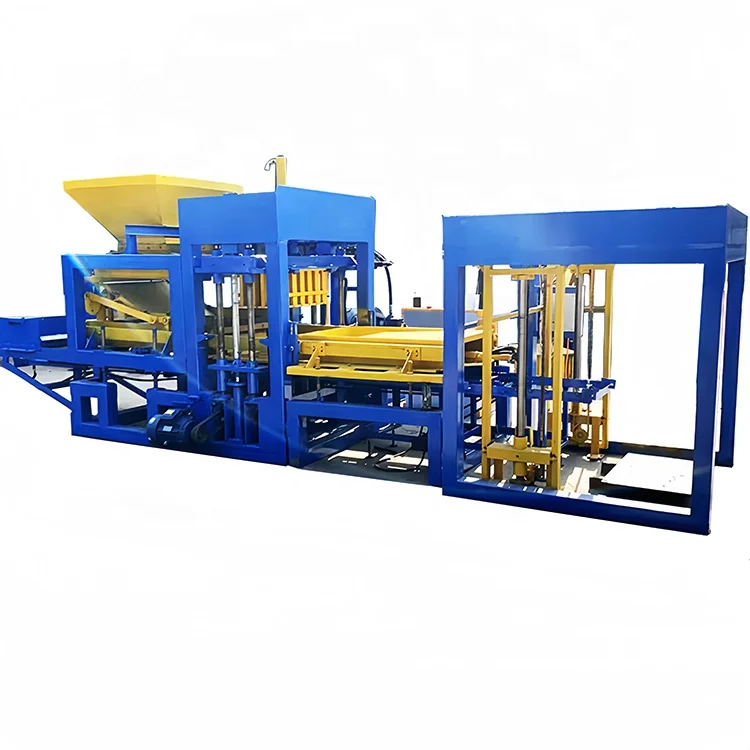
Matched System Design — the QT6-15 block machine, moulds, pallets and handling equipment are specified together as one coordinated line rather than sourced from separate suppliers.
Technical Specifications
| Parameter |
Value |
| Model |
QT6-15 |
| Product Type |
Hydraulic Concrete Block Making Machine |
| Overall Dimensions (L×W×H) |
8200×1700×2950 mm |
| Total Mass |
7 T |
| Overall Power |
37 kW |
| Vibration Form |
Platform Vibration |
| Vibration Frequency |
0-60 Hz |
| Vibration Force |
45 kN |
| Moulding Mode |
Automatic loading, vibration moulding |
| Demolding Method |
Hydraulic |
| Molding Cycle |
15-20 s |
| Pallet Size |
880×850 mm |
| Control System |
PLC with touch screen |
| Factory Area Required |
1200 m² |
| Output — Hollow Block 400×200×200 mm |
1080-1440 pcs/h (6 pcs/mould, 15-20s cycle) |
| Output — Hollow Block 400×150×200 mm |
1440-1920 pcs/h (8 pcs/mould, 15-20s cycle) |
| Output — Solid Brick 240×115×53 mm |
5760-7680 pcs/h (32 pcs/mould, 15-20s cycle) |
| Output — Rectangular Paver 200×100×60 mm |
2160-2880 pcs/h (21 pcs/mould, 20-25s cycle) |
| Output — Zigzag Paver 225×112.5×60 mm |
2160-2880 pcs/h (15 pcs/mould, 20-25s cycle) |
| Block Compressive Strength |
More than 15 MPa |
| Hydraulic System |
Independent integrated hydraulic station |
| Fault Diagnosis |
Built-in fault diagnosis with safe logic interlock |
| Voltage & Frequency |
Configurable to buyer’s local supply (to be confirmed) |
| PLC Display Language |
Configurable (to be confirmed) |
| Warranty |
1 year for whole machine (excluding spare parts) |
Application Suitability
| Application |
Material or Output |
| Hollow block production for building walls |
Crushed stone, sand, cement, fly ash blends |
| Solid brick manufacturing |
Local aggregate and cement mixes |
| Rectangular paving brick production |
Fine aggregate and cement for driveways and walkways |
| Zigzag interlocking paver production |
Graded aggregate for heavy-duty pavement areas |
| On-site block production for housing projects |
Waste ash, slag, and locally available aggregate |
What "Pieces per Hour" Really Means for the QT6-15 Block Machine Manufacturer
Capacity numbers are only honest when they name the block format behind them.
I once watched a buyer sign off on a block machine order based on a single headline output figure. When the machine arrived, the daily tally for the format his market actually demanded fell far short of what he had budgeted for. The QT6-15 block machine manufacturer quotation process avoids this trap by stating output per format — six cavities for 400×200×200 mm hollow blocks, thirty-two for standard solid bricks — so the buyer sees exactly what each shift will produce. [NEED_CITE: how block format and cavity count affect real-world daily output]

Where the QT6-15 Sits in the Full Machine Range
The QT6-15 occupies the mid-to-high tier of the automatic block machine lineup. It is positioned for buyers who have outgrown semi-automatic or mobile egg-laying machines and need consistent, PLC-controlled production without jumping straight to a high-capacity line designed for continuous three-shift operation. The 880×850 mm pallet size and 1200 m² factory footprint place it in a range that suits medium-scale block plants and contractors setting up dedicated production for a housing or infrastructure project.
Automation Level and the Upgrade Path
The machine ships with a PLC touch-screen controller, automatic material loading, and hydraulic demoulding. For a buyer currently running a semi-automatic press with manual pallet handling, this step removes the heaviest manual tasks — pallet feeding, block ejection, and vibration cycle timing — while leaving room to add automatic stacking and cubing later. The built-in fault diagnosis and safe logic interlock circuit reduce the risk of operator error during the transition, which matters when a workforce is learning a new level of automation for the first time. [NEED_CITE: typical automation upgrade stages in concrete block production]
Reading the Numbers That Matter
The 45 kN vibration force paired with independent hydraulic pressure determines how densely the mix is compacted inside the mould. Dense compaction directly correlates with block compressive strength — here rated above 15 MPa — but only when the vibration force is matched to the buyer’s specific aggregate and cement ratio. A mix with high clay content, for instance, absorbs vibration differently than clean crushed stone, so the adjustable 0-60 Hz frequency range lets the operator fine-tune the cycle once local material behaviour is understood. The 880×850 mm pallet size must also align with the curing racks and forklifts already on site; a mismatch means either replacing the curing infrastructure or accepting slower handling between press and yard. The 37 kW overall power draw requires a dedicated circuit with enough headroom for peak hydraulic demand during demoulding.
The Cost of Skipping the Configuration Step
When voltage and frequency are not confirmed before production, the machine can arrive on site with a motor winding or PLC power supply that does not match local grid standards. Commissioning stalls, an electrician must rewire or replace components, and the project timeline slips. [NEED_CITE: voltage and frequency standards by export market] Equally costly is specifying a pallet size without checking the buyer’s curing area dimensions — pallets that do not fit existing racks force the plant to handle wet blocks by hand, negating the automation the buyer paid for. A QT6-15 block machine manufacturer that treats configuration as an afterthought leaves these gaps for the buyer to discover at the worst possible moment.
Why Source This Model Through Shiyue
Block machinery is the single focus here, so the press, mould, pallet, and handling equipment are specified as one matched system. The configuration is set against the buyer’s actual mix design and local aggregate, not pulled from a catalogue default. Mould design covers the formats the buyer’s market sells, including custom drawings when standard cavity layouts do not fit. Automation level is selectable, meaning a buyer can begin with the PLC-controlled base and add automatic stacking or cubing as production volume grows. Installation support includes on-site commissioning and operator training, ensuring the crew can run the machine independently before the service team departs. [NEED_CITE: CE machinery directive requirements for industrial equipment]
Documentation & Verification
- Line layout with capacity calculation tied to your target block format
- Machine specification sheet confirming voltage, frequency, and PLC language
- Mould drawing and complete format list for every block type you produce
- Pallet specification verified against your curing area and forklift capacity
- Factory test record on your mix design before dispatch
- Operation and maintenance manual with wear parts list
Installation, Commissioning & Support
- 1200 m² factory footprint with level concrete foundation for 7 T machine mass
- 37 kW dedicated power circuit matching confirmed local voltage and frequency
- Machine shipped dismantled for container loading, reassembled on site
- PLC touch screen calibrated to buyer’s language during commissioning
- Operator training covers mould change procedure and cycle time adjustment
- Wear parts and hydraulic seal list provided with first spare parts order
Before You Send an Inquiry
To size the QT6-15 correctly for your plant, share the block formats your market demands and the daily volume you need for each. Include details on your local aggregate type, cement source, and any waste material you plan to incorporate. Confirm your site’s available floor area, electrical supply voltage and frequency, and the curing and forklift equipment already in place.
Frequently Asked Questions
Q: How is the QT6-15 positioned within the full block machine range?
A: It sits in the mid-to-high tier of the automatic lineup. Buyers moving from semi-automatic machines choose it for PLC control and hydraulic demoulding. Those needing continuous three-shift output at higher volumes typically step up to a larger model with bigger pallets and more mould cavities.
Q: What block formats can the QT6-15 produce?
A: Standard moulds cover 400×200×200 mm and 400×150×200 mm hollow blocks, 240×115×53 mm solid bricks, and both rectangular and zigzag pavers. Custom moulds can be designed to buyer drawings. Cycle time varies from 15 to 25 seconds depending on the format.
Q: Can I start semi-automatic and add automation later?
A: Yes. The base machine includes PLC control and hydraulic demoulding. Automatic pallet feeding, stacking, and cubing stations can be added as separate modules when production volume justifies the investment and floor space allows.
Q: What electrical details must be confirmed before shipment?
A: Local supply voltage, frequency, and the preferred PLC display language must be confirmed during the quotation stage. Producing the motor winding and control cabinet to the wrong standard delays commissioning and may require component replacement on site.
Q: What supporting equipment completes the QT6-15 production line?
A: A typical line includes a raw material batching and mixing station, pallet feeding system, and a curing area sized for the 880×850 mm pallets. Automatic stacking and cubing units are optional additions that reduce manual handling after demoulding.

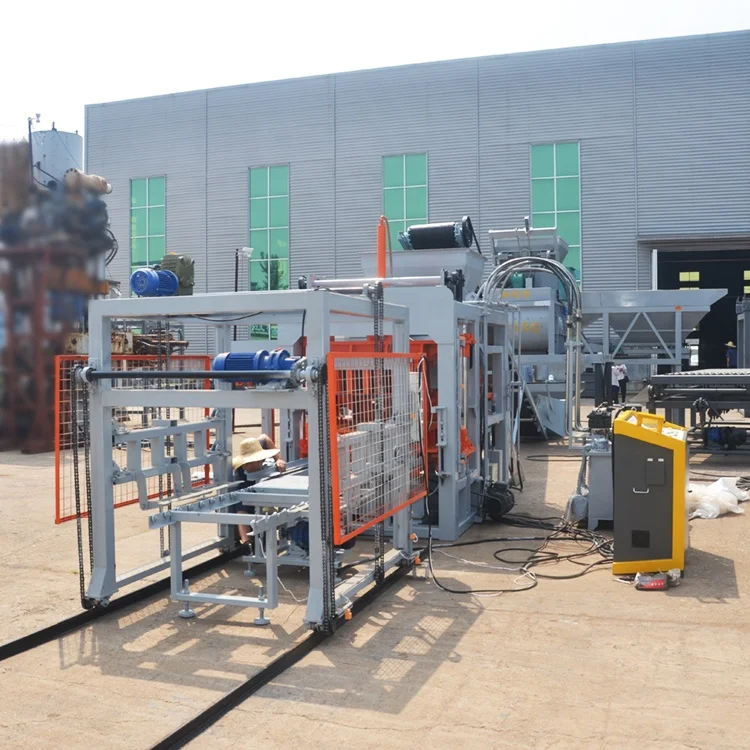
 High quality block machine