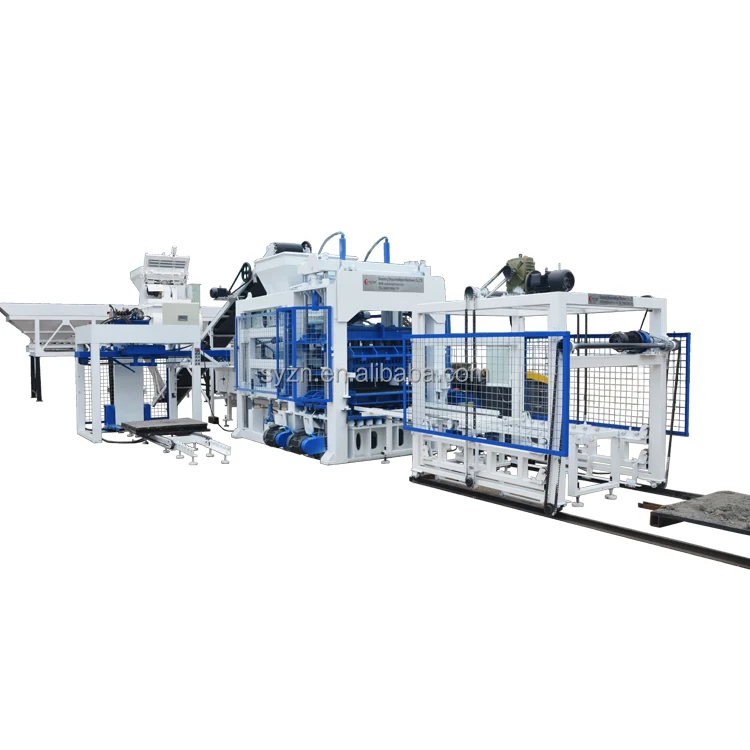
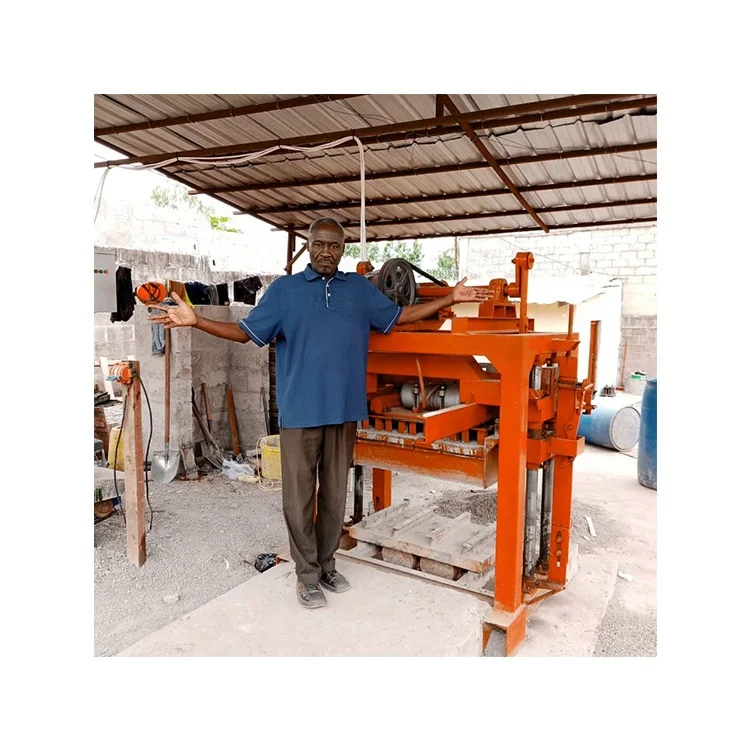
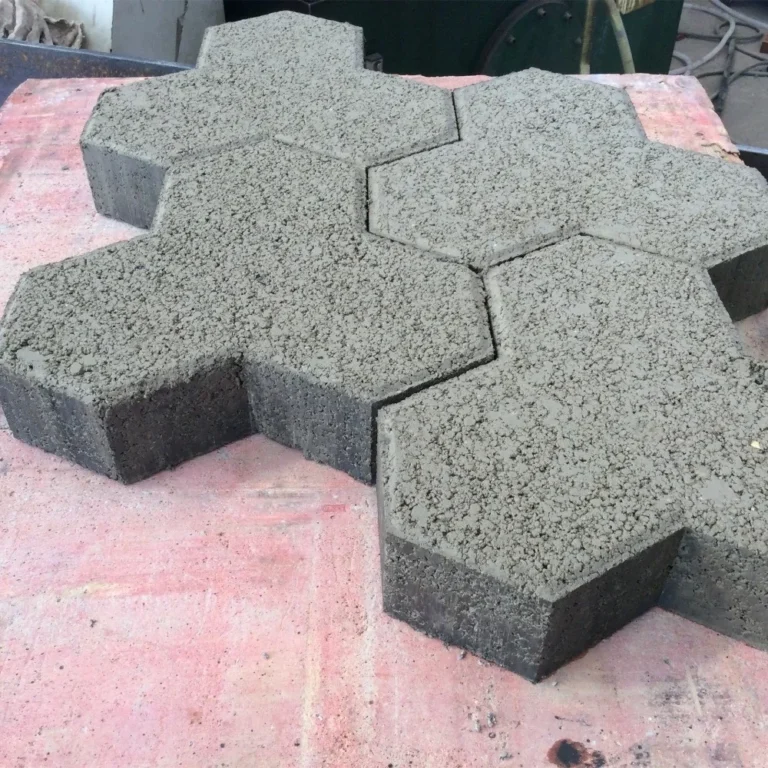
Hydraulic-Vibration Match — platform vibration and hydraulic pressure are sized together against the buyer’s target block format and local aggregate, not set to a catalogue default that ignores the actual mix design.
Technical Specifications
| Parameter |
Value |
| Model |
QT6-15 |
| Product Type |
Fully Automatic Hydraulic Block Making Machine |
| Overall Dimensions (L×W×H) |
8200 × 1700 × 2950 mm |
| Total Mass |
7 T |
| Overall Power |
37 kW |
| Vibration Form |
Platform Vibration |
| Vibration Frequency |
0–60 Hz |
| Vibration Force |
45 kN |
| Moulding Mode |
Automatic loading with vibration moulding |
| Demolding Method |
Hydraulic |
| Pallet Size |
880 × 850 mm |
| Molding Cycle |
15–20 s (basis not stated in source) |
| Control System |
PLC (Programmable Controller) with touch screen HMI |
| Fault Diagnosis |
Built-in fault diagnosis with action interlock safety logic |
| Hydraulic System |
Independent integrated station, isolated from dust and main vibration |
| Recommended Factory Area |
1200 m² |
| Block Compressive Strength |
>15 MPa |
| Output: Hollow Block 400×200×200 mm |
1080–1440 pcs/h, 8640–11520 pcs/8hr |
| Output: Hollow Block 400×150×200 mm |
1440–1920 pcs/h, 11520–15360 pcs/8hr |
| Output: Solid Brick 240×115×53 mm |
5760–7680 pcs/h, 46080–61440 pcs/8hr |
| Output: Rectangular Paver 200×100×60 mm |
2160–2880 pcs/h at 20–25 s cycle, 17280–23040 pcs/8hr |
| Output: Zigzag Paver 225×112.5×60 mm |
2160–2880 pcs/h at 20–25 s cycle, 17280–23040 pcs/8hr |
Application Suitability
| Application |
Material or Output |
| Load-bearing hollow block walls |
Hollow blocks from crushed stone, sand, and cement |
| Non-load-bearing partition blocks |
Lightweight blocks using waste ash or slag aggregate |
| Masonry solid brick production |
Solid bricks from standard aggregate and cement blends |
| Driveway and walkway paving |
Rectangular and interlocking pavers from fine aggregate |
| Permeable surface construction |
Porous bricks with controlled void ratio and drainage |
What "Pieces per Hour" Hides When Comparing a QT6-15 Automatic Block Making Machine Manufacturer
Every output figure must be tied to a specific block format, cycle time, and mix — otherwise the number is meaningless.
I once watched a buyer plan an entire project schedule around a single headline capacity number. The machine arrived, the hollow blocks ran fine, but when they switched to pavers the cycle stretched well beyond what the quote implied. The daily shortfall compounded across weeks until the contractor fell behind on delivery commitments [NEED_CITE: block machine capacity claims without stated format assumptions]. A QT6-15 automatic block making machine manufacturer should provide a capacity table that names each format and its corresponding cycle, so the buyer can model realistic daily output before the machine ships.

Where the QT6-15 Sits in the Machine Range
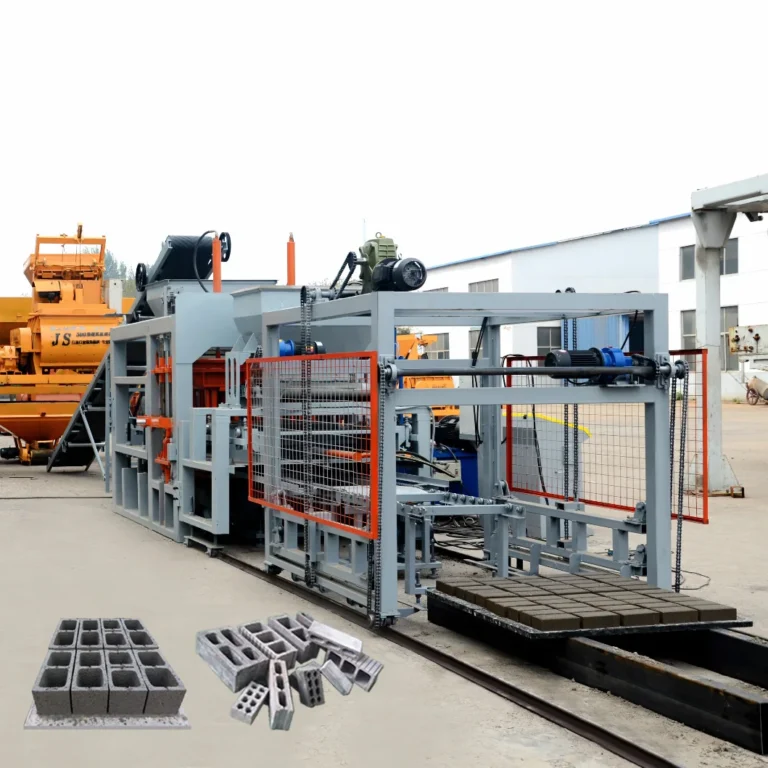
The QT6-15 occupies the mid-to-high automatic tier for buyers who have outgrown semi-automatic egg-laying machines but do not yet need a high-capacity line with full cubing automation. Its 37 kW overall power and 7 T mass place it squarely in a category where the press itself is the main capital item, while supporting equipment like mixers and pallet feeders can be sourced to match the plant’s current scale. For a first automatic plant, this positioning keeps the initial investment contained while leaving room to add stacking and curing rack handling later.
Footprint and Infrastructure Before the Machine Arrives
The recommended 1200 m² factory area covers the press, raw material storage, mixing station, and initial curing space — but not finished-goods yardage for multiple block formats. Buyers who plan to run hollow blocks and pavers in the same facility need to account for separate curing zones, since pavers demand longer initial set times before stacking. The 880 × 850 mm pallet size should be cross-checked against the curing rack dimensions and the forklift tine spacing already on site, so pallets move through the plant without a second handling step [NEED_CITE: pallet and curing rack compatibility in block plant layout].
Vibration, Pressure, and the Density Buyers Actually Need
The 45 kN vibration force combined with hydraulic demolding determines how tightly aggregate particles pack during the 15–20 second moulding window. At 0–60 Hz adjustable frequency, the platform vibration can be tuned down for hollow blocks where wall thickness is generous, or pushed higher for thin pavers that need maximum density in a shorter stroke. Compressive strength above 15 MPa is achievable when the vibration profile matches the local aggregate gradation — a coarse river sand responds differently from crushed basalt, and the PLC touch screen lets the operator store separate recipes for each. The independent hydraulic station sits apart from the main press vibration, which protects valve seals and hose fittings from the fatigue that shortens service life on machines where hydraulics are bolted directly to the vibrating frame.
The Cost of Skipping Electrical Confirmation Before Shipment
Voltage and frequency are easy to leave as defaults, and the consequences do not surface until the machine is standing on the buyer’s floor. A motor wound for a supply the site does not provide will not start — no amount of on-site wiring improvisation fixes a mismatch in phase configuration or frequency rating. I have seen plants sit idle for weeks while a variable-frequency drive was sourced locally to bridge the gap, and every day of that delay came straight out of the project timeline [NEED_CITE: electrical commissioning delays in exported industrial machinery]. Confirming voltage, frequency, and PLC display language before the QT6-15 leaves the factory removes the single largest source of arrival-stage downtime.
Why Source This Machine Through a Single-Focus Block Line Supplier
Block machinery is the sole product category here, which means the press, mould, pallet, and handling equipment are specified as one matched system rather than assembled from separate quotations. Machine configuration is set against the buyer’s actual mix design and target block format, not a catalogue default that assumes ideal conditions. Mould design covers every format the buyer’s market sells, with custom drawings available when a local standard falls outside the usual hollow block and paver range. Automation level is selectable, so a buyer can start with manual pallet handling and add automatic stacking as production volume justifies the investment. Installation support includes on-site commissioning and operator training, with mould and wear parts documentation provided before the first replacement cycle is due.
Documentation & Verification
- Line layout showing the QT6-15 positioned within the full plant footprint
- Capacity calculation stating the exact block format behind each output number
- Machine specification sheet with confirmed voltage, frequency, and PLC language
- Mould drawing and format list for every block type in the buyer’s product range
- Factory test record demonstrating cycle time and compressive strength on buyer’s mix
- Hydraulic and electrical schematic for local maintenance teams
Installation, Commissioning & Support
- Foundation pad sized for 8200 × 1700 mm footprint with vibration isolation provisions
- Dedicated 37 kW power circuit with confirmed voltage and frequency before connection
- Hydraulic station pre-filled and pressure-tested at factory, topped up after positioning
- PLC touch screen loaded with buyer’s language and initial recipe set during commissioning
- Operator training covering mould change procedure, fault diagnosis interlocks, and daily checks
- Wear parts and mould list supplied for first replacement planning
Preparing Your Inquiry
To move from a general interest in the QT6-15 to a firm configuration, the most useful details a buyer can provide are the specific block formats sold in the local market, the target daily output for each format, and the aggregate materials available at the project site. Local voltage and frequency, preferred PLC display language, and any existing equipment such as mixers or forklifts help shape the supporting equipment list. Sharing the available factory area and curing space lets the layout team confirm whether the 1200 m² recommendation fits or needs adjustment.
Frequently Asked Questions
Q: How does the QT6-15 compare to smaller semi-automatic machines and larger high-capacity lines?
A: The QT6-15 sits in the mid-to-high automatic tier with PLC control and hydraulic demolding, aimed at plants that need more consistency than a semi-automatic press offers but do not yet require a fully automated stacking and cubing line. Its 37 kW power draw and 1200 m² footprint are moderate, making it a practical step up for buyers expanding from manual or egg-laying production.
Q: What plant infrastructure does the QT6-15 require compared to the next tier up?
A: A dedicated power circuit for the 37 kW system, a foundation pad for the 8200 × 1700 mm footprint, and roughly 1200 m² covering press, mixing, and initial curing. The next tier up demands a larger curing yard, heavier foundations, and often a separate transformer, so the QT6-15 suits sites where space and power headroom are limited.
Q: Can I switch between hollow blocks and pavers on the same pallet size?
A: Yes — the 880 × 850 mm pallet accommodates hollow blocks, solid bricks, and both rectangular and zigzag pavers. The moulding cycle extends from 15–20 seconds for hollow blocks to 20–25 seconds for pavers, and the PLC stores separate vibration and pressure recipes for each format to maintain consistent density across switches.
Q: How do I confirm voltage and PLC language before shipment to avoid delays?
A: Provide the site supply voltage, frequency, and phase configuration along with the preferred HMI display language during the quotation stage. These values are locked into the specification sheet and confirmed again before factory testing, so the motor winding, control panel, and touch screen all match the destination site on arrival.
Q: What supporting equipment is needed at different automation levels with the QT6-15?
A: At a basic level, a mixer and manual pallet handling are sufficient. Adding a pallet feeder reduces labour at the press input, while an automatic stacker removes manual output handling. The QT6-15 supports each addition independently, so buyers can phase supporting equipment as production volume grows.

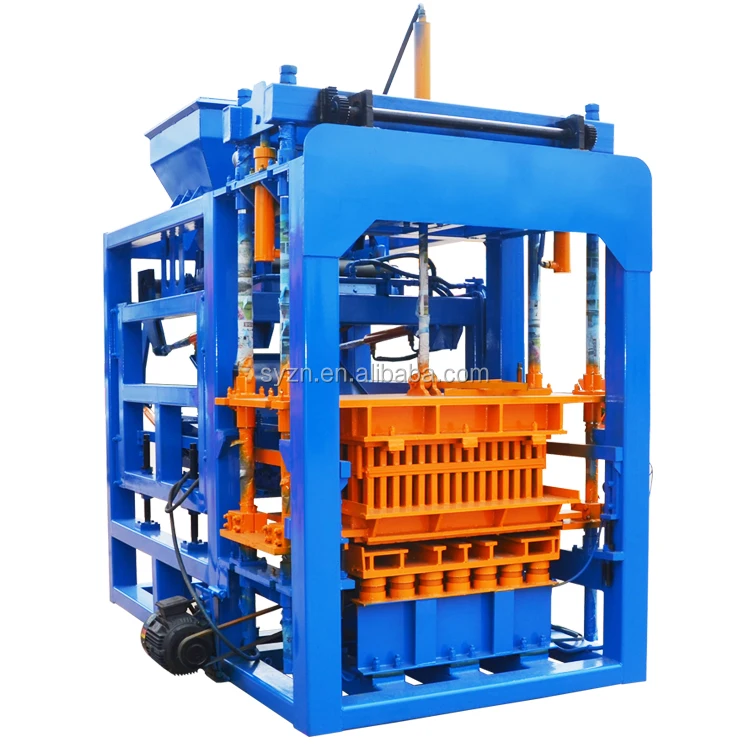
 Stationary block machine