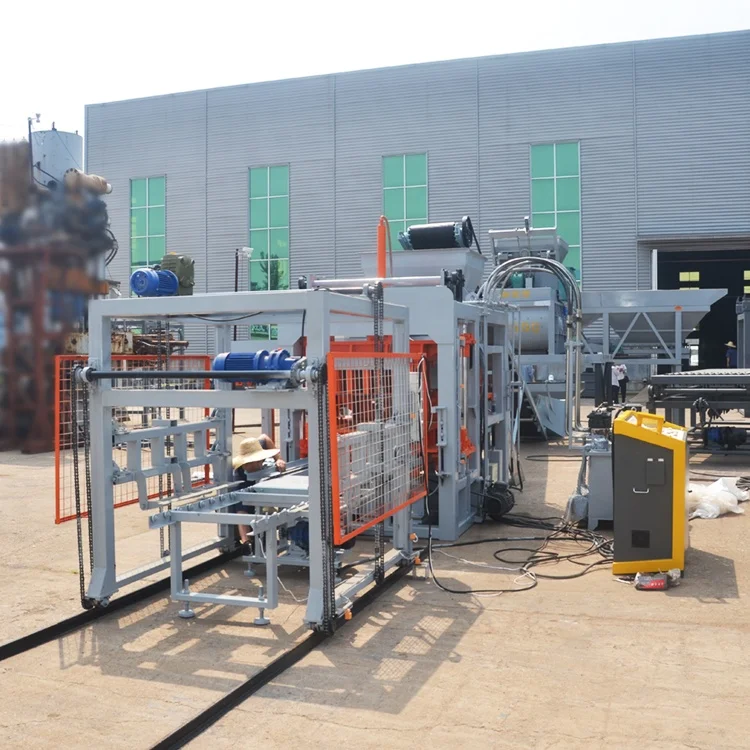
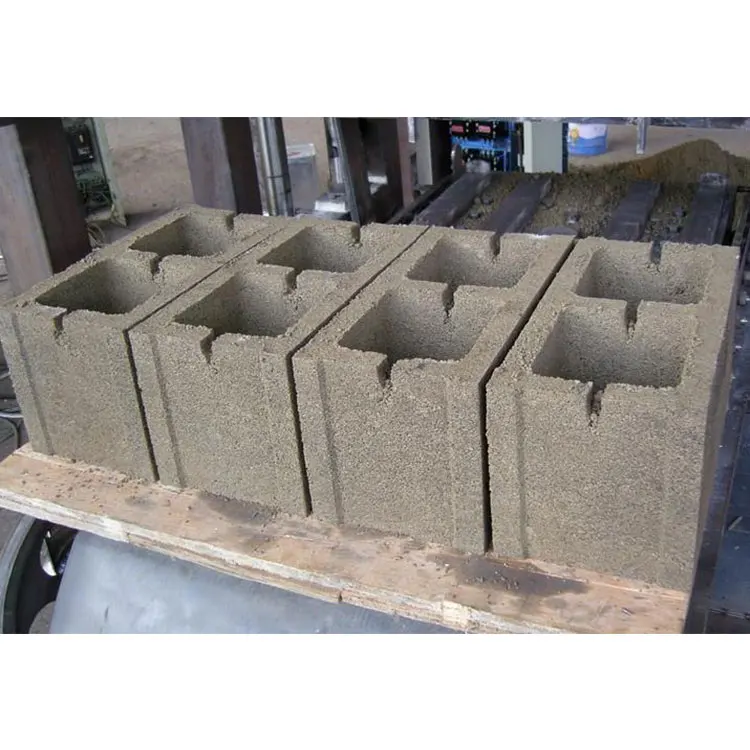
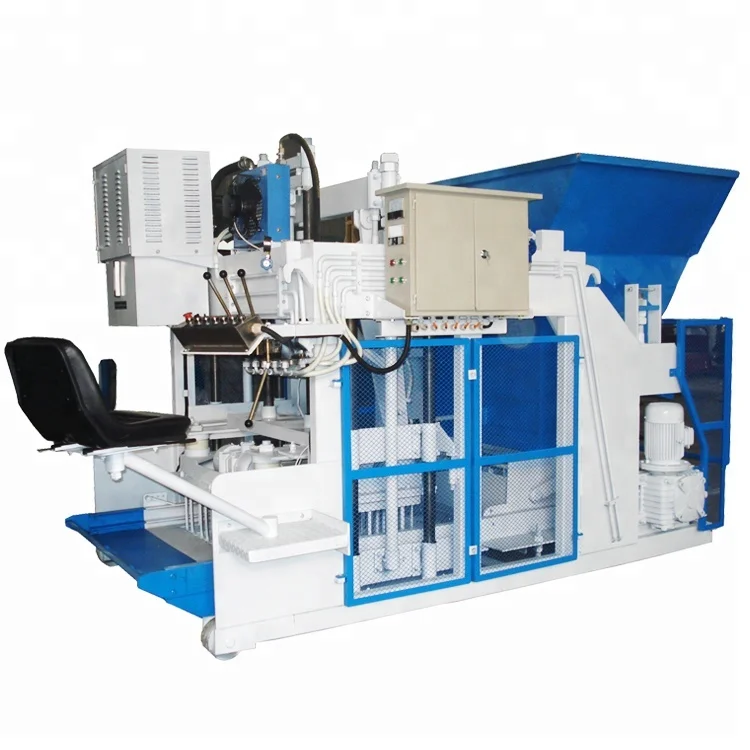
Specified as a matched system — the QT6-15 is sized with pallet, mould, and handling together rather than quoted as a standalone press, keeping cycle time realistic across formats.
Technical Specifications
| Parameter |
Value |
| Model |
QT6-15 |
| Product Type |
Full Automatic Concrete Block Making Machine |
| Rated Power |
31.25 kW |
| Voltage & Frequency |
Configured to buyer local supply (basis to be confirmed) |
| Control System |
PLC intelligent control with man-machine interface, logic control, malfunction diagnosis, remote control function |
| Overall Dimensions |
7100 × 1500 × 3000 mm |
| Net Weight |
8500 kg |
| Hydraulic Pressure |
16–21 MPa |
| Main Vibration Form |
Platform vibration |
| Mould Cycle Time |
15–20 seconds (basis to be confirmed per format) |
| Pallet Size |
850 × 680 mm |
| Output — Hollow Block 400×200×200 mm |
6 pcs/mould, 16–20 s cycle, approx. 8,640 pcs/day |
| Output — Porous Block 240×115×90 mm |
14 pcs/mould, 15–18 s cycle, approx. 22,400 pcs/day |
| Output — Standard Block 240×115×53 mm |
30 pcs/mould, 14–17 s cycle, approx. 54,400 pcs/day |
| Mould Formats |
Hollow/solid blocks, pavers, interlocking blocks, curbstone, colored pavers |
| Raw Materials |
Crushed stone, sand, cement, fly ash, gravel, slag, dust |
| Color Paver Option |
Face-color material feeding device (optional) |
Application Suitability
| Application |
Material or Output |
| Hollow block production for housing projects |
Crushed stone, sand, cement, fly ash mixes |
| Standard solid brick manufacturing |
Local aggregate with cement binder |
| Paving and interlocking block lines |
Sand, dust, gravel blends with face-color option |
| Kerbstone and curb production |
Coarse aggregate with higher cement content |
| On-site block production for contractors |
Site-available aggregate, cement, water |
What Daily Output Figures Leave Out
Real capacity depends on the block format, mix design, and local aggregate — not a single headline number.
I have seen buyers order a full automatic concrete block making machine manufacturer quoting peak daily output, only to find that number assumed a small solid brick while their market demands hollow blocks. The gap between the two formats can be substantial when you account for mould cycle differences and curing logistics [NEED_CITE:]. When we set up the QT6-15 for a project, we calculate output per format and confirm which block the figure assumes before anything goes into production. This keeps the daily target grounded in the product the buyer actually sells.

Where the QT6-15 Sits in the Output Tiers
The QT6-15 occupies the mid-to-high tier of the full automatic range. Below it, smaller semi-automatic models serve workshops with modest daily volumes and limited floor space. Above it, higher-tier lines push throughput further with larger pallets and faster cycles. For buyers surveying options, this model covers a wide format spread — from hollow blocks to paving stones — without requiring the footprint of a high-capacity plant. Understanding where each tier sits helps avoid over-investing in capacity the project does not need or under-specifying a line that will bottleneck within months.
Matching the Press to the Full Line Layout
A block press does not operate alone. Raw material feeding, mixing, pallet circulation, stacking, and curing rack handling all need to keep pace with the press cycle. If the mixer cannot deliver a fresh batch before the press completes a cycle, the press sits idle. The full automatic concrete block making machine manufacturer approach is to configure every station around the QT6-15 cycle so the press is never left waiting [NEED_CITE:]. This means confirming pallet inventory, stacking method, and curing area dimensions before the line layout is finalized.
How Pressure and Vibration Shape Block Density
The QT6-15 applies 16–21 MPa hydraulic pressure alongside platform vibration. These two forces work together: vibration settles the mix into the mould cavity, and hydraulic pressure compresses it into a dense, uniform block. If vibration is too weak relative to the pressure, the mix does not fill the mould corners and edges chip during handling. If pressure is set too high for a lean mix, the block cracks during demoulding. Tuning both parameters to the buyer’s specific aggregate grading and cement content is essential for consistent block strength. The pallet size of 850 × 680 mm also determines how blocks are transferred to the curing area — this must align with the buyer’s existing forklift capacity and curing rack spacing.
The Cost of Skipping Configuration Confirmation
Buyers who order without confirming local voltage, PLC display language, or pallet material often face delays after the machine arrives. A control panel in the wrong language slows operator training. Incorrect voltage or frequency can damage motors before the first production run [NEED_CITE:]. Pallet size and material chosen without regard to the curing area mean blocks are stacked by hand, negating the automation the buyer paid for. These issues do not show up on a spec sheet, but they consume time and budget on site.
Why Source the QT6-15 Here
Block machinery is our single focus, so the QT6-15 is specified as a matched system — press, mould, pallet, and handling — not assembled from separate suppliers. We configure the machine against the buyer’s actual mix design and local aggregate, not a catalogue default. Mould design covers the formats the buyer’s market sells, including custom drawings when standard options do not match. Automation level is selectable, so a buyer can begin with a simpler setup and expand later. Installation support includes operator training so the team can run the line independently from the first week.
Documentation & Verification
- Line layout with capacity calculation per block format assumed
- Machine specification sheet with voltage, frequency, and PLC language confirmed
- Mould drawing and format list matching buyer’s product range
- Factory test record covering all target block formats before dispatch
- Hydraulic and electrical schematic for on-site maintenance reference
Installation, Commissioning & Support
- Foundation plan based on the 7100 × 1500 × 3000 mm footprint and 8500 kg weight
- Dedicated power circuit sized for 31.25 kW rated load at buyer’s confirmed voltage
- Machine dismantled for container loading and reassembled on site
- First-run parameter tuning for hydraulic pressure and vibration matched to local mix
- Operator training covering PLC interface, mould change procedure, and daily checks
- Wear parts list with hydraulic seals and mould liner replacements identified upfront
What to Include in Your Inquiry
To size the QT6-15 correctly, share your target block format and daily output requirement, the local aggregate type available, and site floor area with ceiling height. Confirm your local voltage and frequency so the electrical system is built to match. If you have existing curing racks or forklifts, include pallet dimensions so the line integrates with what you already have.
Frequently Asked Questions
Q: How is daily output calculated and which block format does it assume?
A: Each output figure is tied to a specific block size and mould cycle time. For the QT6-15, hollow block output of approximately 8,640 pieces per day assumes a 400×200×200 mm format at a 16–20 second cycle. Porous and standard block figures use their respective dimensions and cycle times. Always confirm which format the quoted number refers to before comparing machines.
Q: What voltage, frequency, and PLC language options are available?
A: The electrical system is configured to the buyer’s local supply. Voltage and frequency must be confirmed before production so motors and controls are built correctly. The PLC display language is also set during configuration — specify the preferred language early to avoid delays during commissioning on site.
Q: How does the QT6-15 compare with semi-automatic and higher-tier models?
A: The QT6-15 sits in the mid-to-high output tier with full PLC automation. Semi-automatic models below it require more manual pallet handling and suit lower daily volumes. Higher-tier models above it use larger pallets and faster cycles for greater throughput. The right choice depends on your target daily output and available plant footprint.
Q: What pallet size is required and can it match existing curing infrastructure?
A: The QT6-15 uses 850 × 680 mm pallets. Before ordering, confirm that this size fits your curing racks and that your forklift can handle loaded pallets at that dimension. Pallet material — wood, bamboo, or composite — should also be chosen based on your curing environment and expected service life.
Q: Is pallet handling, stacking, and curing included in the quotation?
A: These items must be confirmed separately. The press itself produces blocks on pallets, but how pallets are fed, stacked, and moved to curing determines whether output is truly automatic or still relies on manual labor. Clarify the scope of handling equipment before the quotation is finalized.

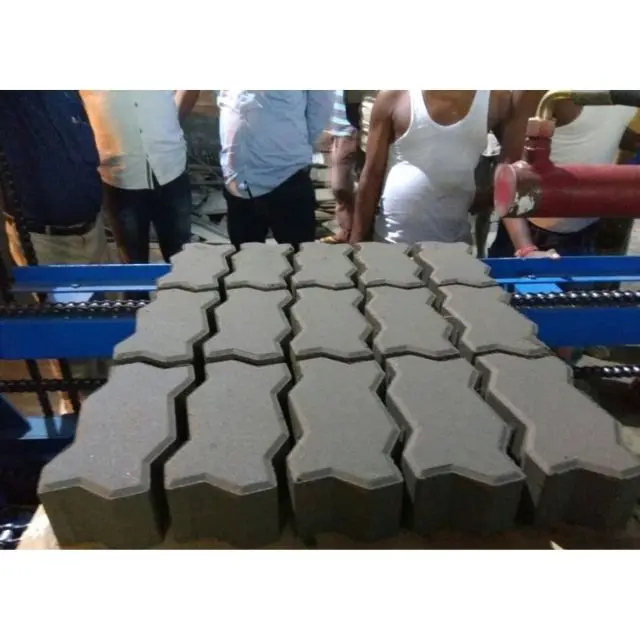
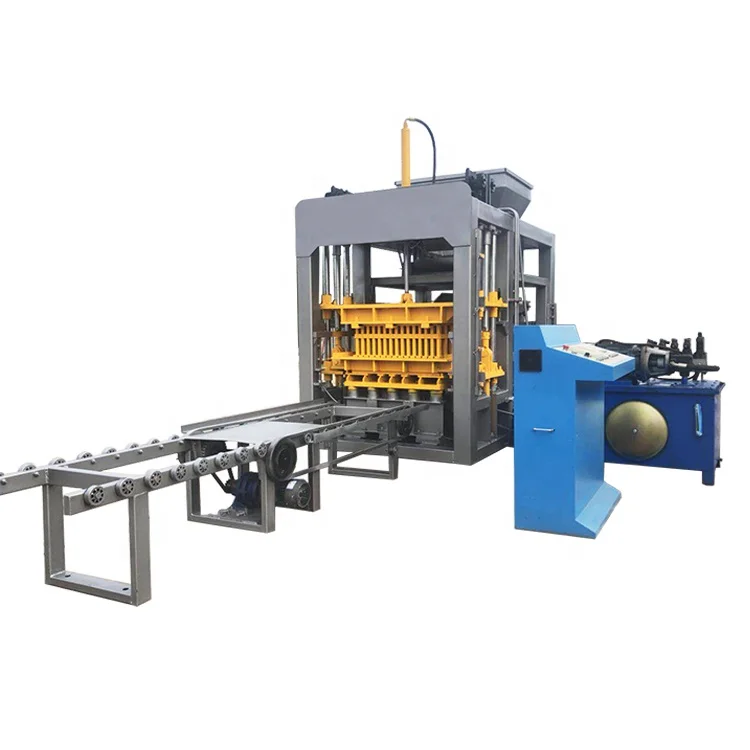 Automatic block machine