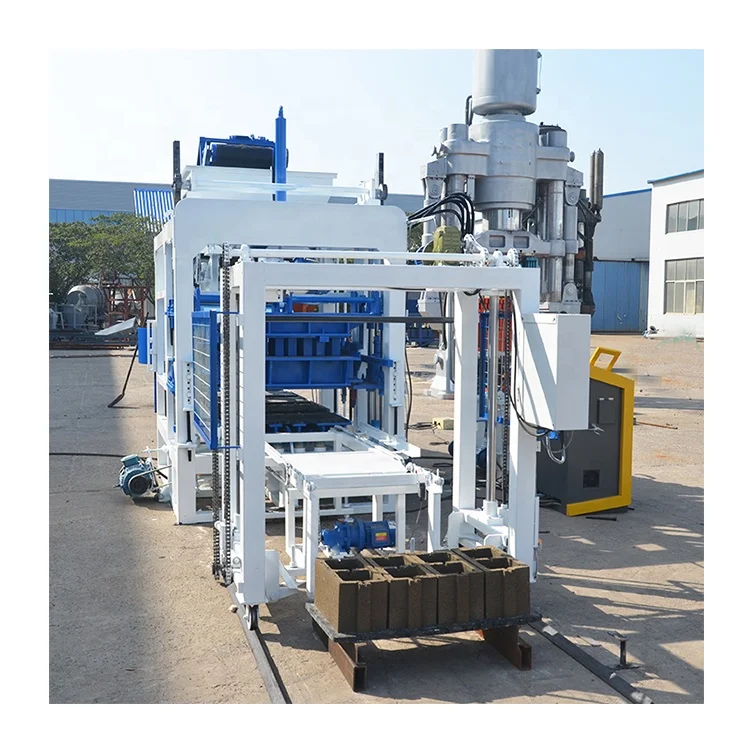
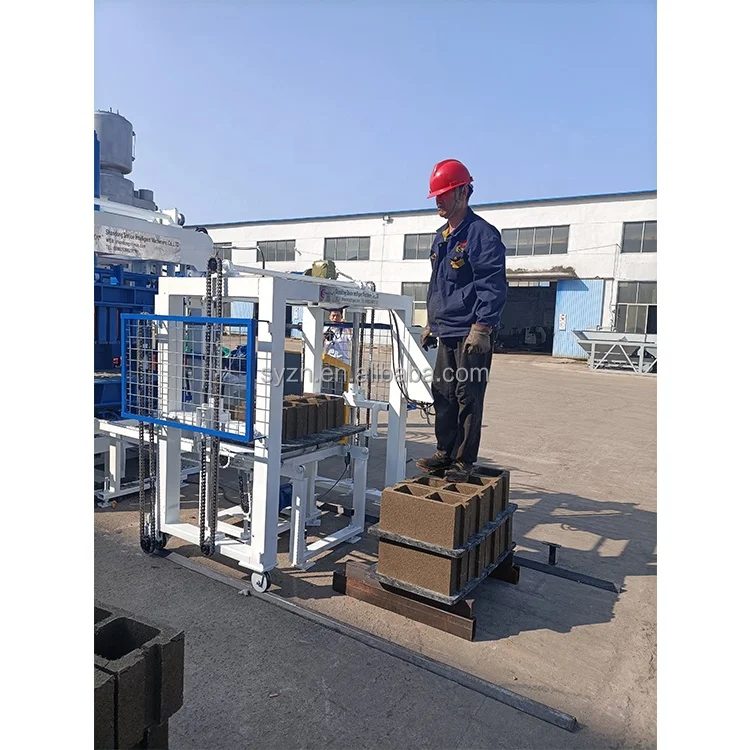
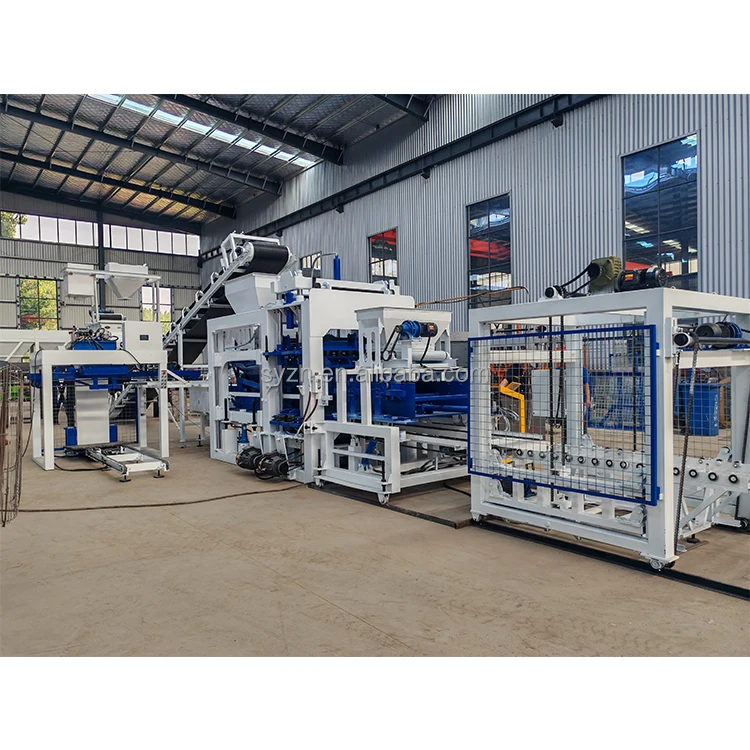
Matched System Configuration — The QT6-15 block making machine is specified as one integrated line with batching, mixing, press, and stacking, eliminating the coordination gaps that arise when sourcing stations from separate suppliers.
Technical Specifications
| Parameter |
Value |
| Model |
QT6-15 |
| Product Type |
Automatic Concrete Block Making Machine |
| Dimension of Host Machine |
5870 × 2220 × 2850 mm |
| Weight of Host Machine |
5.5 Tons |
| Molding Area |
1050 × 500 mm |
| Host Machine Power |
31.5 kW |
| Vibration Force |
55 kN |
| Vibration Frequency |
2800 – 4500 times/min |
| Vibration Method |
Hydraulic + Platform Vibration |
| Pallet Size |
1100 × 550 × 25 mm |
| Voltage |
220 / 380 / 415 / 440 V (Customized) |
| Molding Period |
15 seconds (basis not stated in source — confirm block format) |
| Control System |
Siemens PLC with independently developed control program |
| Motor |
Germany Siemens brand or CE standard brand |
| Travel Switch |
France Schneider / Japan Omron |
| Mould Treatment |
Heat treatment and carburizing, hardness 54 – 58 HRC, lifespan over 100,000 cycles |
| Welding |
Carbon dioxide protection welding, materials per international CE standards |
| Batching Machine (PLD1200) |
Weigh-batching hopper 1200 L, storage hopper 4 × 2.5 m³, theoretical productivity 56 m³/h, ingredient precision ±2%, weight 4500 kg, dimensions 12000 × 2200 × 2500 mm |
| Concrete Mixer (JS500) |
Charging volume 800 L, discharging volume 500 L, production capacity 25 m³/h, mixing motor 18.5 kW, max aggregate size 60 mm, weight 2800 kg |
| Stacker (SY-4) |
Power 3 kW, mobile pallet stack, suitable for hollow block and pavers, weight 600 kg |
| Standards |
CE |
Application Suitability
| Application |
Material or Output |
| Hollow block production |
Crushed stone, cement, sand, and local aggregate blends |
| Solid block manufacturing |
Dense concrete mixes for load-bearing walls |
| Paving block production |
High-strength concrete with fine aggregate and pigment additives |
| Interlocking brick formation |
Stabilized soil-cement or standard concrete mixes |
What "15 Seconds per Cycle" Actually Means for Your Daily Output
A cycle time without a block format attached is not a capacity figure — it is a mechanical limit.
Many buyers receive quotations listing cycles per hour and multiply that number by eight or ten hours, only to find actual daily production far below expectation. The QT6-15 block making machine manufacturer quotes a 15-second molding period, but this figure assumes a specific block format, thickness, and mix design that may not match your product. A hollow block at 200 mm height requires different vibration duration and pressure hold time than a 60 mm paving block. I have seen plants in Southeast Asia take delivery of machines configured for standard sand, only to discover their local volcanic aggregate demanded entirely different vibration frequency and pressure settings. The first two months of production ran at a fraction of nameplate capacity because the parameters were never matched to the actual material. [NEED_CITE: block density variation across aggregate types and vibration settings]
Where the QT6-15 Sits in a Complete Machine Range
The QT6-15 occupies the mid-to-upper tier of automatic block machine configurations, bridging the gap between small workshop machines and high-capacity continuous lines. Buyers evaluating their first automatic plant typically compare this tier against semi-automatic machines that require manual pallet handling and stacking. The distinction matters beyond labor cost: a manual pallet return system introduces cycle time variability that compounds across a full shift, while the QT6-15 configuration includes the SY-4 stacker to maintain consistent output pacing.
For buyers replacing an aging semi-automatic line, the step up involves not just the press itself but the supporting stations. The PLD1200 batching machine with 4 × 2.5 m³ storage hoppers and the JS500 mixer with 25 m³/h production capacity must be matched to the press cycle so that the molding station is never left waiting for material. [NEED_CITE: production line bottleneck analysis in block manufacturing]
Matching Machine Tier to Your Actual Market Volume
Choosing between machine tiers starts with the formats your market actually buys, not the maximum theoretical output. A buyer producing primarily 400 × 200 × 200 mm hollow blocks for local construction needs a different configuration than one splitting production across hollow blocks, pavers, and interlocking bricks. Each format change on the QT6-15 involves swapping the mould on the 1050 × 500 mm molding area, and the time that takes directly subtracts from production hours. The 1100 × 550 mm pallet size determines how many units of each format fit per cycle, which in turn sets your realistic daily output for that specific product.
How Vibration Force and Hydraulic Pressure Determine Block Strength
The 55 kN vibration force operating at 2800 – 4500 times/min works together with hydraulic pressure to compact the concrete mix into the mould cavity. Higher vibration frequency is not universally better: a fine aggregate mix responds well to rapid vibration, while a coarse aggregate blend with larger stone particles needs lower frequency and higher amplitude to achieve full compaction. The Siemens PLC control system allows the vibration frequency to be adjusted within this range, but the correct setting depends entirely on your specific mix design and target block strength. The mould itself is carburized to 54 – 58 HRC hardness, rated for over 100,000 cycles — but that lifespan assumes the vibration parameters do not create excessive abrasion from under-compacted material shifting against the mould walls during each cycle.

The Hidden Cost of Choosing the Wrong Automation Level
Starting with a semi-automatic configuration to reduce initial investment seems practical, but the labor required for manual pallet handling, stacking, and curing rack transport introduces variability that affects block consistency. Buyers who plan to upgrade later often discover that the footprint and foundation layout of their initial semi-automatic line do not accommodate the conveyor and stacker additions needed for full automation. The QT6-15 is offered as a grouped equipment line from the start — batching, mixing, press, and stacking — so the plant layout accounts for all stations. Retrofitting automation into a space designed for manual operation frequently means relocating equipment, re-pouring foundations, and accepting weeks of lost production. [NEED_CITE: plant layout constraints when upgrading block production automation]
Why Source This QT6-15 Block Making Machine Manufacturer Configuration Here
Block machinery is the single focus of this operation, meaning the press, mould, pallet, and handling equipment are specified as one matched system rather than assembled from separate suppliers who have never tested their components together. The configuration is set against your actual mix design, local aggregate characteristics, and target block format — not pulled from a catalogue default that assumes standard sand and cement. Mould design and supply cover the formats your market sells, with custom mould engineering available to buyer drawings for non-standard dimensions. The automation level is selectable within the QT6-15 platform, so a buyer can begin with defined manual steps and integrate automatic stacking or pallet feeding as production volume justifies the investment. Installation and commissioning support includes operator training on the specific Siemens PLC program loaded onto your machine, not generic instruction on a demonstration unit. [NEED_CITE: importance of matched block machine and mould systems for consistent output]
Documentation & Verification
- Line layout and capacity calculation stating the specific block format assumed for cycle time
- Machine specification sheet confirming motor brand and voltage configuration for your market
- Mould drawing and format list for all moulds supplied with the 1100 × 550 mm pallet
- Hydraulic and electrical schematic matching the as-built machine configuration
- Factory test record run on your target block format before shipment
- CE declaration and operation manual with control language matching your operator requirements
Installation, Commissioning & Support
- Foundation plan based on the 5870 × 2220 mm host machine footprint and 5.5-ton operating weight
- Dedicated electrical circuit sized for the 31.5 kW host machine power plus batching and mixer loads
- Machine arrives in grouped sections requiring on-site assembly and alignment of press, mixer, and stacker
- First-run commissioning includes vibration frequency calibration on your actual aggregate and mix design
- Operator training covers Siemens PLC program navigation, mould change procedure, and cycle time adjustment
- Wear parts list and mould maintenance schedule tied to the 100,000-cycle carburized mould lifespan
Before You Request a Quotation
Provide your target block formats with exact dimensions, the daily output you need for each format, and a sample or description of your local aggregate and cement type. Confirm your site voltage, frequency, and the PLC display language your operators require. If you have existing pallets, forklifts, or curing racks, share their dimensions so the pallet size and handling equipment can be matched to what you already have on site.
Frequently Asked Questions
Q: What block format is assumed in the 15-second cycle time, and how does daily output vary by format?
A: The 15-second molding period is a mechanical baseline that changes depending on block height, wall thickness, and mix design. A 200 mm hollow block may require longer vibration hold time than a 60 mm paver, extending the actual cycle. We provide a capacity calculation that states the specific block format assumed, so you can see realistic daily output for each product you plan to manufacture rather than a single unqualified number.
Q: How does the QT6-15 compare to semi-automatic and mobile machines in terms of investment and plant footprint?
A: The QT6-15 sits above semi-automatic machines that rely on manual pallet handling and below high-capacity continuous lines. It requires a defined plant area for the complete grouped line including batching, mixing, press, and stacking stations. Semi-automatic options demand less floor space but more labor per shift, while mobile egg-laying machines eliminate the need for a fixed plant entirely but limit you to on-site production without pallet-based curing.
Q: Which voltage and PLC display language options are available for my market?
A: The QT6-15 supports voltage configurations including 220, 380, 415, and 440 V, and the Siemens PLC control system can be set to display in the language your operators use. Both voltage and language must be confirmed before production begins, as changing either after the machine is built involves rewiring and reprogramming that delays commissioning. We verify these parameters during the quotation stage to match your local electrical standards.
Q: What mould formats are available for the 1100 × 550 mm pallet, and can custom moulds be designed to my drawings?
A: The pallet size supports hollow blocks, solid blocks, paving blocks, interlocking bricks, and kerbstones in various arrangements per cycle. Standard moulds cover common formats, and custom mould design is available to buyer drawings for non-standard dimensions or specialized products. All moulds undergo carburizing treatment to 54 – 58 HRC hardness, and the format list included with your documentation confirms exactly which products your machine can produce on the supplied pallet size.

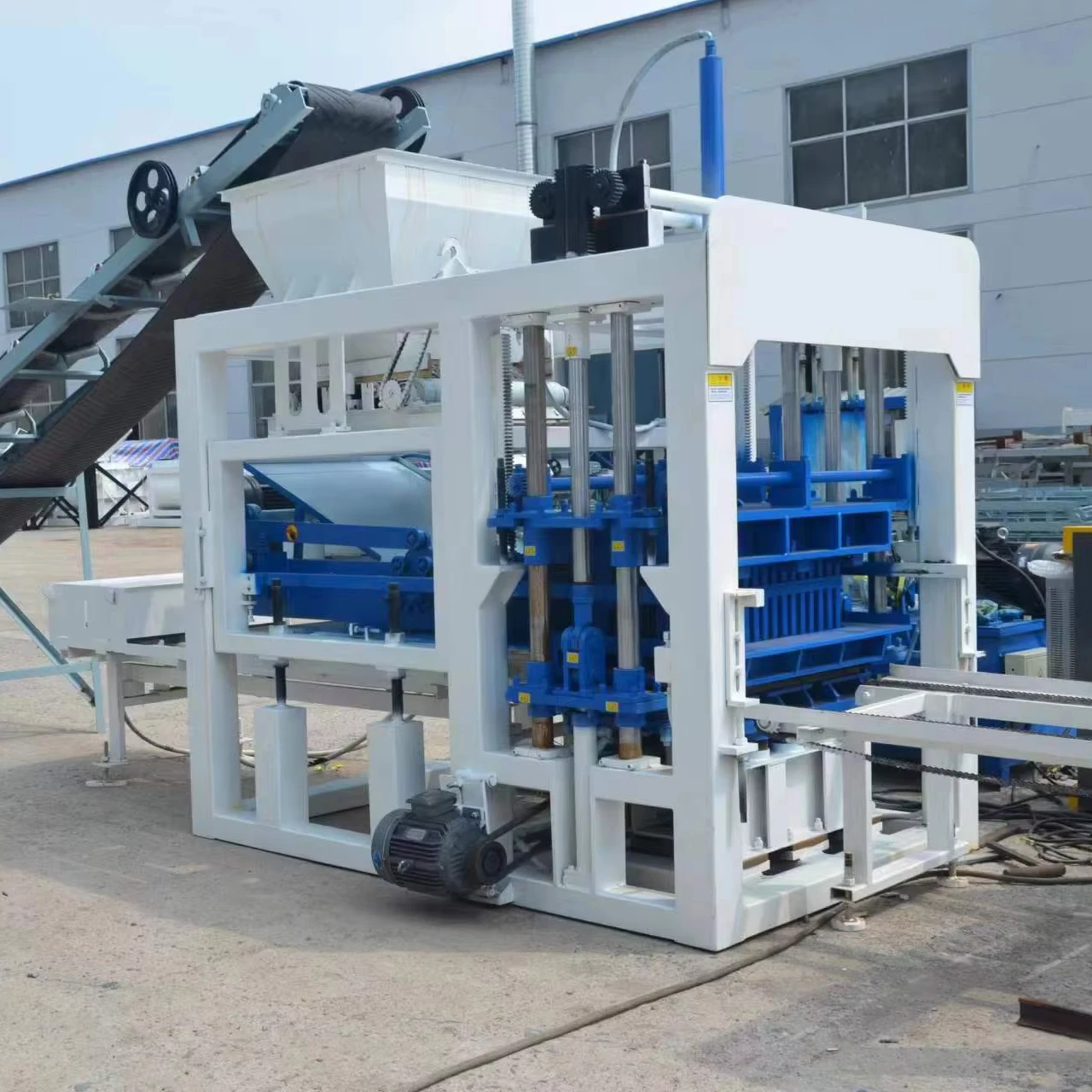
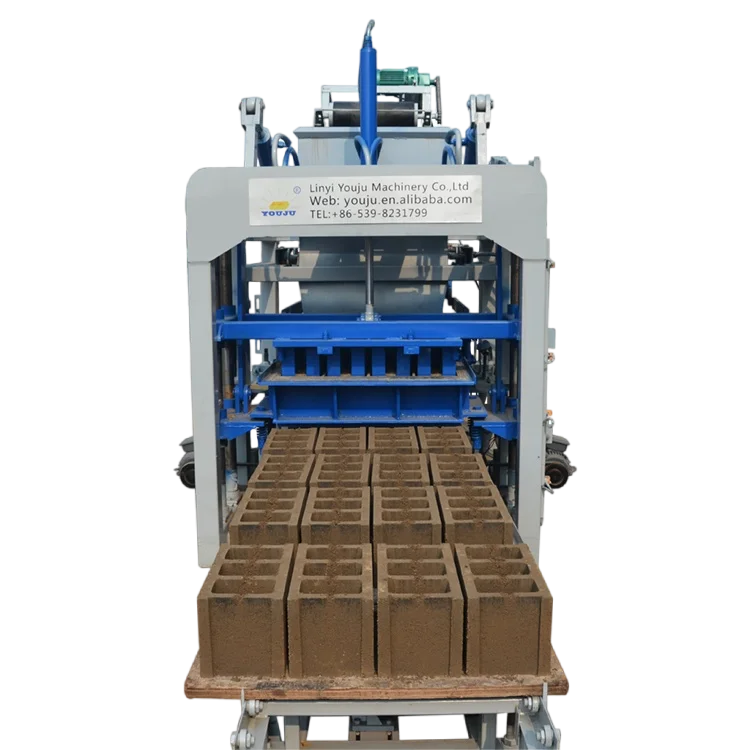 High quality block machine