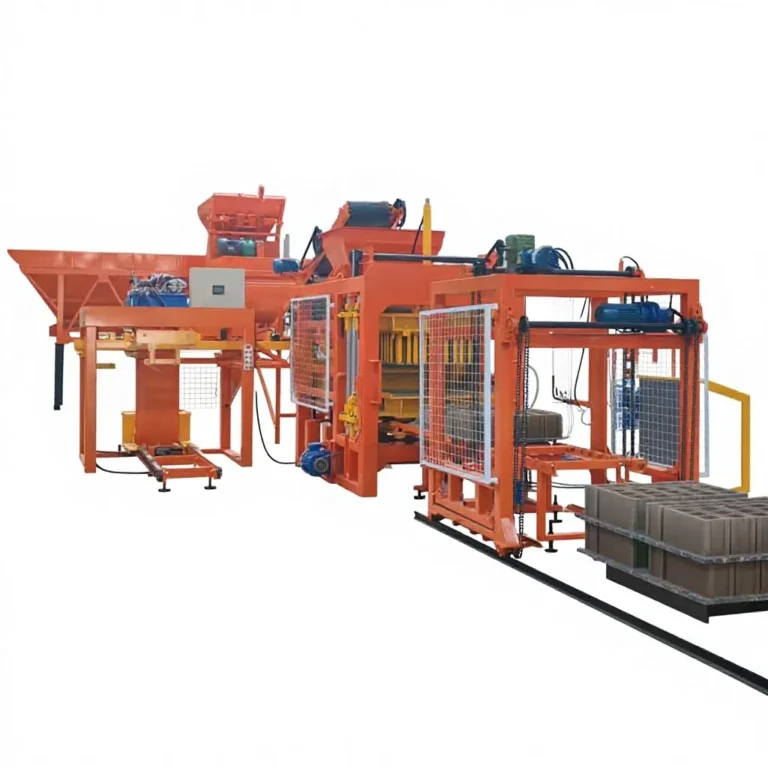
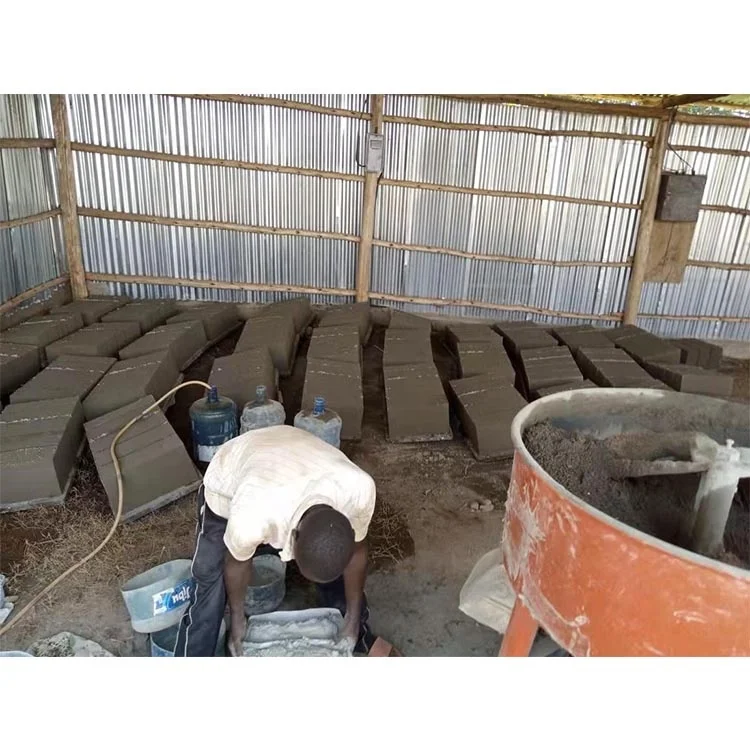
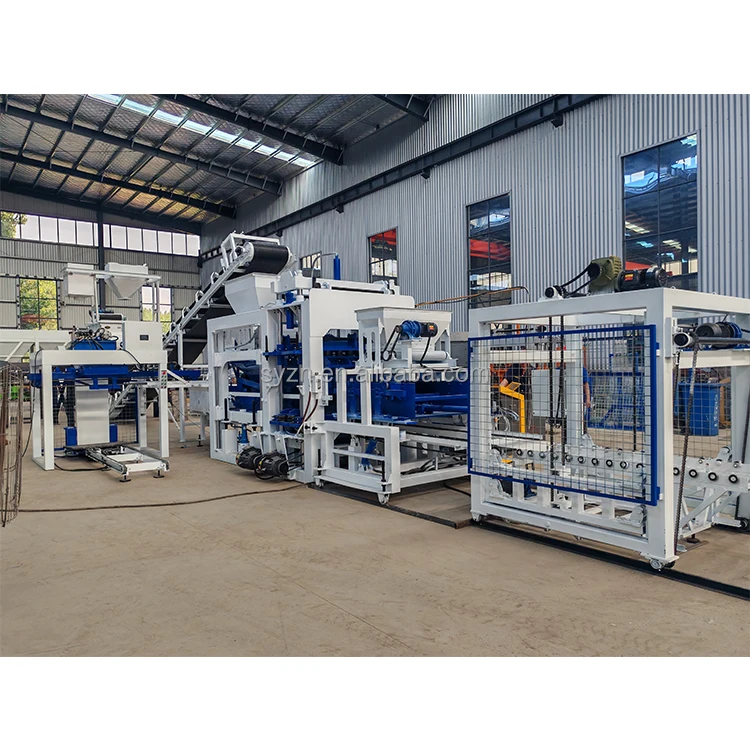
Matched System Supply — Every QT6-15 block machine ships with pallets, moulds, and handling gear specified against the buyer’s curing area and forklift, not pulled from a generic catalog.
Technical Specifications
| Parameter |
Value |
| Model |
QT6-15 |
| Product Type |
Hydraulic Concrete Block Making Machine |
| Overall Dimensions (L×W×H) |
8200×1700×2950 mm |
| Total Mass |
7 T |
| Overall Power |
37 kW |
| Vibration Form |
Platform Vibration |
| Vibration Frequency |
0-60 Hz |
| Vibration Force |
45 kN |
| Moulding Mode |
Load automatically, vibration moulding |
| Demolding Method |
Hydraulic |
| Pallet Size |
880×850 mm |
| Molding Cycle |
15-20 s (basis to be confirmed by block format and material) |
| Factory Area Required |
1200 m² |
| Control System |
PLC with touch screen |
| Output Capacity (Hollow Block 400×200×200 mm) |
8640-11520 pcs/8hr (based on 6 pcs/mould, 15-20s cycle) |
| Output Capacity (Hollow Block 400×150×200 mm) |
11520-15360 pcs/8hr (based on 8 pcs/mould, 15-20s cycle) |
| Output Capacity (Solid Brick 240×115×53 mm) |
46080-61440 pcs/8hr (based on 32 pcs/mould, 15-20s cycle) |
| Output Capacity (Rectangular Paver 200×100×60 mm) |
17280-23040 pcs/8hr (based on 21 pcs/mould, 20-25s cycle) |
| Block Compressive Strength |
>15 MPa |
| Hydraulic System |
Independent integrated hydraulic station |
| Fault Diagnosis |
Built-in system |
| Raw Material Adaptability |
Waste ash, slag, various aggregates |
Application Suitability
| Application |
Material or Output |
| Hollow Block Production |
Crushed stone, cement, and sand mixes for 400×200×200 mm or 400×150×200 mm formats |
| Solid Brick Production |
Dense aggregate blends for 240×115×53 mm standard bricks |
| Paving Brick Production |
High-strength concrete mixes for rectangular and zigzag pavers at 60 mm thickness |
| On-Site Project Supply |
Local aggregate and waste ash adapted to housing project requirements |
What the Quoted Cycle Time Actually Means for Your Plant
The molding cycle only matters once your specific block format and local aggregate are factored in.
I have walked onto sites where the operator pointed at a capacity plate and then pointed at a pallet stack that was barely half the promised count. The gap almost always traces back to a cycle time quoted for a standard mix that the buyer cannot source locally, forcing a slower press cycle to maintain block strength [NEED_CITE: impact of local aggregate gradation on vibration cycle time]. When evaluating a QT6-15 block machine manufacturer, the first document to request is a capacity calculation that names the exact block format and mix design behind every output figure.

Where the QT6-15 Sits in the Full Machine Range
Buyers surveying their first plant or replacing an aging press need to see the tiers before committing capital. The QT6-15 occupies the mid-tier of the Shiyue automatic range, sitting above entry-level semi-automatic models that require manual pallet handling and below high-capacity lines that demand a larger footprint and higher power supply. This positioning makes the QT6-15 block machine manufacturer proposal relevant for entrepreneurs scaling from a workshop setup and for distributors adding hollow block and paver formats to an existing yard.
Matching Automation Level to Your Current Crew
A semi-automatic configuration keeps initial investment lower but leaves pallet feeding and stacking to operators, which caps realistic daily output. The QT6-15 supports selectable automation, meaning a buyer can start with manual pallet handling and add automatic stacking and cubing later as volume grows. This upgrade path is the reason many housing project contractors specify the machine for phased site development [NEED_CITE: typical automation upgrade intervals in block production plants].
Reading the Specs That Decide Daily Output
The 45 kN vibration force combined with hydraulic demolding determines how densely the concrete is compacted before the mould lifts. If the vibration frequency is set too high for a coarse local aggregate, the mix segregates and block strength drops below the 15 MPa target. The 880×850 mm pallet size must align with the curing racks and forklift tines already on site; a mismatch means either new racks or reduced pallet capacity per rack bay. The independent hydraulic station sits away from the main vibration zone, which protects valve seals from dust ingress and extends service intervals.
The Hidden Cost of Skipping the Pallet Audit
When the pallet size is chosen without checking the buyer’s curing area, the result is a stack of pallets that do not fit the existing rack slots, forcing a forklift to double-handle every load. I have seen entire curing yards rearranged because the pallet dimension was confirmed after the machine shipped rather than before [NEED_CITE: curing yard layout errors from unconfirmed pallet dimensions]. The cost is not just the lost week of production but the concrete that cures unevenly because blocks were stacked on the floor instead of on racks.
Why Buyers Specify This Range
Block machinery is the single focus here, so the QT6-15 arrives as a matched system: machine, mould, pallet, and handling equipment are specified together rather than assembled from separate invoices. Configuration starts from the buyer’s actual mix design and target block format, not a default catalog setting. Mould design covers the formats the local market actually buys, including custom drawings when a contractor needs a non-standard kerbstone. Automation is selectable, protecting the buyer from paying for full automatic stacking on day one when a semi-automatic start makes financial sense.
Documentation & Verification
- Line layout drawing showing the 1200 m² factory area with capacity stated per block format
- Machine specification sheet confirming voltage, frequency, and PLC display language before production
- Mould drawing and format list covering every block type in your local market
- Factory test record using your target mix design before the machine is crated
- Packing photographs showing dismantling state for container loading
Installation, Commissioning & Support
- Foundation plan sized to the 8200×1700 mm footprint and 7 T operating mass
- Dedicated power circuit confirmed for the 37 kW overall power draw at your local voltage
- Machine dismantled for container shipment with reassembly supervised on site
- PLC touch screen parameters set against your specific aggregate and block format during commissioning
- Operator training covering mould change procedure and built-in fault diagnosis system
- Wear parts list identifying hydraulic seals and vibration components for first reorder
What to Send with Your Inquiry
To get a configuration that reflects your actual site, include the block formats your market sells, the daily output you need per format, and a sample of your local aggregate with a basic sieve analysis. Add your available factory area dimensions, existing curing rack specs, and the voltage and frequency at your panel board. If you already run a mixer or batching plant upstream, note its capacity so the feeding station can be matched.
Frequently Asked Questions
Q: How does the QT6-15 output tier compare to smaller and larger models in the range?
A: The QT6-15 sits in the mid-tier, producing between 8640 and 15360 hollow blocks per eight-hour shift depending on the format and cycle time confirmed for your mix. Smaller semi-automatic models serve lower volumes with manual pallet handling, while larger automatic lines require more floor space and a higher power supply to achieve greater throughput.
Q: Which block formats can this machine produce, and what is the realistic cycle time?
A: The machine produces hollow blocks, solid bricks, and rectangular or zigzag pavers using the 880×850 mm pallet. Cycle time ranges from 15 to 25 seconds depending on the block thickness and material density required. A realistic figure for your plant is confirmed only after your specific mix design and target compressive strength are reviewed.
Q: What plant footprint does the QT6-15 require?
A: The machine itself measures 8200×1700×2950 mm and weighs 7 T, but the full production line including raw material feeding, pallet return, and stacking area typically needs around 1200 m². The exact layout depends on whether you choose semi-automatic or full automatic handling and how much curing rack space you allocate on site.
Q: How is voltage and PLC language confirmed before production begins?
A: Voltage, frequency, and the PLC touch screen display language are confirmed in writing before the machine enters production. This step prevents commissioning delays that occur when a machine arrives wired for a different grid standard or when operators cannot read the fault diagnosis messages on the screen.
Q: Can the automation level be upgraded later?
A: Yes. The QT6-15 supports a selectable automation path, allowing a buyer to start with manual pallet handling and add automatic pallet feeding, stacking, and cubing modules as production volume grows. The upgrade is planned during the initial line layout so that mechanical interfaces and PLC I/O are already in place.

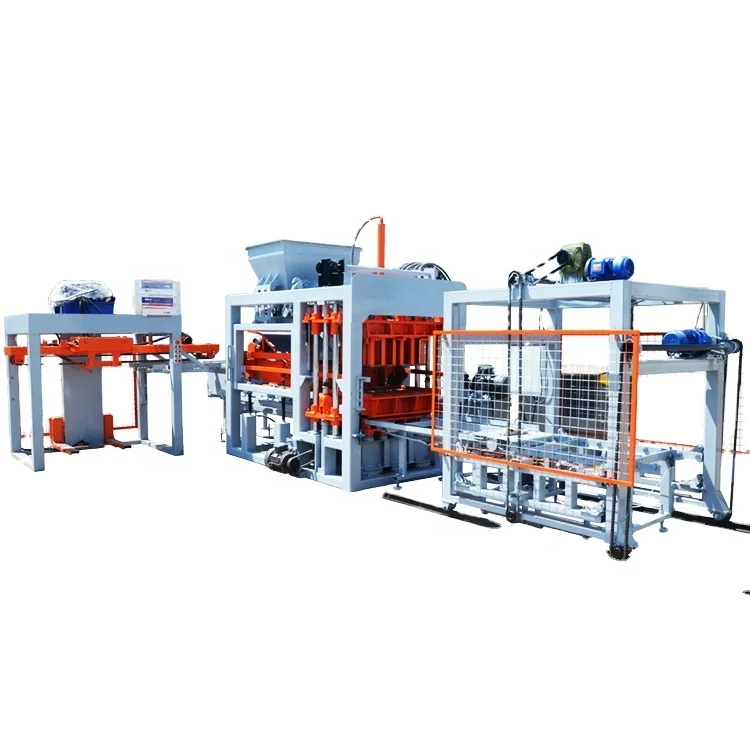
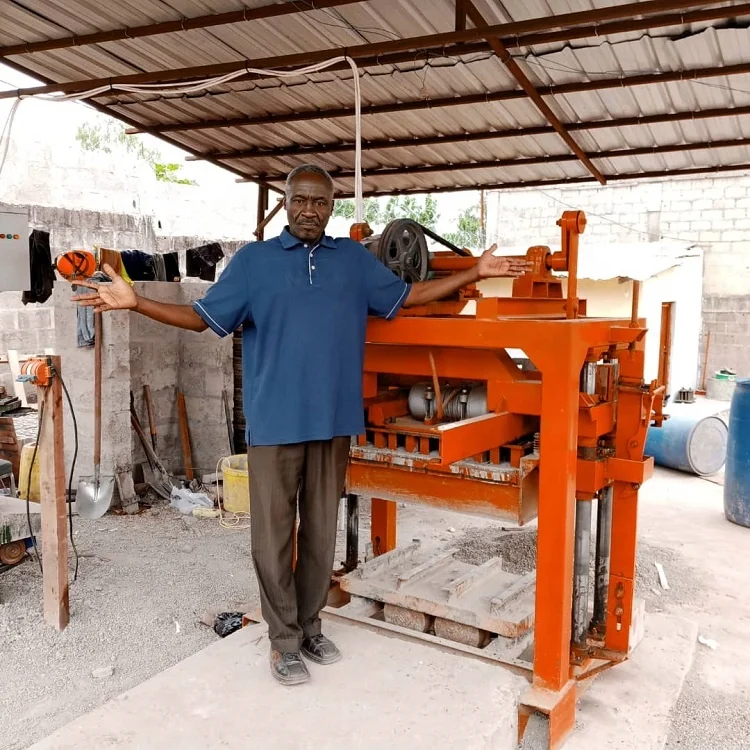 High quality block machine