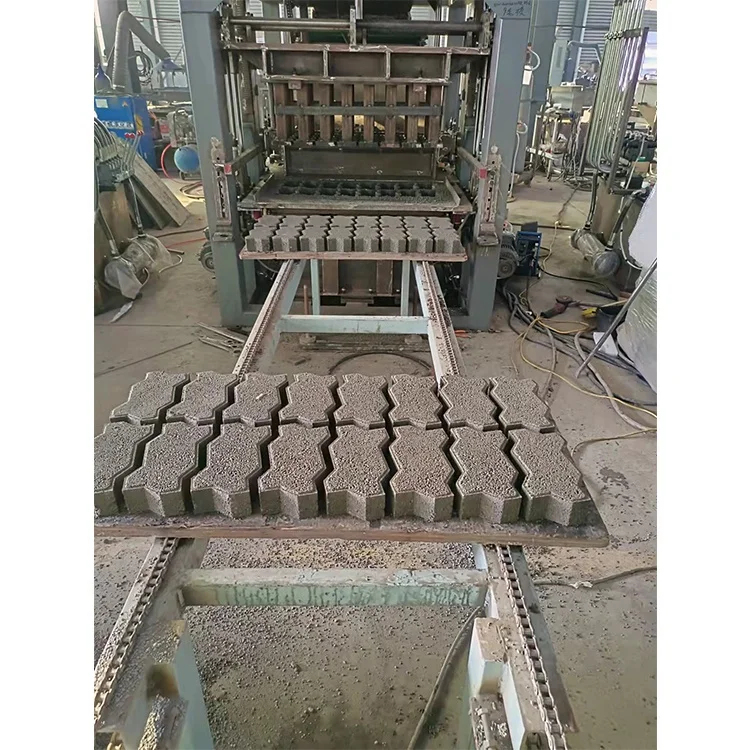
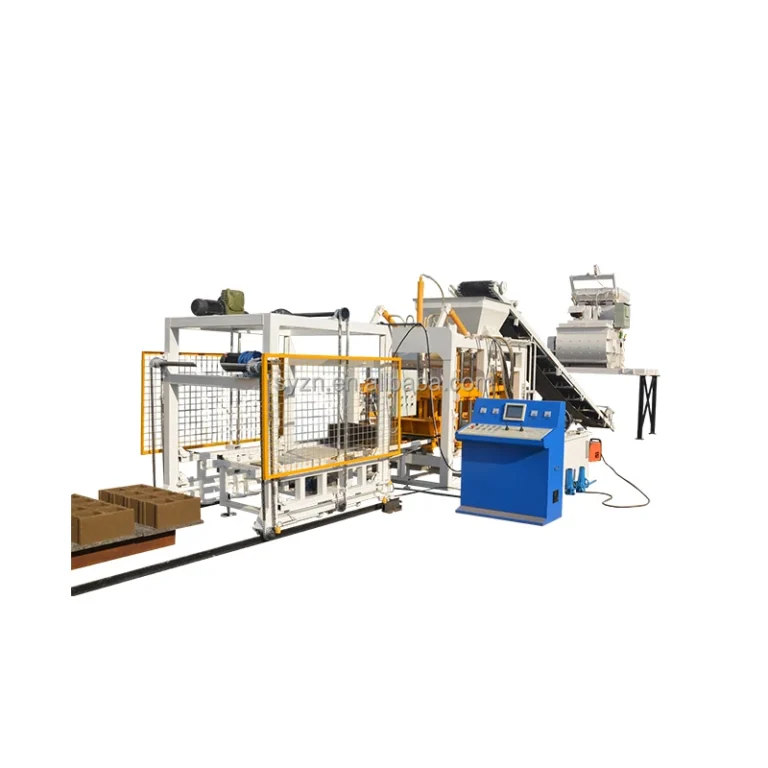
Matched System Sizing — the QT6-15 automatic block machine manufacturer configures press, mould, pallet and handling as one verified set, not separate catalogue picks.
Technical Specifications
| Parameter |
Value |
| Model |
QT6-15 |
| Product Type |
Automatic Concrete Block Making Machine |
| Overall Dimensions (L×W×H) |
8200 × 1700 × 2950 mm |
| Vibration Form |
Platform Vibration |
| Vibration Frequency |
0–60 Hz |
| Vibration Force |
45 kN |
| Moulding Mode |
Automatic loading, vibration moulding |
| Pallet Size |
880 × 850 mm |
| Molding Cycle |
15–20 s |
| Overall Power |
37 kW |
| Total Mass |
7 T |
| Demolding Method |
Hydraulic |
| Recommended Factory Area |
1200 m² |
| Control System |
PLC with touch screen interface |
| Hydraulic System |
Independent integrated hydraulic station |
| Automation Level |
High — automatic loading, PLC-controlled process, fault diagnosis |
| Block Compressive Strength |
>15 MPa (basis to be confirmed against buyer’s mix design) |
| Output — Hollow Block 400×200×200 mm |
1,080–1,440 pcs/h, 6 pcs/mould, 15–20s cycle |
| Output — Hollow Block 400×150×200 mm |
1,440–1,920 pcs/h, 8 pcs/mould, 15–20s cycle |
| Output — Solid Brick 240×115×53 mm |
5,760–7,680 pcs/h, 32 pcs/mould, 15–20s cycle |
| Output — Rectangular Paver 200×100×60 mm |
2,160–2,880 pcs/h, 21 pcs/mould, 20–25s cycle |
| Output — Zigzag Paver 225×112.5×60 mm |
2,160–2,880 pcs/h, 15 pcs/mould, 20–25s cycle |
| Warranty |
1 year for whole machine (excluding spare parts) |
Application Suitability
| Application |
Material or Output |
| Hollow block production for building walls and partitions |
Crushed stone, sand, cement and fly ash blends |
| Solid brick production for structural and infill masonry |
Local aggregate with standard cement dosage |
| Rectangular and zigzag paving block production for roads and walkways |
Fine aggregate and cement for high-density surface finish |
| First block plant setup serving local market demand |
Multiple formats from a single machine platform |
| Construction contractors producing blocks on-site |
Mid-size yard output within 1,200 m² footprint |
| Existing manufacturers expanding product range |
Hollow blocks, solid bricks and interlocking pavers on one press |
What "8,640 Blocks per Shift" Actually Means for Your Yard
Every capacity figure must name the block size, mould cavity count and cycle time behind it, or it is meaningless for planning.
Catalogue sheets often quote a single peak number that assumes a small solid brick running at minimum cycle. When the buyer’s real product is a 400×200×200 mm hollow block, the mould holds fewer cavities and the cycle stretches longer, so daily output drops to a fraction of the headline figure. I have watched entire project schedules slip because the plant was sized on a number that never matched the block the yard actually sells. The QT6-15 automatic block machine manufacturer approach is to tie every output claim to a specific format, so the gap between quotation and reality closes before the deposit is paid [NEED_CITE: common causes of block plant output shortfall after commissioning].

Where the QT6-15 Sits Across the Output Tiers
The QT6-15 occupies the mid-to-upper tier of the Shiyue range, bridging the gap between small workshop machines and high-capacity automatic lines. Buyers setting up a first plant often find that smaller semi-automatic models cannot cover local hollow block and paver demand, while the largest presses require a factory footprint and investment that exceeds their market. This model provides PLC-controlled production across formats, placing it where a new or expanding yard can match its investment level to actual daily sales volume without over-committing capital.
Scaling the Line Without Replacing the Press
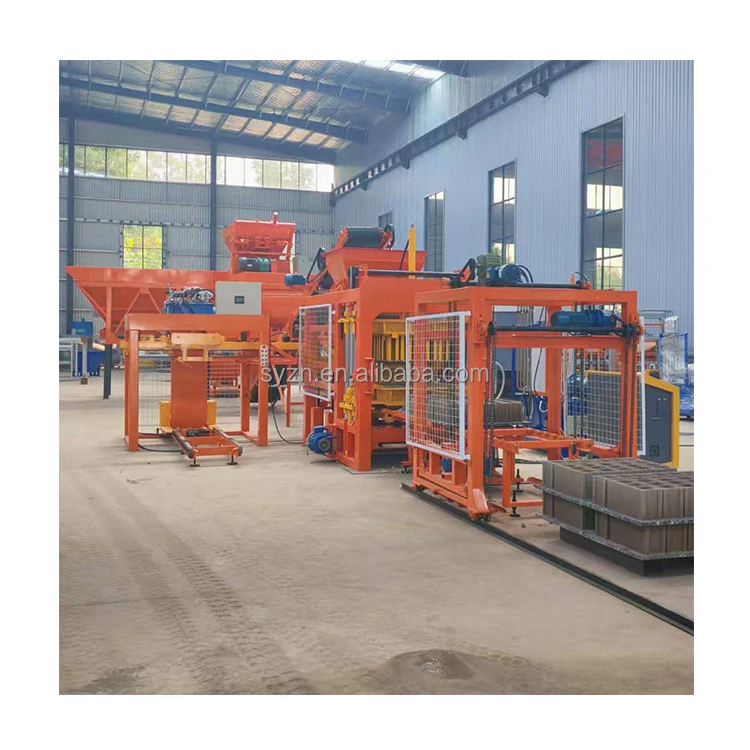
Automation on this platform is selectable, so a buyer can begin with manual pallet handling and add automatic stacking or cubing as demand grows. The press itself remains the same unit; only the upstream feeding and downstream handling stations change. This modular path means the QT6-15 automatic block machine manufacturer can deliver a line that starts within a lower budget and scales through added stations rather than a complete equipment swap [NEED_CITE: modular block line upgrade paths in developing markets].
Reading the Numbers That Matter on Site
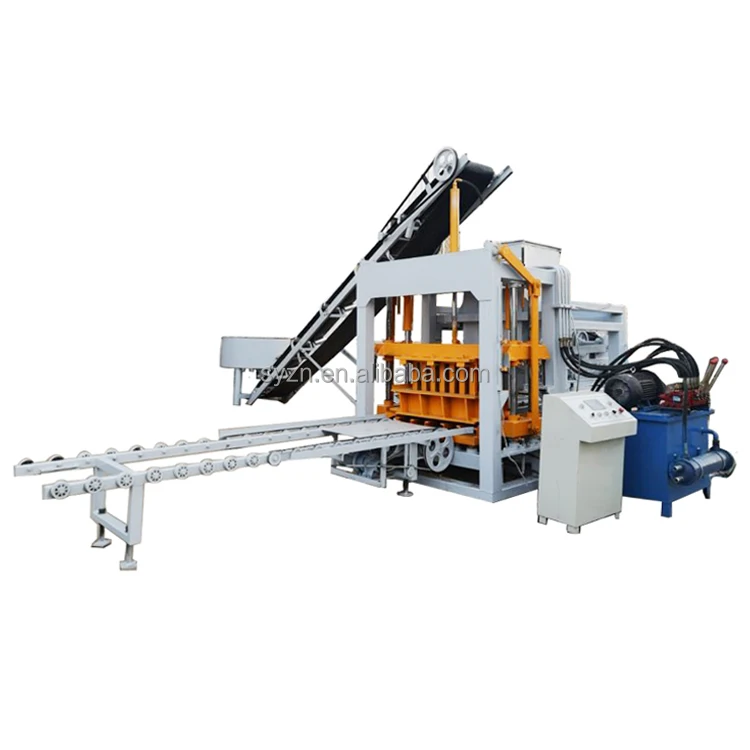
The vibration force of 45 kN combined with hydraulic demolding is what determines block density at the moment of release. A lower vibration force may leave hollow block walls porous, while excessive force without matched hydraulic pressure can cause edge cracking during stripping. The platform vibration system operates between 0 and 60 Hz, allowing the operator to tune frequency to the local aggregate gradation. The independent integrated hydraulic station sits apart from the main frame, shielding valves and seals from vibration fatigue and dust ingress that shorten service intervals in open-yard plants. Pallet size at 880 × 850 mm must align with the curing rack spacing and forklift tine width already on site, or the handling chain breaks down before a single block is stacked.
The Hidden Cost of Ignoring Configuration Fit
When voltage, frequency and PLC display language are left unconfirmed until the machine arrives, commissioning stalls while transformers are sourced or control panels are reprogrammed. I have seen weeks lost on tropical job sites because the touch screen displayed fault codes in a language the operators could not read. The same applies to pallet material chosen without regard to local humidity and curing duration — warping pallets introduce uneven block heights that jam the stacking station downstream [NEED_CITE: impact of pallet warping on automatic stacking reliability].
Why Procurement Through This Channel Works
Block machinery is the single focus here, so the press, mould, pallet and handling equipment are specified as one matched system rather than assembled from separate suppliers. Configuration is set against the buyer’s actual mix design and target block format, not a catalogue default. Mould design covers the formats the local market sells, including custom drawings when standard cavity layouts do not fit. Automation level is selectable, allowing a buyer to start semi-automatic and add stations later. Installation support includes operator training on the specific PLC interface and hydraulic circuit of this press.
Documentation & Verification
- Line layout and capacity calculation stating the block format and mould cavity count assumed for each output tier.
- Machine specification sheet covering overall dimensions, power, vibration force and hydraulic ratings.
- Mould drawing and format list confirming dimensions match local market standards before production.
- Pallet specification including size, material and load rating matched to the buyer’s curing area.
- Hydraulic and electrical schematic for on-site maintenance and troubleshooting reference.
- Factory test record on the buyer’s specified block format before dispatch from the workshop.
Installation, Commissioning & Support
- Foundation must accommodate 8200 × 1700 mm footprint with vibration-dampening pad under the main press frame.
- Dedicated power circuit required for 37 kW overall load with voltage and frequency confirmed before shipment.
- Machine dismantled into container-load sections with reassembly supervised during on-site commissioning.
- PLC touch screen parameters set to buyer’s target block format and cycle times during first production run.
- Operator training covers mould change procedure, fault diagnosis interface and daily hydraulic checkpoint routine.
- Wear parts list provided for vibration table springs, hydraulic seals and mould liner plates with reorder lead times.
What to Prepare Before Requesting a Quotation
To size the QT6-15 correctly for your yard, share your best-selling block format with target dimensions, the local aggregate type and cement dosage you plan to run, and your available factory area including curing space. Confirm the voltage and frequency at your site, the display language your operators need, and whether existing pallets and forklifts must be reused or new handling equipment is required. This information allows the proposal to carry an honest capacity calculation tied to your actual product.
Frequently Asked Questions
Q: How is the QT6-15 positioned within the full block machine range?
A: It sits between small semi-automatic workshop models and high-capacity fully automatic lines. The press covers hollow blocks, solid bricks and pavers on one platform, with automation selectable from basic PLC control through to automatic stacking. This makes it suitable for first-time plant buyers who need format flexibility without the investment of a large-scale line.
Q: How do I verify real daily output for my specific block format?
A: Output depends on the mould cavity count and cycle time for your exact block size. Request the capacity calculation document that states which format each figure assumes, then multiply by your planned shift length and subtract downtime for pallet handling and mould changes to get a realistic daily number.
Q: What automation level does the QT6-15 offer, and can I upgrade later?
A: The standard configuration includes PLC-controlled process logic with touch screen and fault diagnosis. Pallet feeding, stacking and cubing can be added as separate stations. The press itself does not need replacement when upgrading, only the upstream and downstream handling modules are added.
Q: What voltage and control language options are available?
A: Voltage and frequency must be confirmed before production to match your site supply. The PLC display language is also configurable and should be specified at order stage. Confirming both prevents delays during commissioning when the machine arrives at your yard.
Q: What is included in the quotation beyond the press itself?
A: The proposal should list moulds for each block format, pallet specification, and any handling stations selected. Verify that raw material feeding, pallet feeding and stacking equipment are documented in the line layout rather than assumed, so the total investment matches your budget.

 High quality block machine