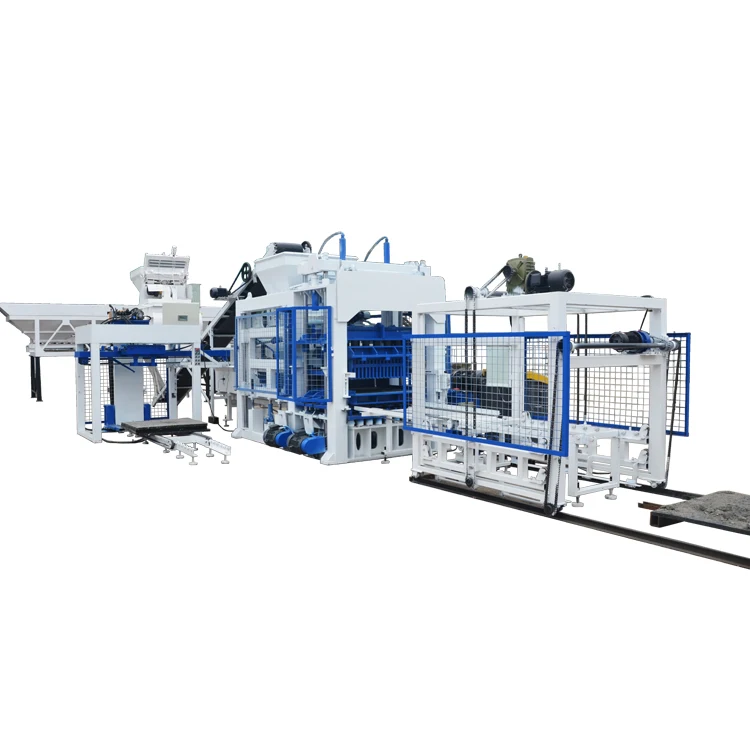
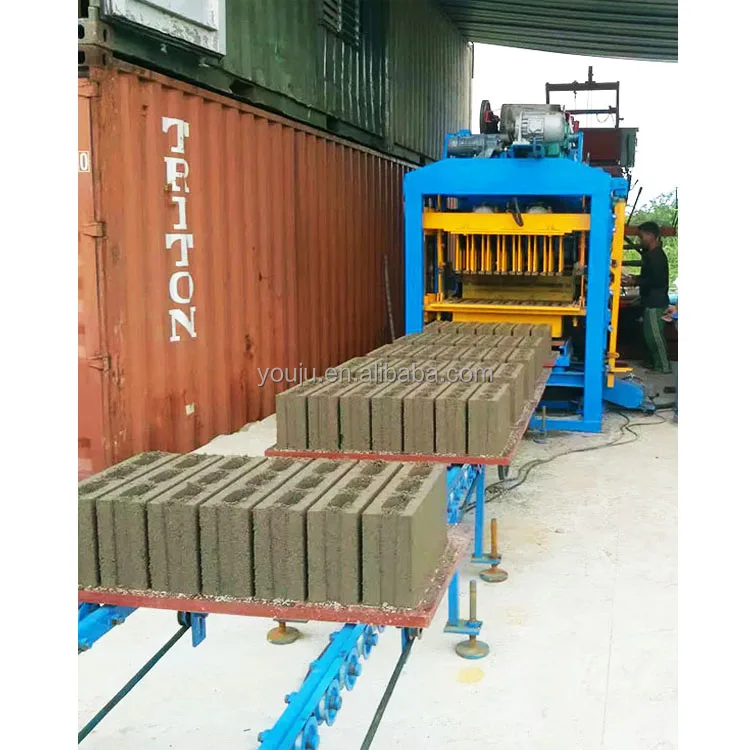
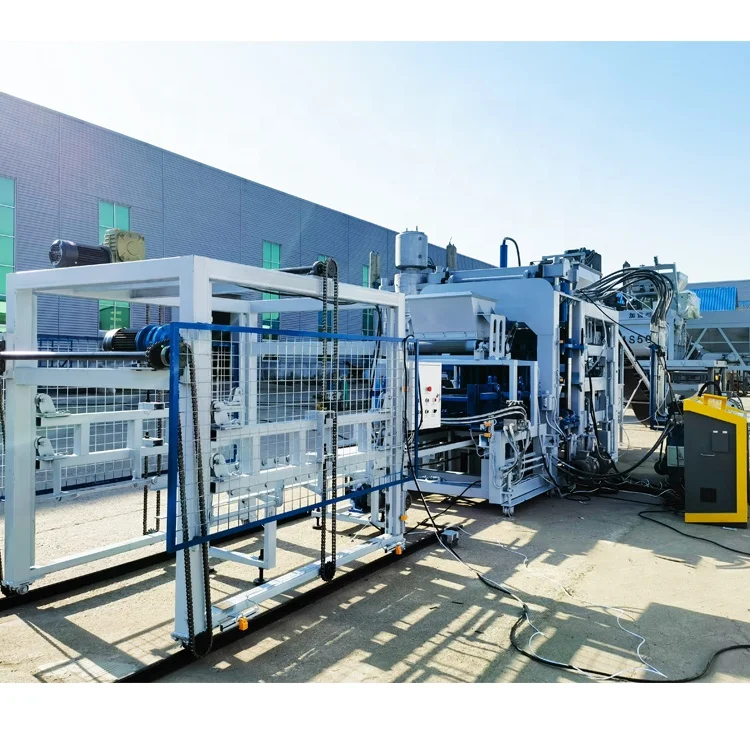
Single Focus on Block Machinery — Every component of the QT6-15, from the 850×680 mm pallet to the Siemens-driven PLC, is specified as one matched system rather than assembled from separate suppliers.
Technical Specifications
| Parameter |
Value |
| Model |
QT6-15 |
| Product Type |
Automatic Cement Block Making Machine |
| Productivity per Mould (Hollow Block 390x190x190mm) |
6 pcs/mould (basis to be confirmed for daily output) |
| Productivity per Mould (Solid Block 240x115x53mm) |
30 pcs/mould (basis to be confirmed for daily output) |
| Productivity per Mould (Paver 225×112.5x60mm) |
15 pcs/mould (basis to be confirmed for daily output) |
| Overall Dimensions |
7100x1500x3000 mm |
| Machine Weight |
10t (for simple production line) |
| Pallet Size |
850×680 mm |
| Motor Power |
31.25 kW |
| Rated Pressure |
21 MPa |
| Vibration Force |
60 kN |
| Control System |
PLC (Siemens electronics) |
| Motor Brand |
Siemens |
| Mould Manufacturing |
Wire cutting and carburizing heat treatment |
| Automation Level |
Automatic |
Application Suitability
| Application |
Material or Output |
| Load-bearing wall construction |
Hollow blocks from crushed stone, sand, and cement |
| Residential paving projects |
Interlocking pavers from colored concrete mixes |
| Infrastructure and landscaping |
Solid blocks and curbstones from local aggregate |
| On-site contractor production |
Various formats matching daily masonry requirements |
What the Cycle Time Doesn’t Tell You About Daily Output
Real capacity depends on the block format you run, not the machine’s maximum theoretical speed.
A buyer looking at an automatic block machine often sees a single productivity figure that assumes a specific standard hollow block. When you switch to a taller paver or a multi-cavity design, the vibration cycle extends, and the actual hourly throughput shifts. This is why we start the configuration process by asking for your target block format and daily output requirement, ensuring the capacity calculation matches your market reality. [NEED_CITE:]

Where the QT6-15 Sits in the Full Machine Range
For a buyer surveying the complete range of block making equipment, the QT6-15 occupies a mid-to-high capacity tier. It is designed for production plants that have moved beyond the mobile or small semi-automatic units but are not yet ready for the massive footprint of a high-volume automatic line with full robotic cubing. This automatic block machine bridges the gap for entrepreneurs establishing their first serious plant or contractors needing a reliable on-site production unit.
Matching the Investment to the Plant Footprint
When you place this model within the wider range, the 7100x1500x3000 mm dimensions dictate a specific workshop layout. Unlike smaller units that can operate in an open yard, this tier requires a dedicated curing area that aligns with the 850×680 mm pallet size. Choosing this tier means committing to a balanced line where the mixer output and pallet return system can keep pace with the press cycle. [NEED_CITE:]
The Physics of Density and the 60 kN Vibration Force
The rated pressure of 21 MPa works in tandem with the 60 kN vibration force to achieve block density. In concrete block production, hydraulic pressure alone is not enough; the vibration must be sufficient to settle the aggregate into the mould cavity. If the vibration force is too low for the local mix design, the resulting blocks may have weak spots or inconsistent dimensions, leading to rejection on the construction site.
Why Pallet Size Matters for the Curing Area
The 850×680 mm pallet specification is a critical interface between the machine and the rest of your facility. If your existing forklifts or curing racks are designed for a different dimension, the handling equipment will not match, creating a bottleneck immediately after the press. We verify your pallet handling infrastructure before finalizing the configuration to ensure the line flows without manual intervention.
The Cost of Unconfirmed Voltage and PLC Language
One of the most frequent delays we see on export projects involves the control system. A machine arriving with a PLC display in a language the local operators cannot read, or wired for a voltage frequency that differs from the site supply, sits idle for weeks. Verifying the Siemens electronics configuration and the main power supply requirements before production begins prevents these commissioning hold-ups. [NEED_CITE:]
How We Match the Machine to Your Market
Our core strength lies in treating block machinery as a single focus. We do not simply ship a standard unit; we configure the QT6-15 against your actual mix design and local aggregate availability. By specifying the moulds, pallets, and handling equipment as a matched system, we avoid the common failure of assembling a line from incompatible suppliers. This approach ensures the automation level you select today has a clear upgrade path as your plant expands.
Documentation & Verification
- Line layout and capacity calculation stating the specific block format assumed for the QT6-15.
- Machine specification sheet confirming voltage, frequency, and PLC display language.
- Mould drawing and format list showing exact dimensions and the changeover system.
- Factory test record demonstrating cycle time and block density under test conditions.
- Hydraulic and electrical schematic for maintenance and troubleshooting reference.
Installation, Commissioning & Support
- Foundation plan must account for the 10t weight and vibration isolation requirements.
- Power supply must support the 31.25 kW motor load with stable voltage and frequency.
- Pallet return system setup ensures the 850×680 mm pallets circulate without manual stacking.
- PLC training covers Siemens interface navigation and basic parameter adjustment for operators.
- Wear parts list identifies mould inserts and hydraulic seals for initial stock planning.
- Mould changeover procedure explained to minimize downtime between format switches.
Next Steps for Your Project
To determine if the QT6-15 is the right tier for your facility, we need to review your target block formats and the daily output you aim to achieve. Please provide details on your local raw materials, the available workshop space, and the specific voltage standards at your site so we can prepare an accurate layout proposal.
Frequently Asked Questions
Q: How does the QT6-15 output tier compare to higher-capacity automatic lines in terms of investment?
A: The QT6-15 is positioned for buyers who need consistent daily output without the massive capital investment and footprint of a fully robotic high-volume line. It offers a balance between automation and manageable plant space, making it ideal for established contractors or distributors expanding their product range.
Q: What is the realistic daily output for my specific block format?
A: We calculate realistic output based on the specific dimensions of the block you intend to produce, as different formats require different vibration cycles. A standard hollow block runs at a different pace than a dense interlocking paver, so the daily figure is only meaningful when linked to your primary product.
Q: Can I start with this machine and upgrade the automation level later?
A: Yes, the QT6-15 is designed with an upgrade path in mind. You can begin with a simple production line configuration and later add automatic stacking or pallet handling systems as your volume increases, without replacing the main press unit.
Q: What are the voltage and PLC language options available?
A: The Siemens PLC system can be configured for various voltages and display languages to match your local grid and operator requirements. This is confirmed during the order process to ensure the machine is ready for immediate commissioning upon arrival.

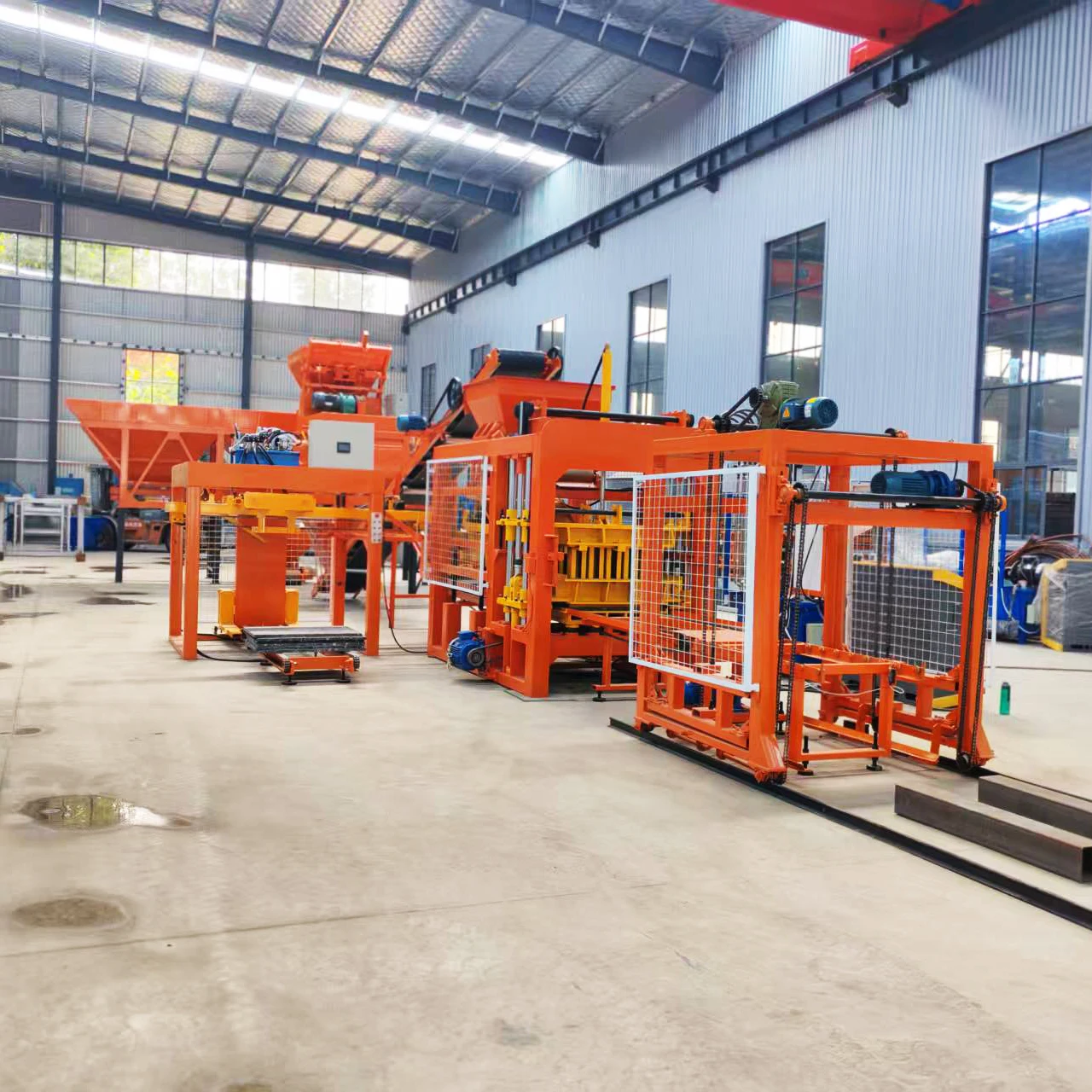
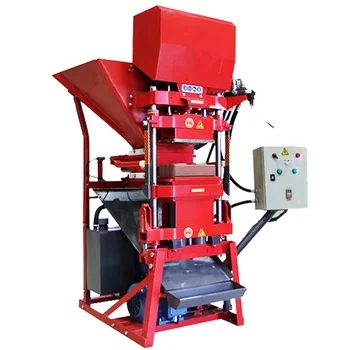 Automatic block machine