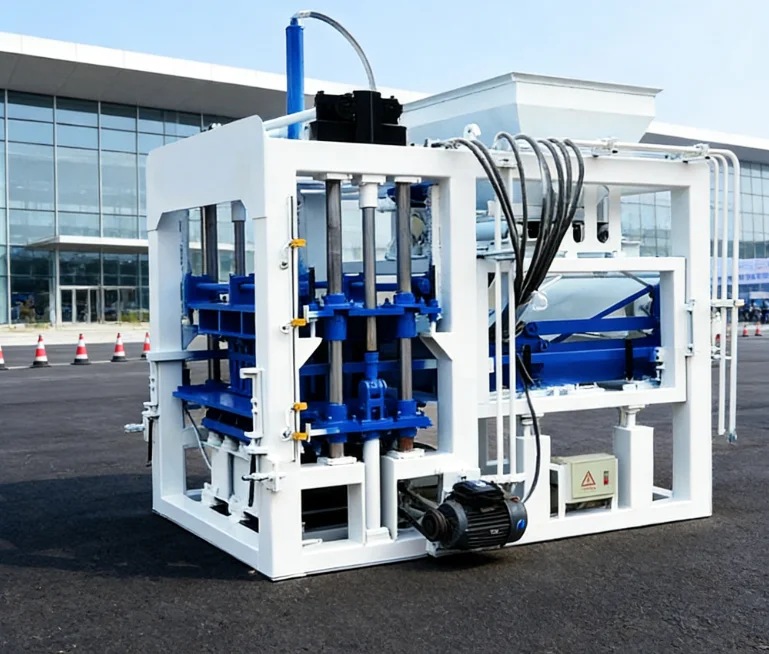
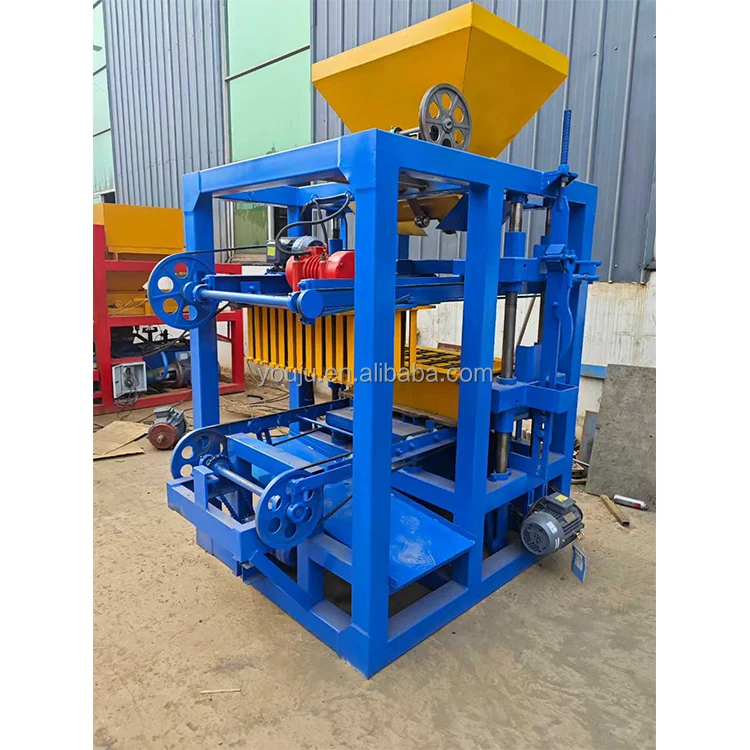
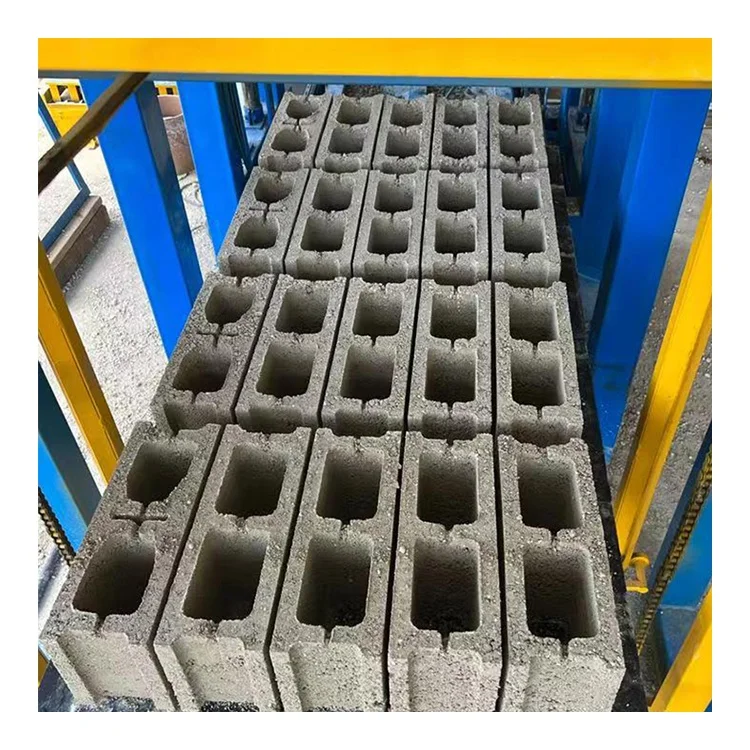
Matched System Design — the QT5-15 automatic block making machine is supplied as a complete press, mould, pallet and handling package sized to your actual block format, not assembled from disconnected catalog pages.
Technical Specifications
| Parameter |
Value |
| Model |
QT5-15 |
| Product Type |
Automatic Hydraulic Concrete Block Making Machine |
| Overall Dimensions (L×W×H) |
7400×1950×2800 mm |
| Rated Pressure |
21 MPa |
| Main Vibration Form |
Hydraulic platform vibration |
| Vibrating Frequency |
2800–4500 rolls/minute |
| Cycle Time |
15–20 seconds (basis not stated in source — confirm block format) |
| Motors Power |
26.5 kW |
| Pallet Size |
1100×550 mm |
| Net Weight |
6 T |
| Control System |
PLC with fault diagnosis and remote monitoring |
| Automation Level |
Fully automatic |
| Material Feeding |
Storage and distribution system for accurate feeding |
| Assembly State |
Stationary plant installation |
| Voltage & Frequency |
Configured to buyer requirements |
| CE Declaration |
Available |
| Warranty |
1 year for the whole machine |
Application Suitability
| Application |
Material or Output |
| Hollow block production |
Crushed stone, sand, cement, fly ash aggregates |
| Solid brick production |
Standard concrete mix designs for masonry units |
| Paving brick production |
High-density concrete mixes for exterior surfaces |
| Multicellular brick production |
Lightweight aggregate blends for thermal insulation |
| Kerbstone and interlocking formats |
Coarse aggregate mixes with high compressive strength requirements |
What "7,200 Hollow Blocks Per Shift" Actually Means
Output figures are only meaningful when tied to a specific block format, mix design and curing protocol.
Many quotations list a peak cycle speed and leave the buyer to assume it applies to every product in the catalogue. In practice, a 400×200×200 mm hollow block demands a longer vibration window than a thin paver, and local aggregate moisture shifts the cycle further. I have watched plants in Shandong receive a QT5-15 automatic block making machine manufacturer rating sheet that promised a single throughput number, only to discover on-site that their porous brick format cut real output noticeably. The honest approach is to quote capacity per format so your business plan matches what the press actually delivers [NEED_CITE: block format influence on cycle time in hydraulic block presses].

Where the QT5-15 Sits in the Full Machine Range
The QT5-15 occupies the mid-tier of our fully automatic stationary block machine lineup. Below it, semi-automatic models suit smaller workshops that handle pallets manually; above it, higher-tier automatic lines add faster cycle rates and larger pallet formats for high-volume plants. This tier gives a growing block plant a balanced combination of output capacity and investment level, with a footprint that fits a standard industrial bay.
How the Range Connects Press, Mould and Handling
Every tier in the range is specified as a matched system. The pallet size, mould format and stacking equipment are selected together so the press is never waiting on upstream feeding or downstream curing. When a buyer chooses the QT5-15, the 1100×550 mm pallet dimension drives the curing rack spacing and forklift requirements, and those decisions are confirmed before the machine enters production [NEED_CITE: pallet and curing area coordination in block plant layout].
Reading the Specs That Matter on the Shop Floor
The 21 MPa rated pressure works in tandem with the hydraulic platform vibration to compact the concrete mix into the mould cavity. Higher pressure alone does not guarantee block strength; the vibration frequency, adjustable between 2800 and 4500 rolls per minute, must match the aggregate particle size so fines settle evenly. The storage and distribution feeding system meters each charge consistently, which matters when local sand carries variable moisture. The PLC control records fault codes and supports remote monitoring, reducing the time spent diagnosing a stoppage during a night shift. Cycle time of 15–20 seconds applies to standard formats, but thicker hollow blocks extend the vibration phase and shift the real-world rhythm.
The Cost of Skipping the Format Conversation
When a buyer confirms only the model and leaves block formats for later, the mould set arrives mismatched to the products the local market actually buys. Mould change then consumes most of a shift, negating the flexibility the automatic system was supposed to provide. Pallets ordered without checking the existing curing area force the plant to rearrange racks or buy new forklifts. These downstream corrections cost far more than a detailed configuration discussion up front [NEED_CITE: mould change time impact on shift productivity].
Why Source the QT5-15 Through This Range
Block machinery is the single focus here, so the QT5-15 is never sold as a standalone press disconnected from its mould and pallet system. Configuration starts from the buyer’s actual mix design and local aggregate, not a catalogue default. Moulds are designed for the formats the buyer’s market demands, including custom drawings when standard formats do not match. Automation level is selectable across the range, allowing a plant to begin semi-automatic and move up. Installation support covers commissioning and operator training so the crew is confident from the first production run.
Documentation & Verification
- Line layout showing QT5-15 position and pallet flow path
- Capacity calculation sheet stating block format for each output figure
- Hydraulic and electrical schematics matched to confirmed voltage
- Factory test record on buyer’s specified mould format before dispatch
- Pallet specification aligned with curing rack and forklift plan
Installation, Commissioning & Support
- Foundation plan sized to the 7400×1950 mm footprint and 6 T operating weight
- Dedicated power circuit confirmed for the 26.5 kW motor group and local voltage
- Machine shipped in dismantled state with reassembly supervised on site
- PLC language and fault diagnosis parameters set during commissioning
- Operator training covers mould change procedure and vibration frequency adjustment
- Wear parts list and first replacement schedule provided at handover
Before You Request a Quote
Share the block formats your market sells most, the daily output you need per format, and the raw materials available locally including aggregate type and moisture range. Confirm your site voltage, frequency, and preferred PLC display language so the QT5-15 automatic block making machine manufacturer can finalize the electrical package before production begins.
Frequently Asked Questions
Q: How is daily output verified for each block format on the QT5-15?
A: Output is stated separately for each format — for example 240×115×90 mm solid brick, 400×115×53 mm brick, and 400×200×200 mm hollow block — with the mould cavity count noted. The cycle time basis is confirmed during configuration so the quoted figure reflects your actual product, not a generic peak speed.
Q: Where does the QT5-15 sit compared to semi-automatic and mobile options?
A: It is a mid-tier fully automatic stationary machine. Semi-automatic models in the range suit lower investment and manual pallet handling, while mobile egg-laying machines produce blocks on-site without a fixed plant. The QT5-15 balances output capacity with a manageable footprint for growing block plants.
Q: How is the 1100×550 mm pallet matched to existing curing infrastructure?
A: Pallet size and material are confirmed against your curing rack dimensions and forklift capacity before the order is finalized. This prevents a situation where pallets arrive but do not fit the curing area or exceed the forklift’s rated load.
Q: What electrical details are confirmed before the QT5-15 enters production?
A: Voltage, frequency, and PLC display language are confirmed in writing. The electrical schematic is then drawn to match those values so commissioning proceeds without delays caused by mismatched control components or unreadable interface text.
Q: How is the machine configured for local aggregate rather than a catalogue default?
A: The buyer sends a sample of local aggregate and the proposed mix design. Vibration frequency and hydraulic pressure settings are then adjusted to match the particle size and moisture characteristics, ensuring consistent block density from the first production run.

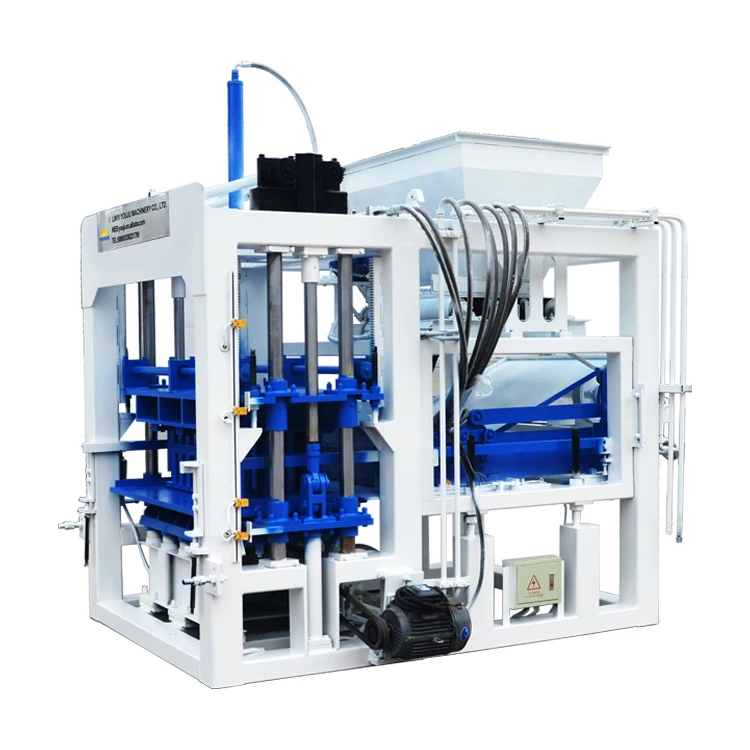
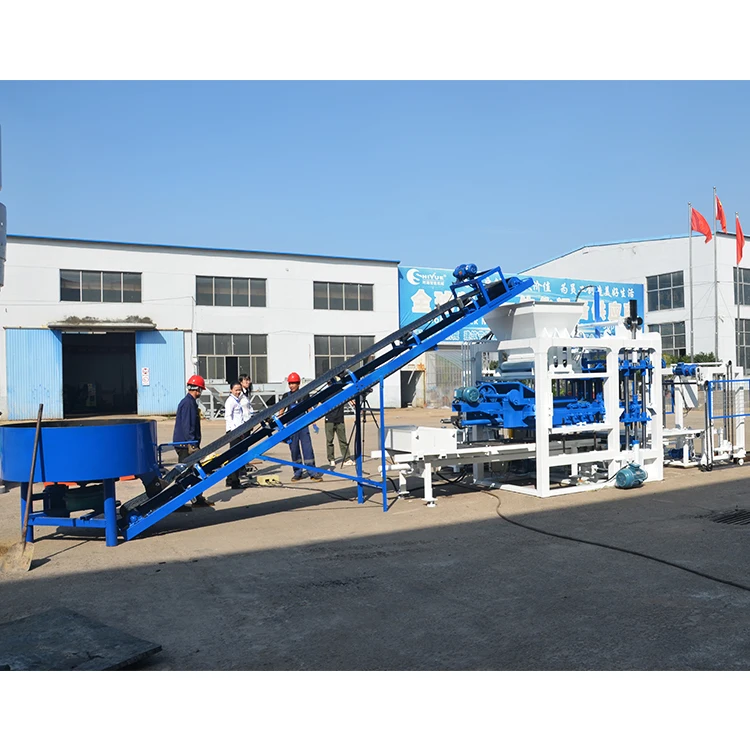 Stationary block machine