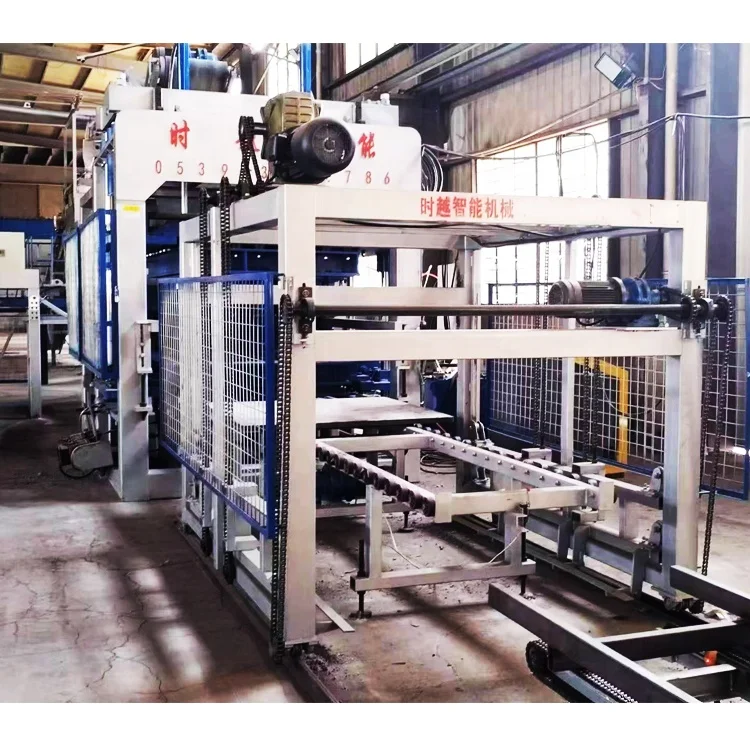
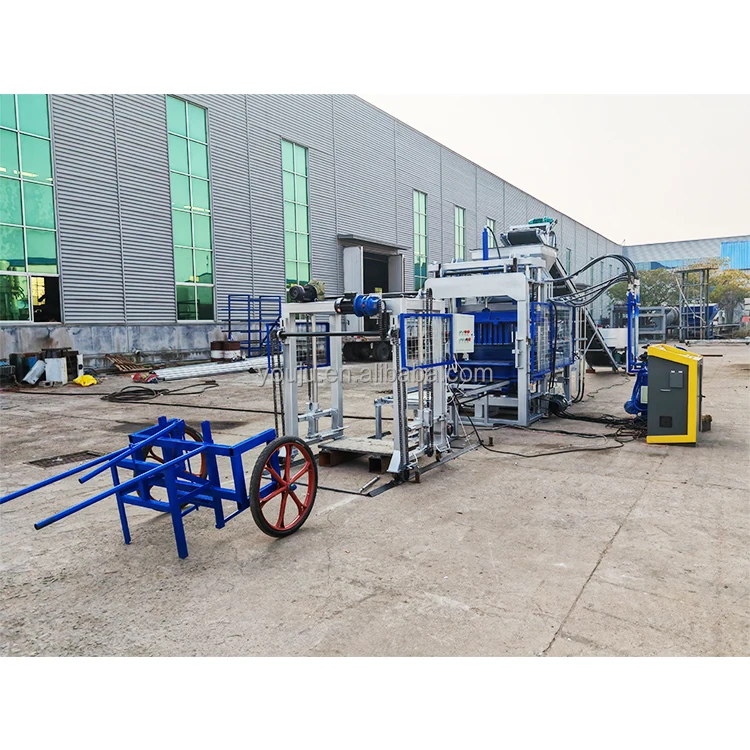
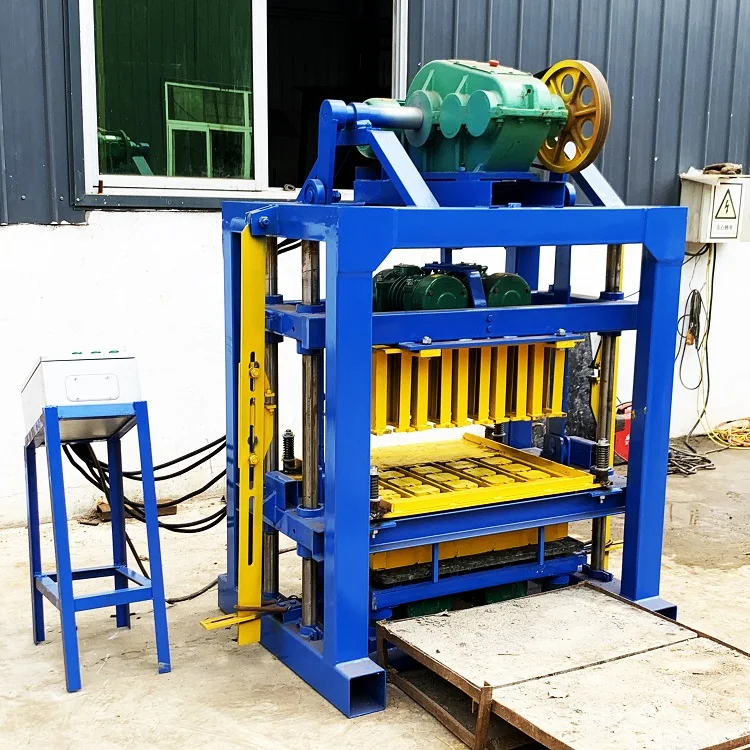
Matched System Design — the QTJ4-40 is specified as one coordinated platform where pallet size, vibration frequency, and mould format align from day one, eliminating the need to source handling equipment separately.
Technical Specifications
| Parameter |
Value |
| Model |
QTJ4-40 |
| Product Type |
Manual Concrete Block Making Machine |
| Vibration Form |
Platform Vibration |
| Vibration Frequency |
2800 r/min |
| Pallet Size |
850 × 450 mm |
| Overall Dimensions |
1350 × 1460 × 1800 mm |
| Machine Weight |
1 T |
| Factory Area Required |
200 m² |
| Labor Requirement |
1–3 people |
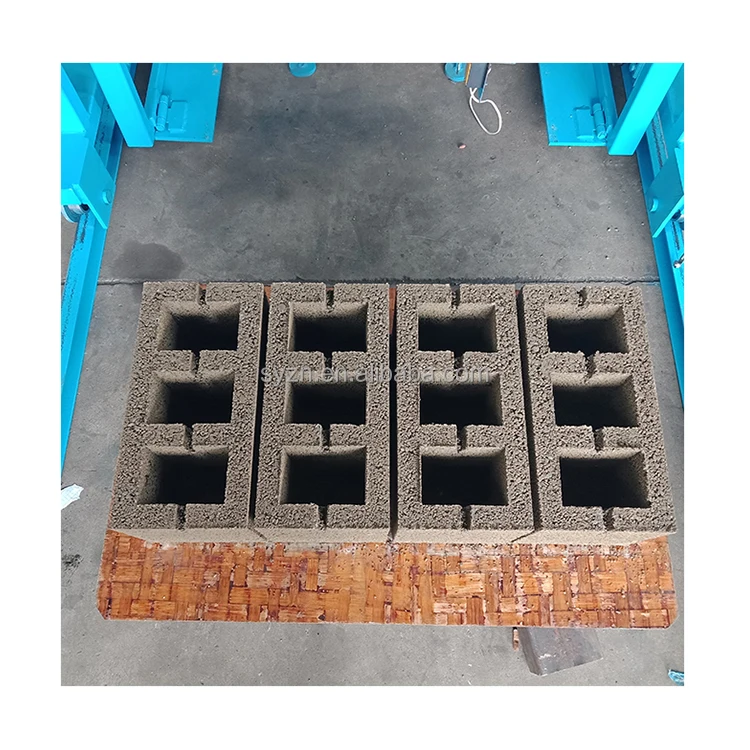
| Output Capacity (400×200×200mm hollow, 4 moulds/cycle) |
360 pcs/h, approx. 2880 pcs/day |
| Output Capacity (400×150×200mm hollow, 5 moulds/cycle) |
500 pcs/h, approx. 4000 pcs/day |
| Output Capacity (225×112.5×60mm interlock, 9 moulds/cycle) |
900 pcs/h, approx. 7200 pcs/day |
| Raw Material Ratio |
Cement 8–10%, Sand 30–40%, Stone 50–60% |
| Compatible Raw Materials |
Concrete, cement, fly ash, crushed stone, sand, gravel, slag |
| Top Die Mechanism |
Push-and-pull with automatic scraper |
| Automation Level |
Manual / Semi-manual |
| Stacking Method |
Manual (basis to be confirmed) |
| Voltage & Frequency |
Configurable to site supply (confirm before production) |
| Certification |
CE (image reference — verify textual documentation) |
Application Suitability
| Application |
Material or Output |
| Small-scale hollow block plant |
400×200×200mm or 400×150×200mm hollow blocks from cement and crushed stone |
| On-site construction block production |
Solid blocks for housing projects using locally sourced sand and gravel |
| Interlocking and paving brick output |
225×112.5×60mm interlocking pavers from cement, sand, and fine aggregate |
| Kerbstone and colored paver runs |
Standard kerb formats with pigment-added concrete mixes |
| Startup block manufacturing |
Low-capital entry for entrepreneurs producing multiple block formats on a single platform |
What "Per-Hour Output" Figures Leave Out About a Manual Block Making Machine for Sale
A quoted cycle rate means nothing until you know which block format was assumed during testing.
Many buyers receive a single headline number — for example, a rated hourly throughput — without being told which mould was installed or what aggregate mix was running at the time. The same machine cycling on a large hollow block will produce far fewer units per shift than when pressing small interlocking pavers. If your market pays for 400×200mm hollow blocks and the quoted figure was based on a smaller format, your real daily count could fall noticeably short of projection. [NEED_CITE: mismatch between quoted cycle capacity and buyer’s actual block format as a common source of project disputes]
Where the QTJ4-40 Sits in the Stationary Range
The QTJ4-40 occupies the entry tier for buyers evaluating a Manual Block Making Machine for sale. It covers the gap between hand-operated egg-laying units and fully automatic stationary lines, offering platform vibration and a defined pallet size without requiring a high-capacity batching plant or automatic stacking system.
Matching Output Tiers to Project Scale
Buyers with daily targets in the low thousands — whether for a first commercial block plant or an on-site construction supply operation — find this tier appropriate because the investment stays proportional to output. The semi-manual configuration keeps the crew requirement at one to three operators, so early-stage producers do not carry labor costs for automation stages they have not yet justified. [NEED_CITE: typical crew size and labor allocation for semi-manual block production lines in emerging markets]
Reading the Vibration and Pallet Specs for Real Production Impact
Platform vibration at 2800 r/min delivers compaction energy through the pallet surface rather than through the mould walls alone. For hollow blocks with thin webs, consistent platform vibration reduces cracking during the demoulding phase because the block settles evenly before the top die lifts. The 850 × 450 mm pallet size determines how many blocks sit on a single board and therefore how many boards cycle through the curing area per hour. If your existing curing racks or forklift tines are dimensioned for a different pallet footprint, the mismatch forces a separate pallet investment before the first production run begins.

The Hidden Cost of Ignoring Local Aggregate When Choosing a Manual Block Making Machine for Sale
A machine calibrated at the factory with clean, graded aggregate will cycle faster than the same unit running on a high-clay local sand source. Extra clay absorbs water and reduces compaction efficiency, extending the vibration time needed per cycle and pulling daily output below the quoted figure. Buyers who skip a raw material test before ordering often discover the gap only after the machine is on-site, when reconfiguring the mix design delays production by several weeks. [NEED_CITE: impact of clay content in local sand on concrete block compaction cycle times]
Why Source This Manual Block Making Machine for Sale Through a Matched-Specification Approach
Every parameter — pallet size, vibration frequency, mould format, and top die mechanism — is confirmed against the buyer’s target block and local material before production begins, so the unit arrives configured for the actual mix, not a catalogue default.
Mould options are selected based on the formats the buyer’s market purchases, including custom drawings when standard moulds do not match local building codes or brick dimensions.
The automation level is selectable at the entry tier, allowing a buyer to begin with manual pallet handling and add automatic stacking or feeding later without replacing the press itself.
Installation support covers operator training on the specific QTJ4-40 controls and mould change sequence, reducing the ramp-up period once the unit is commissioned on-site. [NEED_CITE: standard commissioning and operator training scope for semi-manual block machine installations]
Documentation & Verification
- Capacity calculation sheet stating block format and mould count per cycle for the QTJ4-40
- Pallet specification sheet confirming 850 × 450 mm dimensions and material grade
- Voltage and frequency confirmation document matched to buyer site supply
- Factory test record with block samples produced in buyer’s target format before dispatch
- Operation and maintenance manual with QTJ4-40 specific wear parts and mould list
Installation, Commissioning & Support
- 200 m² factory area requirement confirmed against buyer site layout before shipment of the QTJ4-40
- Voltage and frequency verified to buyer grid specifications prior to motor and control wiring
- Platform vibration assembly inspected and calibrated during on-site commissioning of the 1 T unit
- Top die push-and-pull mechanism adjusted for buyer’s chosen mould format during first production run
- Operator training covering mould change procedure, pallet handling, and daily maintenance on the QTJ4-40
- Wear parts list provided with recommended replacement intervals specific to the platform vibration system
What to Prepare Before Requesting a Quotation
To size the QTJ4-40 accurately, share your target block format and dimensions, expected daily output, and a sample or lab report of the local aggregate and sand you plan to use. Include your site voltage and frequency, the pallet size compatible with your existing curing racks, and the language required for any control displays.
Frequently Asked Questions
Q: How is daily output calculated for each block format on the QTJ4-40?
A: Daily output is derived from the number of moulds per cycle multiplied by realistic cycles per hour, then adjusted for an eight-hour shift. For the 400×200×200mm hollow block with four moulds per cycle, the rate is approximately 360 pieces per hour. Smaller formats such as the 225×112.5×60mm interlock use nine moulds per cycle, raising the hourly count to around 900 pieces.
Q: What pallet size does this machine use and is it compatible with my existing curing racks?
A: The QTJ4-40 uses an 850 × 450 mm pallet. Before ordering, share your curing rack dimensions and forklift tine spacing so the pallet specification can be cross-checked. If your racks are built for a different footprint, alternative pallet sizes may be discussed during configuration to avoid post-delivery handling adjustments.
Q: Can I start with the QTJ4-40 and add automation later?
A: Yes. The QTJ4-40 is positioned at the entry tier, and the platform design allows upgrades such as automatic pallet feeding or stacking to be added as production volume justifies the investment. The press itself does not need to be replaced when moving to a higher automation level within the stationary range.
Q: What block formats and mould options are available for this machine?
A: Standard mould configurations include four-piece sets for 400×200×200mm hollow blocks, five-piece sets for 400×150×200mm hollow blocks, and nine-piece sets for 225×112.5×60mm interlocking pavers. Custom mould designs based on buyer drawings are also available for formats outside these standard ranges.

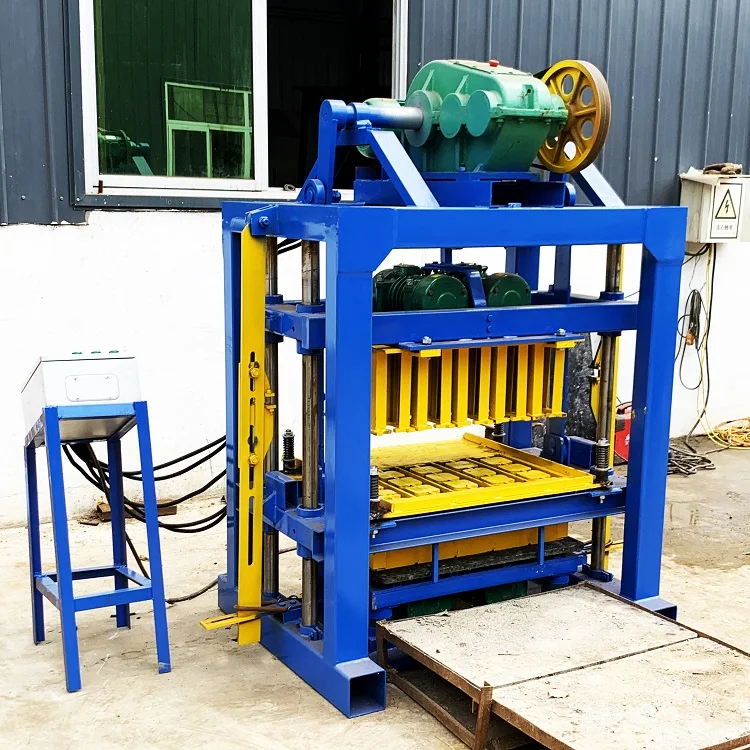
 Stationary block machine