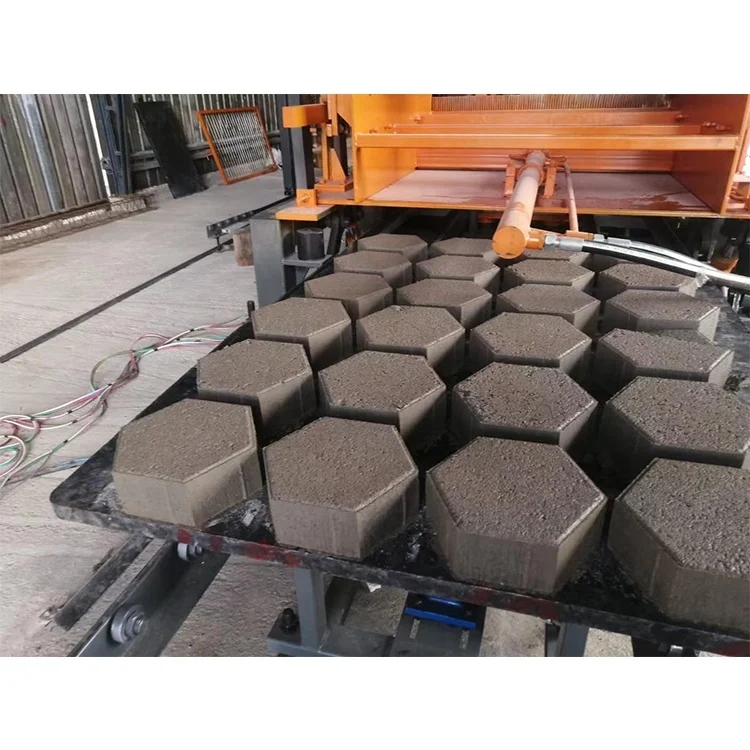
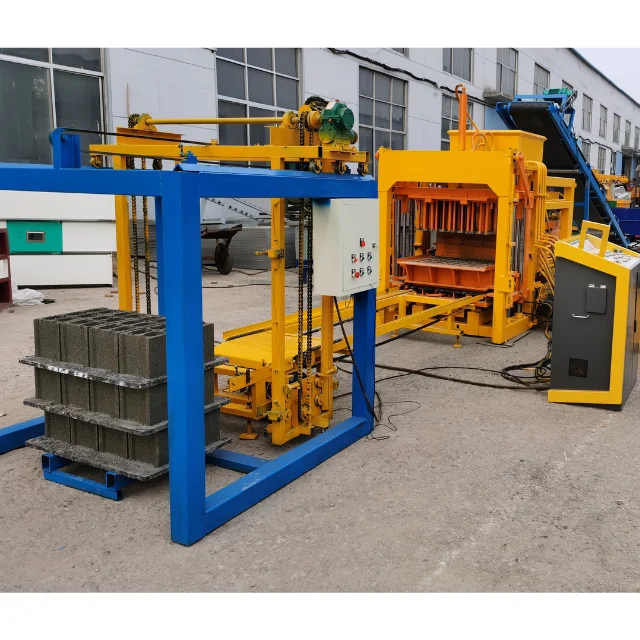
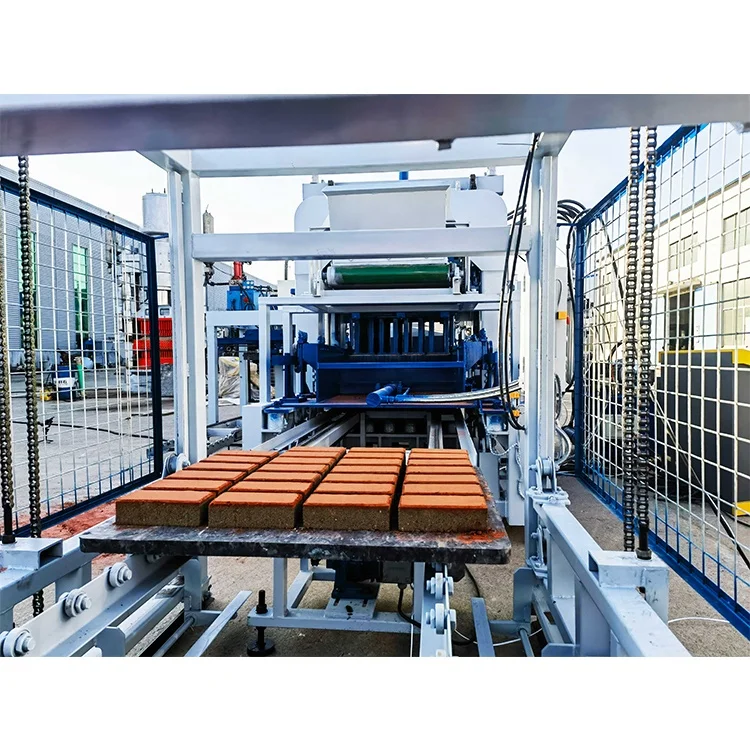
Hydraulic Pressure Matched to Your Mix — we configure the QT4-18 block machine manufacturer range around your actual aggregate and target block strength, not a catalogue default.
Technical Specifications
| Parameter |
Value |
| Model |
QT4-18 |
| Product Type |
Hydraulic Block Making Machine |
| Overall Dimensions (L×W×H) |
3900×1600×2300 mm |
| Molding Cycle |
15-25s (varies by block format, material, and thickness) |
| Vibration Force |
40-50 kN |
| Rated Power |
24 kW |
| Mixer Model |
JQ350 |
| Pallet Size |
850×550×25 mm |
| Net Weight |
3T |
| Applicable Products |
Paver, solid brick, hollow block, curbstone |
| Raw Materials |
Crushed stones, sand, cement, dust, fly ash |
| Control System |
PLC control system |
| Hydraulic Station |
Included |
| Included Equipment |
Block making machine, hydraulic station, PLC control system, pallet feeder, brick conveyor, block sweeper |
| Free Spare Parts |
Manual hydraulic trolley, spare parts and tools |
| Output Capacity |
1200-1680 pcs/h (based on 400×200×200mm hollow block, 15-20s cycle) |
| Output Capacity |
1800-2400 pcs/h (based on 400×150×200mm hollow block, 15-20s cycle) |
| Output Capacity |
3240 pcs/h (based on 240×115×53mm solid brick, 15-20s cycle) |
| 8-Hour Output |
9600-13440 pcs (400×200×200mm hollow block) |
| 8-Hour Output |
14400-19200 pcs (400×150×200mm hollow block) |
| 8-Hour Output |
16200-19440 pcs (240×115×53mm solid brick) |
| Assembly State |
Shipped as complete set, nude packing in 20GP container |
| Standards |
CE declaration where applicable |
Application Suitability
| Application |
Material or Output |
| Block production plants |
Crushed stone, sand, and cement mixes for hollow block and solid brick formats |
| Construction contractors producing blocks on-site |
Fly ash and dust blended with local aggregate for paving and curbstone |
| Entrepreneurs setting up a first block plant |
Standard cement-sand mixes for 400×200×200mm hollow blocks and 240×115×53mm solid bricks |
| Concrete product manufacturers adding formats |
Switching between paver, hollow block, solid brick, and curbstone via mould changes |
What "Pieces per Hour" Actually Means for the QT4-18
Capacity figures only matter when tied to a specific block format.
Most quotations quote a single throughput number without telling you which block it assumes. The QT4-18 block machine manufacturer specification lists output per format: 1200-1680 pieces per hour for 400×200×200mm hollow blocks, but that same machine produces at a different rate when you switch to 240×115×53mm solid bricks. I have watched buyers discover this gap after installation, when daily production fell well short of the number they were sold. The honest starting point is always the format you intend to sell most [NEED_CITE: block output calculation standards by format and cycle time].

Where This Model Sits in the Full Range
The QT4-18 occupies the mid-tier position in SHIYUE’s block machine lineup, bridging entry-level semi-automatic models and high-capacity automatic production lines. For a buyer surveying options for a first or replacement machine, this model covers the output range that small-to-medium plants typically need. It supports hollow block, solid brick, paver, and curbstone formats through mould changes, making it a practical anchor point before you decide whether to invest in a larger automatic line.
Output Tiers and Plant Footprint Considerations
Choosing the right tier depends on your daily volume requirement and available space. The QT4-18 block machine manufacturer package includes the hydraulic station, PLC control, pallet feeder, brick conveyor, and block sweeper as standard. At 3900×1600×2300 mm, it fits inside a modest workshop without demanding the floor area of a full automatic line. Buyers moving from manual egg-laying machines typically find this tier removes the heaviest labour while keeping the investment measured [NEED_CITE: plant layout requirements for mid-tier block production].
Reading the Specs That Matter on the Shop Floor
The vibration force rating of 40-50 kN works together with hydraulic pressure to determine block density and compressive strength. If the vibration is too low for your aggregate size, blocks crack during curing. The 850×550×25 mm pallet size must match your existing curing racks and forklift capacity — ordering the wrong pallet dimension creates bottlenecks downstream. The JQ350 mixer paired with this machine handles the typical crushed stone and sand feed rates the press requires to avoid waiting between cycles. The 24 kW rated power figure tells your electrician what dedicated circuit and breaker rating to prepare before the machine arrives.
The Cost of Skipping Configuration Checks
When pallet size is chosen without checking your curing area, operators end up stacking blocks by hand in a corner of the yard. When voltage and frequency are not confirmed before production, the machine can sit idle for weeks while motors are rewound locally. I have seen this happen — a QT4-18 shipped to a site running a different voltage standard than our factory default, and the buyer waited for replacement windings before commissioning could begin. Mould change time also matters: if the changeover takes most of a shift, the format flexibility you paid for becomes theoretical rather than practical [NEED_CITE: common commissioning delays from unconfirmed electrical specifications].
Why Buyers Source This Model Here
Block machinery is our single focus, so the QT4-18 is specified as a matched system — machine, mould, pallet, and handling equipment configured together rather than assembled from separate suppliers. We confirm voltage, frequency, and PLC display language before the first weld, which prevents the idle-machine scenario described above. Mould design covers the formats your local market actually sells, and we accept custom drawings when standard moulds do not match. The automation level is selectable, meaning you can start with the standard configuration and add automatic stacking or cubing later as your plant grows.
Documentation & Verification
- Factory test record run on your specified block format before dispatch
- Line layout showing capacity calculation per block format
- Mould drawing and complete format list for the QT4-18
- Voltage, frequency, and PLC language written confirmation
- Hydraulic and electrical schematic for your site engineer
- Operation and maintenance manual in your chosen language
Installation, Commissioning & Support
- Foundation must support 3T net weight with level tolerance across the 3900 mm frame length
- Dedicated electrical circuit rated for 24 kW with confirmed voltage and frequency before connection
- Machine ships as a complete set in 20GP container for straightforward unloading
- On-site commissioning includes first-run parameter setting for your block format
- Operator training covers PLC interface navigation and daily maintenance routines
- Wear parts list and mould inventory provided for your first replacement cycle
Preparing a Useful Inquiry
To size this machine correctly for your project, share the block formats you plan to produce, your target daily output, and the raw materials available locally. Include your site voltage and frequency, the pallet size your curing area already accommodates, and whether you need supporting equipment like automatic stacking. This information allows us to return a configuration proposal rather than a generic catalogue page.
Frequently Asked Questions
Q: Where does the QT4-18 sit in the full SHIYUE block machine range?
A: The QT4-18 is a mid-tier hydraulic block machine, positioned between entry-level semi-automatic models and high-capacity automatic lines. It suits small-to-medium plants that need format flexibility without the floor space and investment of a fully automatic setup. Buyers can upgrade automation components later as production volume grows.
Q: How is capacity verified per block format?
A: Output is calculated and stated for each specific block dimension and cycle time — for example, 1200-1680 pieces per hour based on 400×200×200mm hollow blocks at a 15-20 second cycle. We provide a capacity sheet listing every format you intend to produce so you see realistic daily numbers before ordering.
Q: What automation level does the QT4-18 offer?
A: The standard package includes PLC control, a pallet feeder, brick conveyor, and block sweeper. Automatic stacking and cubing are available as additions. This allows a buyer to start with a controlled semi-automatic process and add full automation stages as the plant expands.
Q: What plant footprint does the QT4-18 require?
A: The machine measures 3900×1600×2300 mm and weighs 3T. You need a level concrete foundation, clearance for pallet handling around the press, and curing rack space matched to the 850×550 mm pallet size. A 20GP container handles shipment of the complete set.
Q: Which mould formats are available for this machine?
A: Standard moulds cover hollow block, solid brick, paver, and curbstone formats. Custom moulds are designed to buyer drawings when local market demand requires non-standard dimensions. Mould change procedures and changeover times are confirmed during the configuration stage so you know what flexibility looks like in practice.

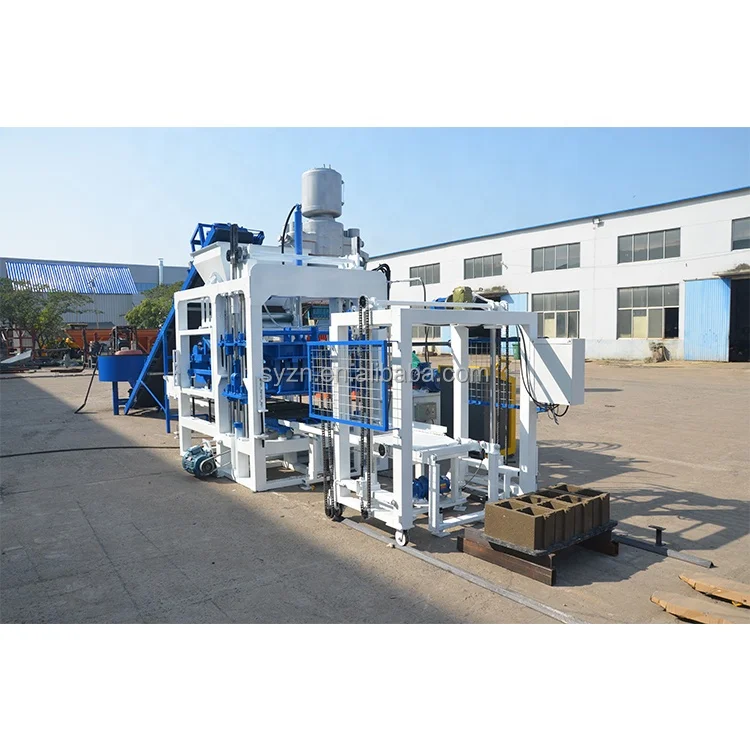
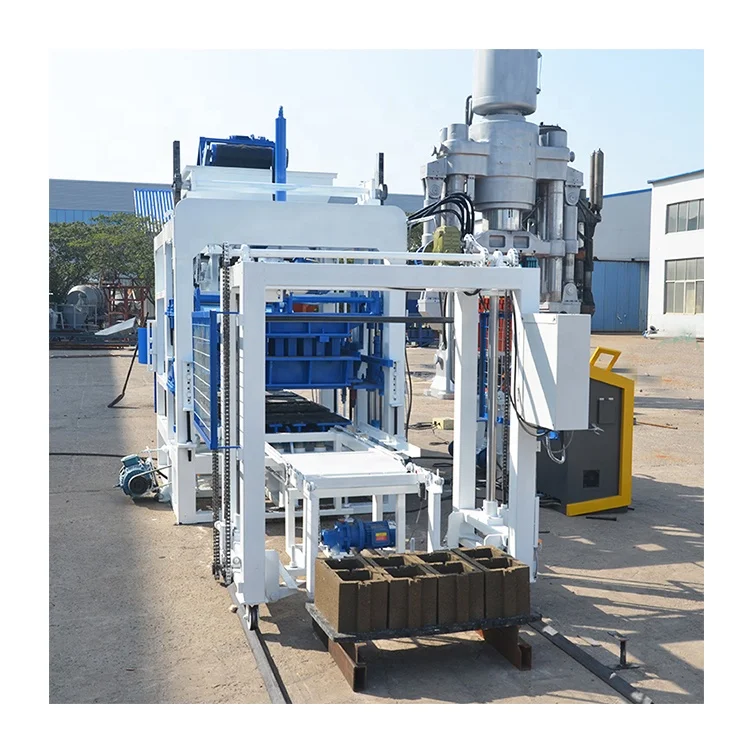 High quality block machine