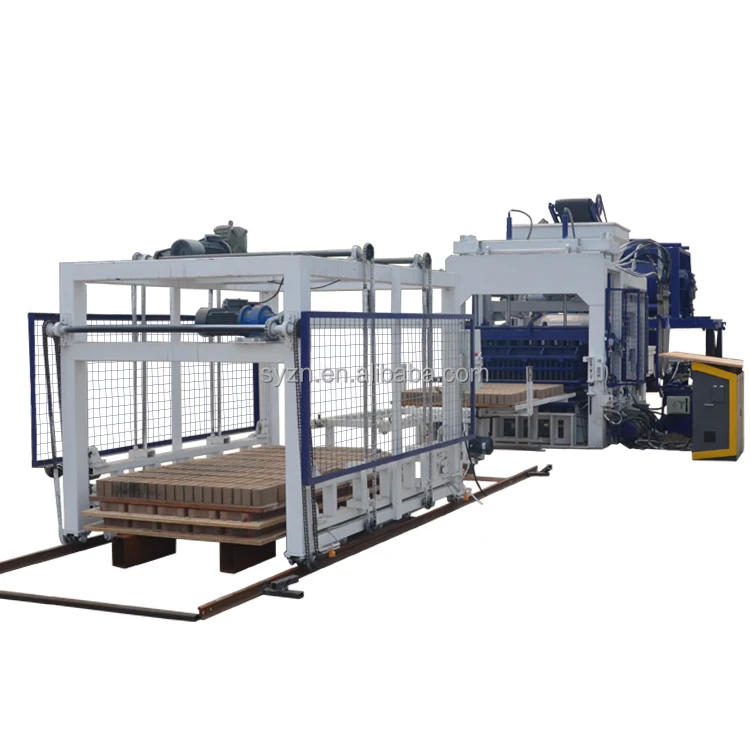
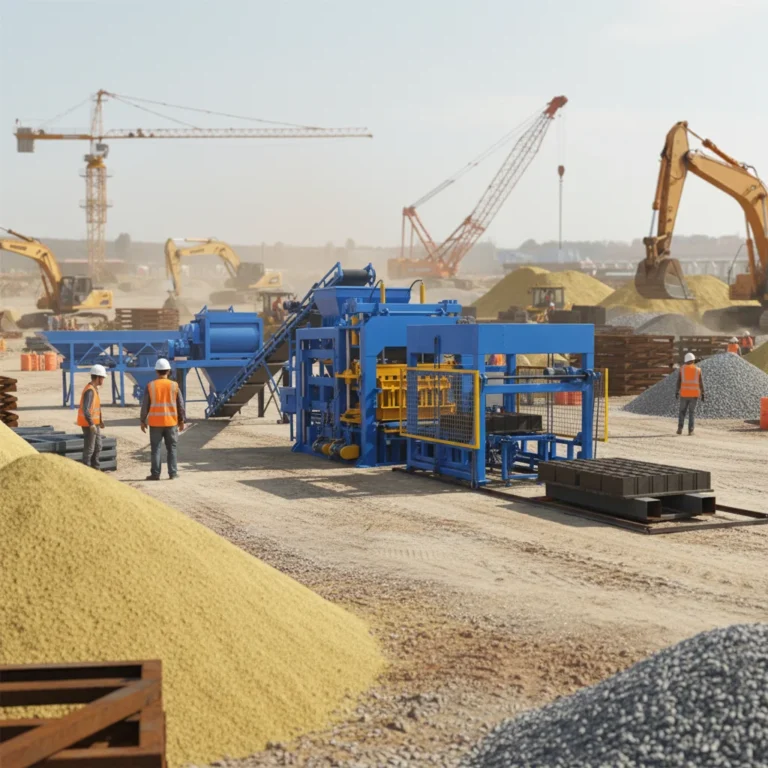
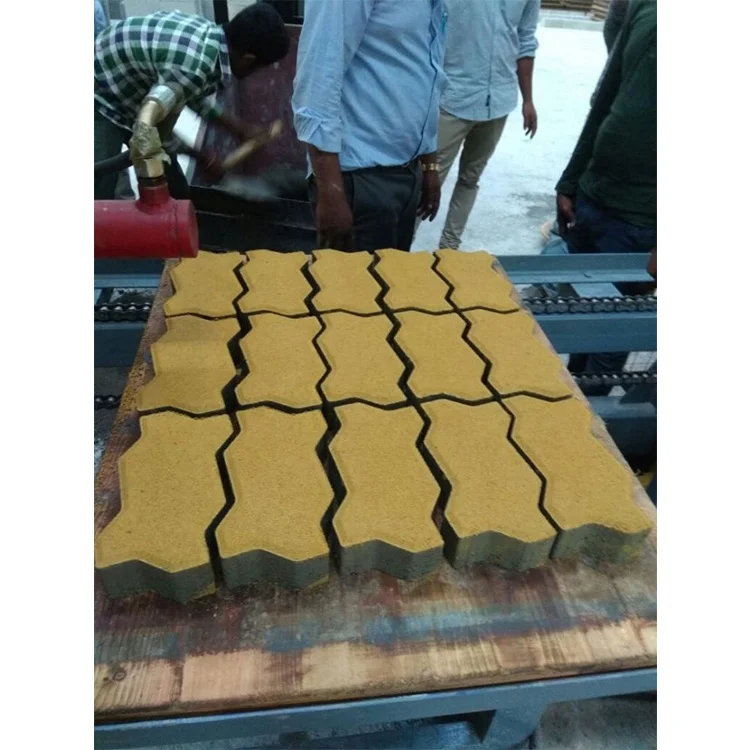
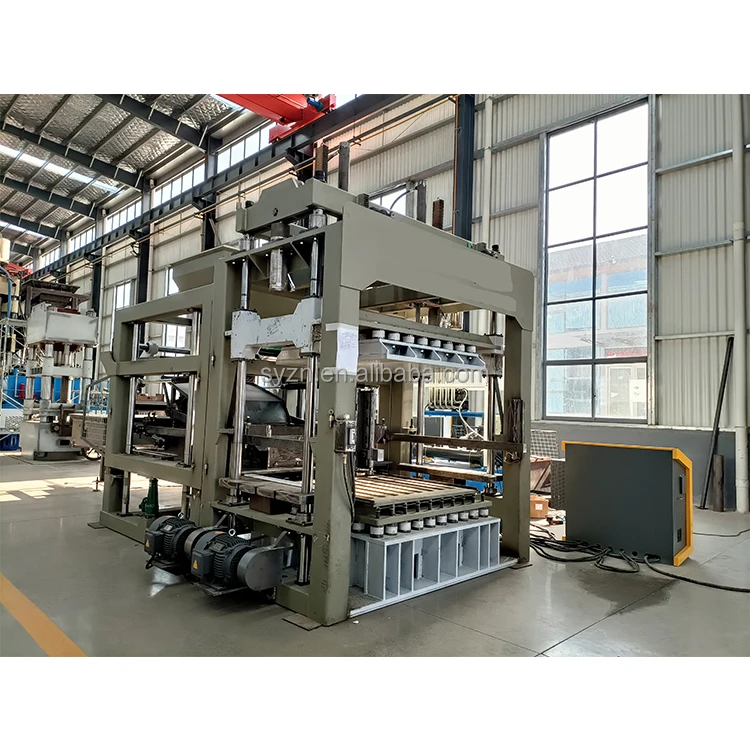
Single Focus on Block Machinery — every QT4-18 hollow brick machine is specified alongside its mould, pallet, and handling layout so the press never operates in isolation from the rest of the line.
Technical Specifications
| Parameter |
Value |
| Model |
QT4-18 |
| Product Type |
Hollow Brick Machine / Automatic Brick Making Machine |
| Vibration Mode |
Multiaxis synchronizer vibration, vertically downward |
| Guide System |
Long-period over-length guide bearing for upper mould and mould box alignment |
| Mixer System |
Multiaxis forced mixer, adaptable to raw materials of different nature |
| Hydraulic System |
High thermal efficiency, low heat productivity |
| Control System |
Computer controlled, fully automatic |
| Rack Construction |
High strength with special welding technique, resists vibrating shock |
| Output Capacity |
See capacity table (basis not stated in source — confirm block format, material, and thickness) |
| Automation Level |
Fully automatic |
Application Suitability
| Application |
Material or Output |
| Hollow brick production |
Concrete mixes with crushed stone, sand, and cement |
| Concrete block manufacturing |
Fly ash, slag, or aggregate-based raw materials |
| Building material plant setup |
Production lines adapting to locally sourced aggregates of varying nature |
Why "Cycles per Hour" Doesn’t Tell You the Real Output of a QT4-18 Hollow Brick Machine Manufacturer
Capacity figures only become meaningful once the block format, mix design, and curing cycle are pinned down.
When I first started reviewing quotations from various suppliers, I noticed a pattern: the headline number — cycles per hour — was always front and center. What was missing was which block size that number assumed and what the actual daily output would look like once you factored in pallet return time, mould change intervals, and the curing rack capacity. A QT4-18 hollow brick machine manufacturer that quotes throughput without naming the reference format leaves the buyer to discover the gap on their own production floor [NEED_CITE: common discrepancies between quoted and actual block plant output]. That gap is where margins disappear.

Where the QT4-18 Sits in the Full Block Machine Range
Buyers evaluating their first block plant or replacing an aging press need to see the entire product ladder before committing capital. The QT4-18 hollow brick machine manufacturer positions this model in the mid-tier automatic segment — above mobile and egg-laying machines that sacrifice consistency for portability, and below high-capacity lines that demand a larger footprint and dedicated batching infrastructure. Understanding where this model falls helps a buyer decide whether the investment tier matches their current market volume without over-building capacity they cannot yet fill.
Mapping Plant Footprint Across the Automation Spectrum
Every step up in automation changes the spatial requirements of the production floor. A semi-automatic machine may need a smaller press area but requires manual pallet handling lanes that stretch the curing zone considerably. The fully automatic QT4-18 consolidates pallet feeding and block stacking within a tighter envelope, though it still demands adequate clearance for the multiaxis forced mixer and raw material feed hoppers. Buyers planning a greenfield site should compare the total line length — from aggregate storage through to the cubing station — rather than measuring the press alone [NEED_CITE: block plant layout planning and spatial requirements for automatic lines].
How Multiaxis Vibration and Hydraulic Pressure Interact During Moulding
The vertically downward multiaxis synchronizer vibration is engineered to distribute force evenly across the mould cavity, which matters when hollow brick webs are thin and uneven compaction leads to breakage during demoulding. The long-period over-length guide bearing keeps the upper mould and mould box aligned throughout each cycle, preventing the taper wear that gradually shifts block dimensions out of tolerance. Meanwhile, the hydraulic system’s low heat productivity characteristic reduces the thermal drift that can alter pressure settings over a long shift. Together, these parameters determine whether blocks leave the press at consistent density or require manual sorting downstream — a distinction that compound over thousands of cycles per production run.
The Hidden Cost of Choosing the Wrong Tier
Purchasing a machine above the output tier your market can absorb ties up capital in idle capacity, while under-sizing forces you into overtime shifts that accelerate wear on every component. I have seen buyers select a high-capacity automatic line only to discover their local aggregate could not feed the batching system fast enough, leaving the press waiting between cycles. Others started with a mobile unit and outgrew it within a year, facing the cost of a second installation while the first machine sat underutilized. Matching the QT4-18 to realistic daily demand — stated in a specific block format — prevents both traps [NEED_CITE: consequences of mis-sized block production equipment].
What This QT4-18 Hollow Brick Machine Manufacturer Brings to the Table
Block machinery is the sole product focus here, which means the press, mould, pallet, and handling equipment are specified as one matched system rather than assembled from separate vendors. Configuration decisions are made against the buyer’s actual mix design and local aggregate, not a catalogue default. Mould design extends beyond standard hollow formats to include custom drawings based on the formats the buyer’s regional market actually sells. The automation level is selectable, so a buyer can begin with semi-automatic operation and add stacking or cubing modules as volume grows. Installation support includes on-site commissioning and operator training, ensuring the crew understands the PLC interface and mould change procedure before the first production run.
Documentation & Verification
- Line layout and capacity calculation stating the block format assumed for QT4-18 output
- Machine specification sheet confirming voltage, frequency, and PLC language for your market
- Mould drawing and format list clarifying supported block types beyond hollow brick
- Hydraulic and electrical schematic matching the as-built QT4-18 configuration
- Factory test record documenting vibration and pressure parameters before dispatch
- Operation and maintenance manual covering daily checks specific to this model
Installation, Commissioning & Support
- Foundation must accommodate the QT4-18 rack vibration load and mixer weight distribution
- Dedicated power circuit sized to the machine’s rated supply voltage and frequency
- Press arrives partially dismantled; reassembly includes guide bearing alignment verification
- Commissioning covers PLC parameter setup for the buyer’s confirmed block format and cycle time
- Operator training addresses mould change procedure and multiaxis vibration system checks
- Wear parts list identifies hydraulic seals and guide bearings for initial spare stock
Before You Request a Quotation
To receive a configuration proposal that reflects actual production conditions rather than a generic template, share your target block format and dimensions, estimated daily output requirement, and the type of aggregate available locally. Include your site’s voltage and frequency standard along with the preferred PLC display language. If you already operate a curing area or forklift fleet, note the pallet dimensions in use so the handling system can be matched accordingly.
Frequently Asked Questions
Q: What output tier does the QT4-18 occupy compared to other models in the range?
A: The QT4-18 sits in the mid-tier fully automatic segment. It delivers higher consistency than mobile or semi-automatic units while requiring a smaller footprint and lower capital outlay than high-capacity lines. Buyers typically choose this tier when daily volume justifies automation but does not yet warrant a multi-press plant layout.
Q: How is capacity calculated and which block format is assumed for the stated output?
A: Honest capacity calculation requires naming the reference block size, wall thickness, and mix composition behind the quoted cycle rate. Without those parameters, a cycles-per-hour figure cannot be translated into daily production volume. Always request a capacity table that lists output per format rather than a single aggregate number.
Q: What is the plant footprint required for the QT4-18 versus semi-automatic or mobile alternatives?
A: A fully automatic configuration consolidates pallet handling and stacking within a defined line length, but still requires space for the mixer, raw material feed, and curing racks. Semi-automatic setups shrink the press zone yet expand manual handling lanes. Mobile machines minimize fixed infrastructure but limit output consistency.
Q: Can I start with the QT4-18 semi-automatic configuration and upgrade automation later?
A: The system supports phased automation. A buyer can begin with manual pallet handling and add automatic feeding, stacking, or cubing modules as production volume grows. The key is confirming the upgrade path and interface compatibility at the quotation stage so future additions do not require press modifications.
Q: What voltage and frequency configurations are available for different destination markets?
A: Electrical systems are configured to match the destination market’s industrial supply standard, including voltage, frequency, and plug type. The PLC display language is also confirmed before production. Buyers should provide these details early to avoid commissioning delays upon machine arrival.

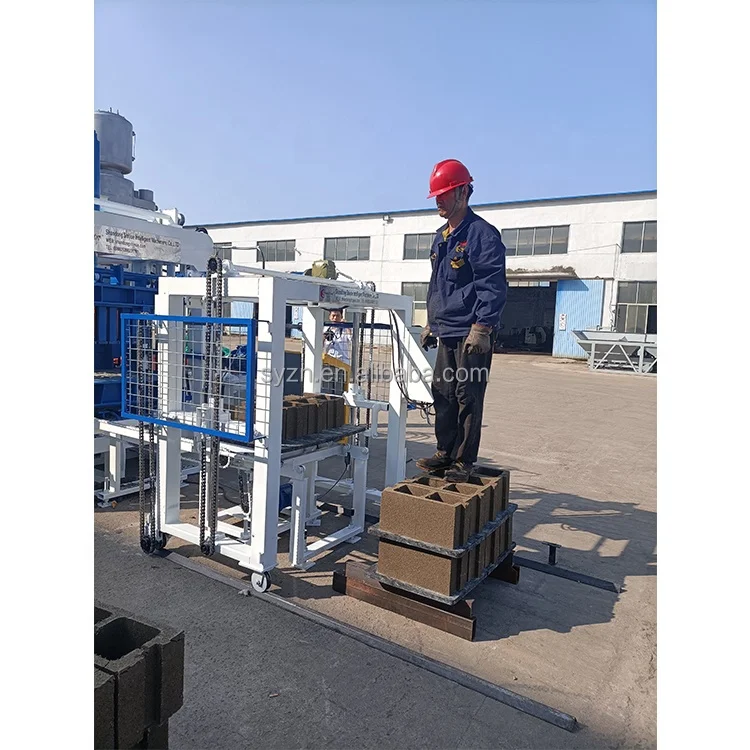
 High quality block machine