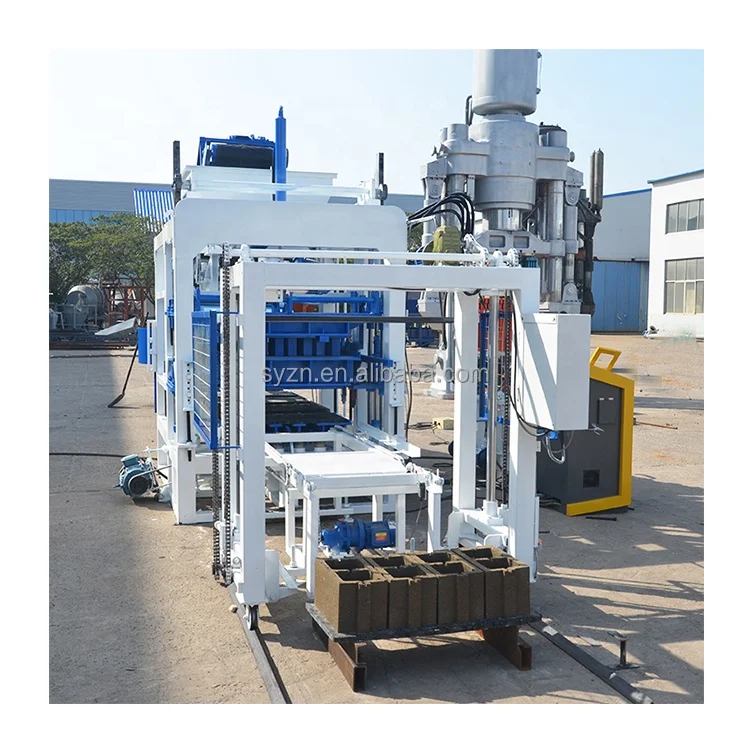
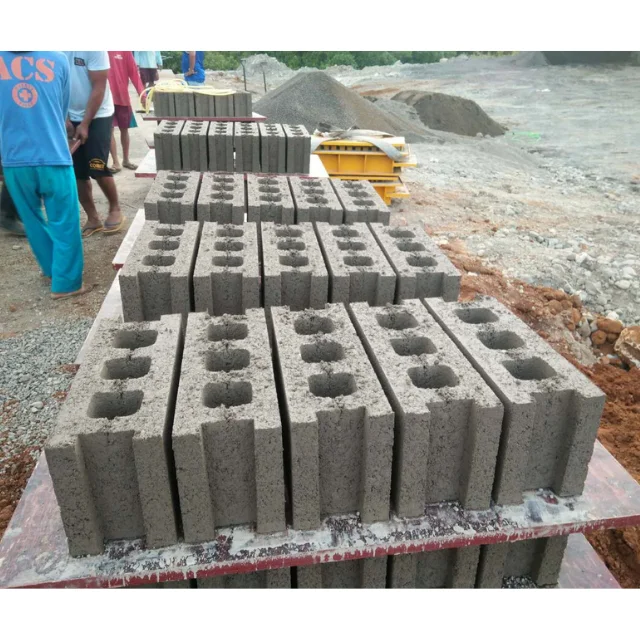
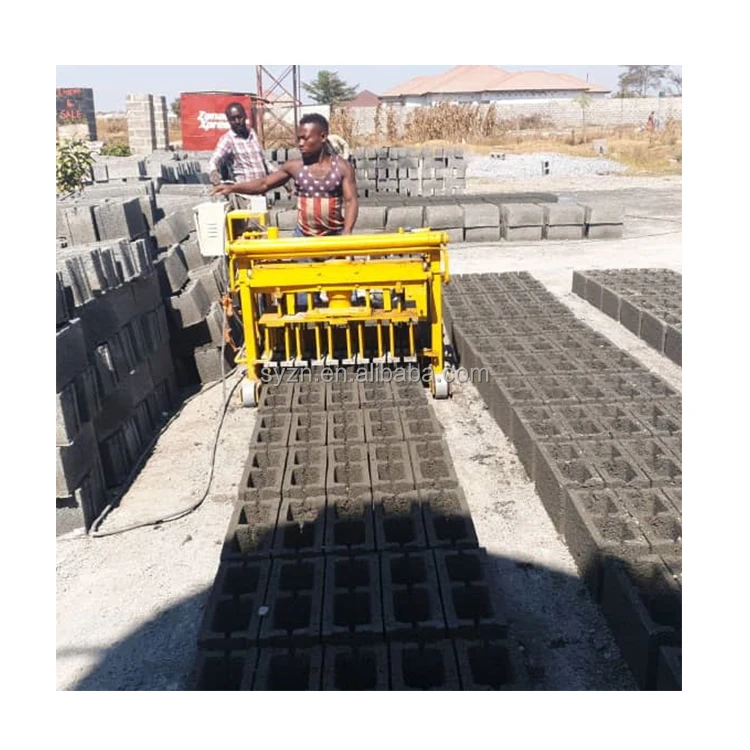
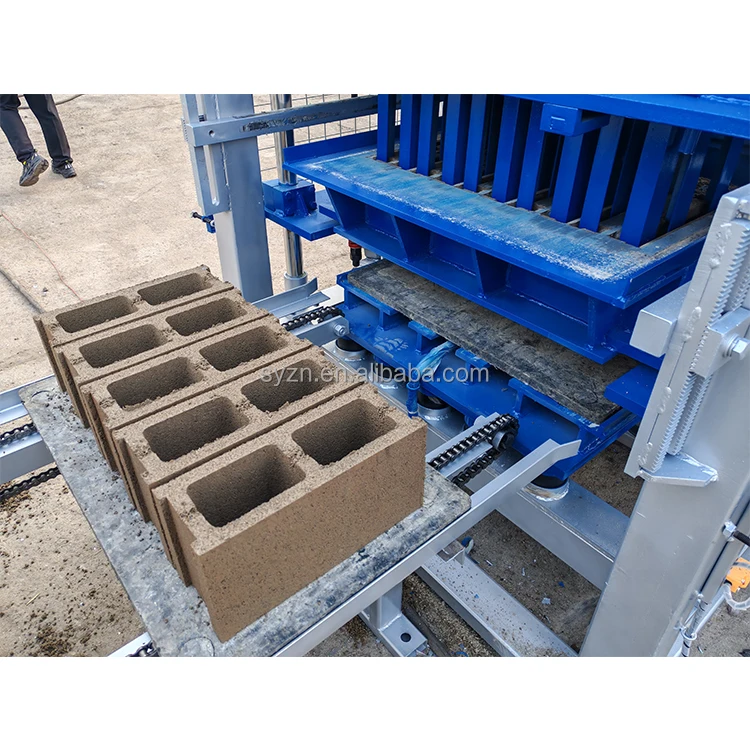
Single-focus block machinery engineering — the QT4-15A is specified as one matched system where machine, mould, pallet and handling equipment are configured together rather than assembled from separate suppliers.
Technical Specifications
| Parameter |
Value |
| Model |
QT4-15A |
| Product Type |
Automatic Hydraulic Block Making Machine |
| Overall Dimensions (L×W×H) |
7100×1600×2610 mm |
| Molding Cycle |
15–25 s |
| Vibration Frequency |
4600 r/min |
| Exciting Force |
40–50 kN |
| Rated Power |
18.45 kW |
| Mixer Model |
JQ350 |
| Pallet Size |
850×550×25 mm |
| Total Weight |
3 T |
| Control System |
PLC control system |
| Hydraulic Station |
Included |
| Applied Products |
Paver, solid block, hollow block, curbstone |
| Raw Materials |
Crushed stones, sand, cement, dust, fly ash |
| Output Capacity |
408 pcs/h (based on 400×200×200 mm hollow block, 4 pcs/mould) |
| Output Capacity |
510 pcs/h (based on 400×150×200 mm hollow block, 5 pcs/mould) |
| Output Capacity |
2100 pcs/h (based on 240×115×53 mm solid brick, 18 pcs/mould) |
| Included Equipment |
Block making machine, hydraulic station, PLC control system, pallet feeder, brick conveyor, block sweeper |
| Free Accessories |
Manual hydraulic trolley, spare parts and tools |
| Automation Level |
Automatic with PLC |
Application Suitability
| Application |
Material or Output |
| Hollow block production for building walls |
Crushed stone, sand, cement, fly ash |
| Solid brick manufacturing |
Sand, cement, dust, fly ash |
| Paver production for walkways and yards |
Crushed stones, sand, cement |
| Curbstone forming for road edges |
Crushed stones, sand, cement |
| On-site block production for construction projects |
Local aggregate with cement binder |
| Small-to-medium block plant operations |
Mixed aggregate formats across mould changes |
What "408 Pieces per Hour" Actually Means for Your Block Format
Capacity figures only hold weight when the block format and mould cavity count are stated alongside them.
I have watched buyers receive an automatic block making machine manufacturer quotation that promises a single hourly number, only to discover on arrival that the figure assumed a hollow block format they never intended to produce. The QT4-15A output varies significantly across formats — 408 pieces per hour assumes a 400×200×200 mm hollow block with four cavities, while the same machine running 240×115×53 mm solid bricks reaches 2100 pieces per hour with eighteen cavities. Without knowing which format drives the quoted capacity, a buyer cannot calculate real daily throughput or plan curing space [NEED_CITE: block format assumptions in capacity quotations].

Positioning the QT4-15A Within the Full Machine Range
The QT4-15A occupies the entry-automatic tier where PLC-controlled hydraulic pressing replaces manual pallet handling, yet the line footprint remains compact enough for a first plant. Buyers comparing semi-automatic workshop machines against high-capacity automatic lines find this model bridges the gap — it delivers automatic cycling with matched pallet feeder and conveyor without requiring the floor space and investment of a full cubing and stacking system.
Where This Tier Fits for Growing Block Producers
For a plant owner who started with a mobile egg-laying machine and now needs consistent block strength across larger orders, this tier introduces hydraulic pressure and vibration force that semi-automatic machines cannot sustain over long shifts. The automatic block making machine manufacturer configures the pallet feeder and brick conveyor as part of the same quotation, eliminating the mismatch that occurs when these stations are sourced from different suppliers after the press has already arrived [NEED_CITE: matched line equipment from single supplier].
How Vibration Force and Hydraulic Pressure Shape Block Density
The 40–50 kN exciting force at 4600 r/min works together with hydraulic pressure to compact the mix during the 15–25 second molding cycle. Higher vibration frequency alone does not guarantee block strength — the hydraulic station must maintain pressure throughout the vibration window so that crushed stone and fly ash particles lock into position before the mould lifts. The 850×550×25 mm pallet size determines how many blocks cure per rack position, which must align with the forklift and curing area the buyer already operates.
The Cost of Unconfirmed Voltage and Control Language
A buyer once received a QT4-15A class machine at a job site in Europe, only to find the motor wired for a voltage and frequency that the local grid did not supply — the project stalled while rewinding took place. PLC display language is another detail that gets overlooked until an operator stands in front of the panel and cannot read the cycle prompts. Confirming these specifications before production avoids weeks of commissioning delay and keeps the installation timeline on track [NEED_CITE: voltage and frequency standards by export market].
Why Sourcing the Full Line from One Supplier Matters
Block machinery as a single focus means the machine, mould, pallet and handling equipment are specified as one matched system, not assembled from separate quotations. Configuration is set against the buyer’s actual mix design and local aggregate rather than a catalogue default. The automatic block making machine manufacturer provides mould design for the formats the buyer’s market sells, including custom drawings when standard formats do not match local demand. Pallet size and material are chosen with the buyer’s curing area and forklift in mind. Automation level is selectable, so a buyer can start at the QT4-15A tier and add automatic stacking or cubing later without replacing the press.
Documentation & Verification
- Line layout and capacity calculation stating block format assumed for each output figure
- Machine specification sheet with hydraulic pressure rating matched to your mix design
- Mould drawing and format list covering hollow block, solid brick, paver and curbstone
- Voltage, frequency and PLC display language confirmation document before production
- Pallet specification matched to your curing rack dimensions and forklift capacity
- Wear parts and mould availability list for first replacement planning
Installation, Commissioning & Support
- Foundation plan sized to the 7100×1600 mm footprint with anchor point locations
- Electrical connection verified against the 18.45 kW rated power and local supply voltage
- PLC control system commissioned with display language confirmed before dispatch
- JQ350 mixer positioned and connected to the raw material feeding sequence
- Pallet feeder and brick conveyor aligned to the 850×550 mm pallet travel path
- Operator training covering mould change procedure and daily maintenance checkpoints
What to Include in Your Inquiry
Provide your target block format and the daily output you need to supply your market, along with the local aggregate and cement type available at your site. Share your existing curing area dimensions and forklift specifications so pallet size can be confirmed before the order is placed. State your local voltage, frequency and preferred PLC display language to avoid commissioning delays after the automatic block making machine manufacturer completes production.
Frequently Asked Questions
Q: How is the QT4-15A output capacity verified, and which block format does each figure assume?
A: Each output figure is tied to a specific block format, mould cavity count and cycle assumption. The 408 pieces per hour figure assumes a 400×200×200 mm hollow block with four cavities, while 2100 pieces per hour assumes a 240×115×53 mm solid brick with eighteen cavities. A capacity calculation document states every assumption so buyers can match the figure to their actual product.
Q: Where does the QT4-15A sit between semi-automatic and high-capacity automatic lines?
A: This model is the entry-automatic tier, offering PLC-controlled hydraulic pressing with pallet feeder and conveyor included as one system. It replaces manual pallet handling while keeping the plant footprint compact. Buyers can add automatic stacking and cubing later without replacing the press itself, allowing the line to grow with demand.
Q: What voltage, frequency and PLC language options are confirmed before shipment?
A: Voltage, frequency and PLC display language are confirmed during the sales process before production begins. This prevents the situation where a machine arrives at site and cannot be powered or operated due to a mismatch with local electrical supply or operator language requirements. The confirmation document is part of the pre-production checklist.
Q: What plant footprint does the QT4-15A tier require compared to the next tier up?
A: The QT4-15A measures 7100×1600×2610 mm and operates as a compact automatic line with pallet feeder and conveyor. The next tier adds automatic stacking and cubing stations that require additional floor length and ceiling height. Buyers working within an existing building should confirm both machine dimensions and the space needed for pallet circulation and curing racks.
Q: How are moulds, pallets and hydraulic wear parts specified as one matched system?
A: Moulds are designed for the buyer’s target formats with cavity counts that align with the stated cycle time. Pallets are sized at 850×550×25 mm and specified for compatibility with the buyer’s curing racks and forklift. Hydraulic wear parts are listed with availability timelines so that the first replacement does not cause unplanned downtime after commissioning.

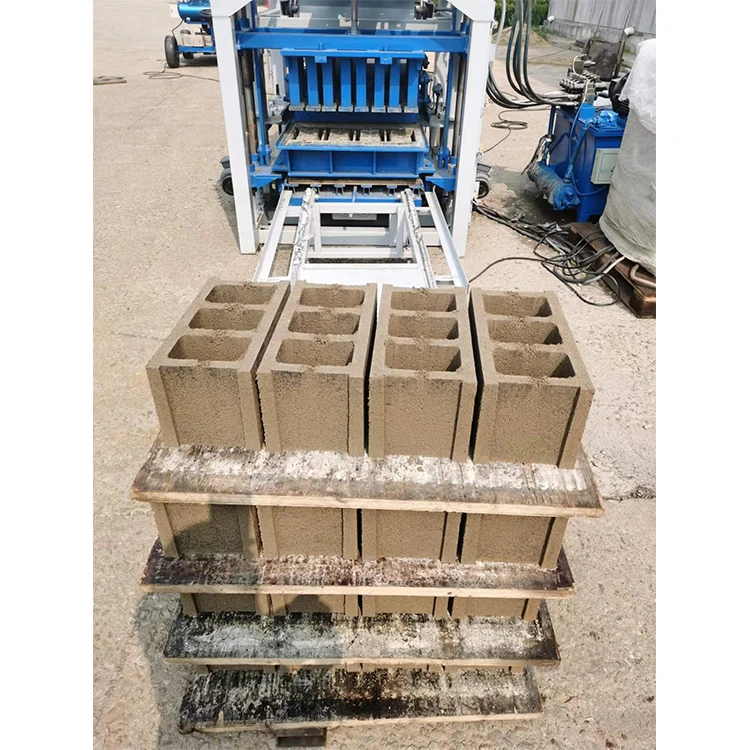
 High quality block machine