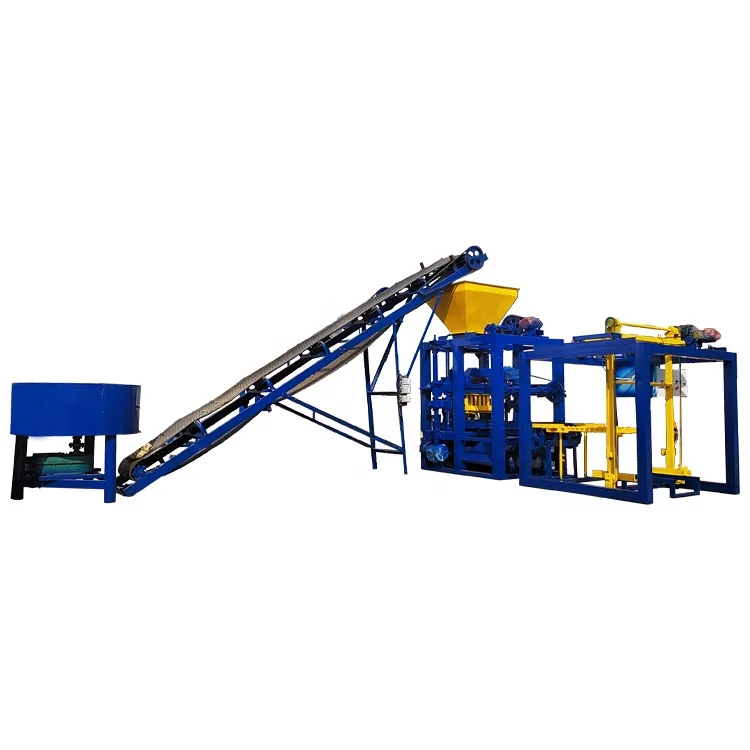
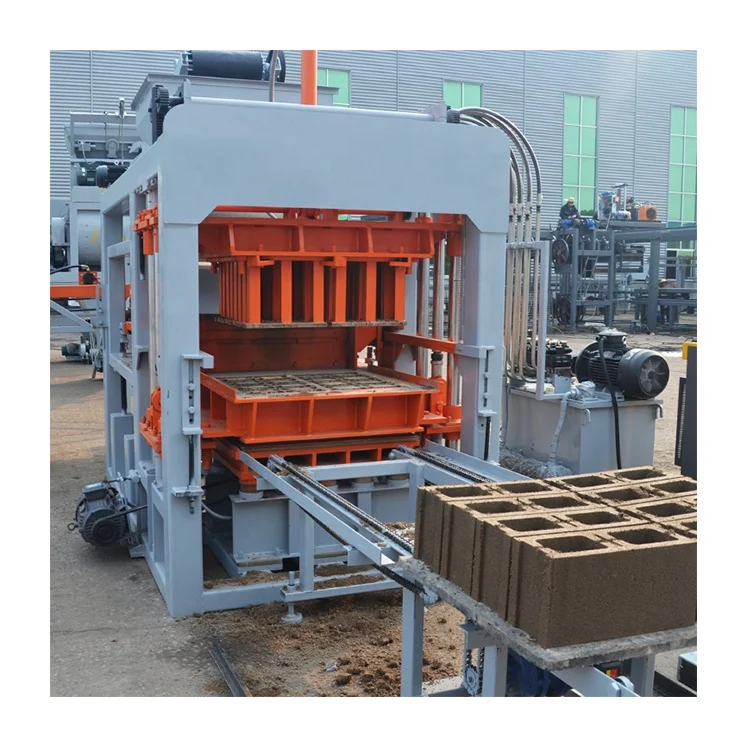
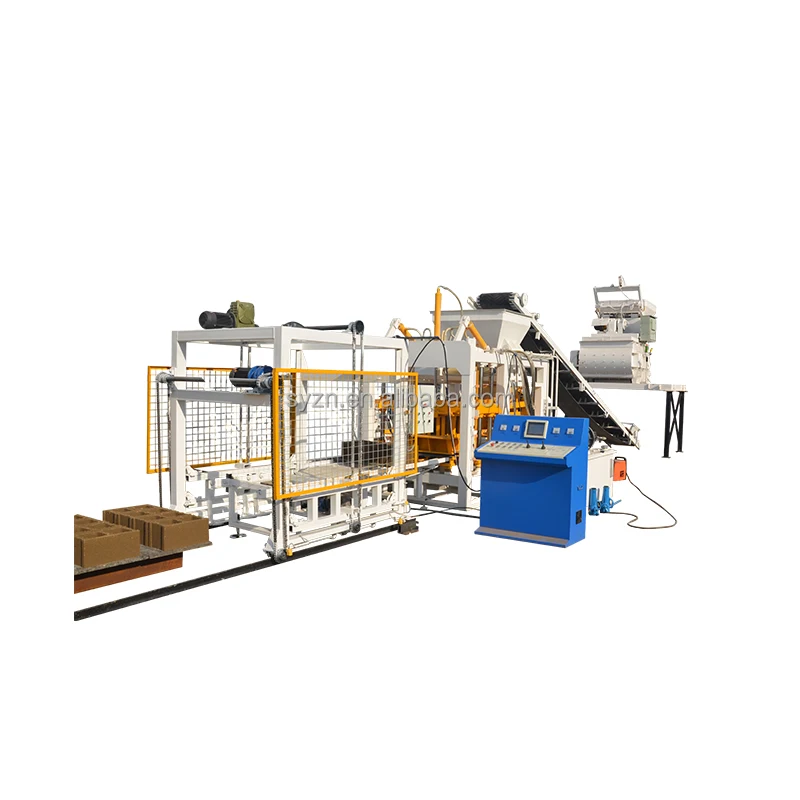
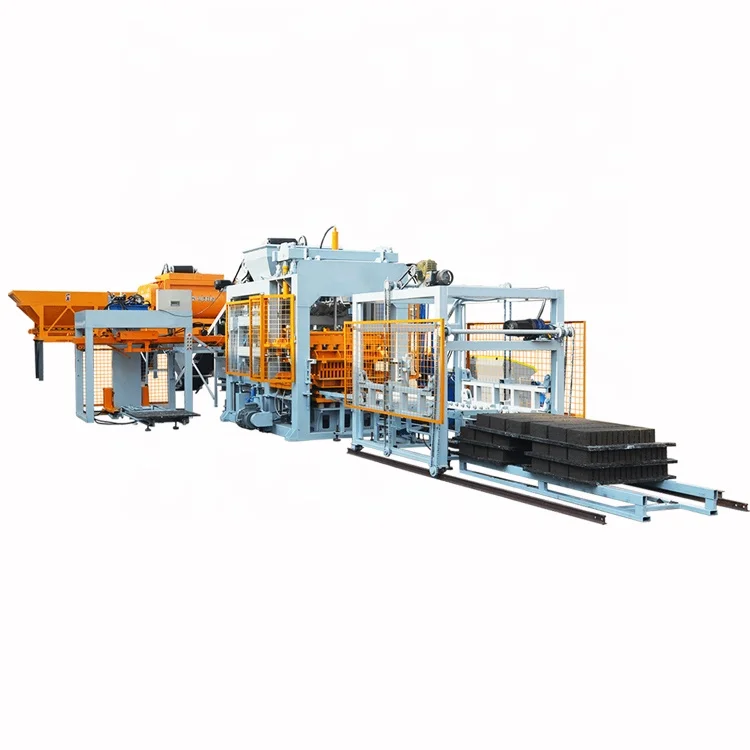
Matched System Approach — The QT4-15A arrives with pallet feeder, conveyor, and sweeper specified as one integrated line rather than assembled from separate suppliers, so cycle times align from press to stacking area.
Technical Specifications
| Parameter |
Value |
| Model |
QT4-15A |
| Product Type |
Automatic Concrete Block Making Machine |
| Overall Dimensions (L×W×H) |
7100×1600×2610 mm |
| Molding Cycle |
15–25 s |
| Vibration Frequency |
4600 r/min |
| Vibration Force |
40–50 kN |
| Rated Power |
18.45 kW |
| Mixer Model |
JQ350 |
| Pallet Size |
850×550×25 mm |
| Net Weight |
3 T |
| Control System |
PLC control system |
| Hydraulic Station |
Included |
| Applied Products |
Paver, solid block, hollow block, curbstone |
| Raw Materials |
Crushed stone, sand, cement, dust, fly ash |
| Automation Level |
Automatic with pallet feeder, brick conveyor, block sweeper |
| Output Capacity — Hollow Block 400×200×200 mm |
408 pcs/hr (4 pcs/mould, 3264 pcs/8 hr) |
| Output Capacity — Hollow Block 400×150×200 mm |
510 pcs/hr (5 pcs/mould, 4080 pcs/8 hr) |
| Output Capacity — Solid Brick 240×115×53 mm |
2100 pcs/hr (18 pcs/mould, 17000 pcs/8 hr) |
| Voltage & Frequency |
(basis to be confirmed before production) |
| Hydraulic Pressure Rating |
(basis to be confirmed) |
| Mould Change Time |
(basis to be confirmed) |
| Certification |
(basis to be confirmed) |
Application Suitability
| Application |
Material or Output |
| Hollow block production for wall construction |
Crushed stone, sand, cement, fly ash |
| Solid brick manufacturing for load-bearing structures |
Crushed stone, sand, cement, dust |
| Paver and interlocking block for roads and walkways |
Crushed stone, sand, cement |
| Curbstone production for infrastructure projects |
Crushed stone, sand, cement |
| On-site block production by construction contractors |
Local aggregate blended with cement |
| First block plant for entrepreneurs entering the market |
Regionally available raw materials |
Why the Voltage Question Comes Before the Price on an Automatic Block Making Machine for Sale
Confirming voltage, frequency, and PLC language before production prevents the most common commissioning failure I see on export sites.
I once stood on a site in the Gulf watching an entire crew wait three weeks for a replacement motor because the unit shipped at 50 Hz into a 60 Hz supply. The automatic block making machine for sale listing looked competitive, the price was signed off, but nobody had asked the single question that determined whether the machine would run on arrival. That gap between quotation and reality is where most project delays hide [NEED_CITE: voltage and frequency standards by export market].
Where the QT4-15A Sits Across the Full Block Machine Range
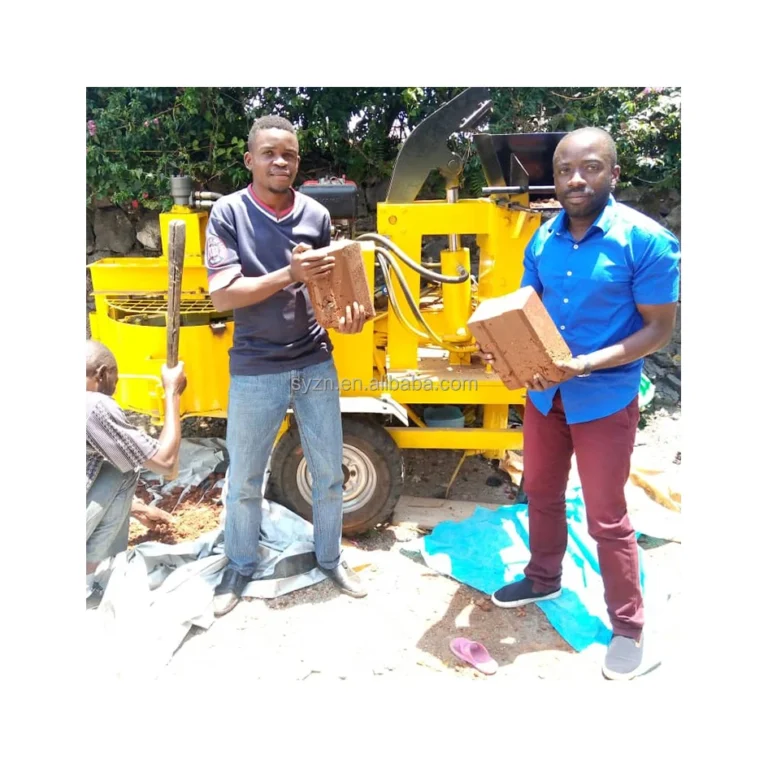
The SHIYUE lineup spans mobile egg-laying units, semi-automatic presses, and high-capacity fully automatic lines. The QT4-15A occupies the automatic tier, meaning the press itself is paired with a pallet feeder, brick conveyor, and block sweeper so an operator does not manually handle output between stations. Buyers stepping up from a semi-automatic press will find the jump in daily consistency comes less from press speed and more from the supporting stations keeping pace.
Plant Footprint and the Space Decision
At 7100 mm in length, the QT4-15A requires a dedicated production bay rather than a shared workshop corner. Contractors evaluating on-site production must measure curing rack travel distance from the conveyor discharge point, because pallet size at 850×550×25 mm dictates the forklift type and rack spacing already in use. Buyers who lock in the machine without checking that existing pallets match end up re-racking the entire curing area after arrival [NEED_CITE: curing rack compatibility with pallet dimensions].
What the Specification Numbers Actually Mean on the Shop Floor
Vibration force rated at 40–50 kN paired with a 4600 r/min frequency determines how densely the mix is compacted before hydraulic pressure finishes the stroke. When those two forces are mismatched to the buyer’s aggregate size, blocks crack during curing or fail compression tests at delivery. The 15–25 second molding cycle reflects a range because heavier formats like 400×200×200 mm hollow blocks require longer vibration than a slim solid brick. Pallet thickness at 25 mm is chosen to survive repeated hydraulic clamping without warping, which would otherwise produce uneven block height across a single batch.

When the Wrong Tier Costs More Than the Machine
Buyers who choose a semi-automatic tier to save upfront often discover that hand-stacking fresh blocks adds labour hours that erase the price difference within the first season. Others jump to a high-capacity automatic line without the daily sales volume to absorb the output, leaving finished blocks sitting on pallets that are then unavailable for the next shift. The QT4-15A tier suits plants that have confirmed local demand for multiple formats but have not yet scaled to continuous two-shift operation [NEED_CITE: block plant labour allocation in semi-automatic versus automatic tiers].
Why Procurement Teams Place the QT4-15A Through This Channel
Configuration is set against the buyer’s actual mix design and locally available aggregate, not pulled from a catalogue default. Mould design covers the formats the buyer’s market actually sells, and custom drawings are accepted for non-standard dimensions. Pallet size, feeder speed, and conveyor length are matched as one system so the press is never left waiting for an empty pallet. Automation level remains selectable, allowing a buyer to start with the standard feeder and sweeper, then add automatic stacking later. Installation support includes operator training on the PLC interface in the language confirmed before shipment.
Documentation & Verification
- Line layout drawing with capacity calculation stated per block format
- Machine specification sheet listing hydraulic pressure and vibration force ratings
- Pallet specification confirming 850×550×25 mm dimensions and material grade
- Voltage, frequency, and PLC display language confirmation signed before production
- Factory test record run on the buyer’s specified block format before dispatch
- Mould drawing, format list, and wear parts list for planned replacement cycles
Installation, Commissioning & Support
- Foundation must support 3 T static weight plus dynamic vibration load across the 7100 mm frame length
- Dedicated electrical circuit sized for 18.45 kW rated power with confirmed voltage and frequency
- Machine ships dismantled for container loading; reassembly on-site follows the hydraulic schematic provided
- PLC language set to operator preference confirmed during pre-production documentation exchange
- Operator training covers mould change procedure, pallet feeder adjustment, and daily sweeper maintenance
- Wear parts list supplied so the first replacement order can be placed before stock runs low
Before You Send the Inquiry
Provide the block formats your market currently sells and the daily output target for each, along with the raw materials available locally and their typical gradation. Confirm the site supply voltage, frequency, and the language your operators will need on the PLC display. If existing curing racks or forklifts are already on site, share the pallet dimensions they accept so the QT4-15A feeder and conveyor are configured to match from day one.
Frequently Asked Questions
Q: How is the QT4-15A capacity calculated, and what does the 8-hour output assume?
A: Each output figure is stated for a specific block format with pieces per mould confirmed — for example, 408 hollow blocks per hour assumes the 400×200×200 mm size with 4 cavities. The 8-hour total assumes continuous press operation without subtracting mould change or maintenance pauses.
Q: Where does the QT4-15A sit compared to semi-automatic and high-capacity lines?
A: It occupies the automatic tier, including pallet feeder, conveyor, and sweeper as standard. Semi-automatic units omit these stations to reduce investment, while high-capacity lines add automatic stacking and cubing for two-shift operation.
Q: What electrical details must be confirmed before the QT4-15A ships?
A: Voltage, frequency, and PLC display language are confirmed during the documentation stage before production begins. Shipping a unit without these confirmed is a leading cause of delayed commissioning on export sites.
Q: Which block formats can one QT4-15A produce?
A: The machine accepts moulds for hollow block, solid brick, paver, and curbstone formats on the same press. Mould change time depends on the format pair and whether the optional quick-clamp system is specified.
Q: Is stacking equipment included or optional at this tier?
A: The QT4-15A ships with pallet feeder, brick conveyor, and block sweeper. Automatic stacking and cubing are available on higher tiers of the range and can be added as a later upgrade path.

 High quality block machine