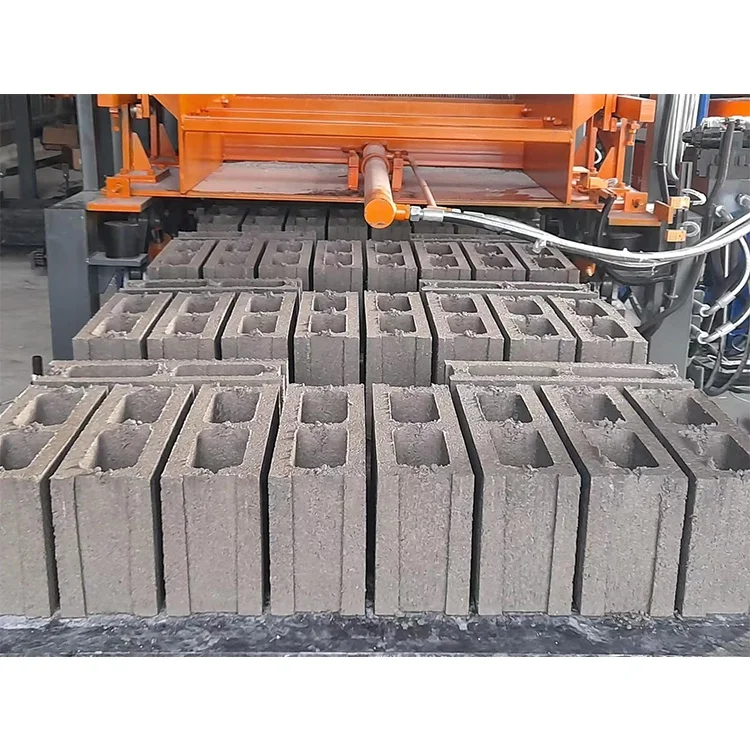
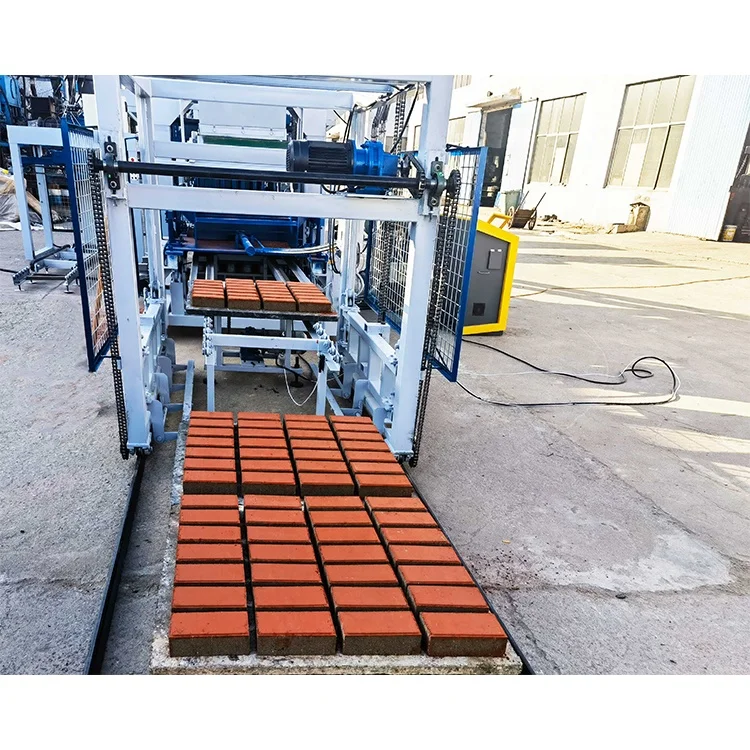
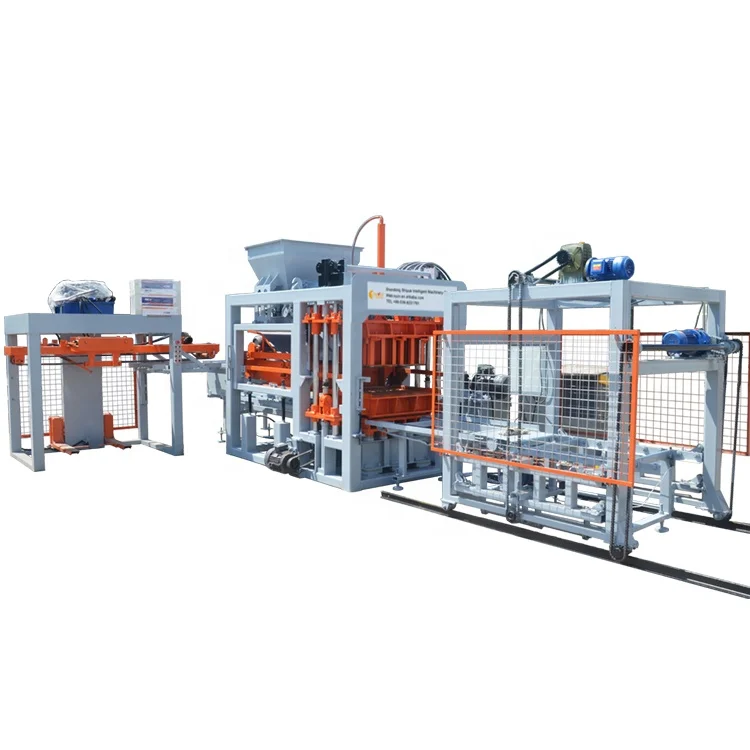
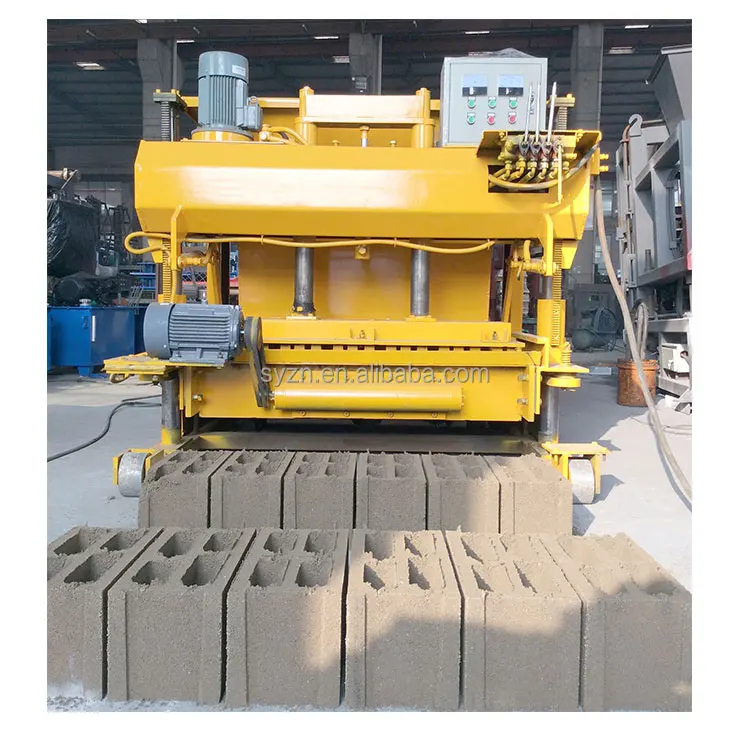
Complete Range Coverage — the QT4-15A anchors the mid-tier fully automatic block machine lineup, positioned between semi-automatic entry points and high-capacity lines so you know exactly where it fits before committing capital.
Technical Specifications
| Parameter |
Value |
| Model |
QT4-15A |
| Product Type |
Fully Automatic Concrete Block Making Machine |
| Overall Dimensions (L×W×H) |
4100×1600×2600 mm |
| Rated Pressure |
16–21 MPa |
| Main Vibration Form |
Platform Vibration |
| Vibration Frequency |
4200 r/min |
| Vibration Force |
55 kN |
| Pallet Size |
880×550 mm |
| Molding Cycle |
25–30 s (basis not stated in source — confirm block format and material) |
| Overall Power |
18.45 kW |
| Demolding Method |
Hydraulic |
| Total Mass |
4 T |
| Factory Area |
300 m² |
| Applied Products |
Concrete blocks, hollow blocks, solid blocks, pavers, interlocking blocks, curbstone, colored pavers |
| Raw Materials |
Crushed stone, sand, cement, dust, fly ash, gravel, slag |
| Warranty |
1 year |
Application Suitability
| Application |
Material or Output |
| Hollow block production |
Crushed stone, sand, cement, fly ash blends |
| Paver and colored paver runs |
Sand and cement with pigment additives |
| Interlocking brick manufacturing |
Gravel, sand, and cement mixes |
| Solid block for load-bearing walls |
Coarse aggregate and cement |
| Kerbstone and curb production |
High-density concrete mixes with slag |
| On-site housing project blocks |
Locally sourced sand, gravel, and cement |
What the QT4-15A Block Machine Manufacturer Doesn’t Tell You About Cycle Time
A 25–30 second cycle only means something when you know which block format and material it was measured on.
I have stood on commissioning floors where the operator watched the counter and realized by mid-shift that the quoted output assumed a thin paver while the actual order book was full of 200 mm hollow blocks. The QT4-15A block machine manufacturer must state the format behind every cycle figure, because a 30-second press stroke on a 60 mm paver is a very different story from 30 seconds on a tall hollow block that needs longer vibration to settle the mix. [NEED_CITE: block format impact on realistic daily output]

Where the QT4-15A Sits in the Full Machine Range
Buyers comparing options often start at semi-automatic machines and wonder whether the step up to a fully automatic tier like the QT4-15A justifies the investment. The distinction is not just about speed — it is about what happens between the press and the curing yard. In a semi-automatic setup, pallet handling and stacking remain manual tasks, which limits the practical daily volume regardless of how fast the press cycles. The QT4-15A is positioned as the point where automatic pallet feeding and hydraulic demolding remove those manual bottlenecks, making it the logical entry into continuous production for a first-time plant owner or a distributor expanding into pavers and interlocking formats.
Matching the Machine Tier to Your Site Footprint
A 300 m² factory area is compact enough for a contractor setting up block production beside a housing development, yet large enough to accommodate raw material storage, a small curing zone, and the press itself with room for pallet circulation. When buyers skip the site survey and assume any automatic machine will fit, they often discover that the curing rack handling and stacking area was never factored in. [NEED_CITE: plant layout requirements for automatic block lines] The QT4-15A’s footprint makes it viable for entrepreneurs who do not have the acreage for a high-capacity line but need more consistency than a mobile egg-laying machine can deliver on a tight project schedule.
Reading the Specs That Actually Matter on Site
The 55 kN vibration force and 16–21 MPa hydraulic pressure work together — vibration settles the mix into the mould cavity while hydraulic pressure compacts it from above. If the local aggregate is lightweight volcanic ash instead of dense crushed stone, that pressure-and-vibration balance must be recalibrated or the blocks will crack during demolding. The 880×550 mm pallet size determines how many blocks per cycle and how those pallets move through curing; if your existing forklift and curing racks were sized for a different pallet, the mismatch slows everything downstream. Hydraulic demolding across hollow, solid, and paver formats means the QT4-15A block machine manufacturer can supply one press for multiple product lines, but the mould change procedure and time still need confirming before you commit to a format-heavy product plan.
The Cost of Skipping Configuration Confirmation
I once watched a contractor lose most of a shift to a mould change that should have taken minutes, because the quick-change system was never specified in the original order. When voltage and PLC display language are left unconfirmed until the machine arrives, the electrician stands in front of a control panel he cannot read and the commissioning schedule slips by days. [NEED_CITE: commissioning delays from unconfirmed electrical specifications] Choosing a pallet size without checking it against the curing area and forklift already on site means pallets pile up on the floor while blocks cure unevenly — a problem that looks like a machine fault but is actually a line design gap.
Why Source This QT4-15A Block Machine Manufacturer
Shiyue focuses exclusively on block machinery, so the QT4-15A is specified as a matched system — press, mould, pallet, and handling — rather than assembled from separate suppliers. Configuration is set against your actual mix design and local aggregate, not pulled from a catalogue default. Mould design covers the formats your market sells, with custom drawings accepted when standard options do not fit. Automation level is selectable, so you can start with the QT4-15A and plan an upgrade path as demand grows. Installation includes operator training so your crew is not left figuring out hydraulic demolding sequences from a manual alone.
Documentation & Verification
- Line layout showing QT4-15A footprint with pallet circulation and curing zone
- Capacity calculation stating the block format behind every output figure
- Mould drawing and format list confirming changeover compatibility
- Voltage and control language confirmation sheet signed before production
- Hydraulic and electrical schematic for on-site troubleshooting
- Factory test record on your specified mix before dispatch
Installation, Commissioning & Support
- 300 m² minimum factory area with level concrete floor for the 4100×1600 mm machine base
- Dedicated power circuit sized for the 18.45 kW total load at confirmed voltage and frequency
- Machine arrives partially assembled; hydraulic and vibration systems require on-site alignment
- PLC display language confirmed before shipment to avoid commissioning rework
- Operator training covers hydraulic demolding, mould change, and pallet feed sequences
- Wear parts list and mould maintenance schedule provided at handover
What We Need to Size the QT4-15A for Your Line
Tell us which block formats your market actually sells — hollow, paver, interlocking, or a mix — and the daily volume you need for each. Share your local aggregate type and any existing mix design so the vibration and pressure settings match from day one. Confirm the voltage, frequency, and PLC language at your site, and whether your curing area and forklift already on the ground are compatible with the 880×550 mm pallet.
Frequently Asked Questions
Q: How is the QT4-15A’s capacity calculated, and which block format does the cycle time assume?
A: The 25–30 second molding cycle must be tied to a specific block format, material, and thickness to translate into meaningful daily output. We provide a capacity calculation per format so you can compare the QT4-15A against your actual product mix, not a generic best-case figure. Always request the format assumption in writing before placing an order.
Q: Where does the QT4-15A sit compared to semi-automatic and higher-tier automatic models?
A: The QT4-15A is the mid-tier fully automatic option, positioned above semi-automatic presses that require manual pallet handling and below high-capacity lines built for large-scale plants. It suits buyers who need continuous production with automatic pallet feeding but do not yet have the volume or site space for a top-tier automatic line.
Q: What voltage, frequency, and PLC language options are available, and when must they be confirmed?
A: Voltage and frequency are configurable to match your local grid, and PLC display language is selectable. All three must be confirmed before production starts — not at the commissioning stage — because rewiring or replacing control components after arrival causes significant delays and additional cost on site.
Q: What plant footprint and utility requirements should I plan for with this machine tier?
A: Plan for at least 300 m² to cover the press, raw material feed area, pallet circulation, and a portion of the curing zone. The 18.45 kW power draw requires a dedicated circuit at your confirmed voltage. Floor leveling and drainage are critical for consistent hydraulic demolding across the 880×550 mm pallet area.
Q: Which mould formats are available, and can custom moulds be designed to my drawings?
A: Standard moulds cover hollow blocks, solid blocks, pavers, interlocking bricks, and curbstones compatible with the QT4-15A’s platform vibration system. Custom mould designs are accepted based on your drawings, with cycle time and demolding behavior validated against your block dimensions before the mould enters production.

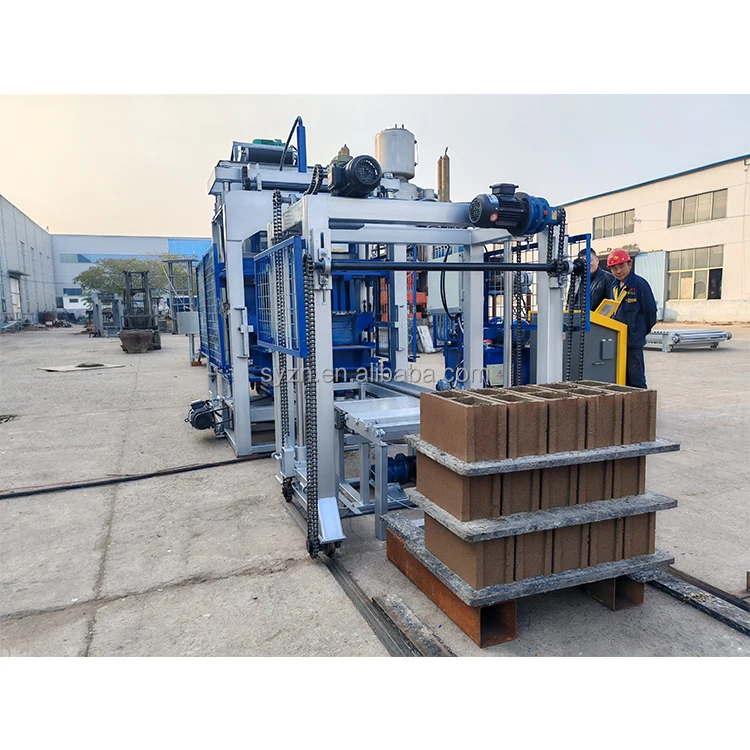
 High quality block machine