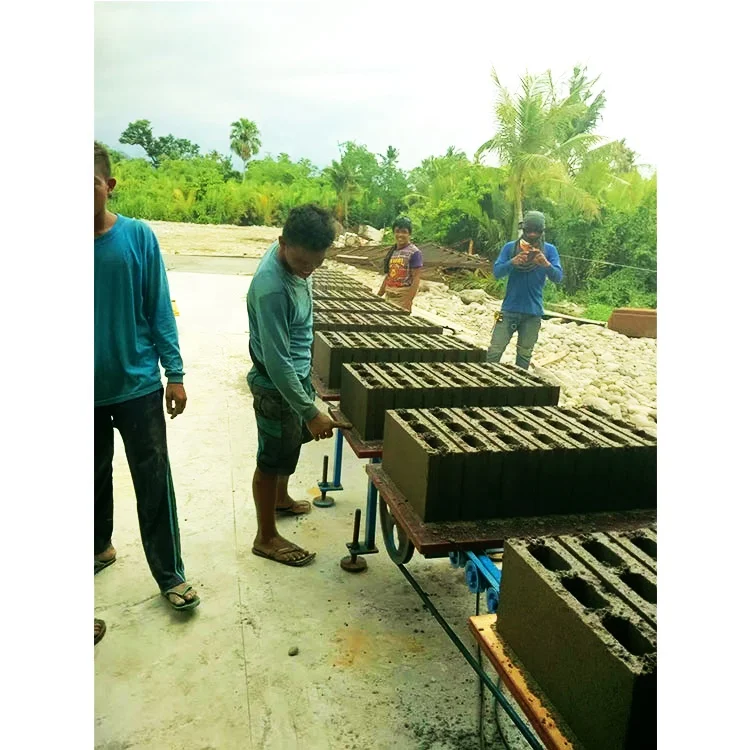
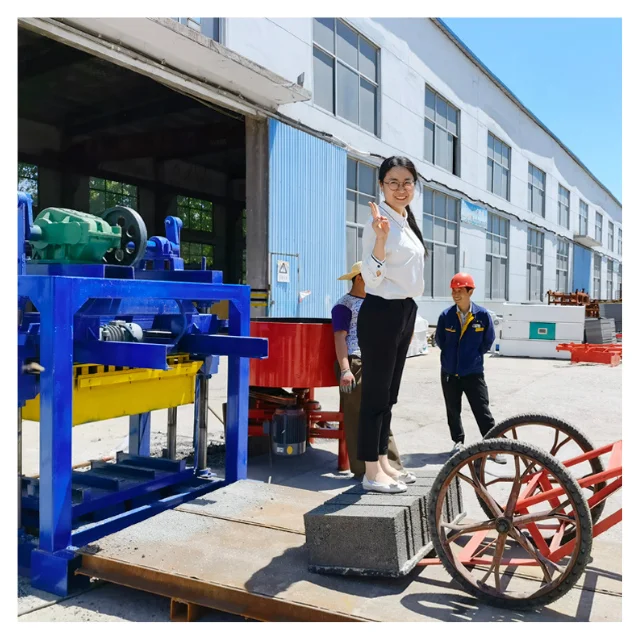
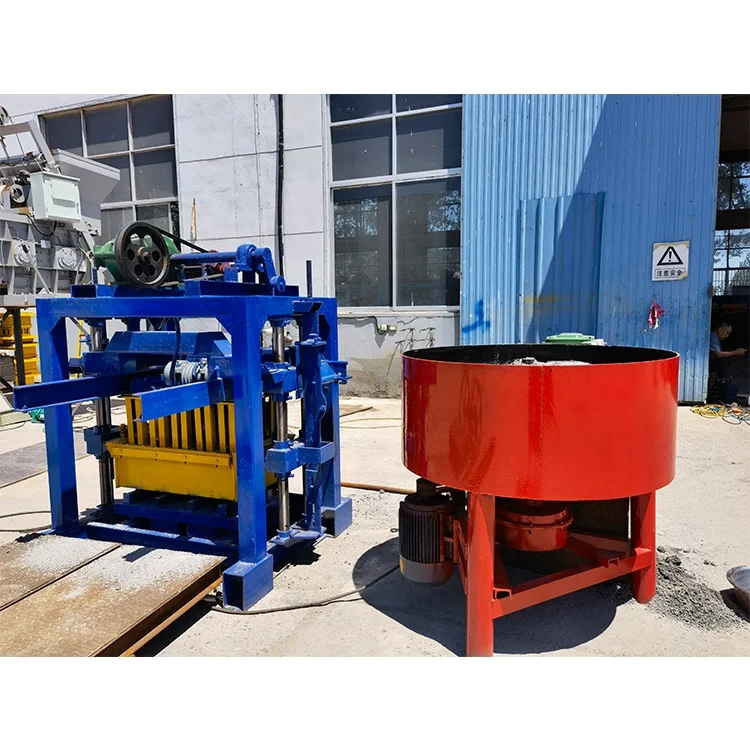
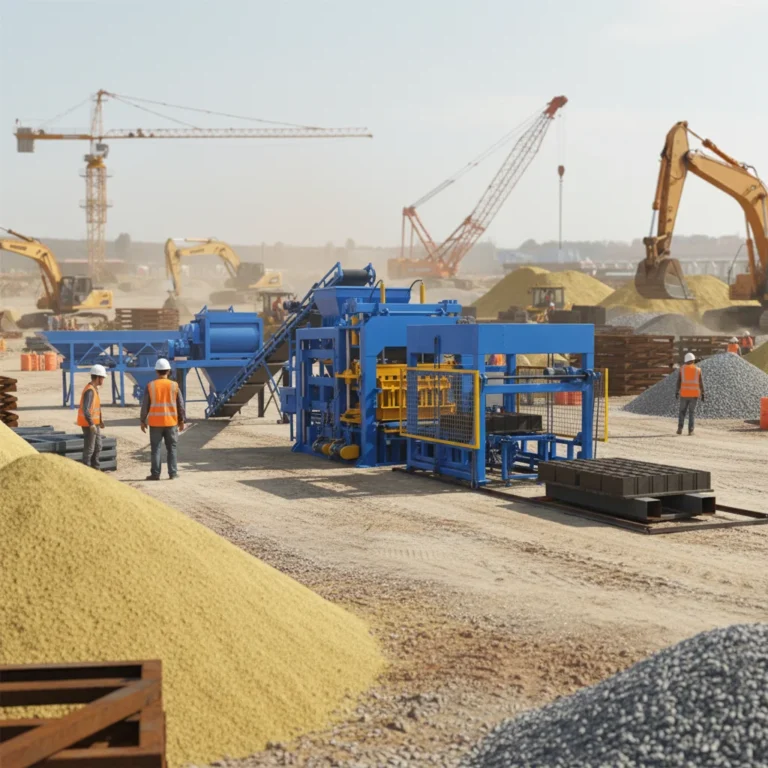
Matched System Configuration — The QT4-15A is specified as one integrated unit of press, mould, pallet, and handling, avoiding the mismatched assembly problems buyers face when sourcing components separately.
Technical Specifications
| Parameter |
Value |
| Model |
QT4-15A |
| Product Type |
Automatic Concrete Block Making Machine |
| Overall Dimensions (L×W×H) |
4100×1600×2600 mm |
| Rated Pressure |
16–21 MPa |
| Main Vibration Form |
Platform Vibration |
| Vibration Frequency |
4200 r/min |
| Vibration Force |
55 kN |
| Pallet Size |
880×550 mm |
| Molding Cycle |
25–30 s (basis not stated in source — confirm block format / material / thickness) |
| Overall Power |
18.45 kW |
| Total Mass |
4 T |
| Demolding Method |
Hydraulic |
| Applied Products |
Hollow blocks, solid blocks, pavers, interlocking blocks, kerbstone, colored pavers |
| Raw Material Compatibility |
Crushed stone, sand, cement, fly ash, gravel, slag, dust |
| Automation Level |
Fully Automatic |
| Factory Area Required |
300 m² |
| Warranty |
1 year (excluding spare parts) |
Application Suitability
| Application |
Material or Output |
| Hollow block production for residential and commercial walls |
Crushed stone, sand, cement, fly ash blends |
| Solid block manufacturing for load-bearing structures |
Gravel, sand, cement mixes |
| Paving block and colored paver production for walkways and plazas |
Fine aggregate with pigment additives |
| Interlocking brick and kerbstone forming for road edges and landscaping |
Coarse aggregate, slag, cement |
| Fly ash block production using industrial by-products |
Fly ash, sand, cement combinations |
Why "Cycles per Hour" Does Not Tell You the Real Daily Output
The molding cycle number means nothing unless it names the exact block format it was measured on.
Many automatic block making machine manufacturer catalogs quote a single cycle time as if it applies to every product the press can form. In practice, a 25–30 second cycle on a small solid block can stretch well beyond that on a tall hollow block or a thick paver requiring extended vibration. Buyers who size their plant on the headline number regularly find daily output falls noticeably short once production starts on their actual product mix [NEED_CITE: capacity calculation methods across block formats]. I once saw a South Asian client receive a machine rated for a specific hourly figure, only to discover the local high-clay aggregate forced longer cycles, cutting output substantially below expectations. That machine was not the QT4-15A, but the lesson applies universally: always ask which block format the cycle time assumes before comparing models.

Positioning the QT4-15A Within the Full Machine Range
The QT4-15A occupies the mid-tier of our automatic block making machine manufacturer lineup, sitting between workshop-class semi-automatic presses and high-capacity fully automatic lines. Its 880×550 mm pallet format delivers a daily volume that suits growing block plants without demanding the curing yard space or capital outlay of larger models. Buyers stepping up from manual operations often find this tier gives them automatic pallet feeding and hydraulic demolding while keeping the plant footprint manageable.
Choosing the Right Tier for Your Project Stage
Entrepreneurs launching a first block plant and established manufacturers adding new formats both land on this tier, but for different reasons. A startup values the balance between output and investment, while an existing producer values the ability to run smaller batches of specialty products without tying up a high-capacity line. Across the range, automation level is selectable — a buyer can begin with semi-automatic pallet handling and later add automatic stacking and cubing as volume grows [NEED_CITE: automation upgrade paths in block production plants]. This flexibility matters when market demand is still uncertain.
What the Core Parameters Mean on the Production Floor
The 55 kN vibration force operating at 4200 r/min through platform vibration determines how densely the concrete mix compacts inside the mould cavity. On this class of machine, vibration must be paired with adequate hydraulic pressure — here 16–21 MPa — to squeeze out air voids and produce blocks with consistent compressive strength. If vibration force is high but pressure is low, blocks emerge with good surface finish but weak internal structure; reverse the imbalance and blocks are dense but surface-cracked. The 880×550 mm pallet size directly sets how many blocks form per cycle and must align with the buyer’s existing curing racks and forklift dimensions. The 4 T total mass reflects the structural steel and hydraulic components required to sustain repeated high-pressure cycles without frame fatigue, a consideration that separates mid-tier machines from lighter workshop models.
The Hidden Cost of Choosing Configuration by Catalog Default
When pallet size is picked from a standard list rather than matched to the buyer’s curing area, pallets pile up on the floor because the rack spacing does not fit. When voltage and PLC language are not confirmed before production, the machine sits idle after arrival while transformers are sourced or control panels are reprogrammed. Mould change systems that look fast in a demonstration can consume most of a shift on the actual production floor if the clamping mechanism was not specified for the buyer’s mould weight and format variety [NEED_CITE: mould change time impact on daily block output]. These mismatches do not show up in any quotation comparison — they appear only after the machine is installed and running.
Why Source the QT4-15A Through This Range
Every configuration starts from the buyer’s actual mix design and local aggregate, not a catalog default — I personally test-press samples with the client’s material before finalizing parameters. Mould design covers every format the buyer’s market demands, including custom profiles built from buyer-supplied drawings. Machine, mould, pallet, and handling equipment are specified as one matched system, eliminating the finger-pointing that occurs when components come from separate suppliers. Automation level is selectable so a buyer can start at a comfortable investment point and add automatic stacking or cubing later without replacing the press. Documentation includes line layout, capacity calculations per block format, and factory test records so buyers see verified output before the machine leaves our facility.
Documentation & Verification
- Line layout with capacity calculation stating the block format assumed for each cycle time
- Machine specification sheet confirming voltage, frequency, and control language before production
- Mould drawing and format list covering every product the buyer’s market requires
- Factory test record showing verified cycle time and block output per format before dispatch
- Hydraulic and electrical schematic for on-site maintenance and troubleshooting
Installation, Commissioning & Support
- Foundation plan sized for the 4100×1600 mm footprint and 4 T operating mass of the QT4-15A
- Electrical supply confirmed to match specified voltage and 18.45 kW total power requirement
- Machine dispatched in dismantled state with reassembly supervised during on-site installation
- First-run commissioning with parameter adjustment to the buyer’s local aggregate and mix design
- Operator training covering mould change procedure, hydraulic system checks, and daily maintenance routines
- Wear parts and mould maintenance schedule provided with initial spare parts recommendations
What We Need to Configure Your Machine Correctly
Send us the block formats your market sells, including dimensions and target daily volume for each. Provide a sample or lab report of your local aggregate so we can test-press and match vibration and pressure settings. Confirm your site voltage, frequency, and the language your operators will use on the control panel, so the QT4-15A arrives ready to run.
Frequently Asked Questions
Q: Where does the QT4-15A sit compared to semi-automatic and high-capacity models in the range?
A: The QT4-15A is a mid-tier automatic press, offering hydraulic demolding and platform vibration above workshop-class semi-automatic machines, while requiring less curing space and capital than high-capacity lines. It suits buyers whose daily volume exceeds manual handling capacity but who are not yet ready for a fully continuous production plant.
Q: What plant footprint does this tier need compared to other models?
A: The QT4-15A requires approximately 300 m² for the press area, raw material storage, and initial curing. Larger automatic lines in the range demand considerably more space for extended curing racks and automatic cubing stations, while semi-automatic models can operate in smaller workshops with manual pallet handling.
Q: How is daily output calculated, and why does block format matter?
A: Daily output is calculated by multiplying blocks per cycle by cycles per hour by working hours, but the cycle time varies with block height, wall thickness, and mix composition. A molding cycle measured on a thin paver will be shorter than on a tall hollow block, so we state capacity per format rather than quoting a single headline figure.
Q: Can I start semi-automatic and upgrade later?
A: Yes. The product family allows buyers to begin with manual pallet handling and add automatic pallet feeding, stacking, or cubing as production volume grows. The press itself remains the same, so the upgrade involves adding peripheral stations rather than replacing the core machine.
Q: What investment level does this tier represent?
A: The QT4-15A sits at a mid-range investment point — higher than entry-level workshop machines but below high-capacity automatic lines that require extensive curing infrastructure. This positions it for buyers who need reliable daily output without the capital commitment of a large-scale plant.

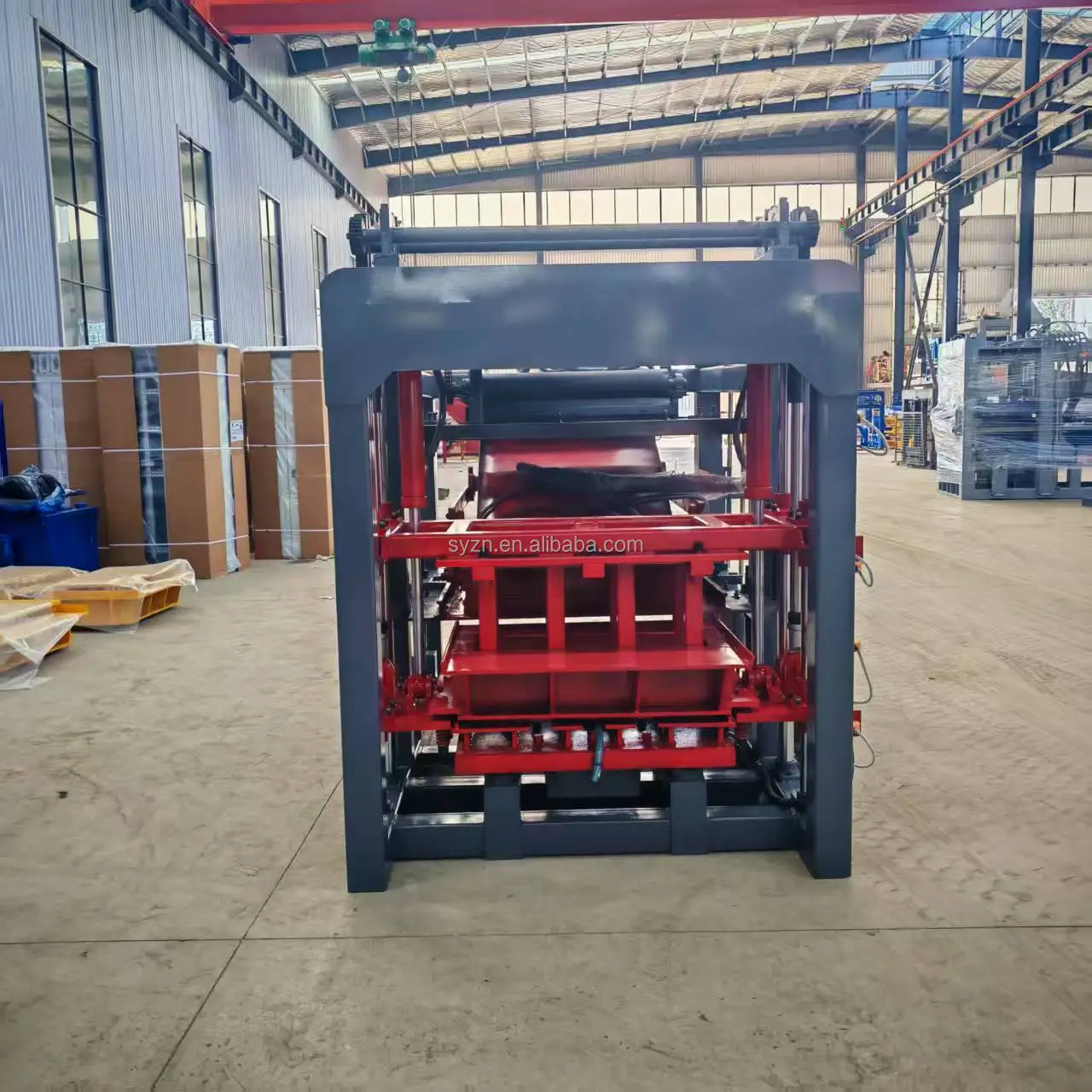
 High quality block machine