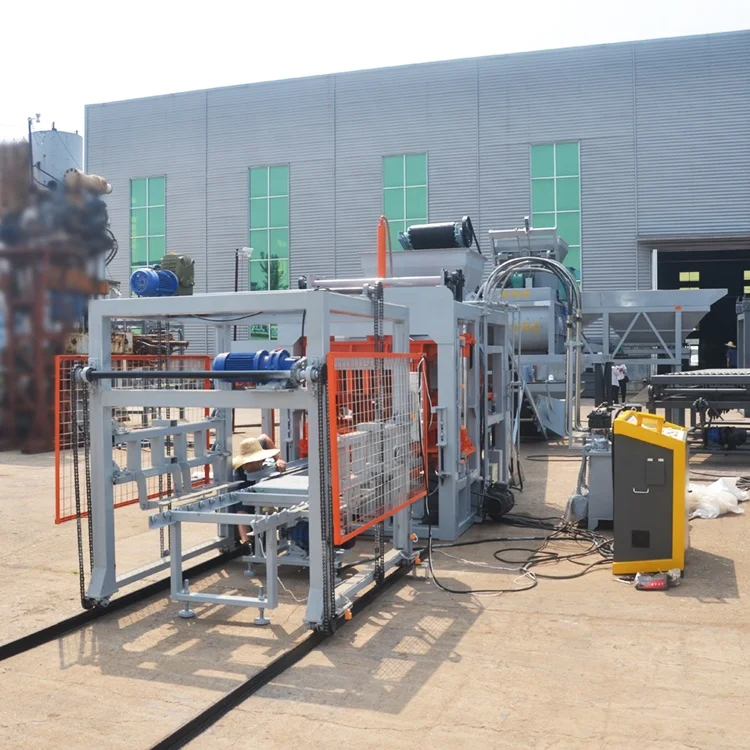
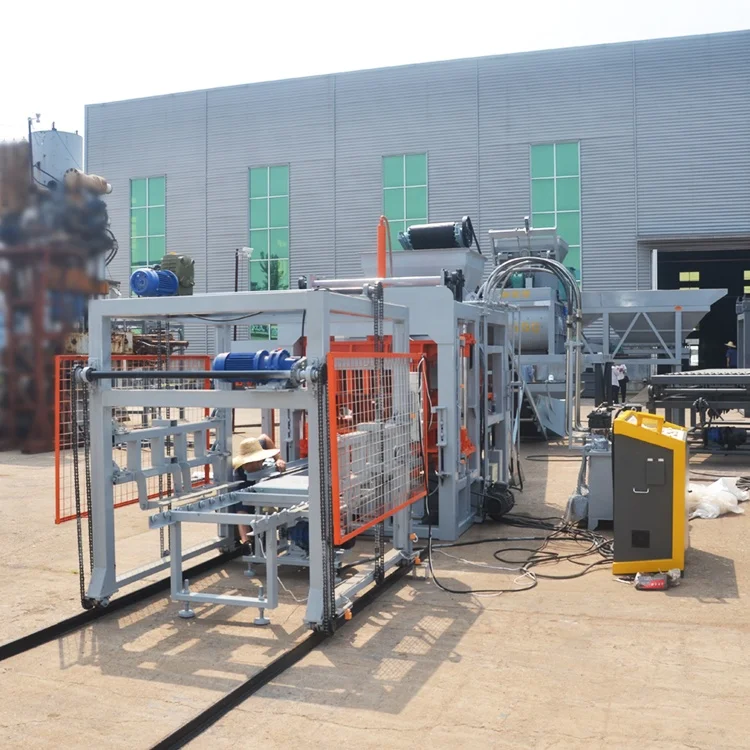
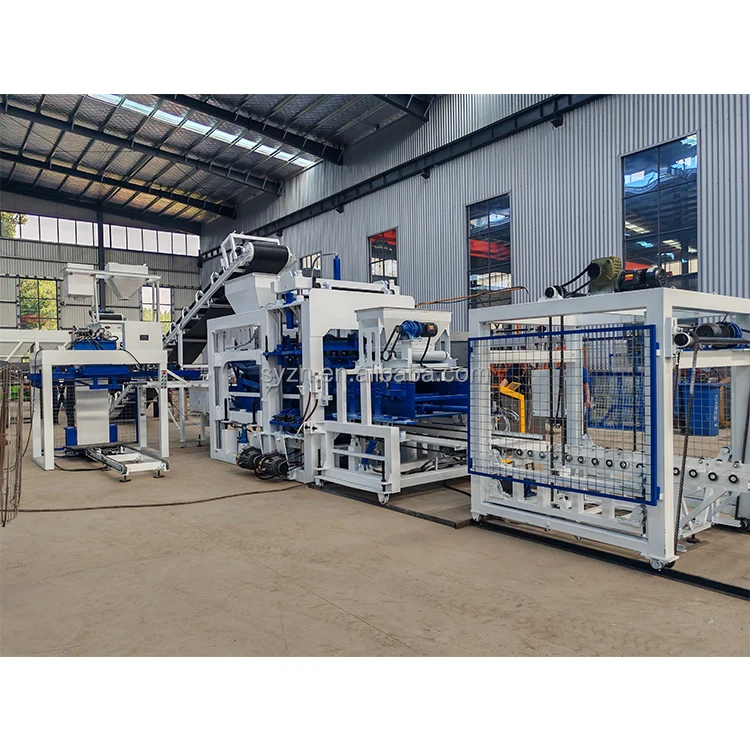
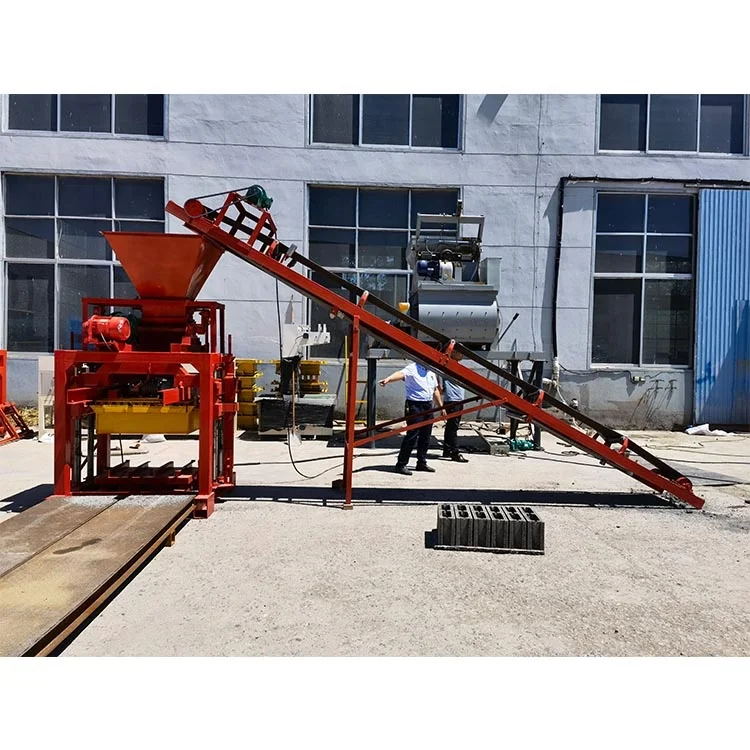
Balanced Entry Tier — The QT4-15A fully automatic block making machine sits in the mid-range of our lineup, offering hydraulic platform vibration and consistent compaction without the footprint or investment of a high-capacity line.
Technical Specifications
| Parameter |
Value |
| Product Type |
Fully Automatic Concrete Block Making Machine |
| Model |
QT4-15A |
| Overall Dimensions (L×W×H) |
4100×1600×2600 mm |
| Rated Pressure |
16–21 MPa |
| Main Vibration Form |
Platform Vibration |
| Vibration Frequency |
4200 r/min |
| Vibration Force |
55 kN |
| Pallet Size |
880×550 mm |
| Molding Cycle |
25–30 s (basis not stated in source — confirm block format and material) |
| Overall Power |
18.45 kW |
| Demolding Method |
Hydraulic |
| Total Mass |
4 T |
| Factory Area Required |
300 m² |
| Raw Materials |
Crushed stone, sand, cement, fly ash, gravel, slag, dust, and other aggregates |
| Applied Products |
Hollow blocks, solid blocks, pavers, interlocking blocks, curbstone, colored pavers |
| Warranty |
1 year (excluding spare parts) |
Application Suitability
| Application |
Material or Output |
| Hollow block production plants |
Crushed stone and cement mixes for 4–6 inch cavity blocks |
| Solid block manufacturing |
Dense aggregate blends for load-bearing masonry units |
| Paving brick and colored paver runs |
Fine sand and cement with pigment addition for surface courses |
| Interlocking block and kerbstone output |
Stiff zero-slump concrete for interlocking profiles and curb sections |
| On-site housing project block supply |
Locally sourced gravel, fly ash, or slag blended with cement |
What "25–30 Seconds per Cycle" Actually Means for Your Daily Count
Cycle time is only meaningful when tied to the exact block format you intend to produce.
A fully automatic block making machine manufacturer quoting a single cycle figure rarely mentions whether that number was measured on a small solid paver or a large hollow block. The QT4-15A completes a press cycle in 25–30 seconds, but a standard hollow block requires more fill time and a longer vibration window than a thin interlocking paver. Buyers who plan daily output around the fastest possible cycle often find real throughput falls short once their primary format is loaded. I have seen projects where the first two weeks of production ran at roughly half the brochure figure because the local aggregate gradation slowed compaction [NEED_CITE: impact of aggregate grading on block machine cycle time]. Stating capacity per format in the quotation — not just per hour in a catalog — prevents that gap.

Placing the QT4-15A Within the Full Machine Range
The Shiyue range spans mobile egg-laying units at the entry end, semi-automatic stationary presses in the lower-middle band, and high-output fully automatic lines at the top. The QT4-15A occupies the mid-tier, giving buyers who have outgrown manual pallet handling a step up without committing to the larger footprint and higher power draw of a high-capacity plant. Its 300 m² factory area requirement keeps the building investment moderate, while hydraulic demolding and platform vibration deliver the block density that manual or egg-laying machines cannot match consistently. For a first-time fully automatic block making machine manufacturer order, this tier balances capital outlay with production reliability.
How Automation Level Affects Your Crew and Floor Plan
At the QT4-15A tier, the press itself runs automatically — the hydraulic system, vibration sequence, and demolding are controlled without manual intervention. What varies is what happens before and after the press: raw material batching, pallet feeding, and wet-side stacking can remain manual, semi-automatic, or fully automatic depending on the configuration you select. A buyer starting with manual pallet return can later add an automatic stacker without replacing the press, because the machine’s control architecture supports that upgrade path. This flexibility matters when labour costs shift or when a housing project ends and the plant transitions to steady commercial supply [NEED_CITE: automation upgrade paths in stationary block plants].
Reading the Numbers That Shape Block Quality
The 16–21 MPa rated pressure and 55 kN vibration force work together: pressure consolidates the mix vertically while vibration rearranges aggregate particles into a dense matrix. If vibration force is high but pressure is low, blocks emerge with good surface finish but weak core strength. The QT4-15A pairs both within a range suited to standard concrete mixes. The 880×550 mm pallet size determines how many blocks are produced per cycle and must align with your curing rack dimensions and the forklift tine spacing already in your yard. A pallet that is too large for your existing racks forces a costly rack replacement; one that is too small leaves capacity on the table. The 4200 r/min vibration frequency is tuned for zero-slump concrete — the stiff, dry mix that block machines require — and would produce poor results if the mix were too wet or too lean in fines.
The Cost of Skipping the Voltage and Language Conversation
Confirming voltage, frequency, and PLC display language sounds basic, yet it is one of the most common reasons commissioning stalls after arrival. A machine wired for 380 V / 50 Hz shipped to a site running 440 V / 60 Hz will trip breakers or burn motor windings within the first hour. Similarly, a control panel displaying only Chinese characters forces the operator to guess parameter labels, increasing the chance of incorrect cycle settings. These issues do not reflect machine quality — they reflect a missing step in the pre-production checklist. Addressing electrical and language specifications before the build starts avoids weeks of idle time and expensive on-site rewiring [NEED_CITE: common commissioning delays in exported block machinery].
Why Buyers Source This Tier From Shiyue
Block machinery is our single focus, so the QT4-15A press, moulds, pallets, and handling equipment are specified as one matched system rather than assembled from unrelated suppliers. We configure vibration and pressure settings against your actual mix design and local aggregate, not a catalog default. Mould design covers the block formats your market sells, and custom mould drawings are available when standard profiles do not match local building codes. The automation level is selectable, letting you begin with manual pallet handling and add stacking or cubing modules later. Installation includes operator training so your crew understands cycle adjustment, mould changeover, and daily maintenance from the first production run.
Documentation & Verification
- Line layout drawing showing QT4-15A footprint within your 300 m² plant area
- Capacity calculation sheet stating output per block format, not a single blanket figure
- Mould drawing and format list for every profile included in your order
- Hydraulic and electrical schematics with voltage and frequency confirmed to your site supply
- Factory test record run on your specified aggregate blend before dispatch
Installation, Commissioning & Support
- Foundation plan matched to the 4 T machine mass and 55 kN vibration load
- Dedicated power circuit sized for the 18.45 kW total draw at your confirmed voltage
- Machine arrives with hydraulic and electrical systems pre-assembled for faster site hookup
- First-run parameter tuning covers vibration duration and pressure dwell for your mix
- Operator training addresses mould change procedure and pallet alignment checks
- Wear parts list supplied with reorder intervals for hydraulic seals and vibration components
Moving From Inquiry to Production
To size the QT4-15A correctly, share the primary block formats you intend to sell, your target daily volume per format, and the aggregate materials available within economical haul distance of your site. We also need your site voltage and frequency, preferred control language, and whether your curing area uses existing racks that constrain pallet dimensions. With those details, we return a configuration proposal and per-format capacity calculation rather than a generic price list.
Frequently Asked Questions
Q: What block format is assumed in the 25–30 second cycle time?
A: The published cycle range is a general figure that varies depending on block height, cavity count, and mix stiffness. A thin paver may complete a cycle at the lower end, while a tall hollow block requires longer fill and vibration. We provide a per-format capacity calculation in the quotation so your daily output projection reflects the actual products you will run.
Q: Where does the QT4-15A sit compared to semi-automatic and higher-tier models?
A: It occupies the mid-tier of our range. Semi-automatic machines require manual pallet handling and suit smaller budgets, while higher-tier automatic lines add full stacking and cubing for large-volume plants. The QT4-15A gives fully automatic pressing with room to add downstream automation later, fitting buyers who need reliable output without a high-capacity investment.
Q: How is pallet size matched to my curing area and forklift?
A: The standard 880×550 mm pallet must fit your existing curing racks and forklift tine spacing. If your racks are narrower or your forklift is rated for lighter loads, we discuss alternative pallet dimensions before production. Confirming this early prevents costly rack modifications or equipment swaps after the machine arrives.
Q: Which block formats can the machine produce, and how do I plan mould additions?
A: The QT4-15A runs hollow blocks, solid blocks, pavers, interlocking bricks, and kerbstones through mould changes on the same platform. You receive a mould drawing and format list with your order, and additional moulds can be ordered later using the same pallet size, so expanding your product line does not require machine modification.

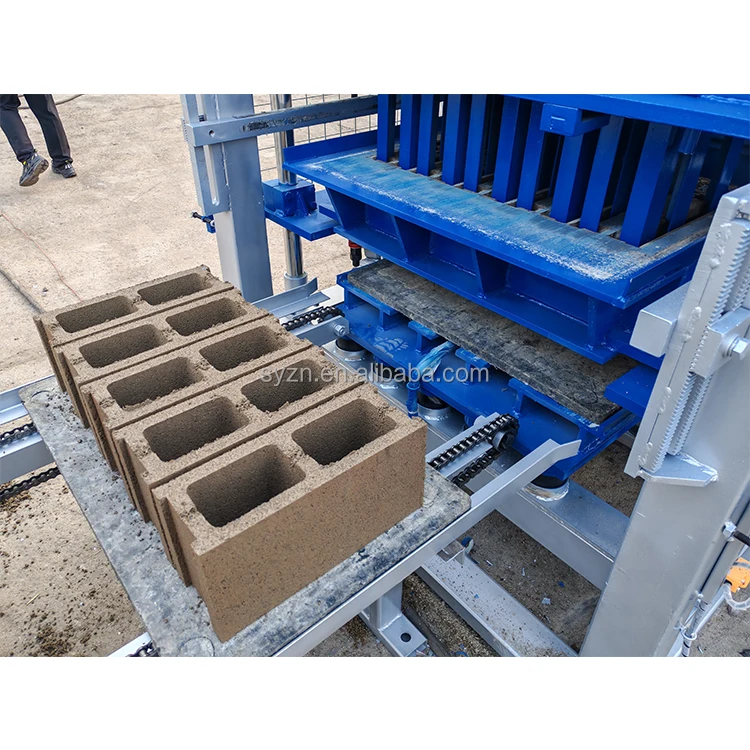
 High quality block machine