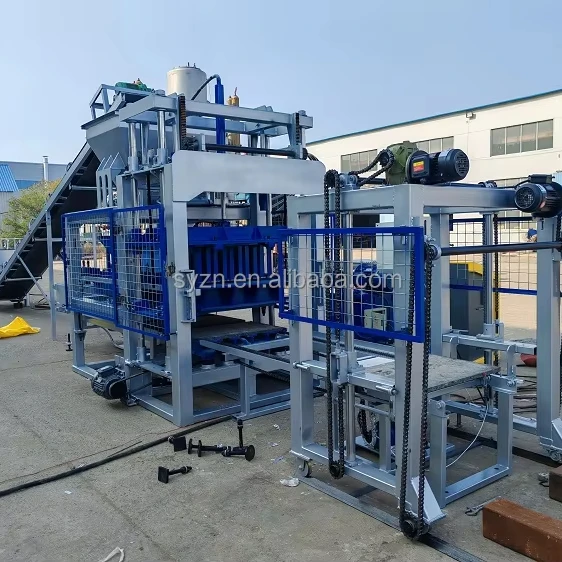
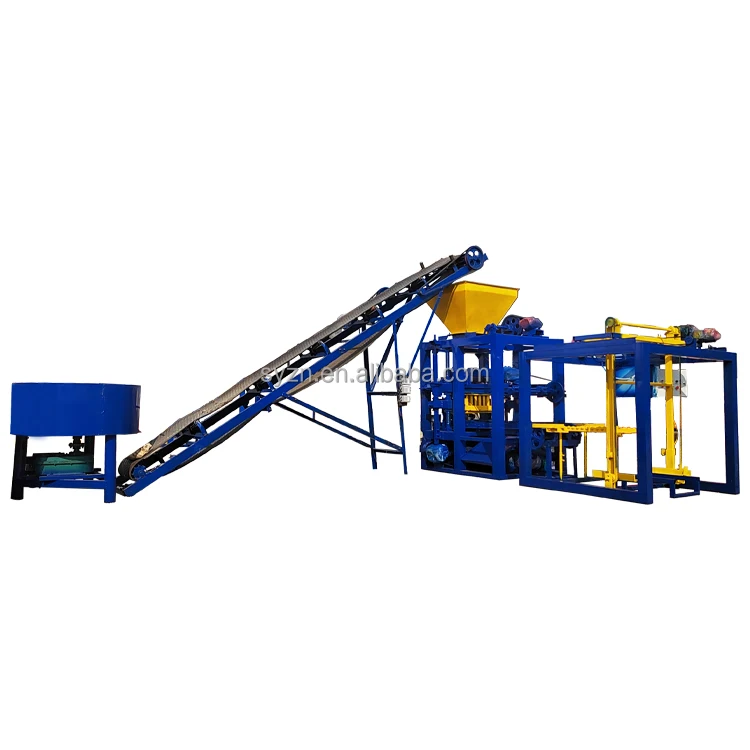
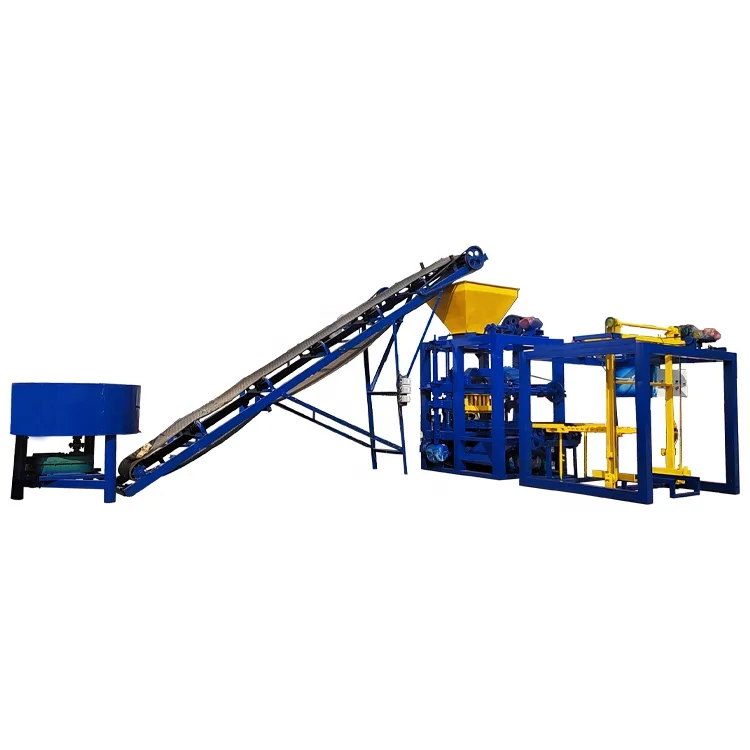
Matched System Design — the QT4-15 block machine, mould, pallet and handling equipment are specified together as one coordinated line rather than sourced separately.
Technical Specifications
| Parameter |
Value |
| Model |
QT4-15 |
| Product Type |
Fully Automatic Concrete Block Making Machine |
| Overall Dimensions (L×W×H) |
7100×1600×2610 mm |
| Molding Cycle |
15-25 s |
| Vibration Frequency |
4600 r/min |
| Exciting Power (Vibration Force) |
40-50 kN |
| Rated Power |
18.45 kW |
| Mixer Model |
JQ350 |
| Pallet Size |
850×550×25 mm |
| Net Weight |
3 T |
| Applied Products |
Paver, solid block, hollow block, curbstone |
| Raw Materials |
Crushed stones, sand, cement, dust, fly ash |
| Output Capacity |
408 pcs/hr (basis: 400×200×200mm hollow block, 4 pcs/mould) |
| Output Capacity |
510 pcs/hr (basis: 400×150×200mm hollow block, 5 pcs/mould) |
| Output Capacity |
2100 pcs/hr (basis: 240×115×53mm solid brick, 18 pcs/mould) |
| Daily Output |
3264 pcs/8hr (basis: 400×200×200mm hollow block) |
| Daily Output |
4080 pcs/8hr (basis: 400×150×200mm hollow block) |
| Daily Output |
17000 pcs/8hr (basis: 240×115×53mm solid brick) |
| Hydraulic Station |
Equipped |
| Stacking Method |
Automatic stacker included |
| Voltage & Frequency |
Configurable to target market (basis to be confirmed) |
| Control System |
PLC-based (brand and language to be confirmed) |
Application Suitability
| Application |
Material or Output |
| Hollow block production for building walls |
Crushed stone, sand, cement, fly ash |
| Solid brick production for masonry |
Sand, cement, dust, fly ash blends |
| Paver block production for landscaping and roads |
Crushed stone, sand, cement with pigment |
| Curbstone production for infrastructure |
High-density crushed stone and cement mix |
| Fly ash brick production |
Industrial fly ash, sand, cement |
| On-site or plant-based concrete product manufacturing |
Locally sourced aggregate and cement |
What "408 Pieces per Hour" Actually Means for the QT4-15 Block Machine Manufacturer
Output only matters when tied to a specific block format and mould cavity count.
A cycle time of 15-25 seconds sounds fast on paper, but buyers regularly discover that the number quoted in a brochure assumed a different block size than what their market actually demands. I have watched project timelines stall because a machine was selected for a headline figure that evaporated once the real product mix was loaded. The QT4-15 block machine manufacturer approach here is to state capacity against each format explicitly, so a buyer producing 400×200×200mm hollow blocks can plan around 3264 pieces per eight-hour shift, while one running 240×115×53mm solid bricks sees a very different throughput [NEED_CITE: block format impact on daily output in production planning]. Without this clarity, daily targets become guesswork.

Positioning the QT4-15 Within the Full Machine Range
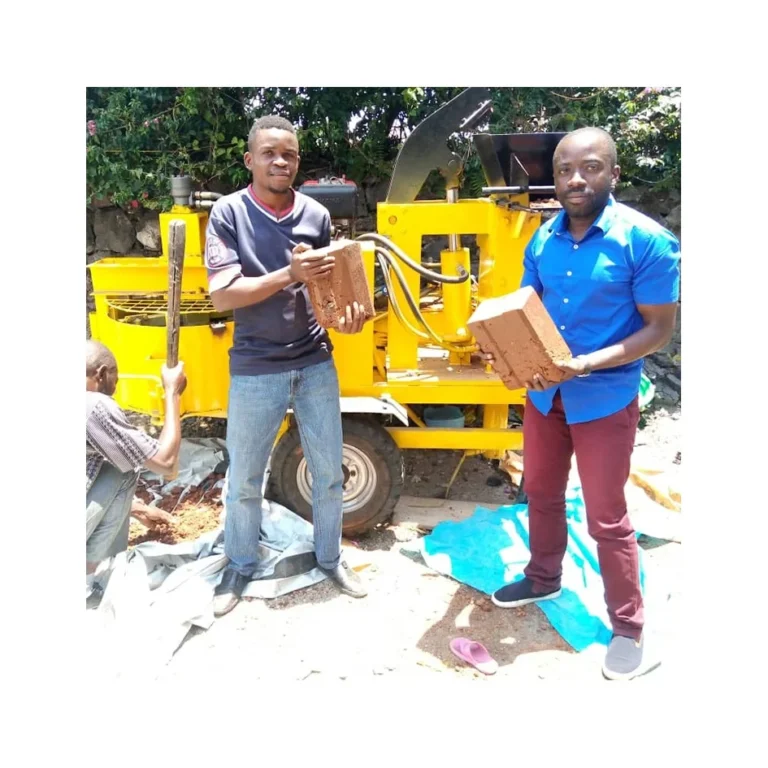
The Shiyue lineup spans mobile egg-laying units at the entry tier, semi-automatic presses for smaller plants, and high-capacity fully automatic lines for continuous production. The QT4-15 block machine sits in the mid-tier, bridging the gap between workshop-scale output and industrial volume. For a buyer surveying options for a first block plant or replacing an aging unit, this model offers a defined plant footprint — roughly 7.1 meters in length with supporting equipment — and an investment level that does not require the infrastructure of a large-scale automatic facility.
Where the QT4-15 Fits for Different Buyer Types
Construction contractors producing blocks on-site for a housing project will find the QT4-15 delivers sufficient daily volume without the complexity of a fully continuous line. Machinery importers comparing tiers can position this model against both lower-output semi-automatic presses and higher-capacity alternatives, evaluating which tier matches their customer base [NEED_CITE: block machine tier selection criteria for importers]. Entrepreneurs setting up a first plant benefit from the selectable automation level, which allows starting with semi-automatic pallet handling and adding automatic stacking as volume grows.
How Vibration Force, Pallet Size and Cycle Time Shape Real Production
The 40-50 kN vibration force at 4600 r/min works with the hydraulic station to compact the mix into consistent density — too little vibration on a fly-ash-heavy mix leaves weak blocks, while excessive force on a fine-sand blend can cause surface cracking. The 850×550×25 mm pallet size is not arbitrary; it must align with the curing rack spacing and the forklift dimensions already on site, otherwise pallets pile up on the floor waiting for manual handling. The 15-25 second molding cycle varies with block height and mix stiffness, meaning a tall hollow block takes longer to compact fully than a thin paver, and the cycle time listed in any specification should be read against the actual product being formed.
The Cost of Overlooking Configuration Details Before Shipment
I spent years on installation sites in Mauritania and Senegal watching machines sit idle because the voltage did not match the local grid, or the PLC display language was unreadable to the operators. A QT4-15 arriving with a 380V motor in a region running 220V three-phase means a transformer order and weeks of lost production while workers stand around. Pallet specifications that ignore the curing area layout force the plant to hand-stack output, canceling the advantage of the automatic stacker [NEED_CITE: commissioning delays caused by voltage and language mismatches]. These are not engineering failures — they are specification oversights that surface only after the container is opened.
Why Procurement Through a Block Machinery Specialist Matters
Block machinery as a single focus means the QT4-15 is not sold as a standalone press but as part of a matched system: the JQ350 mixer, pallet dimensions, stacker and mould are all verified against one another before quotation. Configuration is set against the buyer’s actual mix design and local aggregate, not a catalogue default, which prevents the costly material substitution that occurs when a machine is tuned for a sand blend unavailable in the target region. Mould design covers the formats the buyer’s market sells, with custom drawings available for non-standard sizes. The automation level is selectable, so a buyer can begin semi-automatic and add full stacking later without replacing the press. Installation support includes operator training on the specific control language confirmed before dispatch.
Documentation & Verification
- Line layout with capacity calculation stating the block format assumed for each output figure
- Machine specification sheet confirming voltage, frequency and PLC display language before production
- Mould drawing and format list covering hollow, solid, paver and curbstone types
- Pallet specification matched to curing area dimensions and site forklift
- Hydraulic and electrical schematic for local maintenance reference
- Factory test record run on buyer-specified mix before dispatch
Installation, Commissioning & Support
- Foundation must accommodate 7100×1600 mm footprint with level tolerance for vibration stability
- Power supply requires dedicated circuit rated for 18.45 kW total draw at confirmed voltage and frequency
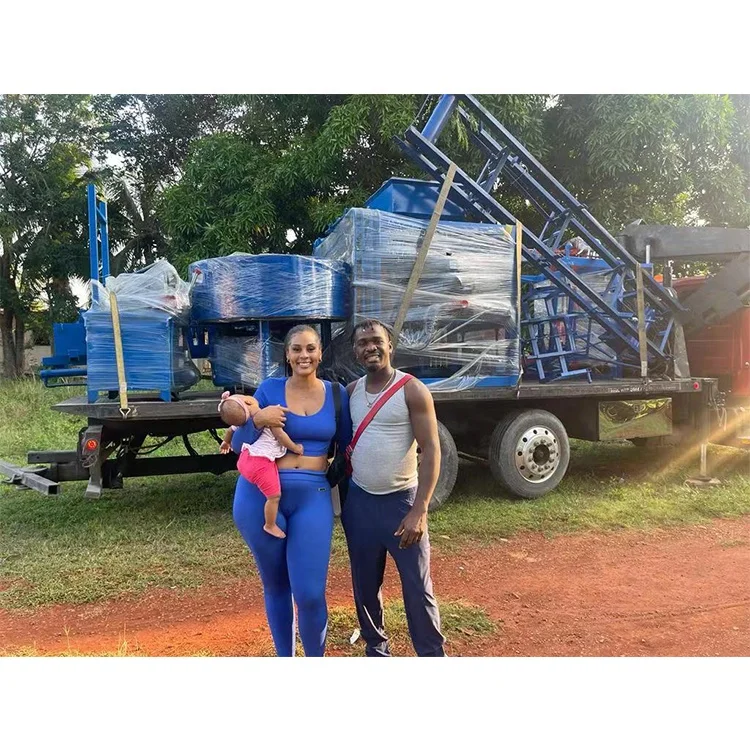
- Machine ships dismantled for container loading with reassembly guided by schematic on site
- PLC parameters set to buyer’s confirmed language during commissioning with operator walk-through
- Mould change training covers all supplied formats to minimize shift downtime
- Wear parts list supplied with hydraulic seals and vibration components identified for first reorder
What to Prepare Before Requesting a Quotation
Share the specific block formats your market demands along with target daily output per format so the capacity calculation reflects reality. Provide your local voltage, frequency and preferred PLC display language to avoid commissioning delays. Confirm available raw materials and typical mix proportions so the machine is configured for what you can actually source on site.
Frequently Asked Questions
Q: How is output capacity verified for the QT4-15 and what block format is each figure based on?
A: Every output figure is tied to a specific block dimension and mould cavity count. For instance, 408 pieces per hour is based on 400×200×200mm hollow blocks with four cavities per mould, while 2100 pieces per hour assumes 240×115×53mm solid bricks with eighteen cavities. The quotation includes a capacity table so buyers can match their product mix to realistic daily volumes.
Q: Where does the QT4-15 sit in the Shiyue range and what is the upgrade path?
A: The QT4-15 occupies the mid-tier between workshop-scale semi-automatic presses and high-capacity fully automatic lines. Buyers can start with semi-automatic pallet handling and add automatic stacking and cubing as production volume grows, without replacing the core press or mould set.
Q: What voltage, frequency and control language options are available for export markets?
A: Voltage and frequency are configured to the buyer’s local grid standard before production begins. The PLC display language is confirmed during the quotation stage so operators can read the interface on day one. Both are documented on the specification sheet signed off before the machine enters build.
Q: What plant footprint and installation conditions does the QT4-15 require?
A: The press itself measures 7100×1600×2610 mm, and the full line including mixer, pallet feeder and stacker requires additional length and width depending on layout. A level concrete foundation, a dedicated power circuit for 18.45 kW, and curing area space matched to the 850×550 mm pallet size are the baseline site requirements.
Q: Which supporting equipment is included and what remains optional?
A: The JQ350 mixer, hydraulic station, automatic stacker and pallets sized at 850×550×25 mm are part of the standard line configuration. Curing racks, additional moulds beyond the initial format set, and raw material feeding conveyors can be added based on the buyer’s plant layout and production plan.

 High quality block machine