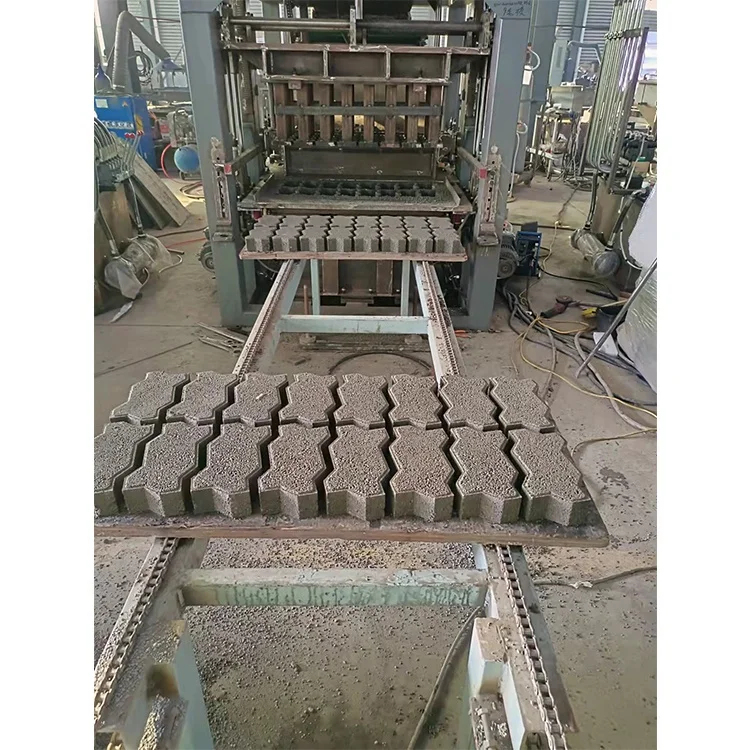
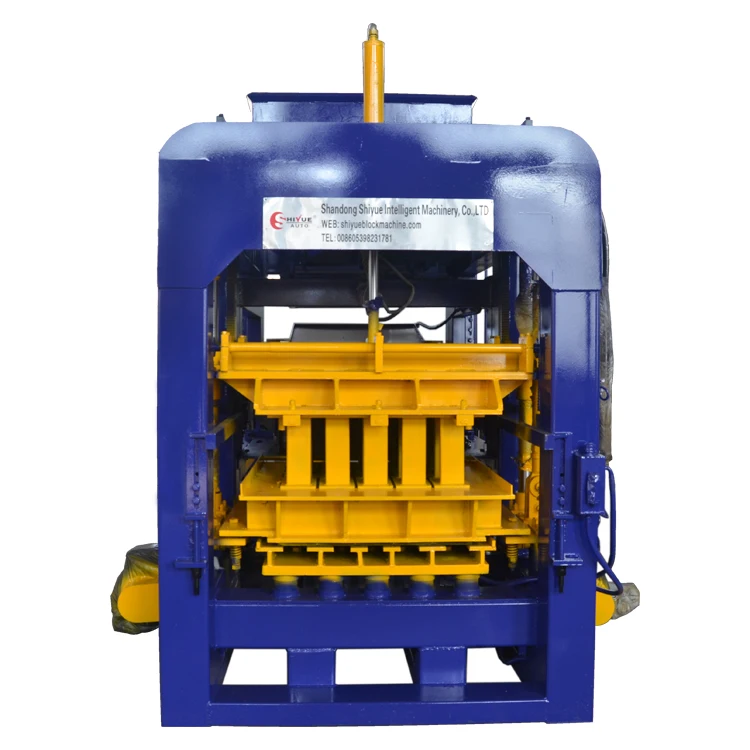
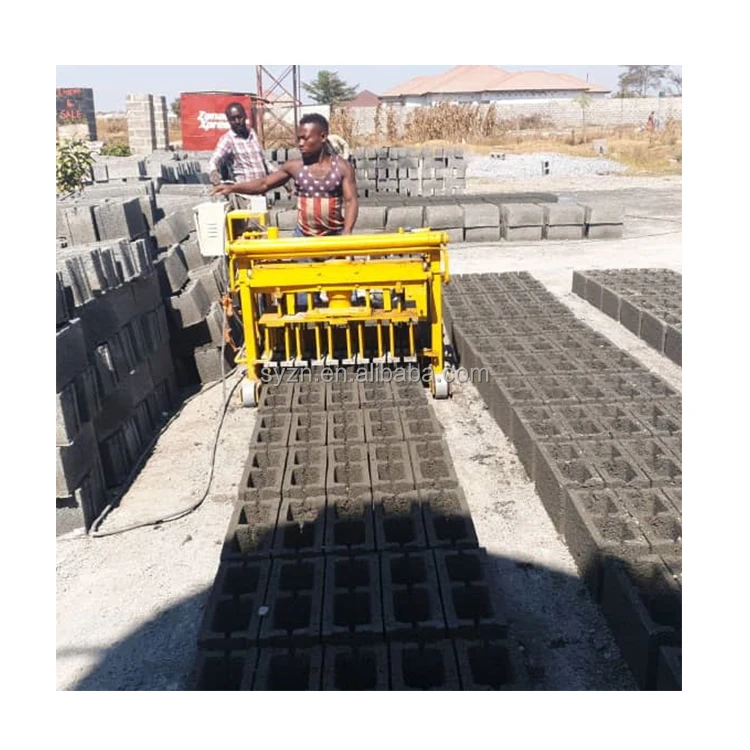
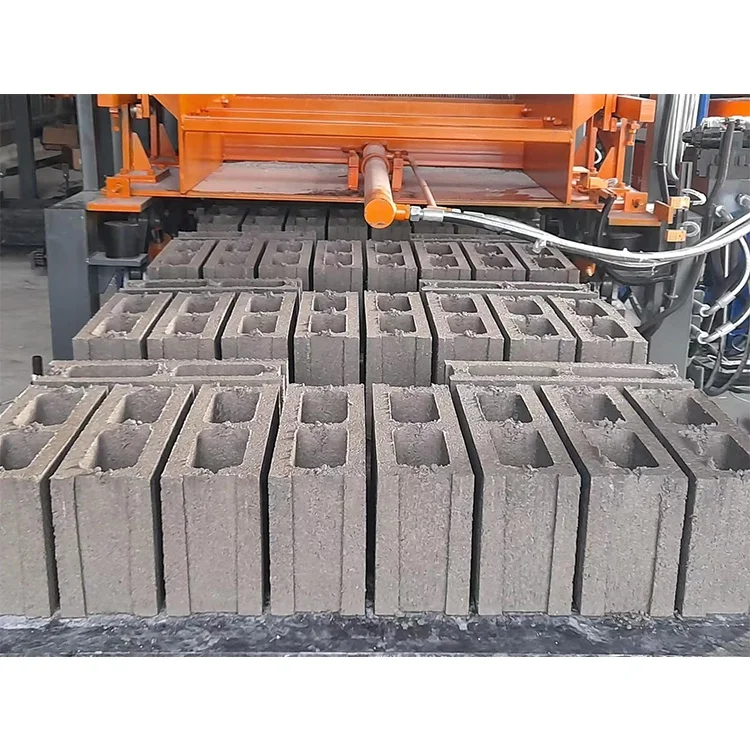
Single-Focus Block Machinery Scope — The QT4-15 sits within a range where the host press, moulds, pallets, and handling gear are specified as one matched system rather than sourced from separate vendors.
Technical Specifications
| Parameter |
Value |
| Model |
QT4-15A |
| Product Type |
Automatic Hydraulic Concrete Block Making Machine |
| Overall Dimensions (L×W×H) |
7100×1600×2610 mm |
| Molding Cycle |
15–25 s |
| Vibration Frequency |
4600 r/min |
| Exciting Power |
40–50 kN |
| Total Power |
18.45 kW |
| Mixer Model |
JQ350 |
| Pallet Size |
850×550×25 mm |
| Total Weight |
3 T |
| Hydraulic Station |
Equipped |
| Automation Level |
Semi-automatic baseline (manual pallet handling) |
| Applied Products |
Paver, solid block, hollow block, curbstone |
| Output Capacity |
408 pcs/h (basis: 400×200×200 mm hollow block, 4 pcs/mould); 510 pcs/h (basis: 400×150×200 mm hollow block, 5 pcs/mould); 2100 pcs/h (basis: 240×115×53 mm solid brick, 18 pcs/mould) |
| Daily Output (8-hour shift) |
3264 pcs (400×200×200 mm hollow block); 4080 pcs (400×150×200 mm hollow block); 17000 pcs (240×115×53 mm solid brick) |
Application Suitability
| Application |
Material or Output |
| Load-bearing hollow block production |
Crushed stone, sand, cement, fly ash mixes |
| Solid brick runs for masonry walls |
Standard clay-substitute or concrete mixes |
| Interlocking paver manufacturing |
High-density aggregate blends with pigment |
| Kerbstone and curb production |
Coarse aggregate with reinforced vibration |
What "Pieces per Hour" Leaves Out When Sizing an Automatic Block Making Machine for Sale
Capacity figures mean nothing unless the block format behind the number is stated upfront.
Buyers often see a headline output number on an automatic block making machine for sale and assume it applies to whatever product they plan to run. The reality is that a mould producing four large hollow blocks per cycle delivers a very different hourly count than a mould pressing eighteen solid bricks in the same cycle time. Without the format assumption written next to the figure, daily production planning becomes guesswork, and the gap between quoted output and actual shift totals shows up on the first day of operation. [NEED_CITE: common discrepancies in block machine capacity claims]

Where the QT4-15 Sits in the Full Machine Range
The QT4-15 occupies the mid-tier position among hydraulic press options, bridging the gap between small workshop machines and high-capacity fully automatic lines. It shares the same hydraulic and vibration platform as larger models while keeping the footprint and power draw manageable for a first plant or a contractor producing blocks on site. Buyers comparing investment levels across the range use this model as the reference point for what a semi-automatic hydraulic press can deliver before committing to higher automation tiers.
Mapping Output Tiers to Your Block Format
A buyer planning to run 400×200×200 mm hollow blocks as the primary product needs to plan around the 408 pieces per hour figure tied to that specific format. Switching to a 400×150×200 mm hollow block mould shifts the rated output to 510 pieces per hour, while a solid brick run at 240×115×53 mm reaches 2100 pieces per hour. These differences matter because the pallet circulation speed, curing rack capacity, and raw material feed rate must all match the format being produced, not an average across formats. [NEED_CITE: block format impact on line throughput planning]
Reading the Specs That Shape Real Production
The 4600 r/min vibration frequency paired with 40–50 kN exciting power determines how densely the mix is compacted in the mould cavity. Higher density means stronger blocks but also demands that the mix design delivers enough fines to fill voids under vibration. The 850×550×25 mm pallet size sets the curing area footprint — a yard designed for a different pallet dimension will cause stacking bottlenecks from day one. The 18.45 kW total power draw, including the JQ350 mixer, defines the electrical supply requirement and confirms whether a standard workshop connection is sufficient or a dedicated transformer is needed. The equipped hydraulic station provides consistent pressing force across every cycle, which directly influences block-to-block strength uniformity.
The Cost of Skipping the Format Conversation
When a machine arrives configured for a mould the buyer never discussed, the first production run reveals that the cycle time, pallet flow, and stacking rhythm do not match the intended product. Pallet handling left as manual means workers spend the shift moving boards by hand while the press sits idle between cycles. A mould change system not confirmed before shipment can turn a format switch into a multi-hour exercise, eliminating the flexibility the buyer paid for. These mismatches do not show up on the quotation but they dominate the first month of operation. [NEED_CITE: consequences of mismatched block line configurations]
Why Source the QT4-15 Through This Range
Block machinery is the single focus here, so the QT4-15 press, its moulds, pallets, and handling equipment are specified together as a matched system rather than assembled from unrelated suppliers. Configuration is set against the buyer’s actual mix design and local aggregate, not pulled from a catalogue default. Mould design covers the formats the buyer’s market actually sells, with custom drawings available for non-standard sizes. Automation level is selectable — a buyer can start with semi-automatic pallet handling and move to higher tiers later without replacing the host press. Installation and commissioning support includes operator training on the specific mould set shipped with the machine.
Documentation & Verification
- Line layout and capacity calculation stating the block format assumed for each QT4-15 output figure
- Machine specification sheet confirming hydraulic pressure, vibration force, and pallet dimensions
- Mould drawing and format list matching the buyer’s agreed product range
- Voltage and control language confirmation recorded before production begins
- Factory test record and packing photographs for shipment verification
Installation, Commissioning & Support
- Foundation plan sized to the QT4-15’s 7100×1600 mm footprint and 3-ton operating weight
- Power supply verification against the 18.45 kW total draw before the electrical panel is energized
- Pallet feeding and handling setup matched to the 850×550 mm board size on arrival
- First-run mould alignment and vibration tuning against the buyer’s local aggregate sample
- Operator training covering mould change procedure and daily hydraulic station inspection
- Wear parts list identifying hydraulic seals and vibration motor bearings for stocking
Preparing Your Inquiry for the QT4-15
Share the specific block formats your market demands and the daily volume you need for each one. Provide a sample or lab report of your local aggregate so the vibration parameters and mix advice are set before the machine is built. Confirm your site voltage, frequency, and preferred control display language to avoid commissioning delays after the container arrives.
Frequently Asked Questions
Q: How is QT4-15 output verified and what block format does each figure assume?
A: Every output figure on this page states the block size and pieces per mould behind the number. The 408 pcs/h figure assumes a 400×200×200 mm hollow block at four per mould. The 510 pcs/h figure assumes a 400×150×200 mm hollow block at five per mould. The 2100 pcs/h figure assumes a 240×115×53 mm solid brick at eighteen per mould. No headline number is quoted without its format basis.
Q: Where does the QT4-15 sit compared to other tiers in the Shiyue range?
A: The QT4-15 is the mid-tier hydraulic press, positioned above small mobile and egg-laying machines and below high-capacity fully automatic lines. It offers hydraulic pressing and vibration forming with a semi-automatic baseline, suitable for buyers who need consistent block quality without the investment and footprint of a top-tier plant. Buyers can upgrade automation within the range later.
Q: What voltage and frequency options are available for my market?
A: Voltage and frequency are confirmed with the buyer before production. The electrical specification is set to match the destination site supply, and the PLC display language is agreed at the same stage. This prevents the common situation where a machine arrives and sits waiting for a transformer or a language re-flash before commissioning can start.
Q: What automation level does the QT4-15 ship with and can I upgrade later?
A: The baseline configuration is semi-automatic with manual pallet handling. The host press is designed to accept automatic pallet feeding, stacking, and cubing systems as the plant grows. Buyers who start semi-automatic can add handling automation without replacing the press, keeping the upgrade path within the same machine family.
Q: What plant footprint and supporting equipment does a QT4-15 line require?
A: The press itself measures 7100×1600×2610 mm and weighs 3 tons. A complete line includes raw material feeding, the JQ350 mixer, pallet circulation, and a curing area sized for 850×550 mm boards. The total footprint depends on the automation level selected and the curing rack layout, which is confirmed during the line layout stage before order placement.

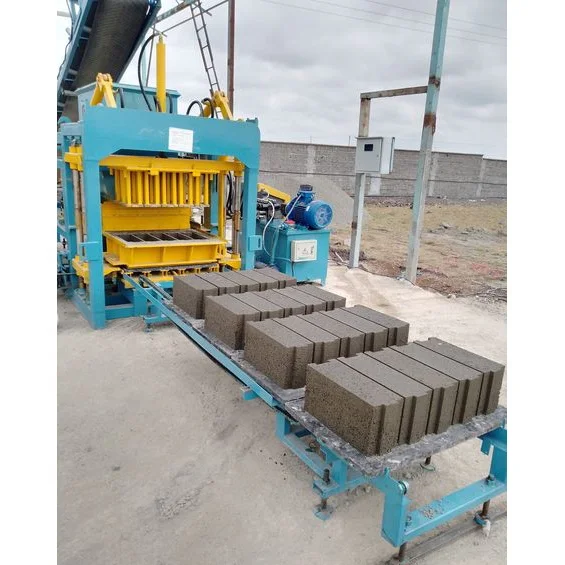
 High quality block machine