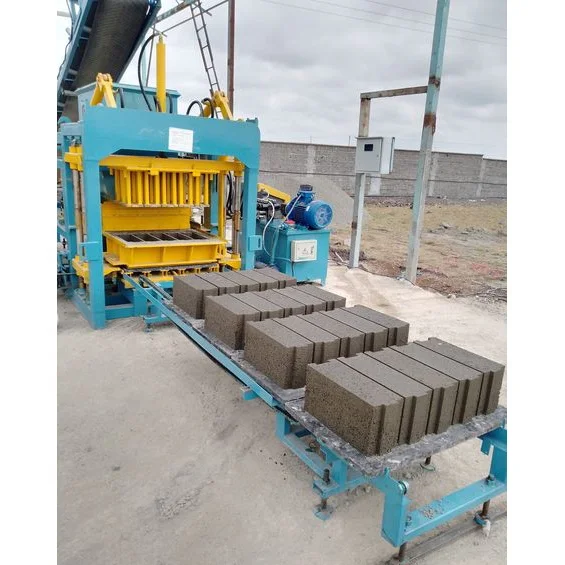
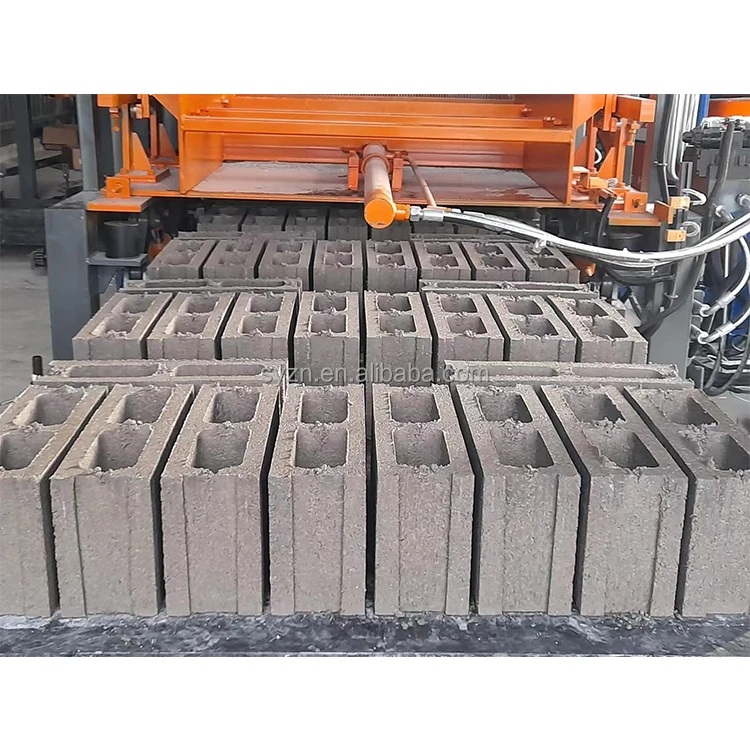
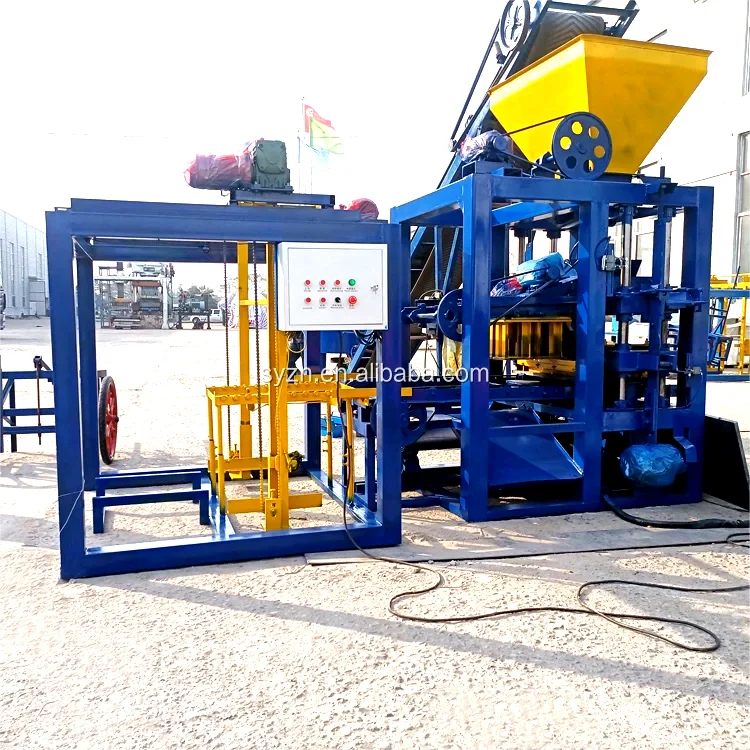
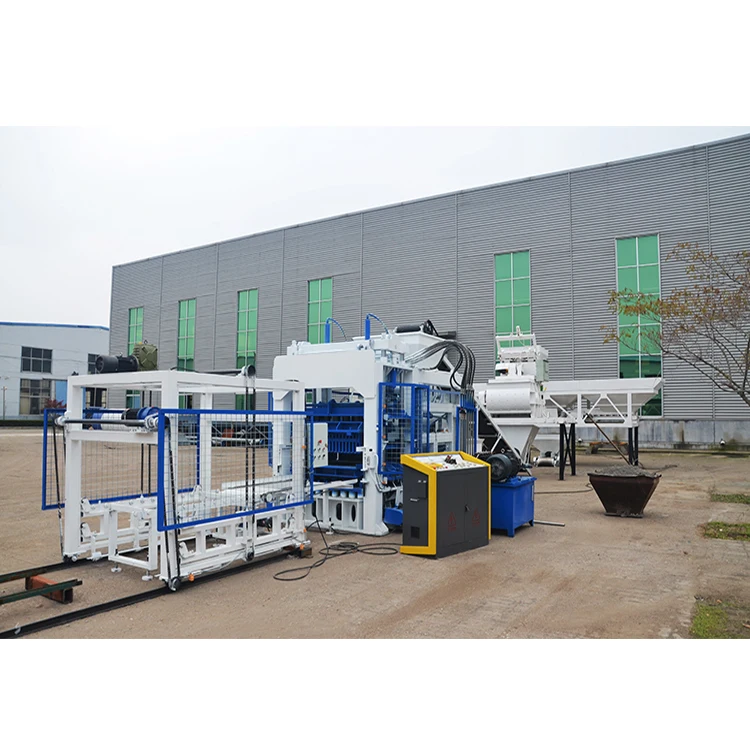
Matched system approach — The QT4-15 is specified with its mould, pallet, and handling stations as a single coordinated line rather than a press assembled from separate supplier quotes, ensuring vibration force, hydraulic pressure, and pallet dimensions all align with your target block format before shipment.
Technical Specifications
| Parameter |
Value |
| Model |
QT4-15 |
| Product Type |
Automatic Hydraulic Block Making Machine |
| Overall Dimensions (L×W×H) |
7100 × 1600 × 2610 mm |
| Net Weight |
5800 kg |
| Rated Power |
27.5 kW |
| Voltage & Frequency |
380V or configurable to buyer site requirement |
| Vibration Force |
60 kN |
| Hydraulic System |
Adopted hydraulic press, even and dependable operation |
| Control System |
PLC (brand and display language to be confirmed per market) |
| Pallet Size |
1020 × 850 × 40 mm |
| Automation Level |
Automatic |
| Output Capacity |
960 pcs/h based on 400×200×200 mm hollow block, 4 pcs/mould |
| Output Capacity |
1440 pcs/h based on 400×150×200 mm hollow block, 6 pcs/mould |
| Output Capacity |
3840 pcs/h based on 225×112.5×53 mm solid brick, 16 pcs/mould |
| Cycle Time |
To be confirmed per block format and mix design |
| Mould Change Time |
To be confirmed with site crew |
| Stacking Method |
To be confirmed (manual or automatic option) |
| Color Options |
According to buyer request |
| Warranty |
1 year |
| Standards |
ISO 9001:2008, CE |
Application Suitability
| Application |
Material or Output |
| Hollow block production |
400×200×200 mm format, crushed stone or gravel aggregate with cement binder |
| Hollow block production |
400×150×200 mm format, standard masonry sand and cement mix |
| Solid brick production |
225×112.5×53 mm format, fine aggregate and cement for load-bearing walls |
| First-time block plant setup |
Entrepreneurs sizing initial investment against daily output targets |
| On-site construction production |
Contractors producing blocks at the project location for immediate use |
What "960 Pieces per Hour" Actually Means for Your Shift Plan
Output figures only matter when tied to the exact block format, mould cavity count, and pallet cycle your line will run.
Most quotations quote a single cycle-based number that assumes a format you may never produce. On the QT4-15 automatic block making machine manufacturer specifications, the 960 pieces per hour figure holds only when pressing 400×200×200 mm hollow blocks with a 4-cavity mould on the standard 1020×850 mm pallet. Switch to the 6-cavity mould for 400×150×200 mm hollow blocks and the hourly count rises to 1440. Move to 16-cavity solid brick and it jumps to 3840. I have seen buyers commit to a machine based on the highest number in the brochure, then discover their primary product format delivers less than half that rate. The daily total depends entirely on which format dominates your production schedule and how many pallets your curing area can hold at once. [NEED_CITE: block format assumptions in manufacturer capacity claims]

Placing the QT4-15 on the Investment and Output Spectrum
The QT4-15 sits in the mid-tier of the full block machine range, bridging entry-level semi-automatic setups and high-capacity fully automatic lines. Buyers setting up a first plant often start here because the 27.5 kW power draw and 5800 kg footprint do not demand a dedicated transformer or reinforced foundation slab. At the same time, the automatic pallet feed and PLC control remove the manual handling bottleneck that limits smaller machines to two or three operators per shift. If your daily target stays below 5,000 standard hollow blocks, a semi-automatic tier may cover the work with lower capital outlay. If you need to exceed 15,000 blocks daily across multiple formats, a higher-tier line with automatic stacking and cubing becomes the more efficient choice.
How the Complete Line Must Match the Press Speed
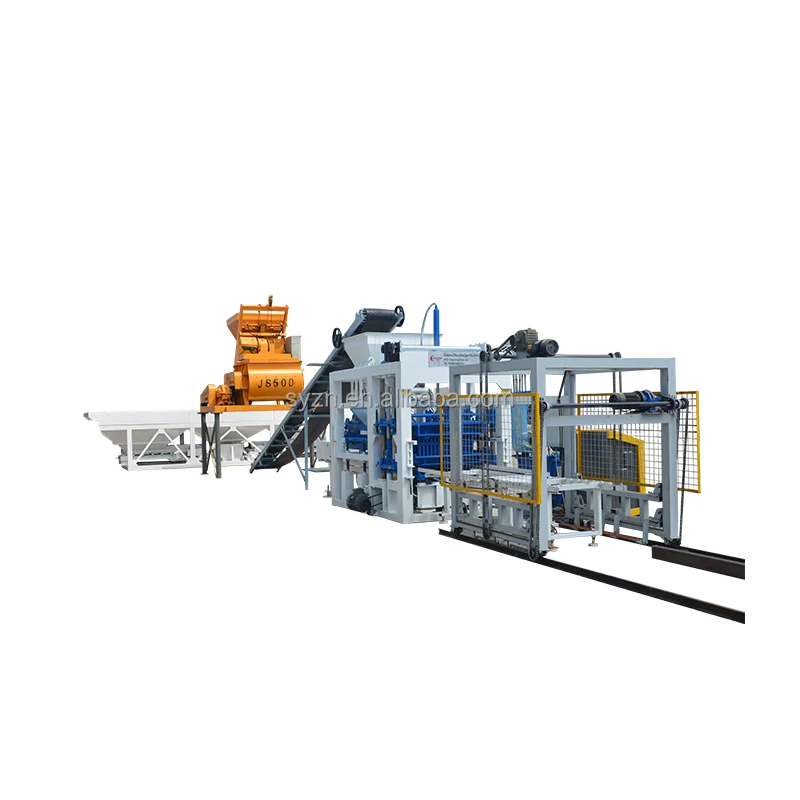
A block press is only as productive as the slowest station around it. Raw material feeding, mixing, pallet circulation, and wet-product handling all need to keep pace with the QT4-15 cycle, or the press sits idle waiting for the next pallet or fresh mix. On smaller sites, I have watched a press rated for 960 hollow blocks per hour deliver barely 600 because the mixer could not keep up and pallets were being returned to the feed station by hand. The QT4-15 automatic block making machine manufacturer configuration addresses this by specifying pallet size, feeder capacity, and mixer volume together so that no single station becomes the constraint. [NEED_CITE: block production line bottleneck analysis for mid-tier plants]
Reading the Specs That Decide Real Output
The 60 kN vibration force and hydraulic pressure work together to compact the mix into a dense, consistent block. Higher vibration alone produces a rough surface if hydraulic pressure is insufficient to hold the mould box tight during the cycle. The 1020×850×40 mm pallet dimension dictates how many wet blocks your curing racks can store at once — if your existing forklift and rack spacing were designed around a different pallet size, you will either need to replace the racks or request a custom pallet specification before the machine ships. The 27.5 kW rated power determines your transformer and cable sizing; sites running on generator power need to account for the starting surge of the hydraulic pump motor. Voltage is configurable to your local grid standard rather than locked to a single default, which matters because running a 380V motor on a 415V supply shortens winding life considerably. PLC display language is confirmed before assembly so operators read fault messages in their working language from day one.
The Cost of Configuring the Line Around the Wrong Format
Choosing a machine based on a peak output number without matching it to your primary block format leads to a plant that technically runs but never meets the daily target your business plan depends on. I have visited sites where the pallet size specified by the supplier did not match the curing racks already welded on-site, forcing the owner to fabricate new racks or hand-stack blocks for the first three months. When the hydraulic pressure and vibration force are set for a standard sand-cement mix but the local aggregate is laterite or volcanic ash, the blocks crack during curing because the compaction parameters were never adjusted to the actual material. [NEED_CITE: impact of local aggregate variation on block compressive strength] Mould changeovers that should take minutes can stretch into hours if the quick-release system was not included in the original specification, eliminating the format flexibility the buyer paid for.
Why the System-Level Specification Matters Here
Every QT4-15 leaving the facility is specified against the buyer’s actual block format, local aggregate sample, and site conditions — not pulled from a catalogue default. The machine, mould, pallet, and handling equipment are quoted as one matched system, so pallet size, hydraulic pressure, and vibration force all correspond to the same target product. Mould design covers the formats your market actually sells, with custom drawings available when standard cavity layouts do not fit. Automation level is selectable, meaning a buyer can start with manual pallet return and add automatic stacking later without replacing the press. Voltage, frequency, and PLC display language are confirmed in writing before production begins, so commissioning is not delayed by a language barrier or a motor wired for the wrong grid standard.
Documentation & Verification
- Line layout and capacity calculation stating the block format assumed for each output figure
- Machine specification sheet with hydraulic pressure and vibration force matched to your mix
- Pallet specification confirming size, material, and compatibility with your curing setup
- Voltage and PLC control language confirmation document signed before production
- Factory test record on your target block format before dispatch
Installation, Commissioning & Support
- Foundation plan accounts for the 7100×1600 mm footprint and 5800 kg static load
- Power connection sized for 27.5 kW rated draw plus hydraulic pump starting surge
- Machine shipped in sections for container loading, reassembled on-site by installation crew
- PLC parameters tuned to your aggregate sample and target block density during commissioning
- Operator training covers mould change procedure, daily lubrication points, and fault reading
- Wear parts and mould cavity list provided so first replacements are ordered before stock runs out
Preparing Your Project Brief
To size the QT4-15 correctly for your line, share the primary block formats you intend to produce along with the daily volume target for each. Provide a sample or description of the local aggregate available — sand type, maximum stone size, and whether any pozzolanic material will replace cement. Confirm your site voltage and frequency, the PLC display language your operators need, and the dimensions of your existing curing racks so the pallet specification can be matched before the machine enters production.
Frequently Asked Questions
Q: How do I verify the QT4-15 output figures against my target block format?
A: Request the capacity calculation document that lists output per format with mould cavity count and pallet cycle time. Compare the format you will run most often, not the highest number in the table. Cross-check that figure against your curing area capacity and shift length to confirm it covers your daily target.
Q: Where does the QT4-15 sit in the range — should I consider a semi-automatic or a higher-tier automatic instead?
A: The QT4-15 covers mid-volume automatic production. If your daily output stays below 5,000 hollow blocks and capital is limited, a semi-automatic tier works. If you need over 15,000 blocks daily with automatic stacking and cubing, a higher-tier line is more appropriate for that volume.
Q: What voltage and PLC display language options are available for my market?
A: Voltage is configurable to your site supply — typically 380V, 415V, or 440V at 50 or 60 Hz. PLC display language is confirmed before production so operators read instructions and fault codes in their working language from the first shift.
Q: How is the pallet size chosen and what happens if my existing curing racks use a different size?
A: The standard pallet is 1020×850×40 mm. If your curing racks or forklift are built for a different dimension, a custom pallet size can be specified before production. Changing pallet size after delivery means replacing racks and adjusting the pallet feed station.
Q: What is the plant footprint and installation requirement for the QT4-15 at each automation level?
A: The press itself measures 7100×1600×2610 mm and weighs 5800 kg. Add space for the mixer, pallet return path, and curing racks. Semi-automatic setups need more floor area for manual pallet handling. Fully automatic lines with stackers require a longer building but fewer operators per shift.

 High quality block machine