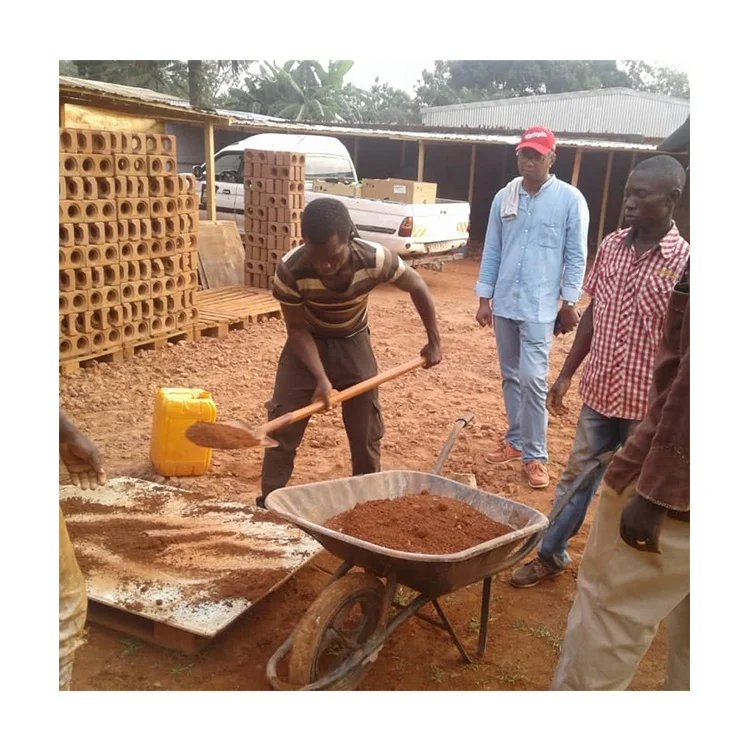
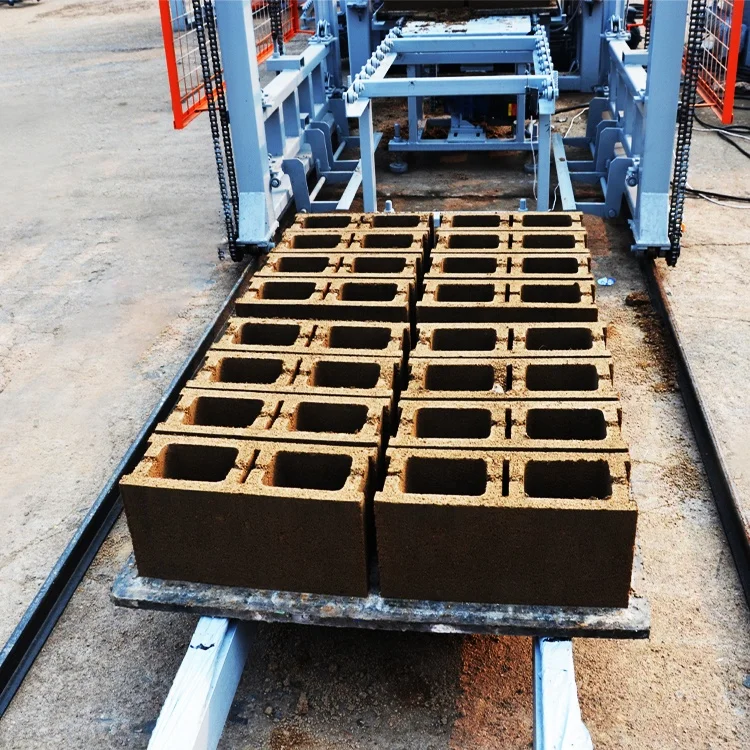
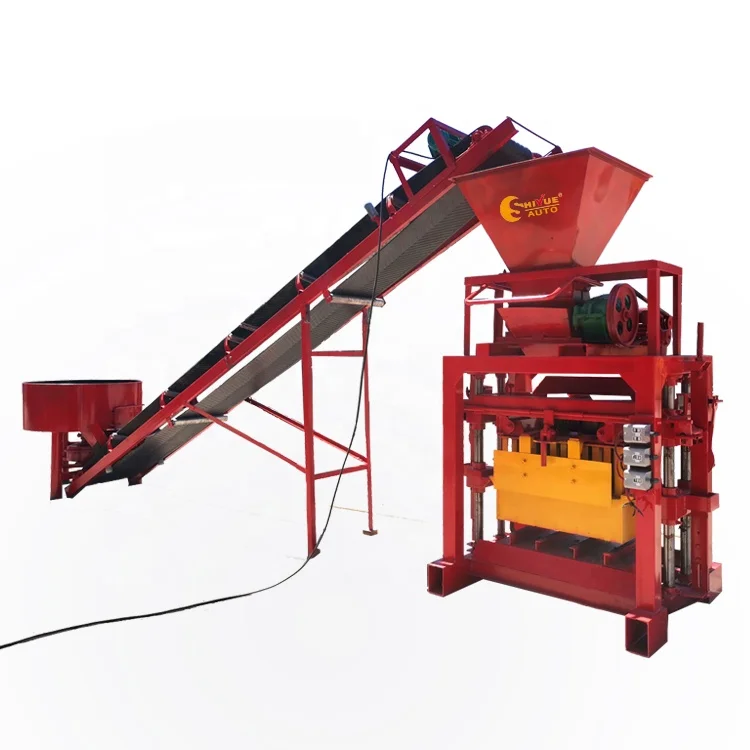
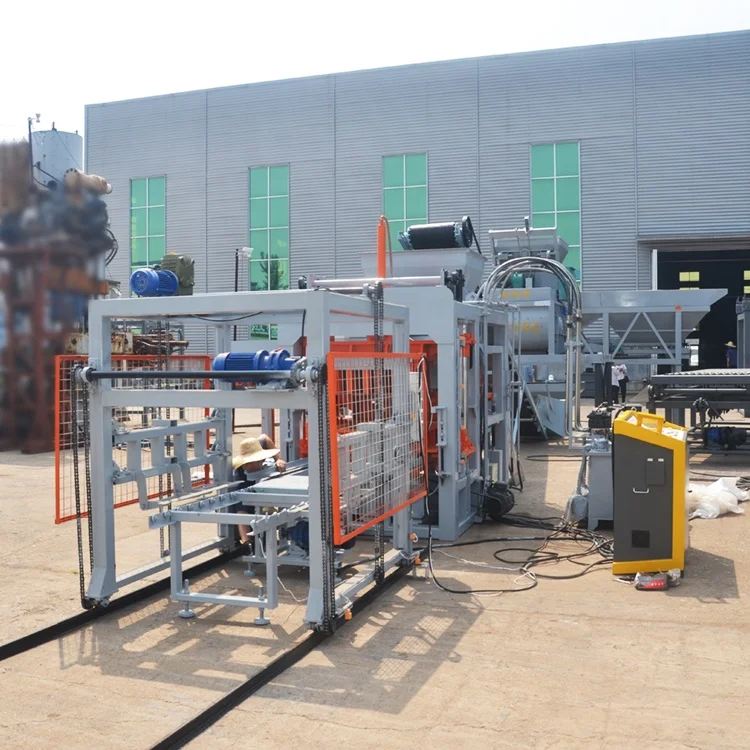
Matched system configuration — the QT4-15 is specified alongside its moulds, pallets, and handling equipment as one integrated line rather than a standalone press, letting buyers map this mid-tier model against the full Shiyue automatic range before committing to a plant layout.
Technical Specifications
| Parameter |
Value |
| Model |
QT4-15A |
| Product Type |
Fully Automatic Concrete Block Making Machine |
| Overall Dimensions (L×W×H) |
4100×1600×2600 mm |
| Rated Pressure |
16–21 MPa |
| Main Vibration Form |
Platform Vibration |
| Vibration Frequency |
4200 r/min |
| Vibration Force |
55 kN |
| Pallet Size |
880×550 mm |
| Molding Cycle |
25–30 s (basis not stated in source — confirm block format, material, and thickness) |
| Overall Power |
18.45 kW |
| Total Mass |
4 T |
| Demolding Method |
Hydraulic |
| Factory Area Required |
300 m² |
| Control System |
PLC |
| Automation Level |
Fully Automatic |
| Assembly State |
Shipped in 1×40HQ container (basic equipment) |
| Mould Compatibility |
Custom moulds available per customer drawings |
| Warranty |
1 year (excluding spare parts) |
Application Suitability
| Application |
Material or Output |
| Hollow block production for load-bearing walls |
Crushed stone, sand, cement, and fly ash blends |
| Solid block manufacturing for partition walls |
Gravel, sand, and cement mixes with local aggregate |
| Paving block and colored paver runs |
Fine sand, cement, and pigment combinations |
| Interlocking brick production for retaining structures |
Dust, slag, and cement composites |
| Kerbstone and curb units for infrastructure projects |
Coarse aggregate and high-strength cement ratios |
Why "Cycles per Hour" Means Nothing Without the Block Format
A molding cycle of 25–30 seconds only translates to daily output once you lock in the exact block format, wall thickness, and mix design you intend to run.
When I first started reviewing block machine quotations coming out of Guangdong workshops, I noticed a recurring pattern: buyers would sign off on a QT4-15 automatic block making machine manufacturer spec sheet that quoted an impressive hourly cycle count, then wonder why their actual pallet output barely reached half that figure six months later. The missing variable was always the same — the cycle time had been measured on a thin solid paver, while the buyer’s daily production target was based on 200 mm hollow blocks that demand longer vibration and compaction phases. The QT4-15 sits in the mid-tier of Shiyue’s range, and understanding where it lands requires a capacity calculation tied directly to your product mix, not a catalogue headline. [NEED_CITE: capacity calculation standards for concrete block plants by format]
Positioning the QT4-15 Within the Full Machine Range
Shiyue’s line spans from small workshop machines with manual pallet handling up through high-capacity fully automatic lines with integrated cubing. The QT4-15 occupies the middle ground: it delivers platform vibration at 55 kN and hydraulic pressure up to 21 MPa in a footprint of 4100×1600 mm, making it suitable for a buyer who has outgrown semi-automatic output but does not yet need the floor space and capital commitment of a high-capacity plant. This QT4-15 automatic block making machine manufacturer offering pairs the press with matching pallet and handling specifications so the line runs as a coordinated unit.
How the Mid-Tier Footprint Shapes Plant Planning
At roughly 4 T total mass and a 300 m² factory area requirement, the QT4-15 fits inside a standard single-bay workshop without specialized foundation engineering. The 880×550 mm pallet size was selected to align with common forklift tine widths and standard curing rack dimensions, which means a buyer upgrading from a smaller machine can often reuse existing curing infrastructure. Buyers evaluating the QT4-15 automatic block making machine manufacturer range should measure their curing yard and forklift capacity before confirming pallet material and stacking configuration. [NEED_CITE: pallet size compatibility with standard curing rack systems]
Reading the Specs That Actually Govern Block Quality
The rated pressure of 16–21 MPa combined with 55 kN vibration force at 4200 r/min determines how densely the mix compacts inside the mould cavity. Insufficient pressure leaves hollow blocks with weak web walls that crack during curing; excessive vibration on a dry mix causes surface segregation. The 18.45 kW overall power rating reflects the energy needed to sustain both hydraulic clamping and platform vibration simultaneously, so underspecifying the electrical supply will cause cycle interruptions mid-shift. The 25–30 s molding cycle is achievable on thinner formats with well-graded aggregate, but heavier blocks with high fly ash content will push toward the upper end of that range — and the PLC control system must be programmed with per-format cycle profiles to maintain batch-to-batch consistency.

The Hidden Cost of Skipping the Format Conversation
I have walked through plants where the block machine sat idle for an entire shift because the mould change procedure had never been documented for the operator’s language, and the hydraulic quick-release fittings did not match the local hose standard. When pallet size is chosen without checking the buyer’s forklift capacity, pallets warp under load and jam the feeding mechanism within the first week. Voltage and PLC display language left unconfirmed until the container arrives mean electricians spend days rewiring panels and sourcing translators instead of commissioning the line. [NEED_CITE: common commissioning delays caused by voltage and control language mismatches]
Why Buyers Specify Through Shiyue
Shiyue focuses exclusively on block machinery, so the QT4-15 is quoted as a matched system — press, mould, pallet, and handling — rather than assembled from unrelated suppliers. Mould design is based on the buyer’s actual market formats, including custom drawings for non-standard block shapes. Automation level is selectable, so a buyer can commission the QT4-15 with semi-automatic pallet handling now and add automatic stacking later without replacing the press. The configuration is set against the buyer’s local aggregate and target mix, not a default catalogue recipe. Factory testing is completed against the buyer’s specified block format before the machine leaves the workshop. [NEED_CITE: factory test protocols for block machine dispatch verification]
Documentation & Verification
- Line layout with capacity calculation stating the block format assumed for each output figure
- Mould drawing and format list covering every block type the QT4-15 will produce
- Pallet specification matched to curing rack dimensions and forklift capacity
- Voltage, frequency, and PLC display language confirmation signed off before production
- Hydraulic and electrical schematic for on-site troubleshooting
- Factory test record on the buyer’s target block format before dispatch
Installation, Commissioning & Support
- 300 m² factory area with level concrete slab required before the 4 T QT4-15 arrives on site
- 18.45 kW total load demands a dedicated circuit with voltage and frequency confirmed pre-production
- Basic equipment ships in one 40HQ container; dismantling and reassembly supervised by Shiyue technicians
- PLC parameters set for each block format during first-run commissioning with operator present
- Mould change procedure and hydraulic wear part replacement covered in on-site training sessions
- Wear parts and mould list provided so first replacements are ordered before stock runs out
What We Need Before Quoting the QT4-15
Send us the exact block formats your market sells, including dimensions and wall thickness for every hollow and solid type. Tell us what aggregate is available locally — crushed stone, river sand, fly ash, slag — and we will configure the vibration and pressure settings around that mix. Confirm your site voltage, frequency, and preferred PLC display language so commissioning is not delayed after the QT4-15 automatic block making machine manufacturer delivery arrives.
Frequently Asked Questions
Q: How is the QT4-15’s capacity calculated, and which block format is assumed?
A: The 25–30 s molding cycle must be mapped to a specific block format before daily output can be stated. A thin solid paver will complete a cycle faster than a 200 mm hollow block with the same mix. Shiyue provides a capacity calculation sheet that lists output per format so you can compare against your production target without guessing.
Q: Where does the QT4-15 sit in Shiyue’s full machine range?
A: It occupies the mid-tier automatic position — above semi-automatic workshop machines and below high-capacity lines with integrated cubing. The 55 kN vibration force and 21 MPa pressure place it in a bracket suitable for buyers scaling past manual output without committing to a full high-capacity plant footprint.
Q: What plant footprint does the QT4-15 require at different automation levels?
A: The base machine needs roughly 300 m² with manual pallet handling at the curing end. Adding automatic stacking and cubing extends the line length and requires additional floor space for the stacking robot and curing rack transfer system. Shiyue provides a line layout showing the exact footprint for your chosen automation level.
Q: Which block formats and mould options are available for the QT4-15?
A: The 880×550 mm pallet accommodates hollow blocks, solid blocks, pavers, interlocking bricks, and kerbstones. Custom moulds can be designed from buyer drawings for non-standard shapes. A full format list and mould drawing set is provided with every quotation so you can verify market coverage before ordering.
Q: Can I start with basic automation and upgrade the QT4-15 later?
A: Yes. The press and hydraulic system remain the same across automation tiers. A buyer can commission with manual pallet handling and add automatic pallet feeding, stacking, or cubing modules later without replacing the QT4-15 itself, spreading capital expenditure across phases of plant growth.

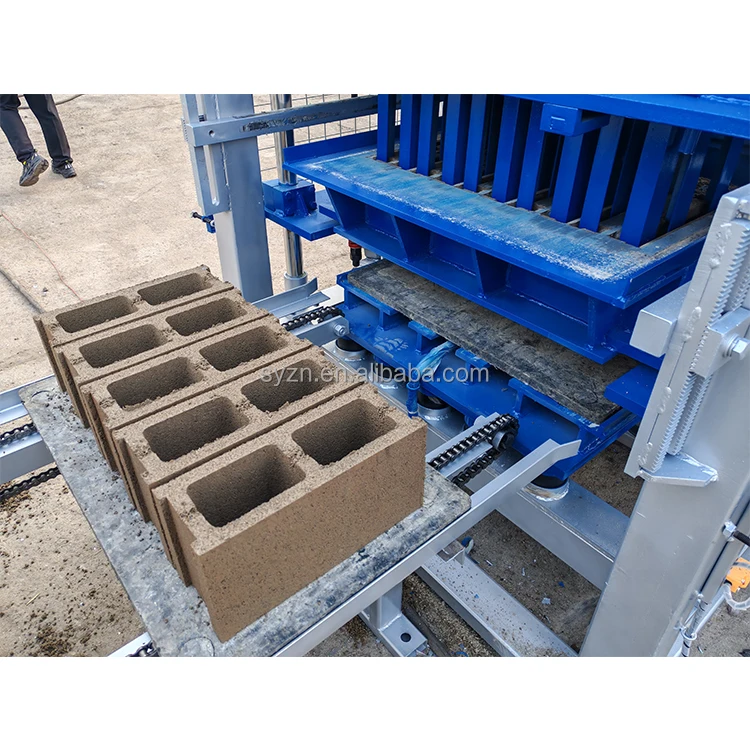
 High quality block machine