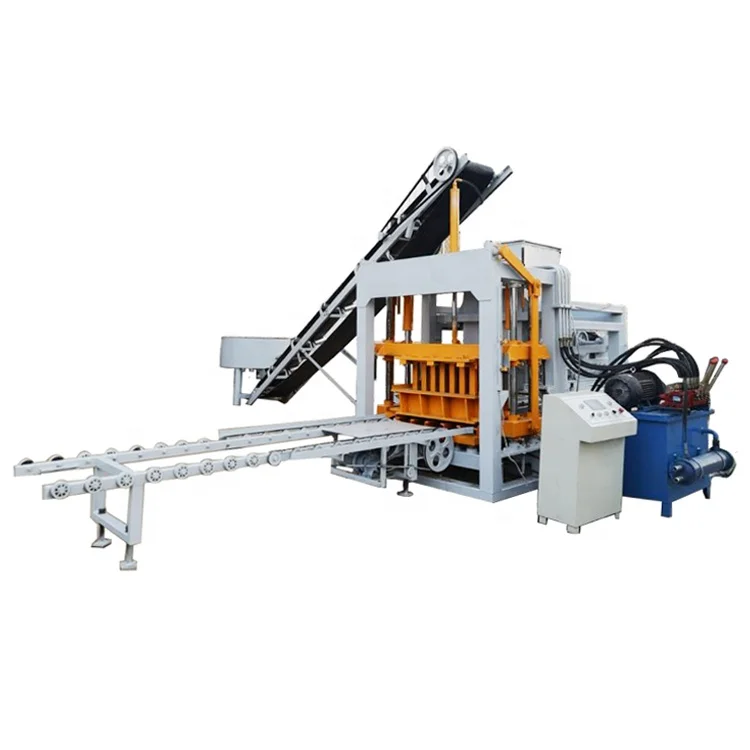
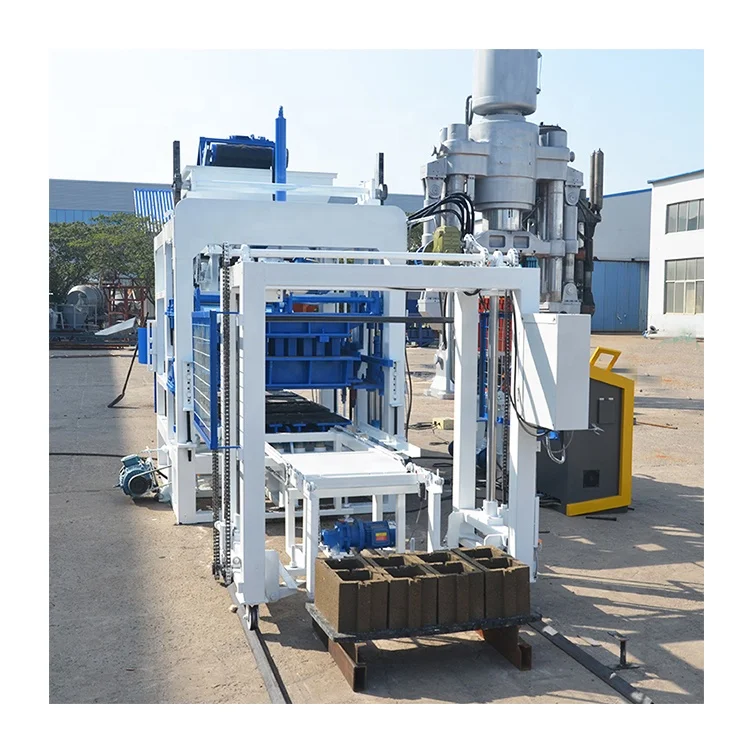
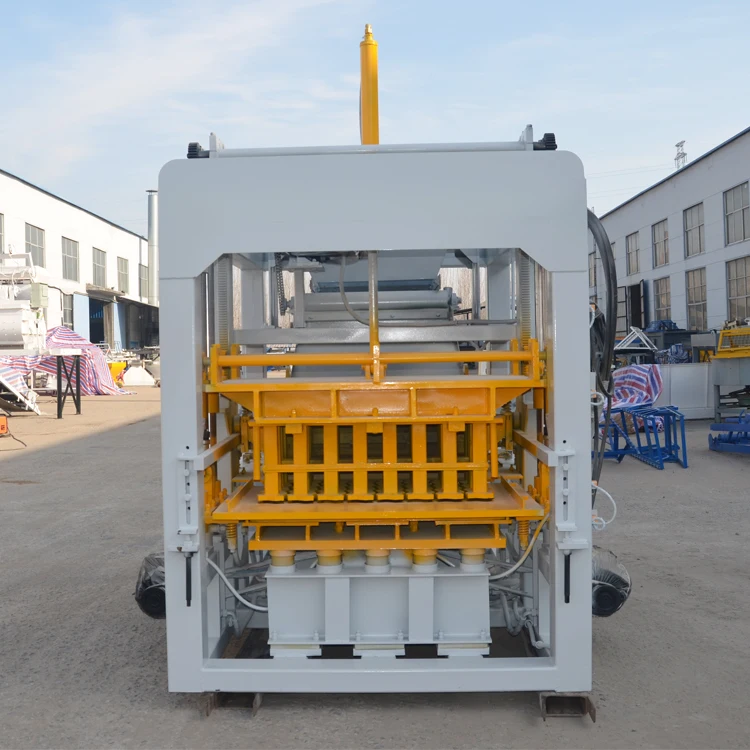
Machine, Mould and Handling Matched — the QT4-15 is specified as one system against your target block format and local aggregate, not a catalogue default with separate pallet and automation add-ons.
Technical Specifications
| Parameter |
Value |
| Model |
QT4-15 |
| Product Type |
Hydraulic Automatic Concrete Block Making Machine |
| Control System |
PLC (Computer controlled, fully automatic) |
| Vibration Mode |
Multiaxis synchronizer vibration (vertically downward) |
| Hydraulic System |
High thermal efficiency, low heat productivity design |
| Mixer System |
Multiaxis forced mixer |
| Guide Bearing |
Long-period over length guide bearing (upper mould to mould box alignment) |
| Rack Construction |
High strength steel with special welding technique |
| Automation Level |
Fully automatic |
| Molding Cycle |
15–20 s |
| Output Capacity (400×200×200 mm hollow block) |
900–1,200 pcs/h, 7,200–9,600 pcs/8 hr |
| Output Capacity (400×150×200 mm block) |
1,080–1,440 pcs/h, 8,640–11,520 pcs/8 hr |
| Output Capacity (400×100×200 mm block) |
1,440–1,920 pcs/h, 11,520–15,360 pcs/8 hr |
| Output Capacity (200×100×60 mm paver) |
2,880–3,840 pcs/h, 23,040–30,720 pcs/8 hr |
| Output Capacity (240×115×53 mm standard brick) |
5,930–6,720 pcs/h, 47,400–53,700 pcs/8 hr |
| Mould Formats Supported |
Hollow block, multicellular brick, paving brick, standard brick |
| Voltage & Frequency |
(basis to be confirmed) |
| PLC Display Language |
(basis to be confirmed) |
| Overall Dimensions |
(basis to be confirmed) |
| Net Weight |
(basis to be confirmed) |
| Warranty |
1 year for whole machine (excluding spare parts) |
Application Suitability
| Application |
Material or Output |
| Hollow block production for building construction |
Crushed stone, sand, cement and fly ash blends |
| Paving block production for roads and walkways |
Hard aggregate paver mixes requiring high surface density |
| Standard solid brick production |
Clay-substitute or cement-bound granular materials |
| Multicellular (porous) brick production |
Lightweight aggregate or aerated concrete-compatible mixes |
| Small-to-medium block production plants |
7,200–9,600 hollow blocks per 8-hour shift at 400×200×200 mm |
| On-site block production for construction contractors |
Moderate daily volumes on constrained project sites |
| First block plant for entrepreneurs |
Single line covering hollow, solid and paving formats |
Why Quoted Capacity Often Disappoints on Arrival
The QT4-15 automatic block machine manufacturer quotes every output figure against a named block format and cycle, so real shift production can be planned before the deposit is paid.
A capacity number without a format attached is a marketing claim, not a planning tool. Buyers who have received machines rated in generic "pieces per hour" have watched actual daily output fall to half the expected level because the quoted figure assumed a solid brick while the plant was running a larger hollow block. [NEED_CITE: typical variance between quoted and actual block output when format is unspecified] The QT4-15 capacity table names the exact block dimensions and the 15–20 s moulding cycle behind each figure, removing the guesswork that leaves pallets stacking up by hand.

Where the QT4-15 Sits Across the Automatic Range
The QT4-15 occupies the entry-to-mid tier of the fully automatic range, delivering PLC-controlled operation and multiaxis vibration without the floor space and capital of a high-capacity line. It serves as a clear step up from semi-automatic and mobile egg-laying machines, giving first-time plant owners a single press that covers hollow, solid and paving formats on one pallet circuit. Buyers surveying the full range can place this model between manual pallet handling tiers and the fully automated stacking and cubing lines.
Automation That Removes the Operator from the Cycle
A fully automatic PLC cycle on the QT4-15 takes raw material feed, pallet movement, vibration and demoulding out of the operator’s hands, leaving only mix supervision and finished pallet removal. This reduces the crew required at the press and holds the moulding cycle constant across shifts, which is where batch-to-batch density stays within tolerance. [NEED_CITE: PLC control consistency in hydraulic block presses] The machine can be ordered in a semi-automatic pallet handling layout and later receive automatic feeders and stackers when volume justifies the upgrade.
Reading the Specifications Against Actual Production
The multiaxis synchronizer vibration directs force vertically downward, which matters when compacting dry, zero-slump mixes where lateral vibration leaves voids in the block web. Hydraulic pressure works with that vibration: too little and the block edges crumble, too much and fine aggregate is squeezed out of the mould. The long-period over length guide bearing keeps the upper mould aligned with the mould box across thousands of cycles, preventing uneven wall thickness that causes rejection at the curing rack. Moulding cycle time of 15–20 s is the figure that links every output row; if local aggregate demands a longer vibration hold, the per-hour capacity drops proportionally.
The Cost of Skipping the Format Conversation
When a buyer orders a block machine on headline capacity and only later reveals the block format the local market actually purchases, the delivered mould and pallet size rarely match. Pallets that do not fit the existing curing area force a forklift change, and a mould that takes most of a shift to swap cancels the format flexibility the buyer paid for. [NEED_CITE: hidden costs of mismatched pallet and curing infrastructure in block plants] Voltage and PLC language left unconfirmed until after arrival can add weeks of idle time while transformers and control panels are sourced locally.
Why the Configuration Conversation Starts Here
Block machinery is the single focus of the Shandong Shiyue workshop, so the QT4-15 press, mould, pallet and handling equipment are specified as one matched system rather than assembled from separate suppliers. The configuration is set against the buyer’s actual mix design and local aggregate, not a catalogue default, which is where vibration force and hydraulic pressure are adjusted before the frame is welded. Mould design covers the formats the buyer’s market sells, including custom drawings when local kerbstone or interlocking dimensions fall outside standard ranges. Automation level is selectable, letting a buyer start with semi-automatic pallet handling and upgrade to full stacking and cubing without replacing the press. Installation, commissioning and operator training are included so the first production run happens under supervision, not trial and error. [NEED_CITE: matched system specification versus modular sourcing in block machinery]
Documentation & Verification
- Line layout and capacity calculation stating the block format assumed for every QT4-15 output row
- Machine specification sheet listing vibration force, hydraulic pressure, pallet size and mould format list
- Mould drawing and format list including any custom profile supplied to buyer drawings
- Voltage, frequency and PLC display language confirmation signed before production starts
- Factory test record with actual cycle times per block format before the machine is crated
Installation, Commissioning & Support
- Foundation drawing tied to the QT4-15 rack weight and vibration load for civil works preparation
- Dedicated power circuit sized to the confirmed voltage and frequency before the machine ships
- Press dismantled into container-load sections with reassembly supervised on site
- First-run parameter setting for vibration hold time and hydraulic pressure against the buyer’s mix
- Operator training covering mould change sequence and PLC fault code response
- Wear parts and mould list issued with the manual for first replacement ordering
What to Include With Your First Enquiry
Tell us the exact block formats your market sells and the daily volume you need per format, so the capacity calculation can be built around your product mix rather than a catalogue default. Include the raw materials you can source locally and any sample aggregate analysis, along with the voltage, frequency and PLC language your operators require. If you already have curing racks, forklifts or a mixer on site, share their dimensions and capacity so the pallet size and upstream handling can be matched.
Frequently Asked Questions
Q: How is the QT4-15 capacity verified per block format, and what cycle time does each figure assume?
A: Every output row in the QT4-15 table is calculated against a named block dimension and the 15–20 s moulding cycle. When your local aggregate requires a longer vibration hold, the per-hour figure is recalculated before quotation so the daily shift plan reflects your actual product mix.
Q: Where does the QT4-15 sit between semi-automatic and higher-tier automatic machines in investment and footprint?
A: The QT4-15 is the entry-to-mid tier of the fully automatic range, offering PLC control and multiaxis vibration in a smaller footprint than high-capacity stacking and cubing lines. It suits buyers stepping up from manual or semi-automatic machines without committing to the floor space of a top-tier plant.
Q: What voltage, frequency and PLC language options are available for my market?
A: Voltage and frequency are confirmed with you before production, matching the local grid where the plant will operate. The PLC display language is also agreed at order stage so operators can read fault codes and cycle parameters in their working language from the first shift.
Q: Can I start with a semi-automatic QT4-15 configuration and upgrade automation later?
A: Yes. The QT4-15 can be supplied with manual or semi-automatic pallet handling and later receive automatic pallet feeders, stackers and cubing systems without replacing the press. The upgrade path is planned at order stage so mounting points and PLC I/O are reserved.
Q: Which block formats and mould sizes are supported, and how long does a mould change take?
A: The QT4-15 supports hollow, multicellular, paving and standard brick formats on a single press. Mould change time depends on the format pair being swapped and is confirmed during commissioning so operators know the exact procedure and tool requirements for your product range.

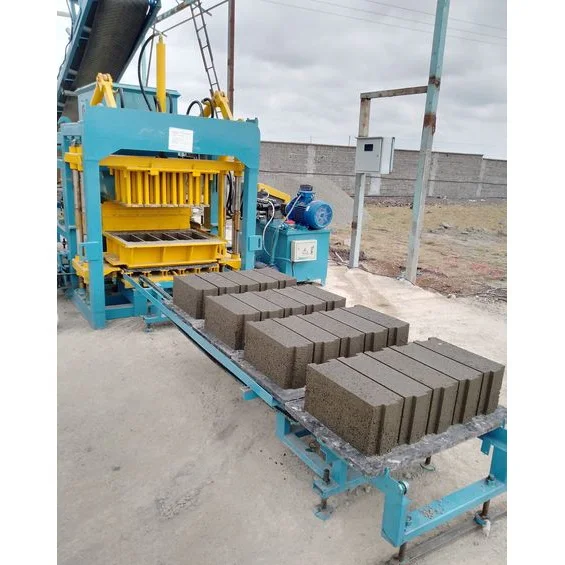
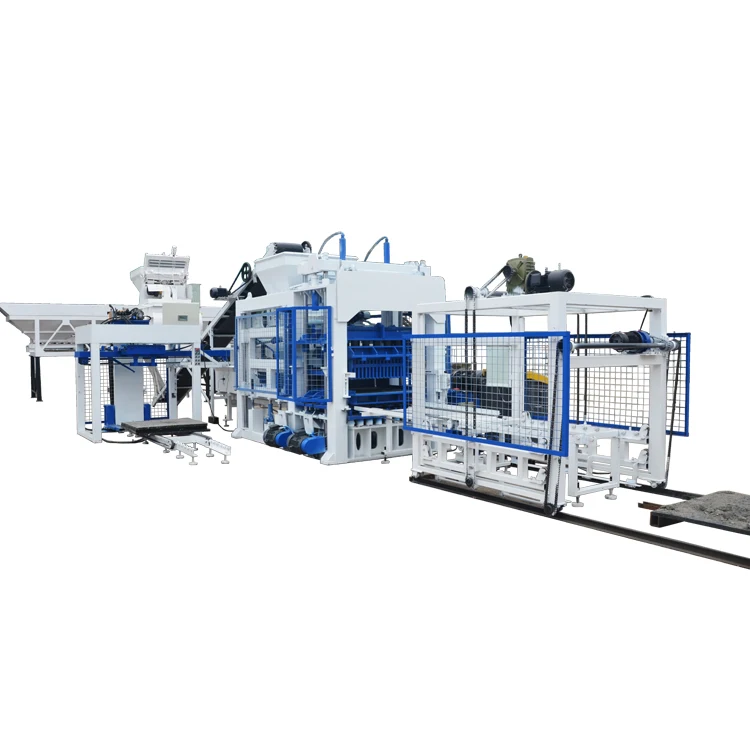 Automatic block machine