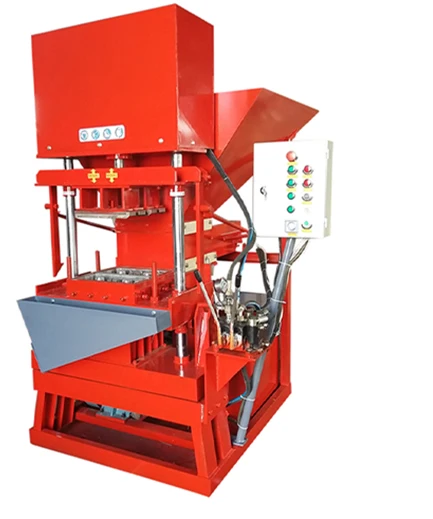
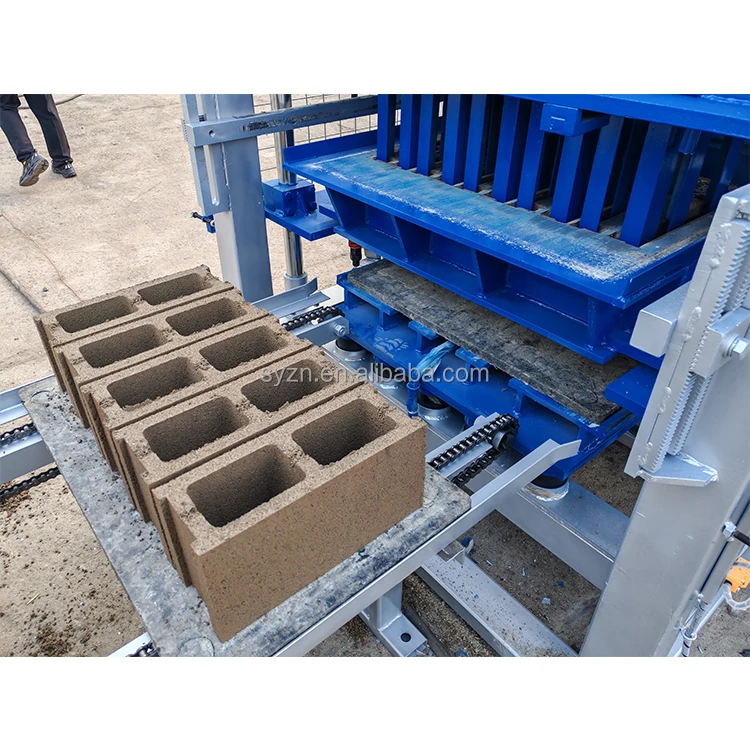
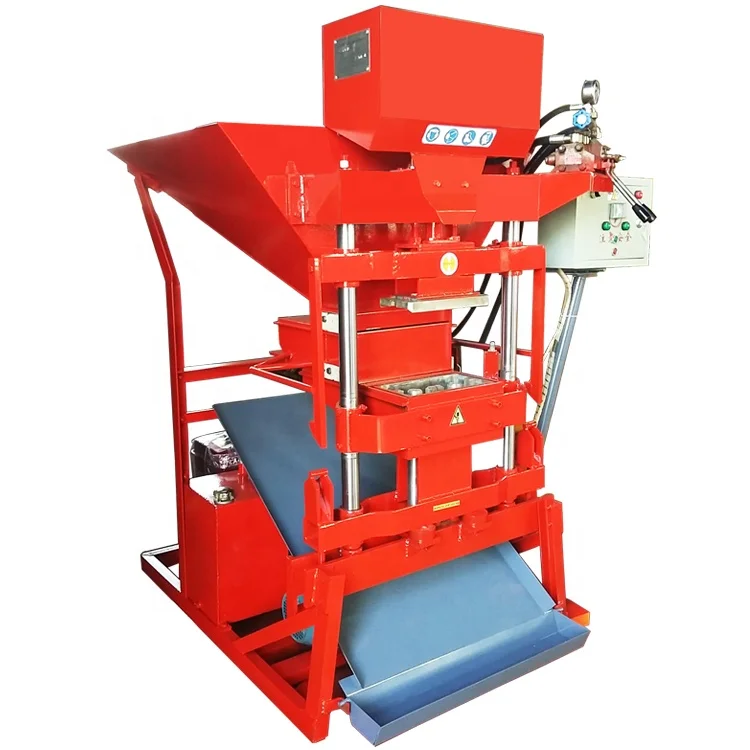
Single-Focus Machinery Alignment — every press, mould, pallet and handling station is specified as one matched system against your actual block format, not assembled from separate catalogues.
Technical Specifications
| Parameter |
Value |
| Product Type |
Fully Automatic Block Making Machine |
| Model |
QT15-15 |
| Moulding Cycle |
15–20 s |
| Output Capacity (Hollow Block 400×200×200 mm) |
2,700–3,600 pcs/hour; 21,600–28,800 pcs/8 hr shift |
| Output Capacity (Solid Brick 240×115×50 mm) |
14,400–19,200 pcs/hour; 115,200–153,600 pcs/8 hr shift |
| Qty per Mould (Hollow Block 400×200×200 mm) |
15 pcs |
| Qty per Mould (Solid Brick 240×115×50 mm) |
80 pcs |
| Vibration System |
Dual-source synchronous vibration with frequency conversion and braking |
| Feeding System |
Semi-closed screen reticular rotational forced feeding |
| Control System |
PLC aptitude control with human-machine interface |
| Structure |
Super-strong steel frame with imported hydraulic and electrical components |
| Automation Level |
Fully automatic with hydraulic loading unit for mass production |
| Standards |
CE or ISO availability to be confirmed prior to order |
Application Suitability
| Application |
Material or Output |
| Large-scale hollow block production |
Crushed stone, cement, sand, and fly ash blends |
| Paver block manufacturing for municipal projects |
High-density concrete mixes with fine aggregate |
| Porous and permeable brick lines |
Lightweight aggregate with controlled water-cement ratio |
| Solid brick output for housing developments |
Local river sand, stone dust, and cement |
| Kerbstone and interlocking block runs |
Coarse aggregate with hydraulic pressing requirements |
Why "Cycles per Hour" Tells You Nothing About Your Real Daily Tonnage
A quoted cycle time without the block format attached is a number detached from your plant floor.
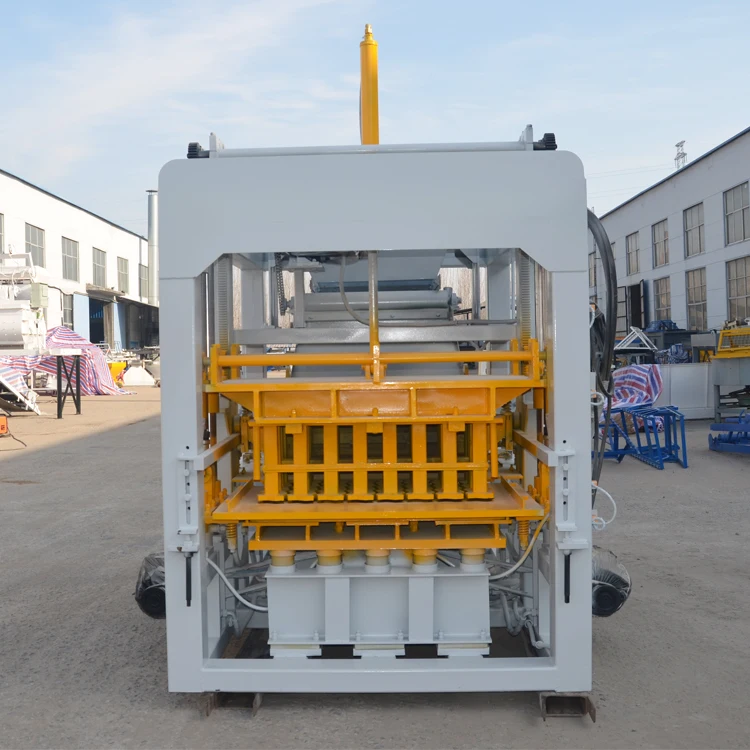
Many buyers receive proposals that state a moulding cycle in seconds but never mention which block size that figure was measured against. The QT15-15 Automatic Block Making Machine for Sale achieves a 15–20 second cycle, yet that cycle produces fifteen 400×200×200 mm hollow blocks or eighty 240×115×50 mm solid bricks — a difference in hourly tonnage that reshapes your raw material ordering, pallet circulation, and curing rack capacity. When I first started commissioning lines on-site, I watched operators run a machine rated at a fast cycle only to discover the pallet return system could not keep pace, leaving the press idle for seconds between every stroke [NEED_CITE: pallet circulation speed matching press cycle in automatic block lines].

Positioning the QT15-15 Within the Full Machine Range
The Shiyue range spans mobile egg-laying units for on-site work, semi-automatic presses for lower-investment workshops, and high-capacity automatic lines like this model. The QT15-15 sits at the top of that hierarchy, designed for buyers whose daily output targets require continuous hydraulic loading and PLC-coordinated pallet flow rather than manual intervention between cycles.
Where This Tier Fits in Your Plant Footprint
A fully automatic line at this output level demands a curing area sized for roughly twenty thousand hollow blocks per shift, a pallet inventory that rotates without bottleneck, and a raw material batching station capable of feeding the forced feeder continuously. Buyers comparing this tier against mid-range semi-automatic models should weigh not just the press price but the space, pallet stock, and upstream batching investment that the higher tier requires [NEED_CITE: plant footprint planning for high-output automatic block production].
Reading the Vibration and Pressure Specs That Actually Matter
The dual-source synchronous vibration system combines vertical vibration with frequency conversion braking, meaning the vibration force can be adjusted per mix rather than running a fixed amplitude. On a site in East Africa where the local crushed stone carried high fines content, we had to reduce vibration frequency and increase hydraulic dwell time to achieve adequate compaction without the blocks cracking during demoulding. The forced feeding unit uses a semi-closed screen reticular rotor that pushes mix into deep mould cavities evenly, preventing the weak corners that static gravity feeding produces on tall hollow blocks. PLC control with a human-machine interface allows the operator to store separate recipes for each block format, so a shift change from hollow blocks to pavers does not require manual valve adjustment across the hydraulic manifold.
The Cost of Skipping the Pallet and Handling Conversation
Orders that cover the press and moulds but omit pallet specification, stacking automation, and curing rack handling leave the buyer to move thousands of blocks per shift by hand. Pallet size chosen without checking the curing area aisle width or the forklift already on site leads to double-handling. Voltage and PLC display language left unconfirmed until the machine arrives can delay commissioning by weeks while control panels are rewired or interface files are translated [NEED_CITE: voltage and frequency confirmation checklist for exported block machinery].
Why Buyers Source This Range Here Rather Than Assembling from Separate Suppliers
Block machinery is the single focus of the Shiyue product range, so the press, mould, pallet, and handling equipment are specified as one matched system rather than assembled from unrelated vendors. Machine configuration starts from the buyer’s actual mix design and local aggregate, not a catalogue default. Mould design covers every format the buyer’s market sells, with custom drawings accepted for non-standard profiles. Automation level is selectable — a buyer can commission the QT15-15 in semi-automatic mode and add stacking and cubing modules later. Installation support includes on-site commissioning and operator training, so the first production run happens with an experienced technician present.
Documentation & Verification
- Line layout and capacity calculation stating the specific block format assumed for each output figure
- Machine specification sheet with hydraulic pressure and vibration force ratings per mould position
- Mould drawing and format list covering every profile included in the purchase order
- Pallet specification matched to curing rack dimensions and forklift load rating
- Factory test record run on buyer’s block format before container loading
- Voltage, frequency, and PLC display language confirmation document signed prior to production
Installation, Commissioning & Support
- Foundation plan sized to the QT15-15 steel frame footprint and dynamic vibration load
- Dedicated power circuit confirming local voltage and frequency before the hydraulic unit is energized
- Press dismantled into container-load sections with reassembly supervision on arrival
- First-run parameter tuning against the buyer’s aggregate sample and target block strength
- Operator training covering PLC recipe storage, mould change procedure, and daily greasing points
- Wear parts list with reorder lead times for hydraulic seals, vibration springs, and mould liners
Before You Request a Quotation
Send the target block format with dimensions, the daily output you need per format, and a sample or lab analysis of your local aggregate. Confirm the voltage and frequency at your site, the PLC interface language your operators read, and whether the curing area and pallet return system are already in place or need to be included in the scope. If you are replacing an existing press, share the current pallet size so the new line can reuse your inventory.
Frequently Asked Questions
Q: What block format is the stated daily output based on?
A: The 21,600–28,800 pieces per eight-hour shift figure is based on 400×200×200 mm hollow blocks at 15 pieces per mould. Output changes with every format switch — solid bricks at 80 per mould yield a different hourly count. A capacity table listing each format you plan to run is provided with every proposal.
Q: Which PLC languages and remote functions are available?
A: The human-machine interface can be configured in multiple display languages before shipment. Remote diagnostics capability depends on the control package selected. Confirm your preferred language and connectivity requirements during the quotation stage so the correct PLC firmware is loaded at the factory.
Q: How are vibration and pressure adjusted for local aggregates?
A: The dual-source vibration system allows frequency and amplitude adjustment per recipe. Hydraulic dwell pressure is tuned during commissioning against your specific mix. On one East African site, high fines in crushed stone required lower vibration frequency and longer press time to prevent demoulding cracks.
Q: How much floor space does a full automatic line require?
A: A QT15-15 line with pallet return, stacking, and curing racks needs a building with adequate height for the stacking mechanism and aisle width for forklift pallet movement. Exact footprint depends on pallet size and curing rack configuration, both of which are confirmed before the line layout is drawn.
Q: What is the typical lead time for replacement moulds and wear parts?
A: Standard mould profiles are produced in the same workshop as the press, and wear parts such as hydraulic seals and vibration springs are listed in the documentation package. Reorder lead times vary by part complexity and are stated in the spare parts list provided with every machine shipment.

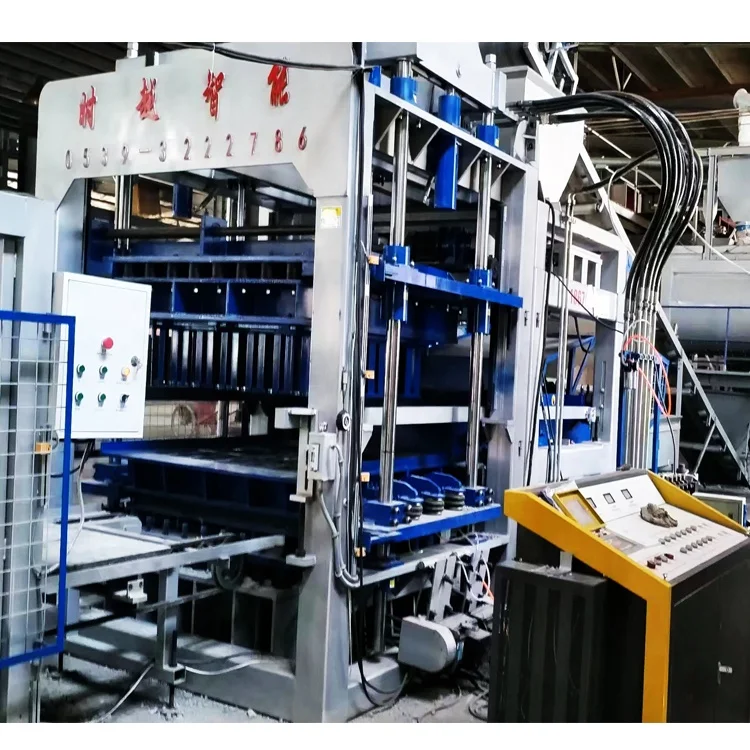
 Automatic block machine