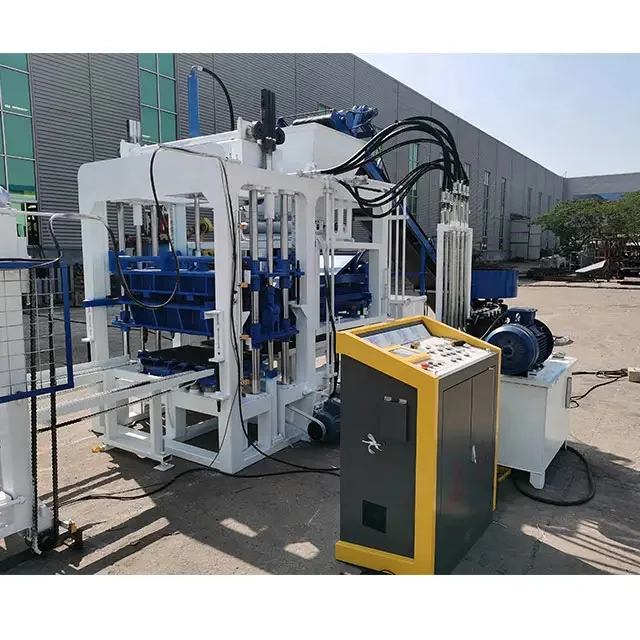
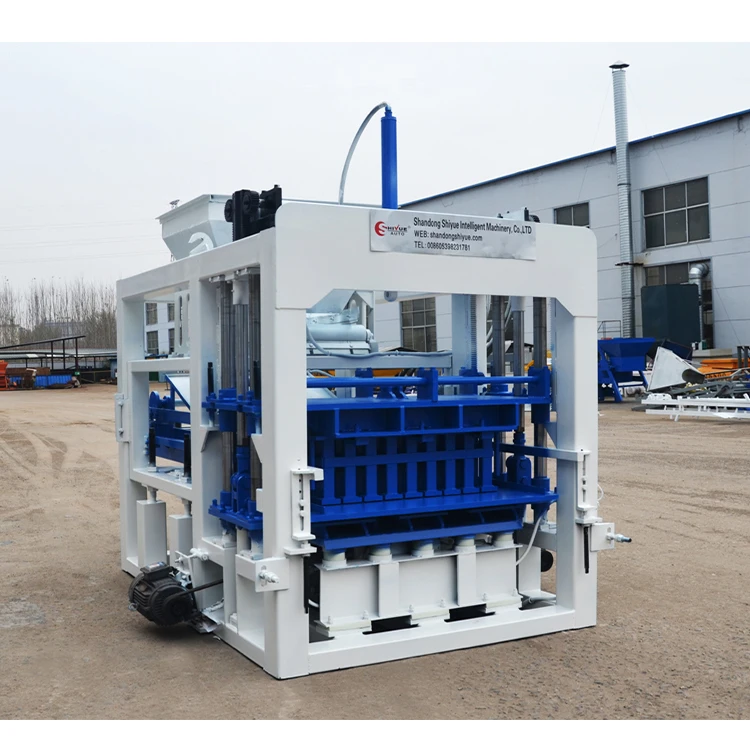
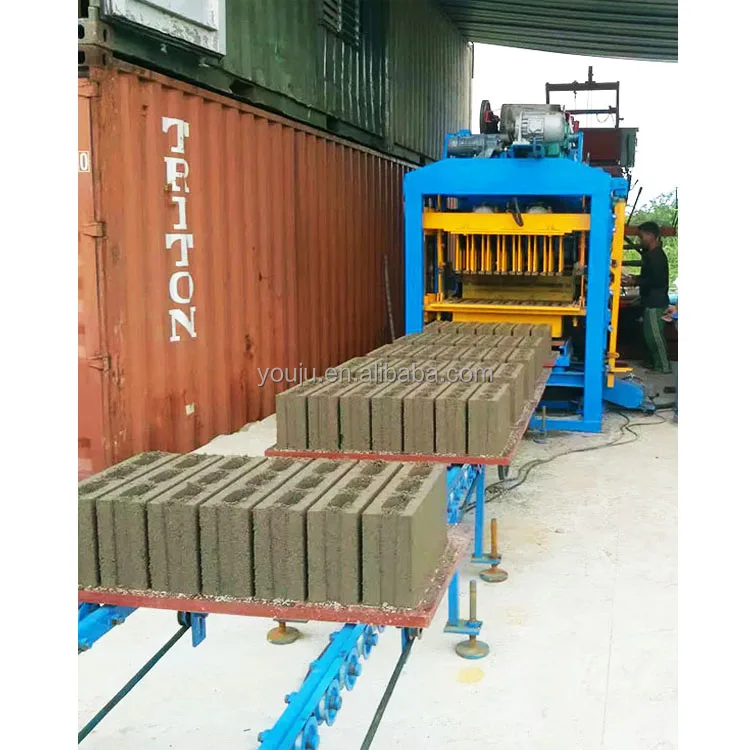
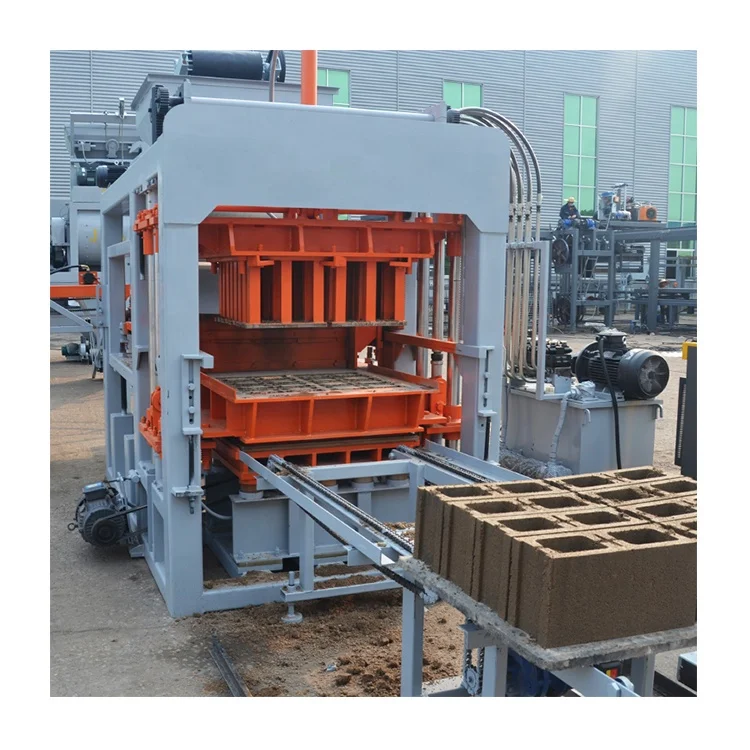
Matched System Sizing — the QT14-15 is specified as one coordinated line of press, mould, pallet and handling, keeping output tiers and plant footprint aligned for high-capacity buyers.
Technical Specifications
| Parameter |
Value |
| Model |
QT14-15 |
| Product Type |
Automatic Concrete Block Making Machine |
| Vibration Mode |
Multiaxis synchronizer vibration, vertically downward |
| Guide System |
Long-period over-length guide bearing for upper mould alignment |
| Mixing System |
Multiaxis forced mixer system |
| Hydraulic System |
High thermal efficiency, low heat generation |
| Control System |
Computer controlled, fully automatic (PLC) |
| Rack Construction |
High strength steel with special welding technique |
| Moulding Cycle |
15–20 seconds depending on format and mix |
| Output (Hollow Block) |
900–1200 pcs/h (7200–9600 pcs/8hr) based on 400×200×200mm, 4 pcs/mould |
| Output (Standard Block) |
1440–1920 pcs/h (11520–15360 pcs/8hr) based on 400×100×200mm, 8 pcs/mould |
| Output (Paving Block) |
2880–3840 pcs/h (23040–30720 pcs/8hr) based on 200×100×60mm, 16 pcs/mould |
| Output (Solid Brick) |
5930–6720 pcs/h (47400–53700 pcs/8hr) based on 240×115×53mm, 28 pcs/mould |
| Automation Level |
Fully automatic |
| Warranty |
1 year for whole machine (excluding spare parts) |
| Assembly State |
Factory assembled, dismantled for container shipment |
Application Suitability
| Application |
Material or Output |
| Hollow block production |
Crushed stone, cement, and sand mixes for structural and partition walls |
| Multicellular brick production |
Lightweight aggregate blends for thermal insulation blocks |
| Paving brick production |
High-density aggregate and cement mixes for pedestrian and vehicular surfaces |
| Standard solid brick production |
Fine sand and cement blends for load-bearing masonry |
| Kerbstone production |
Coarse aggregate and cement for road and pavement edging |
What the Stated Cycle Time Actually Means for Daily Tonnage
The moulding cycle must be matched to the block format and the specific raw material mix, or the quoted hourly rate will not translate into real shift output.
Buyers often calculate daily capacity by multiplying the shortest listed cycle by the number of hours in a shift. With the QT14-15 automatic block making machine, a 15-second cycle applies only when the mix design, moisture content, and block format allow the vibration and feeding phases to complete without extension. If the local aggregate is fine or has high moisture, the feeder requires more time to distribute material evenly across the mould, and the vibration phase must run longer to achieve target compaction. This extends the cycle, reducing the boards produced per hour. Capacity calculations that ignore these variables lead to plants that consistently miss their daily targets. [NEED_CITE: effect of aggregate moisture and gradation on block compaction and cycle time]
Placing the QT14-15 Within the Full Machine Range
The QT14-15 sits at the high-output end of the Shiyue automatic block making machine lineup, intended for plants that require continuous, large-volume production across multiple formats. Buyers stepping up from semi-automatic tiers will find that this model eliminates the manual pallet handling and stacking steps that otherwise limit shift output. For those comparing options for a first plant, the decision between this tier and smaller automatic models usually hinges on the daily volume commitment and the curing area available to absorb the higher board flow.
How Automation Level Determines Line Staffing
At this tier, the fully automatic PLC-controlled sequence manages feeding, pressing, and board discharge without manual intervention at the press itself. This shifts the labour requirement from the machine operator to the downstream handling and curing stages. A plant running the QT14-15 still needs personnel for raw material loading, quality sampling, and stacking or cubing if those stations are not included in the line configuration. Buyers planning a complete block production setup should map the staffing for the entire line, not only the press, to avoid bottlenecks once the machine is running at full pace. [NEED_CITE: labour allocation for fully automatic concrete block production lines]
Interpreting Vibration, Pressure, and Guide Precision
The multiaxis synchronizer vibration directs force vertically downward, which is critical for achieving uniform density across the full board area. When combined with a hydraulic system designed for high thermal efficiency, the press can sustain repeated cycles without the oil overheating and losing pressure during long shifts. The long-period over-length guide bearing keeps the upper mould aligned with the mould box throughout the production run, preventing uneven block heights and edge damage that would otherwise increase the reject rate. The multiaxis forced mixer system prepares a consistent feed, which matters because even the best press cannot compensate for poorly blended material arriving at the hopper. Together, these elements determine whether the block leaving the machine meets the strength requirement for its intended application.

The Hidden Cost of Sizing Without Format Confirmation
When a quotation lists a single output figure without stating the block format it assumes, the buyer may discover after installation that the machine produces far fewer units of the format their market actually demands. A press configured for hollow blocks will have a different pcs-per-mould count than one set up for paving bricks, and the cycle time will differ as well. Moulds that do not match the buyer’s sales mix sit unused, and the format flexibility the buyer paid for is never realised. Additionally, if the pallet size was selected without checking the buyer’s existing curing racks and forklift dimensions, the entire downstream handling process requires unplanned modifications. [NEED_CITE: common causes of output shortfalls in new block production plants]
Why Procurement Starts With the Line, Not the Press Alone
Block machinery is the single focus here, meaning the QT14-15 is not sold as an isolated press but as part of a matched system where mould, pallet, and handling equipment are specified together. Configuration is set against the buyer’s actual mix design and local aggregate rather than a catalogue default, which prevents the costly material substitution that occurs when a machine is tuned for inputs unavailable in the target market. Mould design covers the formats the buyer’s market sells, with custom drawings available for non-standard requirements. Automation level is selectable, so a buyer can begin at a level that fits the initial budget and upgrade later. Installation support includes operator training, and documentation covers voltage, frequency, and PLC display language confirmation before the machine enters production.
Documentation & Verification
- Line layout showing board flow and station spacing for the QT14-15 footprint
- Capacity calculation listing output per specific block format and cycle assumption
- Mould drawing and format list confirming cavity count and dimensions
- Voltage, frequency, and PLC language confirmation signed before production begins
- Factory test record with photographs taken before dismantling for shipment
- Packing list and container loading plan for the dismantled QT14-15 line
Installation, Commissioning & Support
- Foundation plan specifying load points for the QT14-15 rack and vibration isolation
- Power supply confirmation for the high-capacity hydraulic and vibration motors before arrival
- Reassembly sequence for the dismantled press, mixer, and handling stations
- First-run parameter setting for the PLC against the confirmed mix design and block format
- Operator training covering mould change procedure and cycle adjustment on the QT14-15
- Wear parts list identifying mould liners and hydraulic seals for the first replacement cycle
- Maintenance schedule aligned with the vibration and hydraulic system duty ratings
Moving From Enquiry to Configuration
To receive a line proposal built around the QT14-15, buyers should share the target block formats, the required daily output per format, the local raw material characteristics, and the available site dimensions including curing area. Voltage, frequency, and preferred PLC display language should also be confirmed early, along with whether pallet handling and stacking are to be included in the quotation or sourced locally. Providing this information up front allows the capacity calculation and line layout to reflect actual conditions rather than generic assumptions.
Frequently Asked Questions
Q: How is the QT14-15’s output capacity verified, and which block format does each figure assume?
A: Each output figure in the specification table is tied to a specific block dimension and cavity count per mould. The hollow block rate, for example, is based on a 400×200×200mm format with 4 cavities. Buyers should match the calculation to the format they intend to produce most frequently, since cycle time and pcs-per-board vary across formats.
Q: Where does the QT14-15 sit in Shiyue’s full machine range compared to semi-automatic and smaller automatic tiers?
A: This model occupies the high-capacity end of the automatic range, designed for plants committed to large daily volumes across multiple formats. Smaller automatic tiers suit lower-output plants, while semi-automatic models require manual pallet handling and are intended for operations with lower investment or space constraints.
Q: What voltage, frequency, and control language options are confirmed before production?
A: The electrical supply specifications and PLC display language are confirmed during the proposal stage and documented before the machine enters production. This prevents commissioning delays caused by incompatible voltage or unreadable control interfaces upon arrival at the site.
Q: Does the quotation cover pallet handling, stacking, and curing, or only the press?
A: The scope depends on the buyer’s configuration choice. The QT14-15 can be quoted as a standalone press or as part of a complete line including raw material feeding, pallet circulation, automatic stacking, and curing rack handling. Buyers should clarify which stations are included to avoid manual bottlenecks downstream.
Q: How does the automation level of the QT14-15 compare to semi-automatic models, and is there an upgrade path?
A: The QT14-15 runs a fully automatic PLC-controlled sequence from feeding to board discharge, eliminating the manual pallet handling required on semi-automatic tiers. Buyers who start with a semi-automatic configuration on smaller models can plan a future upgrade to full automation as production volume and labour costs justify the investment.

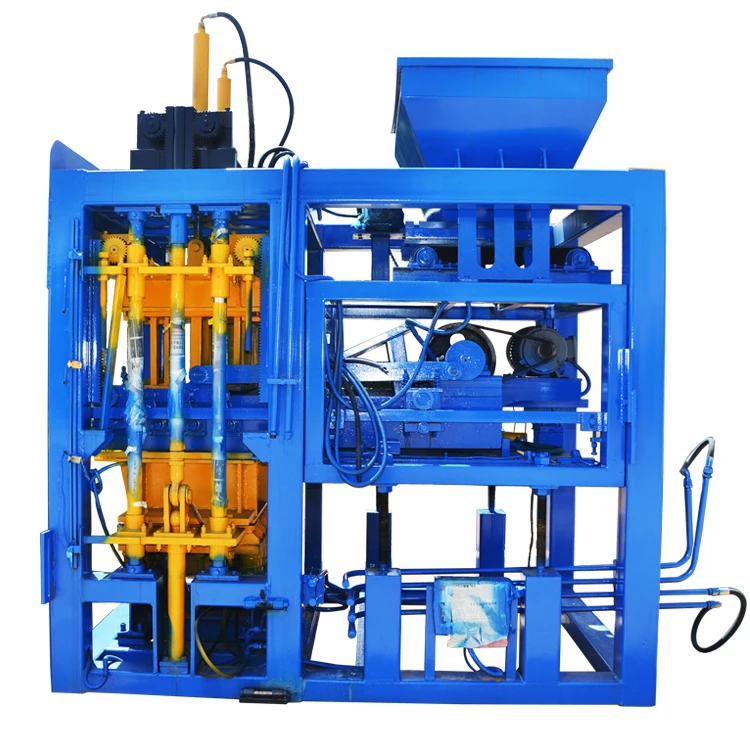
 Automatic block machine