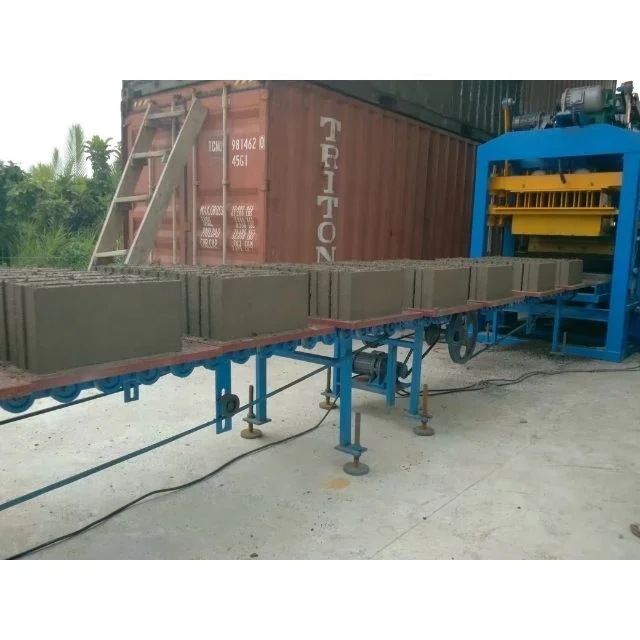
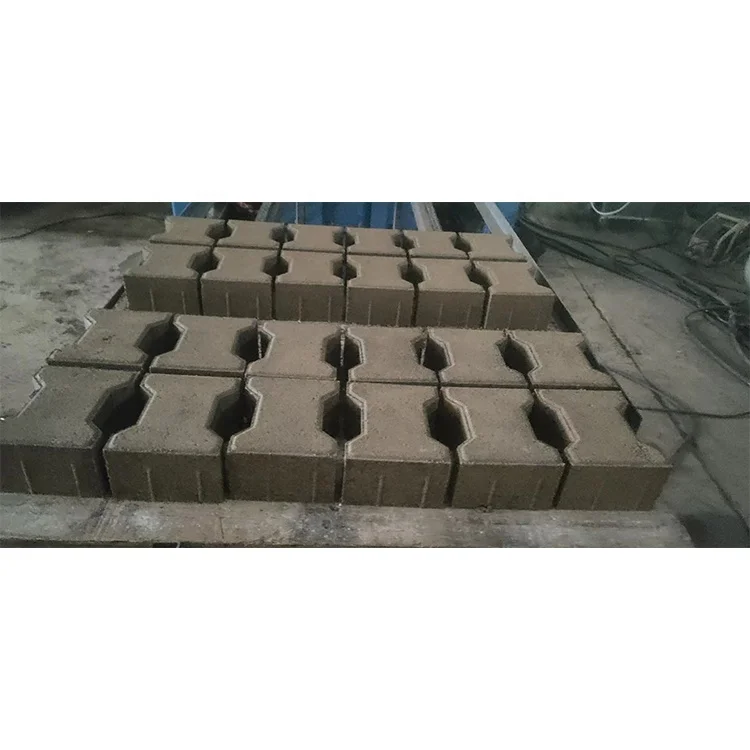
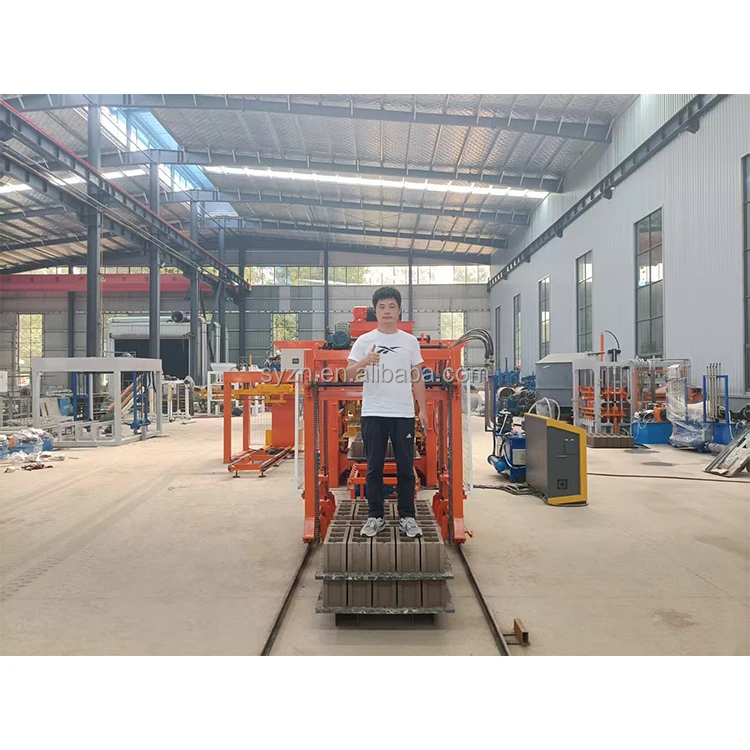
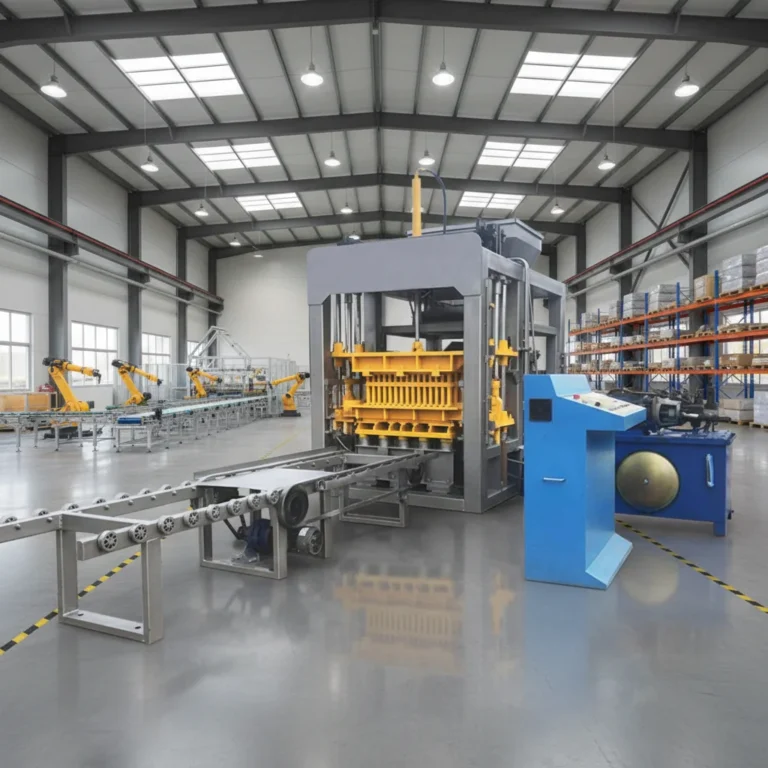
Matched System Specification — Machine, mould, pallet and handling equipment are configured as one integrated line rather than sourced from separate suppliers, eliminating interface mismatches that delay commissioning.
Technical Specifications
| Parameter |
Value |
| Model |
QT10-15 |
| Product Type |
Automatic Hydraulic Concrete Block Making Machine |
| Machine Power |
44 kW |
| Hydraulic Pressure |
16–21 MPa |
| Main Vibration Form |
Platform Vibration |
| Molding Cycle |
15–20 seconds (basis not stated in source — confirm block format / material / thickness) |
| Pallet Size |
1100 × 900 mm |
| Overall Dimensions |
9350 × 2320 × 2950 mm |
| Machine Weight |
10,000 kg |
| Frame Structure |
Gantry frame type, super steel, shock resistant |
| Control System |
PLC (language options not stated in source — confirm display language) |
| Voltage |
According to buyer’s local voltage (confirm exact V/Hz) |
| Material Feeding |
Driving type storage with independent foundation; net wave swing feeding device |
| Mould Material |
Cartridge type welding, manganese steel, carburizing and quenching treatment |
| Matching Line Configuration |
PL1200 batching machine, JS750 mixer, 8 m belt conveyor, stacker |
| Output Capacity |
18,000 pcs/day based on 400×200×200 mm hollow block, 10 pcs/mould, 16–20 s cycle |
| Output Capacity |
67,200 pcs/day based on 240×115×90 mm porous block, 28 pcs/mould, 15–20 s cycle |
| Output Capacity |
124,800 pcs/day based on 240×115×53 mm standard block, 52 pcs/mould, 15–17 s cycle |
Application Suitability
| Application |
Material or Output |
| Hollow block production for commercial and residential walls |
Fly ash, slag, crushed stone, river sand blended with cement |
| Solid and porous brick manufacturing |
Gangue, industrial waste, gravel with cement binder |
| Paving block and interlocking brick runs |
Colored face mix layered over standard base mix |
| Kerbstone and slope-protecting block casting |
Coarse aggregate with high cement content for structural strength |
| Grass block and ring-tree block production |
Permeable mix designs for landscaping and urban drainage projects |
What "High Capacity" Really Means When Format Changes
Every output figure on this page names the exact block format, mould cavity count and cycle time behind it.
Buyers often receive quotations that state a single cycles-per-hour number without revealing which block format that rate assumes. The result is a machine that meets its hourly target on a large hollow block but disappoints when the plant switches to smaller pavers or porous bricks. With the QT10-15 automatic hydraulic concrete block making machine manufacturer documentation, capacity is always stated per format — 18,000 hollow blocks daily, 67,200 porous blocks daily, or 124,800 standard bricks daily — so daily planning reflects the actual product mix the market demands. [NEED_CITE: capacity calculation methodology for concrete block plants]

Placing the QT10-15 on the Full Machine Range
The QT10-15 occupies the high-capacity tier within the automatic block machine lineup, positioned above semi-automatic models that require manual pallet handling and below dedicated multi-line plants with separate curing and cubing circuits. Buyers evaluating their first high-output plant use this tier as the reference point for footprint, power draw and pallet logistics. The 1100 × 900 mm pallet size sets the curing rack dimensions and forklift capacity for the entire facility.
How the Range Stretches From Mobile to Fully Automatic
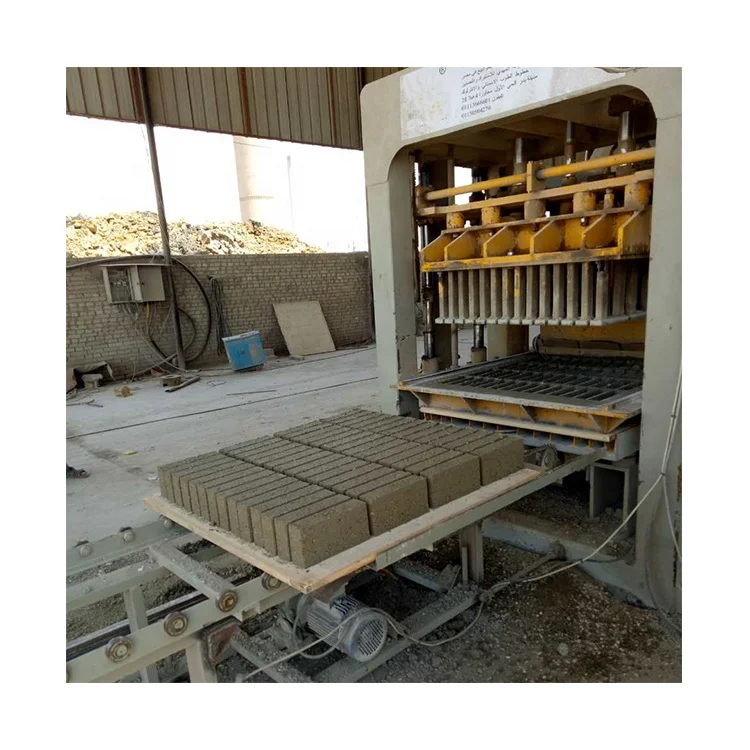
At the entry level, mobile egg-laying machines produce blocks directly on a concrete floor without pallets, suitable for on-site contractor use but limited in format variety. Semi-automatic stationary machines introduce fixed pallets and vibration pressing, raising consistency while keeping investment moderate. The QT10-15 automatic hydraulic concrete block making machine manufacturer tier adds PLC-controlled batching, automatic pallet feeding and stacking, removing manual bottlenecks from the cycle and allowing format changes through mould swaps rather than line reconfiguration. [NEED_CITE: automation levels in concrete block production lines]
Reading the Specs That Determine Daily Reality
Hydraulic pressure of 16–21 MPa combined with platform vibration determines the compaction density of every block leaving the press. Higher pressure shortens the molding cycle but demands a stiffer mix; lower pressure extends the cycle and may leave porous blocks below the required compressive strength. The net wave swing feeding device distributes raw material evenly across the 1100 × 900 mm pallet before each press stroke, preventing density variation between the left and right sides of the mould. Moulds are fabricated from manganese steel with carburizing and quenching treatment, a process that hardens the cavity surface against abrasive aggregate wear. The 44 kW total machine power must be matched to a dedicated circuit at the buyer’s confirmed voltage and frequency, because voltage drop over long cable runs reduces vibration motor torque and lengthens each cycle.
The Hidden Cost of a Mismatched Pallet and Curing Area
When pallet size is chosen without measuring the existing curing racks and forklift capacity, the plant either pays for new racking or stacks wet blocks by hand beside the press. A pallet dimension that does not align with the curing chamber door width forces blocks to be re-stacked before entering the chamber, doubling handling labor and increasing edge damage before the cement has cured. [NEED_CITE: pallet handling impact on block breakage rates]
Why Source This Tier From a Single-Focus Supplier
Block machinery is the sole product category, so the press, mould, pallet and conveyor are engineered against the same cycle time rather than negotiated as separate purchase orders. Configuration starts from the buyer’s local aggregate sieve analysis and target block format, not from a catalogue default row. Mould drawings are produced for the specific formats the buyer’s regional market sells, including custom profiles when standard cavity layouts do not match local building codes. Automation level is selectable, meaning a buyer can begin with semi-automatic pallet return and add the full stacking and cubing circuit later without replacing the press. Factory testing runs the exact mould and mix ratio the buyer will use on-site, generating a test record before the machine is dismantled for container loading.
Documentation & Verification
- Line layout drawing stating the block format assumed for each output figure
- Machine specification sheet with hydraulic schematic and electrical wiring diagram
- Mould drawing and format list matched to buyer’s regional building codes
- Voltage, frequency and PLC display language confirmation form before production
- Factory test record on buyer’s specified mix ratio and block format before dispatch
Installation, Commissioning & Support
- Foundation plan sized for the 9350 × 2320 mm footprint and 10,000 kg dynamic load
- Dedicated power circuit confirmed for 44 kW at buyer’s exact voltage and frequency
- Machine arrives dismantled; on-site assembly aligns the gantry frame to curing rack height
- First-run commissioning sets hydraulic pressure between 16–21 MPa per the mix design
- Operator training covers PLC menu navigation, mould change sequence and daily greasing points
- Wear parts list identifies mould cavity inserts and hydraulic seals for first reorder
Preparing Your Inquiry
Provide the block formats your local market sells most frequently, along with target daily volume for each format. Include the sieve analysis of available aggregate and the cement brand you intend to use, so the mix design can be matched before the mould cavity layout is finalized. Confirm your site’s voltage, frequency and preferred PLC display language to avoid commissioning delays after the machine arrives.
Frequently Asked Questions
Q: How is the daily capacity figure calculated for the QT10-15?
A: Each capacity line names the block format, cavity count and cycle time. For example, 18,000 hollow blocks per day assumes a 400×200×200 mm block, ten cavities per mould and a 16–20 second cycle, calculated over a standard shift. Different formats yield different totals, so always match the figure to the block you actually produce.
Q: Where does the QT10-15 sit compared to semi-automatic and mobile machines?
A: The QT10-15 is in the high-capacity automatic tier, featuring PLC-controlled batching, automatic pallet feeding and stacking. Semi-automatic models require manual pallet return, while mobile egg-laying machines produce blocks directly on a floor without pallets, offering lower output but minimal infrastructure.
Q: What plant footprint does this automatic tier require?
A: The press itself occupies roughly 9.35 × 2.32 m, but the full line including batching, mixing, conveyor and stacking area needs a considerably larger bay. Curing rack length depends on pallet circulation speed and the target daily output, which should be calculated before pouring the foundation.
Q: How are voltage and PLC language confirmed before shipment?
A: The buyer supplies local voltage, frequency and preferred display language during the inquiry stage. A confirmation form is signed before production begins, ensuring the motor winding ratio and PLC firmware match the destination site, preventing commissioning delays after arrival.

 Automatic block machine