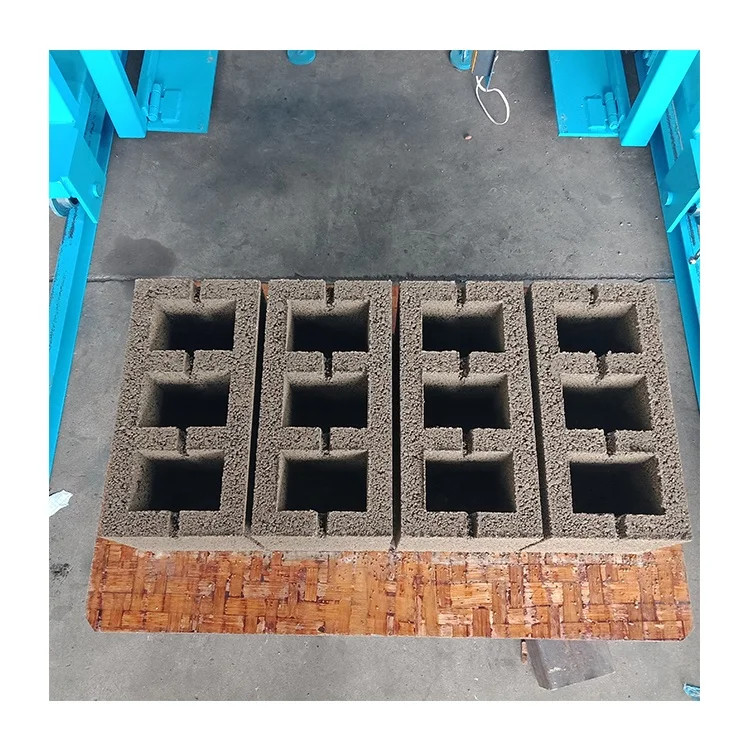
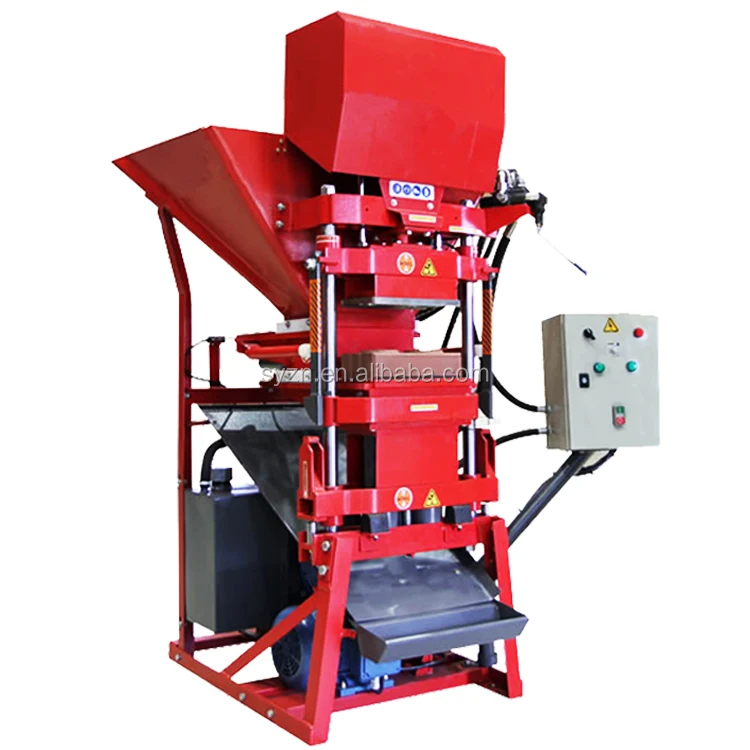
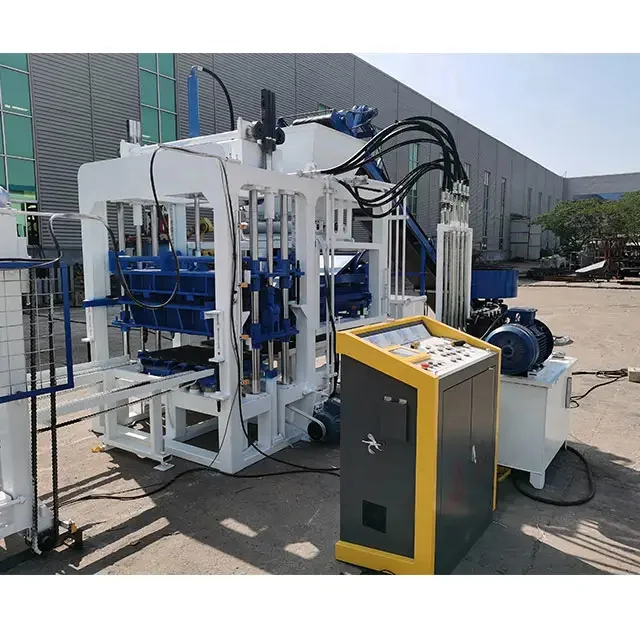
Single-Machine Focus, Fully Matched System — the QT10-15 block machine, moulds, pallets, and handling equipment are specified together against your local aggregate and target block format, not sourced as separate components and forced to work.
Technical Specifications
| Parameter |
Value |
| Model |
QT10-15 |
| Product Type |
Automatic Hydraulic Concrete Block Making Machine |
| Rated Power |
44 kW |
| Voltage & Frequency |
Configurable to local standard (basis not stated in source — confirm before production) |
| Control System |
PLC, fully automatic |
| Overall Dimensions (L×W×H) |
9350 × 2320 × 2950 mm |
| Net Weight |
10,000 kg |
| Hydraulic Pressure |
16–21 MPa |
| Main Vibration Form |
Platform vibration |
| Molding Cycle |
15–20 seconds (varies by block format) |
| Pallet Size |
1100 × 900 mm |
| Frame Structure |
Gantry frame type, super steel, shock resistant |
| Mould Material |
Manganese steel, carburizing and quenching treatment, rated for 100,000 uses without deformation |
| Material Feeding |
Driving type storage mode, net wave swing feeding device |
| Mould Formats |
Hollow block, porous block, standard block, pavers, interlocking blocks, curbstone, colored pavers |
| Raw Materials |
Fly ash, slag, gangue, river sand, gravel, cement, crushed stone, dust, other industrial waste |
| Optional Line Components |
Batching machine (PL1200), mixer (JS750), 8 m conveyor belt, stacker |
| Output — Hollow Block |
18,000 pcs/day based on 400×200×200 mm, 10 pcs/mould, 16–20 s cycle |
| Output — Porous Block |
67,200 pcs/day based on 240×115×90 mm, 28 pcs/mould, 15–20 s cycle |
| Output — Standard Block |
124,800 pcs/day based on 240×115×53 mm, 52 pcs/mould, 15–17 s cycle |
| Standards |
CE declaration where applicable |
Application Suitability
| Application |
Material or Output |
| High-volume hollow block plant |
Crushed stone, cement, fly ash — 400×200×200 mm hollow blocks, 10 cavities per mould |
| Porous and permeable brick production |
Slag, gangue, river sand blends — 240×115×90 mm format |
| Standard solid brick supply |
Cement and local aggregate — 240×115×53 mm, 52 pcs per mould |
| Paving and interlocking block lines |
Colored face mix with base aggregate — curbstone, pavers, interlocking formats |
| On-site contractor production |
Project-specific mix designs using locally available sand and gravel |
| Multi-format concrete product plant |
Single QT10-15 automatic block machine manufacturer platform covering hollow, solid, paver, and curbstone |
What "High Daily Output" Actually Means for Your Block Format
Every capacity figure must name the block format, mould cavity count, and cycle time behind it — otherwise the number is marketing, not engineering.
I remember an African buyer who ordered a fully automatic line based on a brochure output number. When the machine arrived, his local aggregate had a much higher clay content than the test samples we used at the factory. Vibration and pressure settings had to be completely reworked on site, and his real daily throughput dropped to roughly half of what he expected. That gap was not the machine’s fault — it was a specification gap. The QT10-15 automatic block machine manufacturer capacity claims on this page are each tied to a specific block dimension, cavity count, and cycle range so there is no ambiguity at contract stage. [NEED_CITE: common causes of output shortfall in concrete block production]
Where the QT10-15 Sits in the Automatic Range
The QT10-15 occupies the upper tier of the full automatic block machine lineup. It is positioned for plants that need continuous high-volume output across multiple block formats without switching to a separate press for each product type. The 1100 × 900 mm pallet gives enough mould area to run large hollow blocks and high-cavity standard brick moulds on the same platform, which is the core reason this model appears in serious production plant shortlists rather than small workshop setups.
Matching the Press to the Rest of the Line
A press does not produce blocks alone — raw material feeding, mixing, pallet circulation, stacking, and curing rack handling must all keep pace. When any upstream or downstream station falls behind, the QT10-15 sits idle between cycles and the quoted output becomes unreachable. This is why the machine is offered alongside a defined batching, mixing, and conveyor configuration rather than as a standalone island. [NEED_CITE: block production line bottleneck analysis]
Reading the Specs That Matter Most
Hydraulic pressure in the 16–21 MPa range works together with platform vibration to compact the mix into the mould cavity. Higher pressure alone does not guarantee block strength — the vibration frequency and amplitude must match the gradation and moisture content of your specific aggregate. The net wave swing feeding device addresses a different problem: uneven material distribution across the mould, which causes density variation from one block to the next within the same cycle. The gantry frame in super steel absorbs continuous vibration shock over years of operation, preventing the structural loosening that lighter frames develop after the first few thousand hours. Pallet size at 1100 × 900 mm must align with the curing rack spacing and forklift tine width already in your yard — ordering pallets without checking these dimensions leads to costly handling workarounds.

The Cost of Skipping Configuration Detail
Buyers who confirm machine model and price without locking in voltage, frequency, and PLC display language often face weeks of delay at commissioning. The electrical cabinet arrives wired for a supply standard that does not match the local grid, and the operator cannot read the control screen. Moulds specified without reference to the buyer’s actual market formats sit unused while the factory scrambles to source replacements locally. These are not rare edge cases — they show up regularly on sites where the specification conversation stopped at the quotation line. [NEED_CITE: voltage and frequency standards by export market]
Why Source the QT10-15 Through This Range
Block machinery is the single focus here, so the QT10-15 is not assembled from unrelated supplier quotes — the press, moulds, pallets, and handling equipment are configured as one matched system. The capacity calculation you receive states the block format assumed for each output tier, not a single optimistic headline number. Mould design covers the formats your market actually sells, with custom drawings accepted when standard options do not fit. Automation level is selectable, meaning a plant can commission the QT10-15 in a semi-automatic pallet handling setup and add automatic stacking later as production stabilizes. Factory testing runs your target mould before dispatch, not a generic demonstration cycle.
Documentation & Verification
- Machine specification sheet confirming voltage, frequency, and PLC display language before production begins
- Line layout and capacity calculation naming the block format behind each output figure
- Mould drawing and format list for every block type in your product range, including custom designs
- Factory test record using your specified mould and target cycle time
- Packing photographs and customs documentation support for shipment
- Operation and maintenance manual with wear parts and mould replacement list
Installation, Commissioning & Support
- Foundation plan matching the 9350 × 2320 mm footprint and 10,000 kg operating weight
- Dedicated power circuit sized for the 44 kW rated load at your confirmed voltage and frequency
- On-site assembly and leveling of the gantry frame to maintain vibration alignment
- First-cycle parameter tuning — hydraulic pressure and vibration matched to your local aggregate sample
- Operator training covering PLC navigation, mould change procedure, and daily maintenance checkpoints
- Wear parts and mould supply list provided at commissioning for first reorder planning
What to Include in Your Inquiry
To configure the QT10-15 automatic block machine manufacturer proposal accurately, share your target block formats with dimensions, the daily output you need per format, and the raw materials available locally — ideally with a sample shipment so the mix can be tested before configuration is finalized. Confirm your site voltage and frequency, the PLC language your operators read, and whether you already have curing racks and forklifts that the pallet size must fit.
Frequently Asked Questions
Q: How is daily output calculated and what block format does each figure assume?
A: Each output figure on this page names the block dimension, mould cavity count, and cycle time range behind it. For example, 18,000 pieces per day assumes 400×200×200 mm hollow blocks with 10 cavities per mould and a 16–20 second cycle. If your target format differs, the calculation must be redone with your specific mould before the order is confirmed.
Q: What voltage, frequency, and PLC language will the machine be configured for?
A: These are confirmed with you before production starts, not assumed. The electrical cabinet is wired to your local supply standard and the PLC display is set to the language your operators read. Skipping this step is one of the most common causes of commissioning delay after the machine arrives on site.
Q: Which block formats can the QT10-15 produce on the 1100×900 mm pallet?
A: The platform supports hollow blocks, porous blocks, standard solid bricks, pavers, interlocking blocks, curbstones, and colored pavers. Mould cavity count varies by format — larger hollow blocks use fewer cavities per cycle, while standard bricks use up to 52. Custom mould drawings are accepted when standard formats do not match your market.
Q: Can the line start semi-automatic and upgrade later?
A: Yes. Automation level is selectable at order stage. A buyer can commission the QT10-15 with manual pallet handling and add automatic stacking and cubing modules later as production volume and operator familiarity grow. The press itself remains the same — only the peripheral handling stations change.
Q: How are pallets matched to the curing area and existing forklift?
A: The 1100 × 900 mm pallet must align with your curing rack spacing and forklift tine width. If your existing infrastructure was built around a different pallet size, the configuration must account for that before mould and handling equipment are finalized — otherwise blocks cannot move from press to curing without manual rehandling.

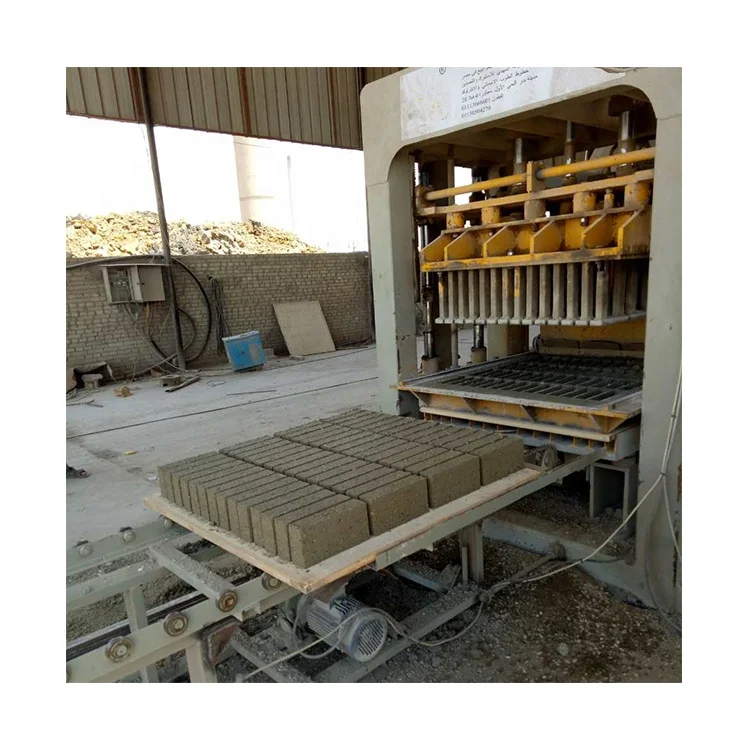
 Automatic block machine