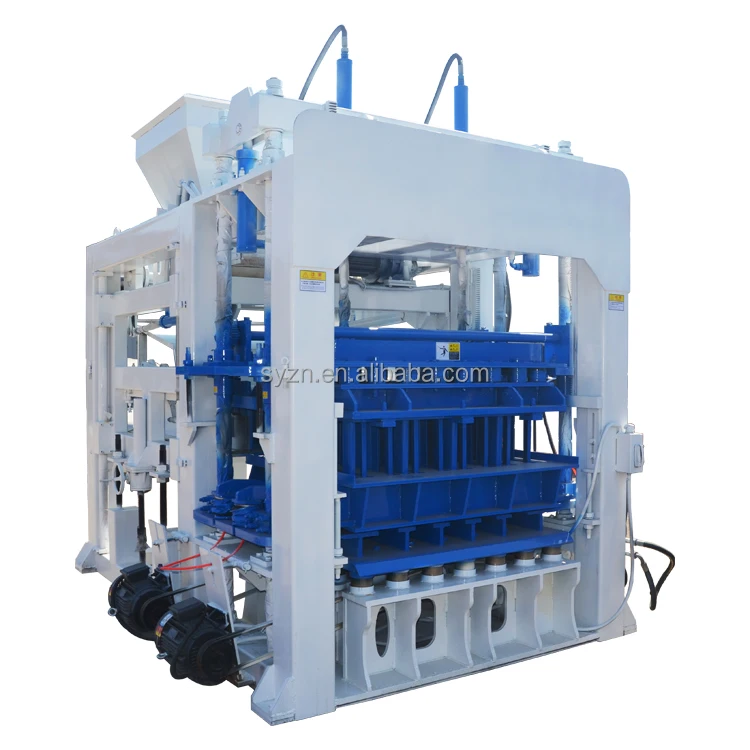
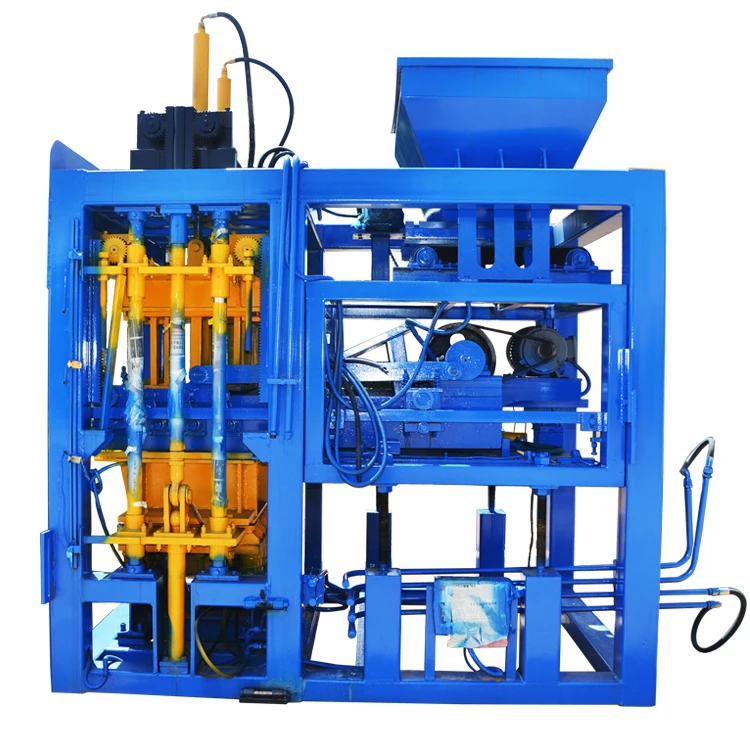
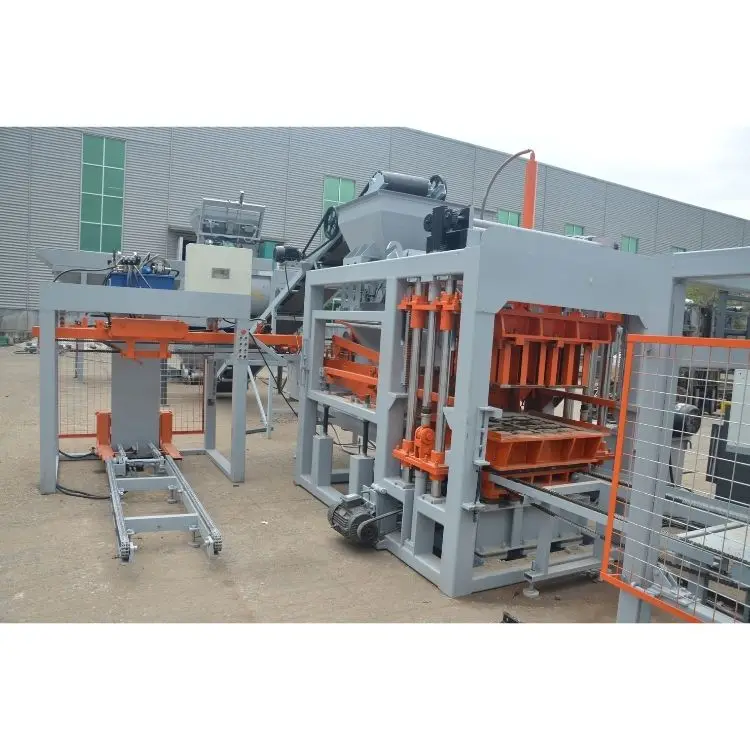
Matched System Focus — The QT10-15 is positioned as the high-capacity tier within our complete block machine range, letting buyers compare automation levels, plant footprints, and investment requirements before narrowing down to the right configuration.
Technical Specifications
| Parameter |
Value |
| Model |
QT10-15 |
| Product Type |
Automatic Block Making Machine |
| Vibration Technology |
Dynamic and static table with frequency conversion control |
| Vibration Acceleration |
20g |
| Vibration System |
Four-axis vibration technology with independent property rights |
| Synchronization System |
Powerful synchronization frame with forced synchronization gear shaft |
| Feeding System |
Press-in arch breaker with 360° rotation |
| Feeding Platform |
Replaceable wear-resistant plate |
| Noise Reduction |
Flexible vibration reduction of pressure head; adjustable pressure air bag vibration reduction in mold box |
| Mould Adaptability |
Hollow blocks, solid blocks, pavement bricks, slope protection bricks, interlocking bricks |
| Technology Base |
European technology, upgraded to European version of Industry 4.0 |
| Automation Level |
Automatic |
| Hydraulic Pressure |
(basis to be confirmed) |
| Vibration Force |
(basis to be confirmed) |
| Pallet Size |
(basis to be confirmed) |
| Cycle Time per Format |
(basis to be confirmed) |
| Output Capacity |
(basis to be confirmed) |
| Control System |
(basis to be confirmed) |
| Voltage & Frequency |
(basis to be confirmed) |
| Overall Dimensions |
(basis to be confirmed) |
| Net Weight |
(basis to be confirmed) |
Application Suitability
| Application |
Material or Output |
| Hollow block production for building walls |
Crushed stone, cement, sand, and local aggregate blends |
| Solid block manufacturing for load-bearing structures |
Dense concrete mixes with graded aggregate |
| Paving block production for roads and walkways |
High-strength concrete with fine aggregate and pigment |
| Interlocking brick production for landscaping |
Cement-stabilized soil or standard concrete mixes |
| Slope protection brick production for embankments |
Permeable concrete with coarse aggregate |
| Porous brick production for drainage applications |
Open-graded aggregate with controlled cement content |
Why "Cycles per Hour" Can Mislead You on a High-Capacity Automatic Block Making Machine
Always ask which block format the quoted cycle time assumes before comparing machines across tiers.
Many buyers evaluate an automatic block making machine manufacturer based on a single output number, only to discover after commissioning that the figure was measured on a small solid block while their actual product is a large hollow block requiring a longer press cycle. The vibration pressure needed, the mould cavity volume, and the curing behaviour all change with the format. I have watched production lines stall because the daily target was calculated on one format and the market demanded another. [NEED_CITE: block format impact on cycle time and daily throughput]

Placing the QT10-15 Within the Full Machine Range
The QT10-15 occupies the high-capacity automatic tier of our block machine lineup. Buyers moving up from a semi-automatic model will find a step change in forming consistency and reduced manual handling. Those evaluating a mobile or egg-laying machine for on-site work will see that the QT10-15 requires a fixed plant with dedicated curing space, which is a different investment profile altogether. Understanding where each tier sits helps you match the machine to your actual project scale rather than over- or under-specifying.
Automation Tiers and What Each Requires From Your Plant
Semi-automatic machines in our range rely on operators to move pallets between the press, curing area, and stacking zone. The QT10-15, by contrast, is configured for automatic pallet feeding, block stacking, and cubing — which means your plant layout must accommodate the full line of supporting stations. The press cycle, the pallet return conveyor, and the stacking robot must all be timed so the press never waits. [NEED_CITE: block production line synchronization between press and handling equipment] This is where a matched system from one manufacturer avoids the bottlenecks that arise when stations are sourced separately.
Reading the Specs That Actually Shape Your Output
The 20g vibration acceleration generated by the four-axis system determines how quickly concrete settles into the mould cavity and how uniformly it compacts. Higher acceleration shortens the press cycle, but only if the hydraulic pressure is matched to the mix design — a dry mix with coarse aggregate needs different pressure than a wet mix with fine sand. The dynamic and static table with frequency conversion allows the operator to adjust excitation force for each format, so a hollow block and a paving brick can both reach target density without changing hardware. The 360° press-in arch breaker addresses a common feeding problem: material bridging in the hopper that causes uneven fill and weak spots in finished blocks. The replaceable wear-resistant feeding platform means that abrasion from aggregate does not require a full hopper replacement, keeping maintenance costs predictable over the machine’s service life.
The Cost of Choosing the Wrong Tier for Your Project
A buyer who selects a semi-automatic machine for a high-volume contract will spend the difference on labour and pallet handling, and still fall short on consistency batch to batch. Conversely, specifying the QT10-15 for a small workshop producing limited formats means paying for automation capacity that sits idle while the fixed plant overhead remains. [NEED_CITE: capital equipment sizing errors in concrete block production] The mismatch often surfaces only after the first production run, when real cycle times and labour requirements diverge from the original plan.
Why Source the QT10-15 Through Our Range
We configure each QT10-15 against the buyer’s actual mix design and local aggregate rather than shipping a catalogue default, because vibration and pressure settings that work with Chinese river sand may not compact laterite or volcanic ash correctly. The mould design is matched to the formats your market sells, including custom drawings when standard moulds do not cover your specification. Automation level is selectable within our range, so a buyer can enter at semi-automatic and move to full automatic as demand grows. Installation includes on-site commissioning with operator training so the crew understands format changeover, pallet handling, and daily maintenance from the first shift. Our documentation package covers the machine, the mould, the pallet, and the handling line as one system, which prevents gaps that appear when components are sourced from separate suppliers.
Documentation & Verification
- Line layout and capacity calculation stating the block format assumed for the QT10-15
- Machine specification sheet with voltage, frequency, and PLC display language confirmed
- Mould drawing and format list covering every block type in your product mix
- Hydraulic and electrical schematic for the QT10-15 press and supporting stations
- Factory test record documenting actual cycle times on your specified format
Installation, Commissioning & Support
- Foundation plan sized to the QT10-15 vibration load and synchronization frame weight
- Electrical supply matched to confirmed voltage and frequency before the machine leaves the factory
- Dismantling and container loading plan so the four-axis vibration assembly arrives undamaged
- On-site commissioning with cycle time verification on your actual block format and mix
- Operator training covering mould changeover, PLC navigation, and daily wear-part inspection
- Wear parts and mould list specifying replacement intervals for the feeding platform and vibration components
What to Share Before Requesting a Quotation
To place the QT10-15 correctly within our range, we need to know the block formats your market requires, the daily output target per format, and the raw materials available locally including aggregate type and cement source. Share your site dimensions and existing curing area layout so we can confirm whether the full automatic line fits or whether a semi-automatic tier is more practical. Confirm your local voltage and frequency, and let us know the preferred PLC display language so commissioning proceeds without delay.
Frequently Asked Questions
Q: How do I verify the QT10-15’s output capacity against the specific block format I produce?
A: We provide a capacity calculation that states the exact block format, mould cavity count, and cycle time used for the figure. You compare this against your target format and daily requirement. If your format differs from the test standard, we recalculate before the order is confirmed so there are no surprises after commissioning.
Q: Where does the QT10-15 sit in the range compared to semi-automatic and mobile block machines?
A: The QT10-15 is the high-capacity automatic tier, designed for fixed-plant operations with full pallet handling and stacking. Semi-automatic models in our range require manual pallet movement and suit lower-volume plants. Mobile and egg-laying machines produce blocks directly on the ground without pallets and are suited for on-site project work rather than commercial block sales.
Q: What automation level does the QT10-15 offer, and can I start semi-automatic and upgrade later?
A: The QT10-15 is configured as a fully automatic line, but our range includes the option to begin with semi-automatic pallet handling and add automatic stacking and cubing later. The press itself remains the same model; the upgrade involves adding supporting equipment and updating the PLC program to control the new stations.
Q: What plant footprint and supporting equipment does the QT10-15 automatic line require?
A: The full line includes raw material feeding, mixing, pallet feeding, the press, block stacking, and curing rack handling. Each station must be spaced so pallets move without queuing. We provide a line layout drawing showing the total footprint, including curing rack area, so you can confirm your site accommodates the complete system before ordering.
Q: How are voltage, frequency, and PLC language confirmed before the machine leaves the factory?
A: These details are confirmed during the quotation stage and recorded on the machine specification sheet. The PLC display language is set before the factory test, so you can review the interface during video inspection. Any mismatch is corrected before shipment, avoiding commissioning delays caused by incompatible electrical supply or unreadable menus.

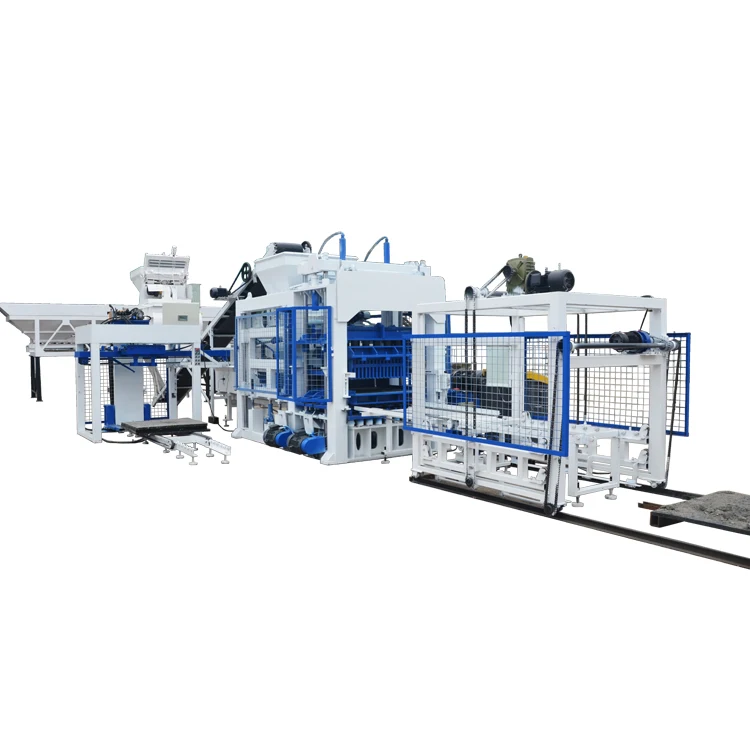
 Automatic block machine