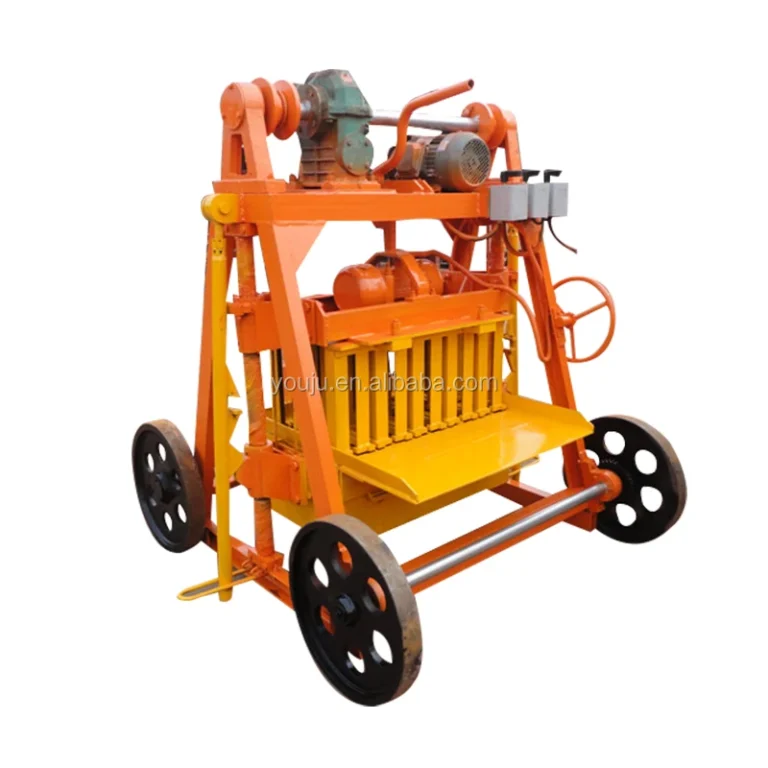
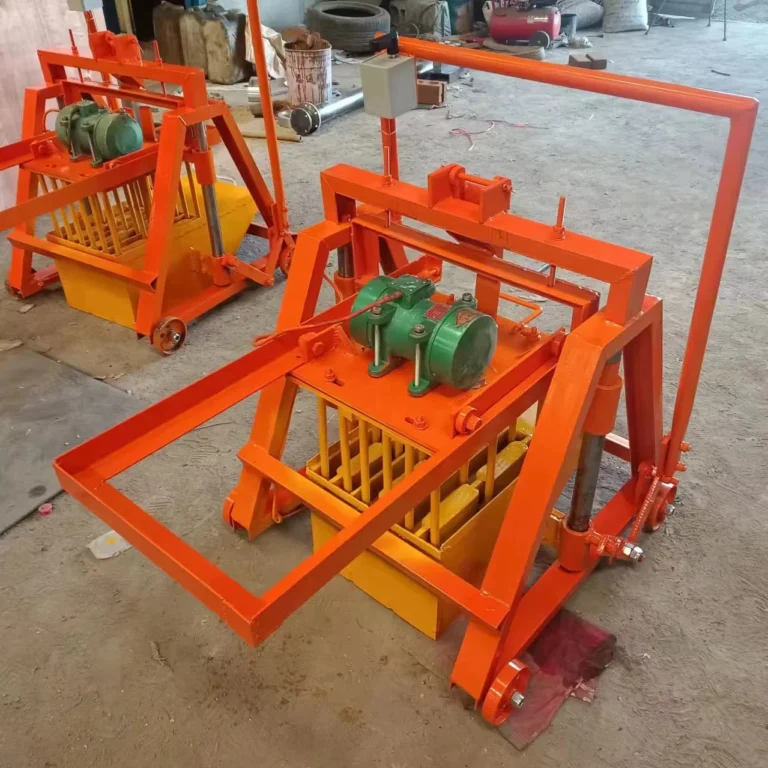
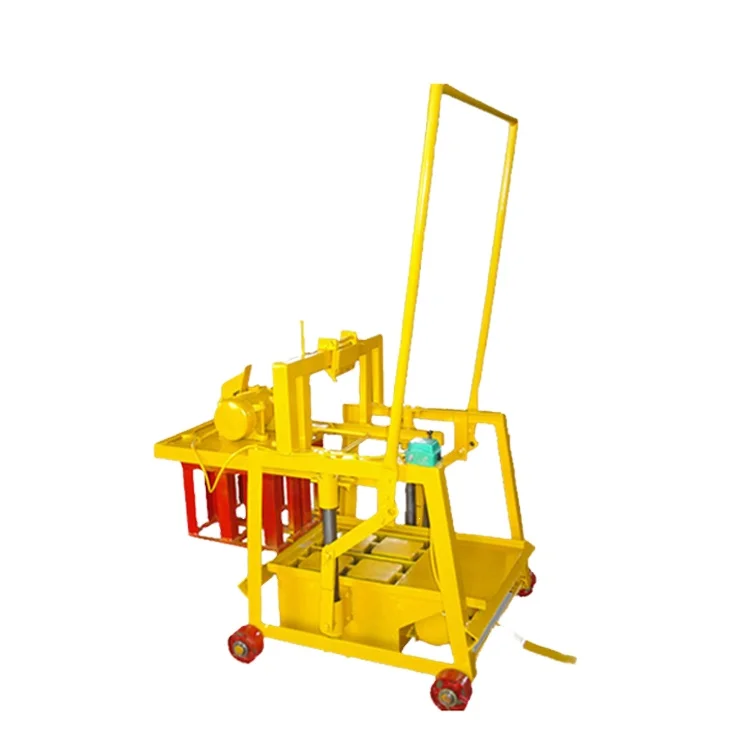
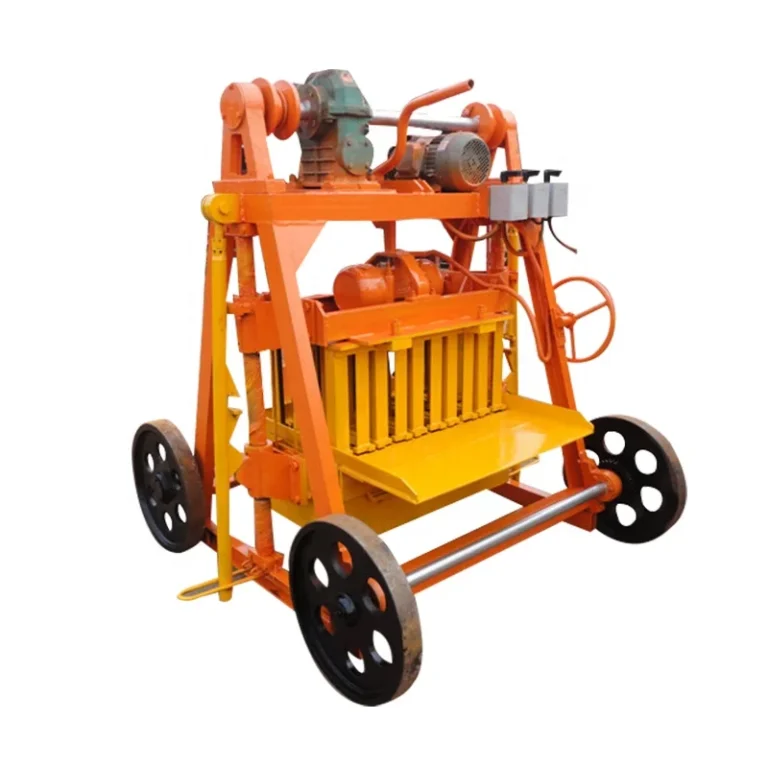
Matched System Configuration — the QMY4-30 is specified as a complete mobile unit with matched moulds, pallets, and handling, not assembled from separate suppliers.
Technical Specifications
| Parameter |
Value |
| Model |
QMY4-30 |
| Product Type |
Mobile Concrete Block Making Machine |
| Rated Power |
5 kW |
| Molding Cycle Time |
30 seconds per mold |
| Overall Dimensions |
1200 × 1200 × 1100 mm |
| Net Weight |
950 kg |
| Raw Materials |
Cement, sand, crushed stones, slag |
| Mould Change Capability |
Hollow block and solid brick formats |
| Output Capacity |
480 pcs/hour based on 400×200×200mm hollow block, 4 pcs/mold |
| Output Capacity |
600 pcs/hour based on 400×150×200mm hollow block, 5 pcs/mold |
| Output Capacity |
840 pcs/hour based on 400×100×200mm hollow block, 7 pcs/mold |
| Automation Level |
Manual operation |
| Voltage & Frequency |
Basis not stated in source — confirm block format / material / thickness |
| Hydraulic Pressure |
Basis not stated in source — confirm block format / material / thickness |
| Vibration Force |
Basis not stated in source — confirm block format / material / thickness |
| Control System |
Basis not stated in source — confirm block format / material / thickness |
Application Suitability
| Application |
Material or Output |
| Small-scale block production |
Cement, sand, and crushed stone aggregates for entrepreneurs launching a block plant |
| On-site construction projects |
Mobile hollow block and solid brick production directly at the building site |
| Low-investment block manufacturing |
Flexible mould formats allowing production of multiple block types from one unit |
What "480 Pieces per Hour" Actually Means for Your Project
Capacity figures are meaningless unless tied to a specific block format and material condition.
Many quotations list a peak output number without stating which block size it assumes. The QMY4-30 output varies significantly depending on the format being run. A 400×200×200mm hollow block yields 4 pieces per mold at 480 pieces per hour, while a 400×100×200mm hollow block yields 7 pieces per mold at 840 pieces per hour. The difference is substantial, and buyers who expect the higher figure while producing larger blocks face a shortfall from day one.
I once worked with an entrepreneur in West Africa who ordered a mobile unit based on a headline capacity number. His market demanded the 200mm-wide hollow block, which ran at the lowest output tier. The mismatch was not caught until the machine was on-site producing. Since then, every capacity calculation I prepare states the exact format and aggregate condition. [NEED_CITE: capacity calculation standards for concrete block machinery]

Where the QMY4-30 Fits in the Mobile Block Machine Range
The QMY4-30 sits at the entry tier of mobile block production. It is designed for buyers who need block-making capability without investing in a fixed plant with conveyors, batching systems, and curing chambers. The 1200 × 1200 mm footprint means the machine can be positioned on a prepared concrete slab at a job site and relocated as the project moves.
For a Mobile Block Machine manufacturer serving first-time plant owners, this tier removes the capital barrier. Buyers start producing hollow blocks and solid bricks immediately, using locally sourced cement and aggregate, without waiting for a permanent facility to be built.
On-Site Production Without Fixed Infrastructure
The manual operation level keeps the machine mechanically simple. There are no PLC panels to troubleshoot, no automated pallet feeders to maintain, and no hydraulic servo systems requiring specialist knowledge. An operator loads the mold, initiates the 30-second cycle, and strips the block manually.
This simplicity is a deliberate choice for the target buyer: construction contractors who need blocks at the site and entrepreneurs in markets where electrical reliability is inconsistent. The 5 kW power requirement runs from a standard site generator or grid connection without requiring a dedicated transformer. [NEED_CITE: on-site power supply requirements for small-scale construction equipment]
Power, Cycle Time, and Format Flexibility
The 5 kW rated power is allocated entirely to the vibration motor that compacts the concrete mix within the mold. At 30 seconds per mold cycle, the machine completes two cycles per minute regardless of which block format is loaded. What changes is the piece count per mold, which is determined by the cavity configuration for each block size.
The mould change capability covers hollow block and solid brick formats. Switching between them is a manual process involving unbolting the current mold and fitting the replacement. For a contractor producing hollow blocks for walls during one phase and solid bricks for paving or partition work during another, this flexibility means one machine covers both needs. The compact dimensions at 1200 × 1200 × 1100 mm and 950 kg weight allow the unit to be loaded onto a flatbed truck and moved between sites as project phases demand.
The Cost of Skipping the Site Visit Before Ordering
Buyers who order a mobile unit without confirming the local aggregate properties often discover that their mix design does not compact properly at the machine’s vibration setting. River sand with high clay content absorbs more water, changes the consistency, and extends the effective cycle time as the operator compensates for poor demolding. The rated 30-second cycle assumes a mix that releases cleanly.
Another frequent issue is voltage. Machines configured for 380V/50Hz shipped to a market running 440V/60Hz will experience motor overheating and premature bearing failure. The vibration motor is the first component to suffer. These problems are preventable when voltage, frequency, and aggregate conditions are confirmed before production begins. [NEED_CITE: voltage and frequency standards by export market]
Why Source This Machine Through a Single-Focus Supplier
Block machinery is our single focus, so the QMY4-30 is supplied as a matched system. The mold, pallet specification, and machine parameters are confirmed together, not sourced separately and assembled at the destination.
Configuration is set against the buyer’s actual mix design and local aggregate, not a catalog default. Mould design covers the specific formats the buyer’s market sells, and custom drawings are available when standard formats do not match local building codes.
The manual operation level means buyers can start with this entry tier and add automation to their operation later as volume grows. Installation guidance and operator training ensure the machine is running correctly from the first shift.
Documentation & Verification
- Capacity calculation sheet stating which block format each output figure assumes
- Machine specification sheet with confirmed voltage and frequency for destination market
- Mould drawing and format list for each cavity configuration included in shipment
- Factory test record demonstrating actual cycle times per block format before dispatch
- Packing photographs and customs documentation support for smooth import clearance
Installation, Commissioning & Support
- Requires a level concrete slab at the site matching the 1200 × 1200 mm machine footprint for stable operation
- Power connection must match confirmed voltage and frequency, with a dedicated circuit for the 5 kW load
- Machine ships fully assembled and requires only mould fitting and electrical connection on arrival
- First-run commissioning includes cycle time verification against each block format purchased
- Operator training covers mold change procedure, mix consistency assessment, and daily maintenance checks
- Wear parts list provided with recommended replacement intervals for vibration components and mold edges
What We Need From You to Build an Accurate Quotation
To prepare a configuration that matches your project, we need to know which block formats your market requires and the daily volume you expect to produce. Share the local aggregate type you plan to use, including sand source and stone size, so the mix can be validated against the machine’s vibration characteristics.
Confirm your site voltage and frequency, the language preference for any operational documentation, and whether you have existing pallets or curing racks that the machine needs to be compatible with. If you have a specific project deadline, state it early so lead time and shipping can be planned accordingly.
Frequently Asked Questions
Q: How is capacity verified and what block format is the basis for the stated output figures?
A: Each capacity figure is tied to a specific block format and mold cavity count. The QMY4-30 produces 480 pieces per hour on 400×200×200mm hollow blocks at 4 pieces per mold, 600 pieces per hour on 400×150×200mm at 5 pieces per mold, and 840 pieces per hour on 400×100×200mm at 7 pieces per mold. A factory test record confirms actual cycle times before dispatch.
Q: What voltage and frequency configurations are available for different destination markets?
A: The electrical configuration is confirmed during the quotation stage based on your site supply. Voltage and frequency must match exactly to prevent motor damage. We require written confirmation of your local standard before production begins to avoid commissioning delays after the machine arrives at your site.
Q: Which mould formats are available and how long does mould change take between formats?
A: The QMY4-30 supports hollow block and solid brick formats, with mold cavities sized to your required dimensions. Mould change is a manual procedure involving unbolting and refitting. We provide the procedure during operator training and include the necessary tools with the machine shipment.
Q: What is the machine footprint and what site preparation is required for mobile operation?
A: The QMY4-30 measures 1200 × 1200 × 1100 mm and weighs 950 kg. Site preparation requires a level concrete slab sufficient to support the machine weight plus operator and material loads. A dedicated 5 kW electrical circuit at confirmed voltage and frequency must be available at the operating location.
Q: What documentation is provided with shipment including specifications, test records, and customs support?
A: Shipment includes the machine specification sheet, mould drawings, a capacity calculation by format, factory test records, packing photographs, and customs documentation support. An operation and maintenance manual covers daily procedures, wear parts replacement, and troubleshooting steps for common issues.

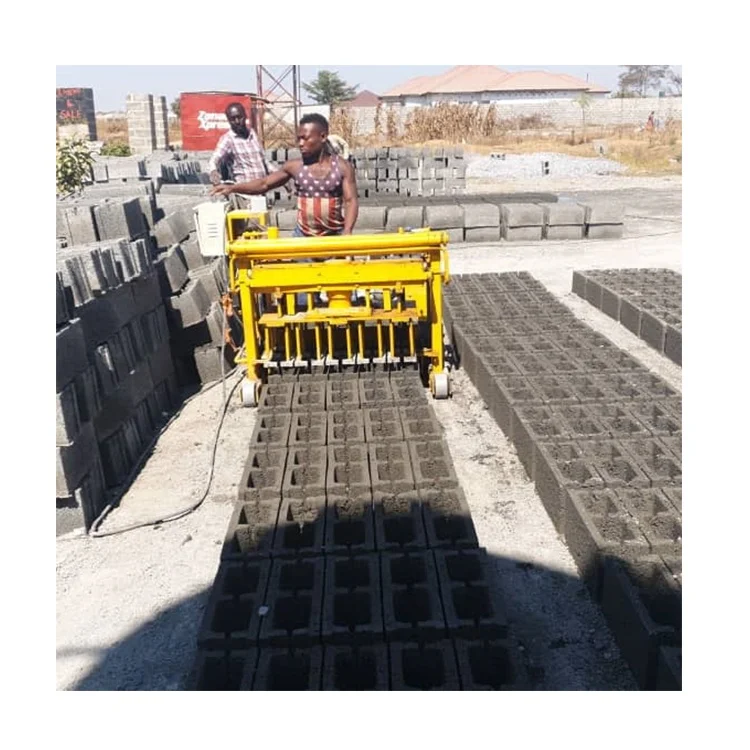
 Mobile block machine