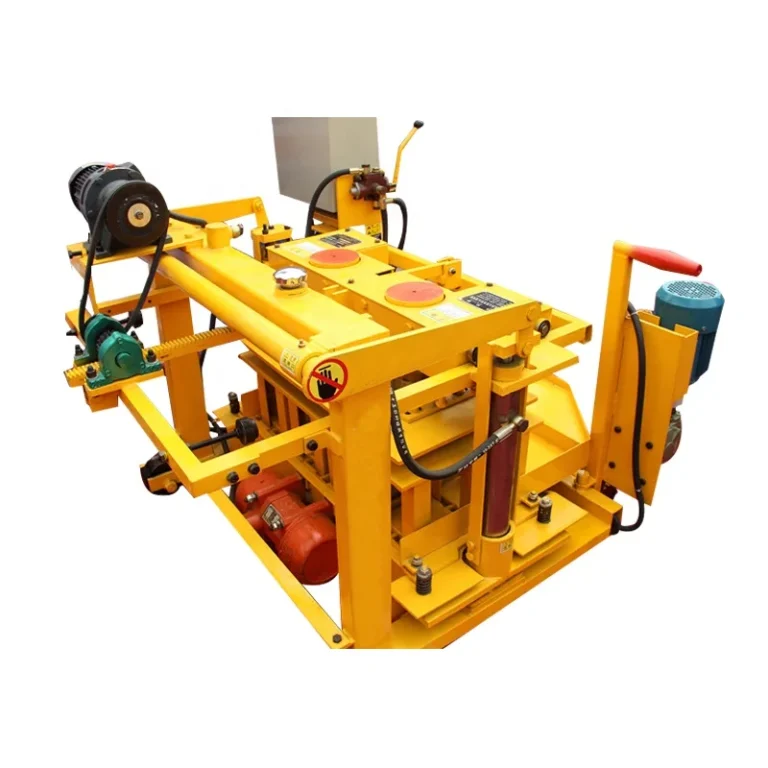
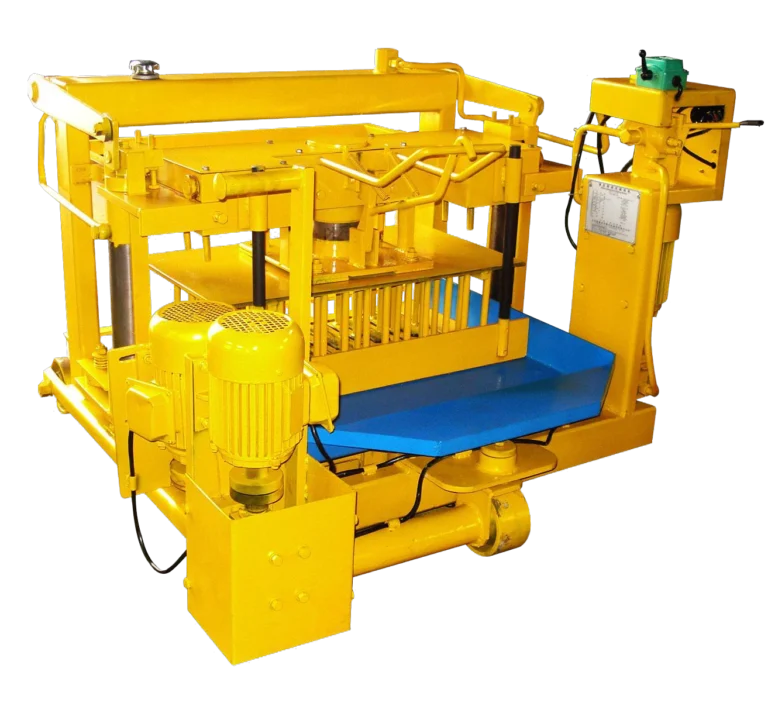
Full machine range coverage — The QMY10-15 anchors the mobile tier of our block machinery lineup, built for buyers who need production without fixed plant infrastructure while keeping upgrade paths open to semi-automatic or automatic lines.
Technical Specifications
| Parameter |
Value |
| Product Type |
Mobile Concrete Block Making Machine |
| Model |
QMY10-15 |
| Molding Capacity |
10 pcs/mold |
| Molding Cycle |
10s–15s |
| Total Power |
16 kW |
| Output Capacity |
11,000 pcs/day (basis not stated in source — confirm block format, material, and thickness) |
| Vibration System |
Dual vibration motors |
| Hydraulic System |
Upper and lower demoulding with heat dissipator |
| Movement |
Electric walking, hydraulic steering |
| Pallet Requirement |
None (egg-laying type) |
| Basic Equipment Included |
QMY10-15 host machine, JS7500 concrete mixer, dump truck |
| Optional Equipment |
PL1200 batching machine, cement silo, screw conveyor, loader |
| Mould Change |
Supports multiple brick formats by changing moulds |
| Automation Level |
Semi-automatic with hydraulic demoulding |
Application Suitability
| Application |
Material or Output |
| On-site hollow block production for building contractors |
Crushed stone, river sand, cement blends |
| Interlocking paver laying at housing developments |
Granite aggregate, quarry dust, cement |
| Solid brick runs for perimeter walls and foundations |
Fly ash, sand, lime or cement mixes |
| First plant setup by entrepreneurs with limited infrastructure |
Locally available aggregate with standard cement ratios |
What "11,000 Blocks per Day" Actually Means on a Mobile Block Machine
Daily output on a mobile block machine manufacturer line depends entirely on which block format you run and how fast your crew feeds the mixer.
The QMY10-15 spec sheet quotes 11,000 pieces per day, but that number shifts the moment you swap from a standard hollow block to a taller interlocking paver or a thicker kerbstone. I once watched a contractor in West Africa lose an entire afternoon because his crew assumed the quoted capacity applied across all moulds — it did not. Before you sign a purchase order, confirm which block size the daily figure assumes, then recalculate for the formats your market actually buys [NEED_CITE: block format impact on cycle time and daily output].

Where the Mobile Tier Sits in the Full Range
The QMY10-15 occupies the entry point for buyers who want concrete block production without committing to a fixed plant, pallet inventory, or curing racks. It lays blocks directly on the ground and walks forward, which removes the entire pallet handling loop that semi-automatic and automatic tiers require. For a mobile block machine manufacturer, this tier answers one question clearly: can you produce acceptable block quality with minimal site preparation?
Ground Conditions and the Egg-Laying Advantage
Egg-laying machines like the QMY10-15 need a flat, compacted surface — poured concrete is ideal, but well-graded gravel works for temporary sites. The electric walking motor and hydraulic steering let one operator reposition the unit between runs without a forklift. This matters on housing projects where the production area shifts as the build progresses [NEED_CITE: ground preparation standards for mobile block laying]. The trade-off is surface finish: blocks laid on rough ground pick up texture underneath, which is acceptable for structural hollow blocks but less so for face brick.
Reading the Specs That Actually Matter
The dual vibration motors work alongside hydraulic pressure to compact the concrete mix inside the mould. Vibration settles aggregate into voids; hydraulic pressure squeezes out trapped air. If one is strong and the other weak, you get blocks with dense tops and crumbly cores. The 16 kW total power rating must cover both vibration motors and the hydraulic pump simultaneously, so check that your site generator can sustain that draw without voltage drop. The heat dissipator on the hydraulic circuit keeps oil temperature stable during continuous runs, which matters when ambient temperatures exceed typical workshop conditions. Mould change on the QMY10-15 involves unbolting the current mould, lifting it out, and securing the replacement — plan this for shift changes rather than mid-run to avoid losing cycle rhythm.
When the Wrong Configuration Costs You Later
A mobile machine configured for a standard sand-and-cement mix will struggle if your local aggregate is volcanic rock, coral sand, or recycled demolition rubble. The vibration frequency and hydraulic pressure need adjustment to match particle shape and absorption rate. I shipped a unit to a region where the only available sand was extremely fine, and the blocks cracked during curing until we recalibrated the vibration timing and adjusted the water ratio [NEED_CITE: aggregate type influence on vibration settings]. Buyers who skip this conversation before shipment end up paying for remote troubleshooting and replacement parts they did not budget for.
Why Source the QMY10-15 Here
Block machinery is our single focus, so the QMY10-15 host machine, JS7500 mixer, and dump truck are specified as one matched set rather than assembled from unrelated suppliers. We set the hydraulic pressure and vibration timing against your actual mix design and local aggregate before the machine leaves our Linyi facility. Mould design covers the formats your market sells, including custom drawings when standard sizes do not match. The automation level is selectable — start with the QMY10-15 and move to a semi-automatic or automatic line later without scrapping your initial investment. Installation support includes on-site commissioning and operator training so your crew knows mould change procedure, hydraulic checks, and daily maintenance before the first production week ends.
Documentation & Verification
- Machine specification sheet listing total power, vibration force, and hydraulic pressure ratings
- Capacity calculation stating which block format the daily output figure assumes
- Mould drawing and format list confirming achievable block types and dimensions
- Voltage, frequency, and PLC display language confirmation document before shipment
- Factory test record on your specified block format before dispatch
Installation, Commissioning & Support
- Flat, compacted ground area required; poured concrete pad recommended for consistent block underside finish
- 16 kW total power draw requires a dedicated circuit with correct voltage and frequency for your site
- QMY10-15 ships as a single host unit; JS7500 mixer and dump truck loaded separately in container
- Hydraulic pressure and vibration timing calibrated on your aggregate sample during factory test
- Operator training covers mould change, hydraulic system checks, and electric walking controls
- Heat dissipator inspected and hydraulic oil replaced at intervals stated in maintenance manual
What We Need Before Quoting
Tell us which block formats your market sells — hollow, interlocking, solid, or kerbstone — and the daily volume you need per format. Share the aggregate type available locally, including particle size and source, so we can match vibration and pressure settings before the machine ships. Confirm your site voltage, frequency, and preferred control language to avoid commissioning delays on arrival.
Frequently Asked Questions
Q: Which block format does the quoted daily output assume, and how does output change with other moulds?
A: The 11,000 pieces per day figure needs confirmation against a specific block size and material blend. Larger formats like 200mm hollow blocks yield fewer pieces per day than smaller solid bricks because the mould holds fewer cavities and cycle time may extend. We provide a capacity calculation per format before you commit.
Q: What voltage and frequency options are available for export markets?
A: The QMY10-15 electrical system is configurable before shipment to match your local supply standard. We confirm voltage, frequency, and phase requirement during the order stage and document the configuration so the correct motor windings and control components are installed at factory.
Q: How long does a mould change take, and how many formats can one machine run?
A: Mould change involves unbolting, lifting, and re-securing the new mould to the host frame. The QMY10-15 supports multiple formats — hollow, interlocking, solid brick — limited by mould availability. We recommend scheduling changes at shift boundaries to preserve cycle rhythm rather than switching mid-run.
Q: What supporting equipment keeps the mobile machine running without idle time?
A: The basic package includes a JS7500 concrete mixer and dump truck. For continuous production, add the optional PL1200 batching machine and cement silo so mixed material reaches the QMY10-15 hopper at a rate matching the molding cycle, preventing the machine from waiting between loads.
Q: How does the QMY10-15 compare to semi-automatic and automatic tiers in labour and output?
A: The QMY10-15 eliminates pallet handling entirely by laying blocks on the ground, reducing labour at the press but requiring more manual finishing and curing management. Semi-automatic and automatic tiers add pallet systems and stacking for higher throughput and consistency at greater infrastructure investment.

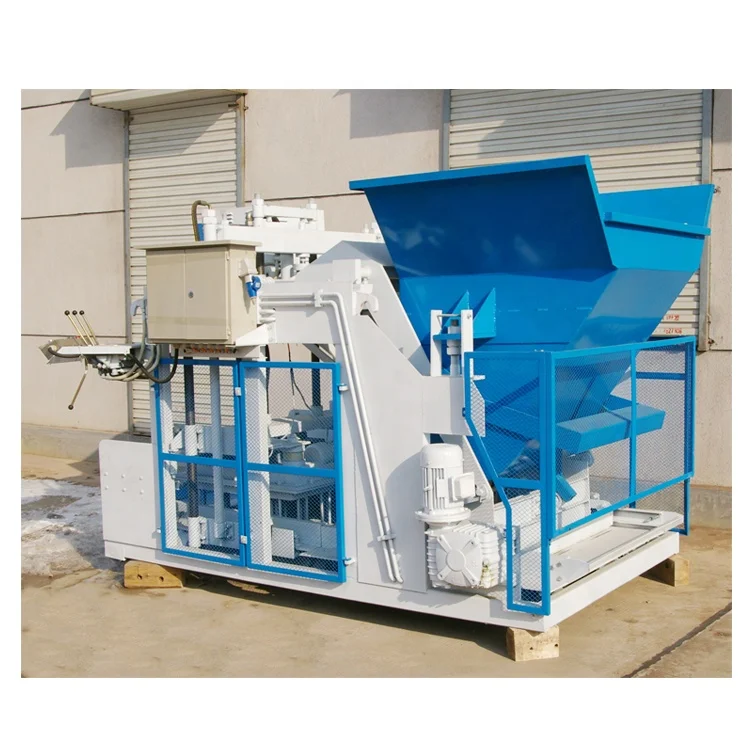
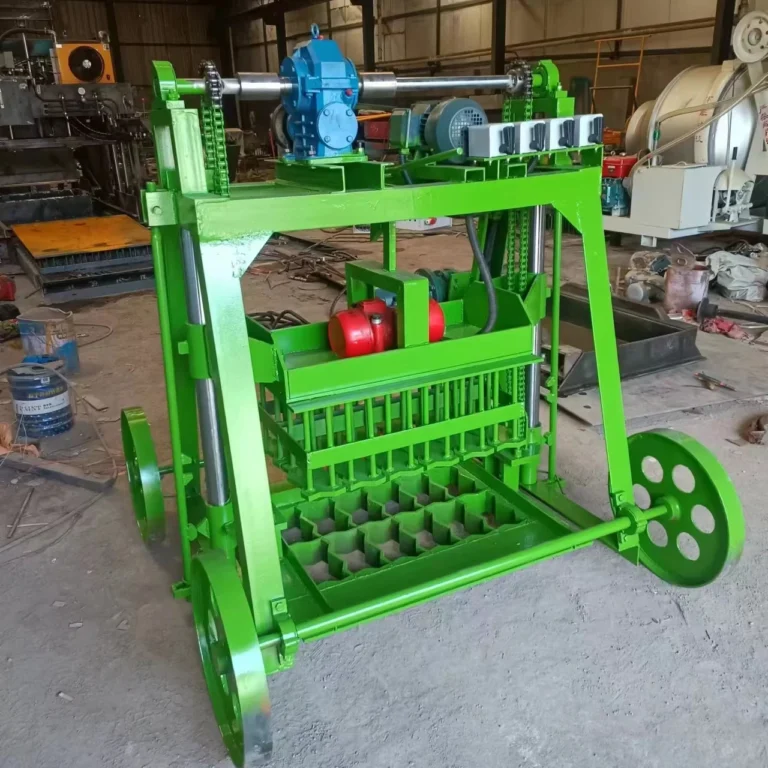 Mobile block machine