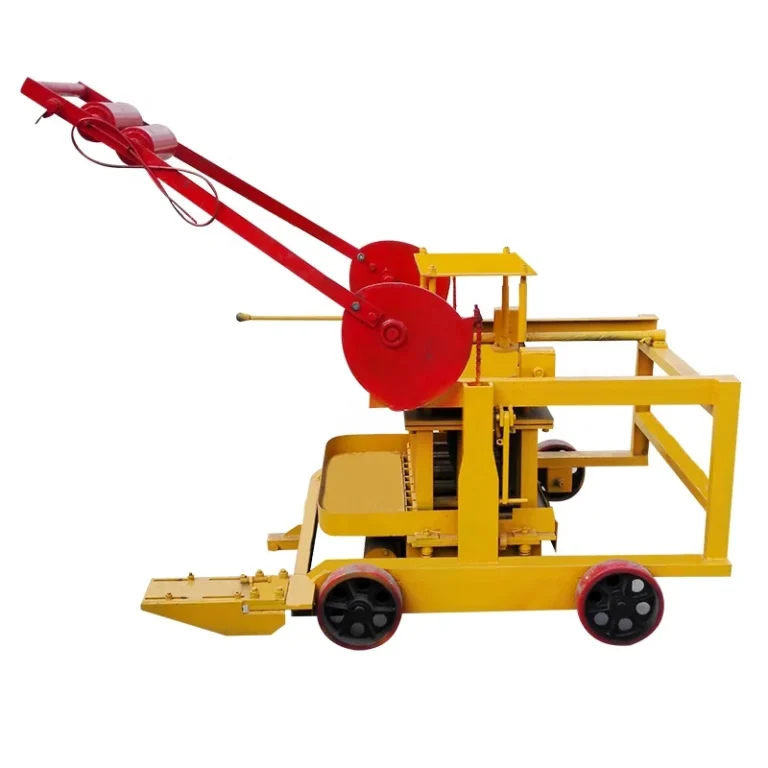
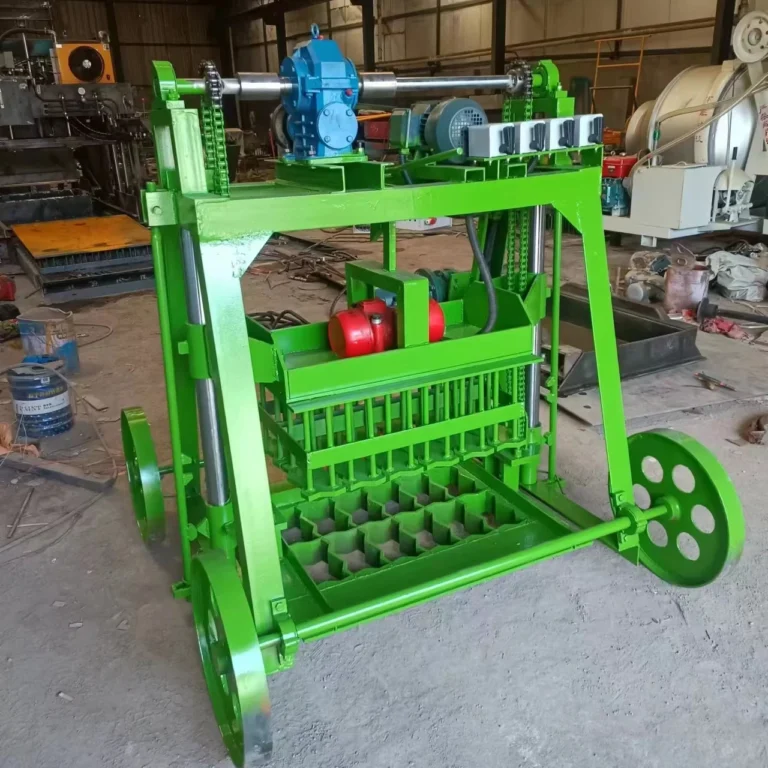
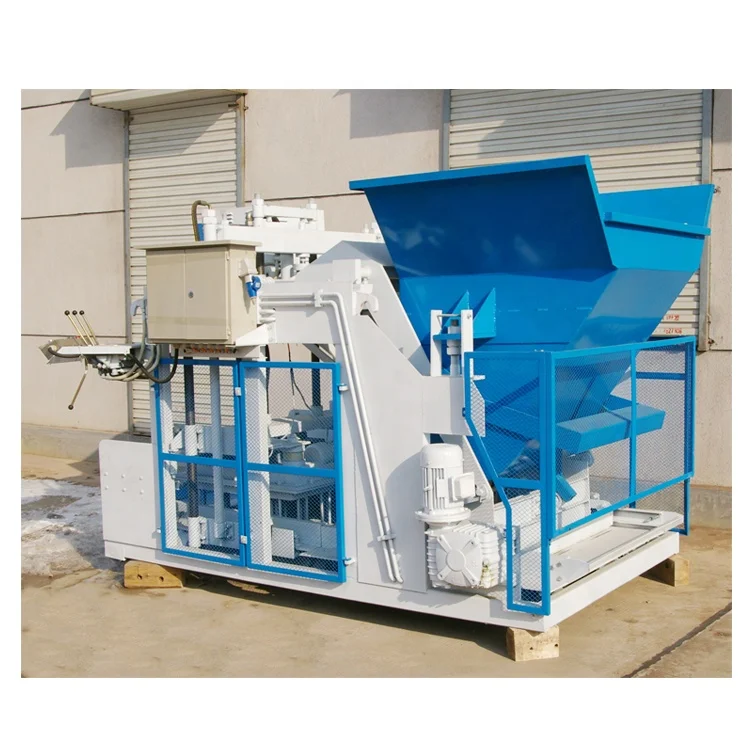
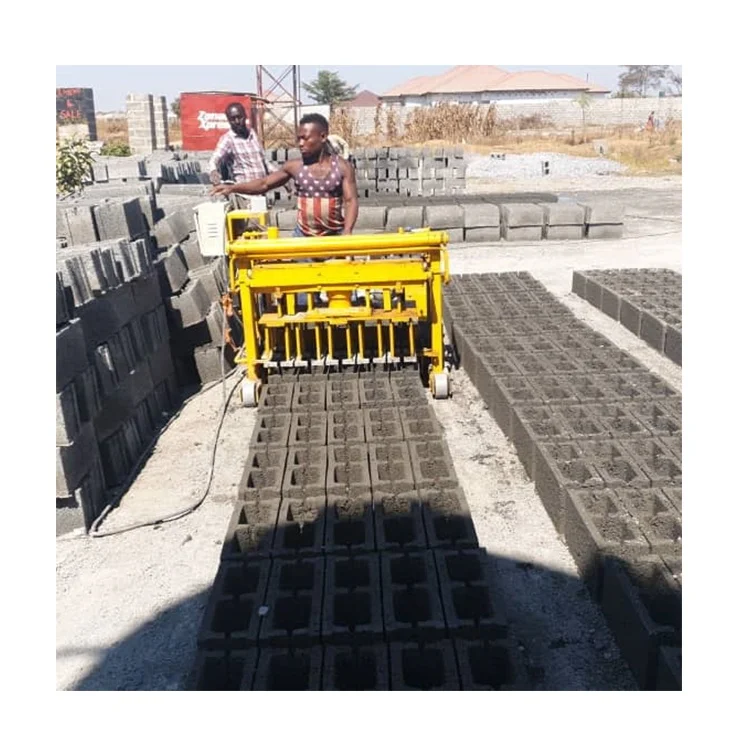
Complete Range Positioning — the QMJ4-45 sits at the entry tier of our mobile and stationary block machine lineup, producing hollow blocks directly on the ground without pallets so first-time buyers can validate their market before committing to a fixed plant.
Technical Specifications
| Parameter |
Value |
| Model |
QMJ4-45 |
| Product Type |
Mobile Egg Laying Block Making Machine |
| Molding Capacity |
4 pcs/mould (400×200×200 mm hollow block) |
| Alternative Mould Configurations |
5 pcs/mould (400×150×200 mm), 6 pcs/mould (400×120×200 mm) |
| Vibration Frequency |
2400 r/min |
| Vibration Method |
Mold vibration (twice-vibration of molding core) |
| Molding Cycle |
40–45 s |
| Productivity (400×200×200 mm, 4 pcs/mould, 40–45 s cycle) |
3000 pcs/day (8 hours) |
| Productivity (400×150×200 mm, 5 pcs/mould, 40–45 s cycle) |
3500 pcs/day (8 hours) |
| Productivity (400×120×200 mm, 6 pcs/mould, 40–45 s cycle) |
4500 pcs/day (8 hours) |
| Demold Method |
Manual |
| Turning Method |
Manual |
| Total Power |
6 kW |
| Power Source |
Diesel / Petrol engine |
| Pallet Requirement |
Not required (egg laying type) |
| Hydraulic Pressure |
Not applicable (mechanical vibration) |
| Control System |
None (manual operation) |
| Automation Level |
Manual |
| Standards |
CE |
| Warranty |
1 year for whole machine |
Application Suitability
| Application |
Material or Output |
| On-site hollow block production |
Crushed stone, sand, cement mixes laid directly on compacted ground |
| Small-scale cement block manufacturing |
Local aggregate and cement at construction or cement working yards |
| Multi-thickness hollow block production |
400×200×200 mm, 400×150×200 mm, and 400×120×200 mm formats |
| First block plant with low investment |
Diesel-powered operation in areas without stable grid electricity |
What "3000 Blocks per Day" Actually Means on a Job Site
The number only holds when the block format, mould cavity count and cycle time all match what the operator is actually running.
Many mobile block machine quotations quote a single daily output figure that assumes the smallest, fastest format. When the buyer switches to the larger hollow block the local market demands, daily output drops because fewer blocks fit per mould and each cycle still takes the same time. With the QMJ4-45, the output changes depending on which hollow block format you run — a detail the QMJ4-45 mobile block machine manufacturer must make explicit before the order is placed [NEED_CITE: block machine capacity calculation standards per format].

Where This Machine Fits Across the Full Block Machine Range
The QMJ4-45 occupies the entry position in the complete Shiyue block machine lineup. Above it sit semi-automatic stationary machines that use pallets and require a curing area, and further up are fully automatic lines with PLC-controlled batching, stacking and cubing. A buyer surveying options for a first or replacement machine can use this model to understand what manual egg-laying production delivers before deciding whether a higher tier is justified. The QMJ4-45 mobile block machine manufacturer positions this unit so buyers can start here and move upward as their market grows.
Output Tiers and Plant Footprint Compared
A fixed-plant machine requires a concrete floor, pallet inventory, curing racks and a roofed area large enough for the full line. The QMJ4-45 removes all of that infrastructure from the initial investment — the machine moves along a flat ground surface and leaves blocks where they fall. This means the plant footprint is simply the length of ground the operator covers in a shift. For a buyer comparing a mobile egg layer against a stationary press, the real question is not machine cost alone but total setup cost including pallets, curing space and material handling [NEED_CITE: mobile versus stationary block plant setup requirements].
Reading the Vibration and Mould Data
The twice-vibration of the molding core at 2400 r/min compacts the mix in two stages rather than one, which helps fill the mould cavity more evenly — important when producing the 400×200×200 mm hollow block where wall thickness is narrow and uneven compaction leads to weak corners. The mechanical vibration system, rather than hydraulic pressure, keeps the machine simple to maintain on sites without hydraulic service capability. The 40–45 second cycle time is consistent across all three hollow block formats, meaning the mould cavity count is the only variable that changes daily output. A six-cavity mould for the 120 mm wall block produces more units per shift simply because more blocks drop per cycle.
The Cost of Ordering Without Confirming Ground Conditions
An egg-laying machine drops fresh blocks onto the ground surface, so the ground must be flat, firm and level. If the surface is uneven or soft, blocks settle before the cement gains initial strength and wall dimensions drift out of tolerance. On one site I visited, the contractor had prepared only a rough cleared area and the blocks on the outer rows leaned visibly by midday. The QMJ4-45 mobile block machine manufacturer should flag ground preparation requirements during the inquiry stage, not after delivery [NEED_CITE: site preparation requirements for egg laying block machines].
Why Buyers Choose This Point in the Range
The QMJ4-45 is specified as one matched unit — machine, mould and engine — rather than assembled from separate suppliers, so vibration force and mould cavity design are aligned from the start. Capacity calculations are stated per block format with the cavity count and cycle time that produce the number, leaving no room for output surprises on the first production day. Mould options cover the three hollow block sizes most commonly sold in developing construction markets, and custom moulds can be produced from buyer drawings when the local market demands a format outside the standard range. Diesel engine power means no voltage confirmation or grid connection is needed before commissioning.
Documentation & Verification
- Line layout showing ground area needed per shift output for your chosen block format
- Machine specification sheet confirming engine type, vibration frequency and cycle time per format
- Mould drawing and format list with cavity counts for each hollow block size
- Factory test record on your target mix and block format before dispatch
- Operation and maintenance manual with wear parts list for diesel engine and mould
Installation, Commissioning & Support
- Flat, compacted ground surface required — no concrete foundation or curing racks for the QMJ4-45
- Diesel or petrol engine arrives ready to run — no electrical supply or voltage matching needed
- Mould change performed manually with basic tools; no hydraulic lines to disconnect on the QMJ4-45
- On-site commissioning covers mix adjustment to local aggregate and cycle timing confirmation
- Operator training includes demold technique and mould cleaning for consistent block dimensions
Sending a Useful First Inquiry
To size the right configuration, share the hollow block format your market sells most, the local aggregate type available, and whether diesel or petrol fuel is easier to source on your site. If you already own other block-making equipment or plan to upgrade to a pallet-based line later, mention that so the QMJ4-45 mobile block machine manufacturer can map the position in your long-term setup.
Frequently Asked Questions
Q: How is the QMJ4-45 daily output verified per block format and what assumptions are behind the number?
A: Each output figure assumes a specific mould cavity count and a 40–45 second cycle over an eight-hour shift. The 3000 pcs/day figure applies to the 400×200×200 mm block at four per mould, while the 4500 pcs/day figure applies to the 400×120×200 mm block at six per mould. Switching formats changes the daily total accordingly.
Q: Where does the QMJ4-45 sit in the full Shiyue machine range and what is the upgrade path?
A: It is the entry-tier mobile unit. Above it are semi-automatic stationary presses requiring pallets and a curing area, then fully automatic lines with PLC batching and stacking. Buyers often start with the QMJ4-45 to prove their market, then move to a pallet-based tier when volume justifies the infrastructure.
Q: What site conditions and ground preparation are needed before the QMJ4-45 can start production?
A: The ground must be flat, firm and free of debris so blocks settle evenly after demolding. A compacted soil or concrete-screeded surface works. No fixed foundation, curing racks or electrical connection is needed since the machine runs on a diesel or petrol engine.
Q: What mould formats are available and can custom moulds be supplied to buyer drawings?
A: Standard moulds cover 400×200×200 mm, 400×150×200 mm and 400×120×200 mm hollow blocks. Custom moulds can be manufactured from buyer drawings for formats outside this range, with cavity count and cycle time recalculated for the new dimensions.
Q: How does diesel-engine operation affect maintenance and spare parts compared to electric models?
A: Diesel engines require routine fuel filter, oil and air filter maintenance that most local mechanics can handle. Spare parts are widely available through engine distributors globally. Operating cost depends on local diesel prices, and there is no dependence on grid voltage stability.

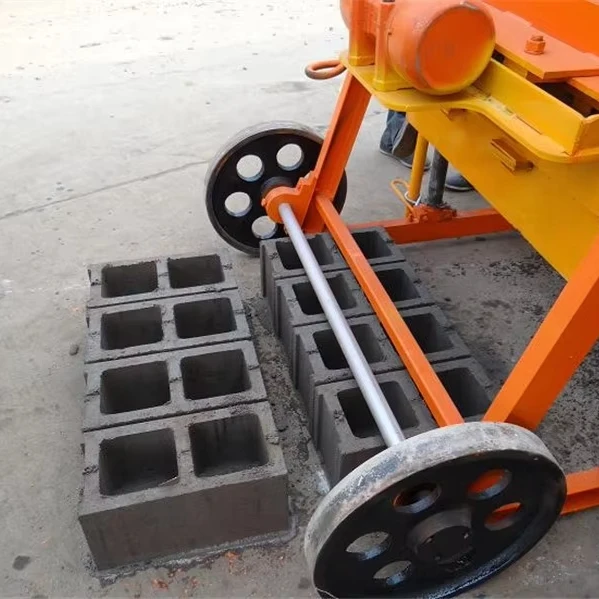
 Mobile block machine