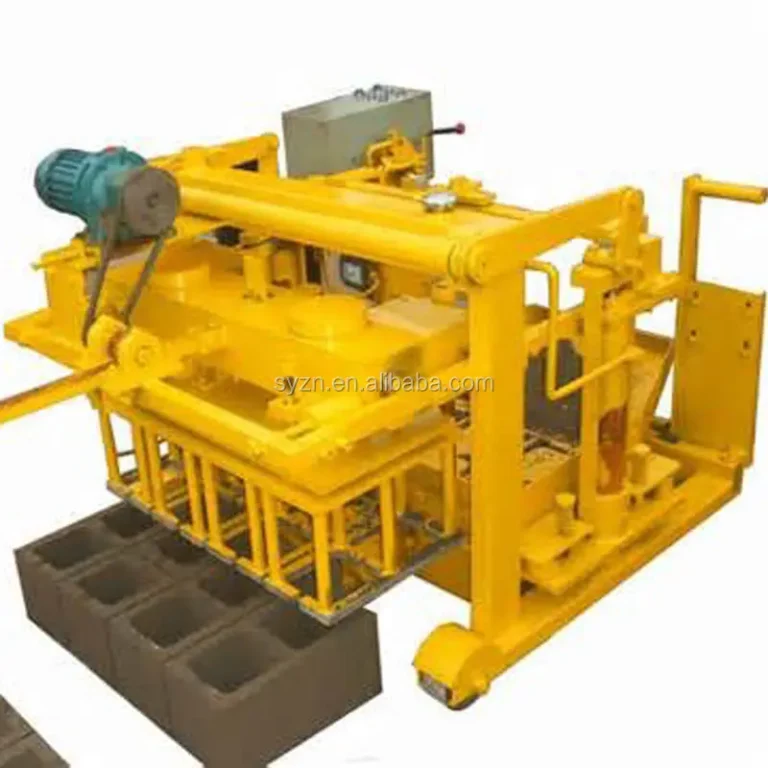
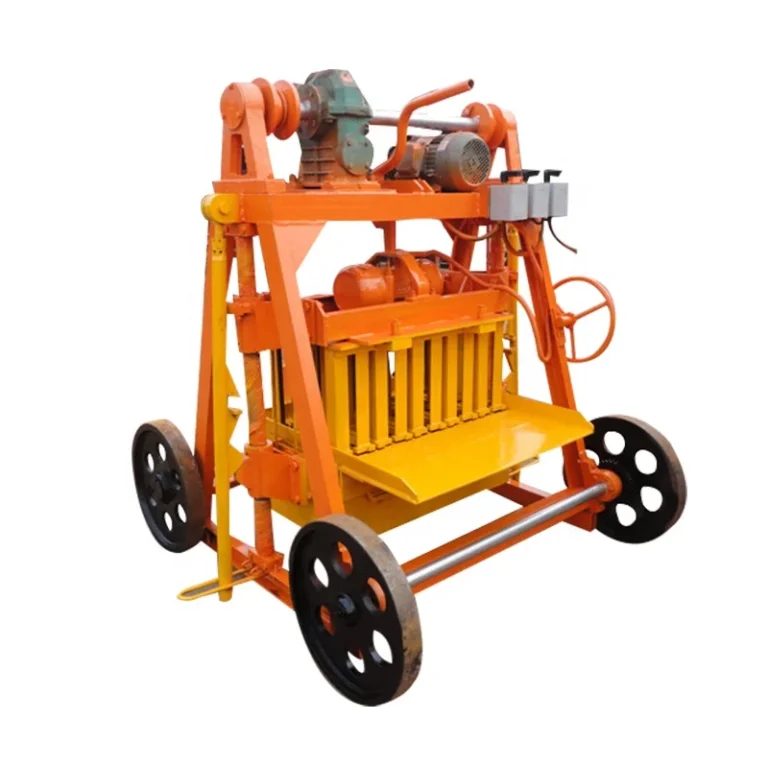
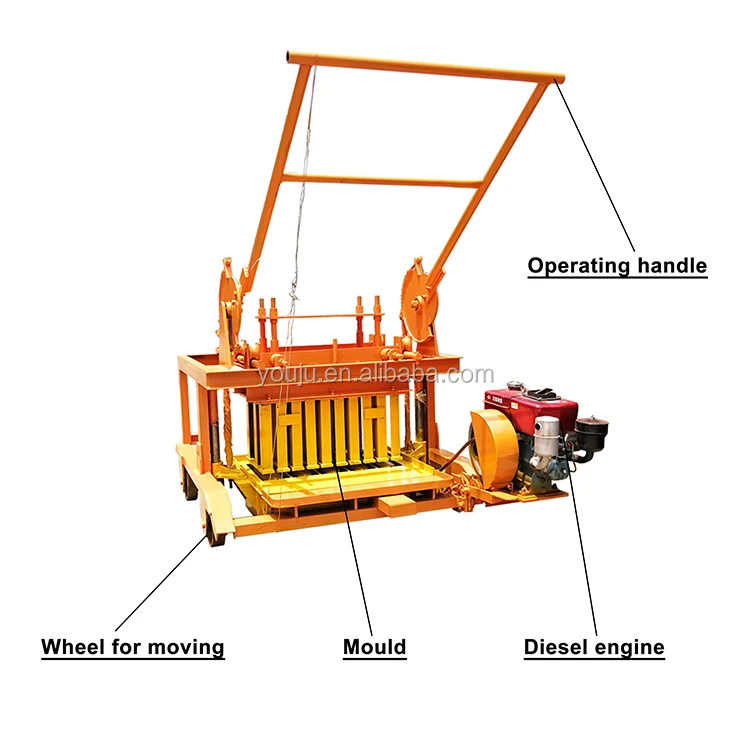
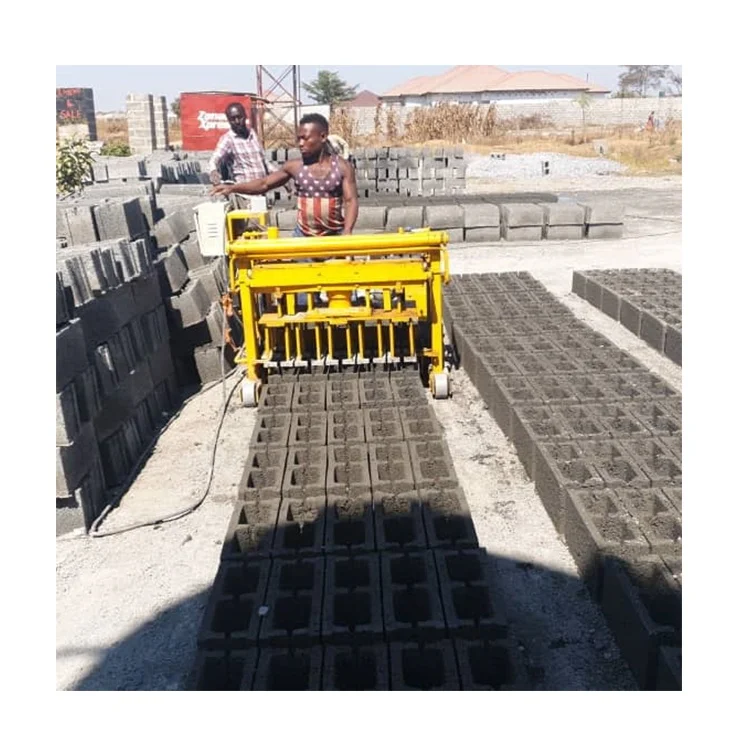
Matched System Design — machine, mould, pallet and handling specified together so the QMJ4-45 mobile egg laying block making machine performs as one unit, not a collection of separate purchases.
Technical Specifications
| Parameter |
Value |
| Model |
QMJ4-45 |
| Product Type |
Mobile Egg Laying Block Making Machine |
| Molding Capacity |
4 pcs/mould (based on 400×200×200 mm hollow block) |
| Vibration Frequency |
2400 r/min |
| Vibration Method |
Mold vibration |
| Molding Cycle |
45 s |
| Demold Method |
Manual |
| Turning Method |
Manual |
| Power Source |
Diesel/Petrol engine |
| Total Power |
6 kW |
| Automation Level |
Manual egg-laying (mobile) |
| Pallet Requirement |
Reduced consumption (no fixed pallets required for egg-laying operation) |
| Hollow Block Output — 400×200×200 mm |
4 pcs/mould, 40–45 s cycle, 3000 pcs/day (8 h) |
| Hollow Block Output — 400×150×200 mm |
5 pcs/mould, 40–45 s cycle, 3500 pcs/day (8 h) |
| Hollow Block Output — 400×120×200 mm |
6 pcs/mould, 40–45 s cycle, 4500 pcs/day (8 h) |
| Voltage & Frequency |
N/A (diesel/petrol engine powered) |
| Control System |
Manual operation |
| Warranty |
1 year for the whole machine |
Application Suitability
| Application |
Material or Output |
| On-site hollow block production for construction projects |
Crushed stone, river sand, and cement mixed to local aggregate gradings |
| Small-scale cement block manufacturing |
Volcanic ash, quarry dust, or gravel blended with Portland cement |
| Remote or off-grid sites without stable power supply |
Any locally sourced masonry aggregate where grid electricity is unavailable |
| Contractors producing blocks at their own building sites |
Standard concrete mixes for 400×200×200 mm and smaller hollow formats |
What "3000 Blocks per Day" Actually Means for Your Format
Capacity numbers without a block format attached are meaningless on any mobile egg laying block making machine manufacturer catalogue. The QMJ4-45 output is stated per hollow block size — 3000 pieces per 8-hour day assumes the 400×200×200 mm format at 4 pieces per mould. Switch to a 400×120×200 mm wall block and the same cycle yields 4500 pieces, because six fit in the mould instead of four. Most suppliers quote the highest possible figure and leave the buyer to discover the gap on site [NEED_CITE: common block machine capacity quotation practices in export markets].
I once watched a contractor in East Africa plan a housing project around a quoted daily output, only to find the figure assumed a solid paver his market did not buy. The machine ran fine; the math did not match his sales orders. That is why every capacity sheet we issue names the exact block format, cycle time, and mould cavity count behind each number.

Where the QMJ4-45 Sits in the Range
The QMJ4-45 occupies the entry tier of a mobile block machine range that extends upward through semi-automatic stationary presses and fully automatic lines with pallet feeders and stackers. Buyers choose this tier when the priority is low capital outlay, zero grid dependency, and the ability to move the press from one building site to the next. The trade-off is manual demoulding and turning, which keeps labour on the floor but removes hydraulic and PLC complexity from the maintenance equation. Understanding where this machine sits helps a buyer decide whether the next step is a larger egg layer or a stationary semi-automatic press.
Engine Power and the Grid-Free Advantage
Diesel or petrol engine drive means the mobile egg laying block making machine manufacturer does not need to ask you about voltage, frequency, or transformer availability before shipping [NEED_CITE: voltage and frequency standards by export market]. The 6 kW total power rating is delivered at the crankshaft, not through a cable. For contractors working on green-field housing developments or rural school builds, this eliminates the weeks-long wait for a temporary power connection. Fuel consumption scales with cycle frequency, so a crew that pauses for mix delivery simply idles the engine rather than drawing idle current.
Reading the Specs That Matter
Vibration frequency at 2400 r/min is transmitted directly into the mould cavity, compacting the concrete mix around the reinforcement webs of a hollow block. The 45-second molding cycle is consistent across all three listed formats, which tells a buyer that cycle length is governed by the vibration and settling phase rather than cavity count. Mould vibration — as opposed to table vibration — concentrates energy on the block itself, reducing the mass that must be shaken and lowering the power requirement. The manual demould and manual turn sequence adds operator time but removes hydraulic hoses, solenoid valves, and the associated spare-parts inventory from a remote site. Pallet consumption drops to near zero because the egg-laying method deposits each block directly on the curing floor.
When the Wrong Configuration Costs More Than the Machine
A buyer who selects a mould size without checking the local market standard ends up producing blocks that masons refuse to lay. I have seen entire container loads of non-standard hollow blocks sit unsold because the wall thickness did not match the lintels and bond beams available in that region [NEED_CITE: regional masonry dimension standards in African and South Asian construction]. Equally, specifying a petrol engine for continuous high-load operation in tropical heat leads to overheating and shortened service intervals, while a diesel unit would have run cooler under the same duty cycle. These are not machine failures; they are specification failures that surface only after production begins.
Why Source the QMJ4-45 Through This Range
Block machinery is our single focus, so the QMJ4-45 is never sold as a standalone press disconnected from its mould, handling, and curing context. Configuration is set against the buyer’s actual mix design and local aggregate, not a catalogue default. Mould design covers the hollow block formats that the buyer’s market actually sells, and custom drawings are available when a project specifies a non-standard wall thickness. The automation level is selectable across the range, meaning a buyer can start with manual egg-laying today and move to a semi-automatic stationary press later without changing suppliers. Installation support and operator training travel with the machine, so commissioning does not depend on finding a local technician who already knows the platform.
Documentation & Verification
- Line layout and capacity calculation sheet naming the exact hollow block format assumed for each output figure
- Machine specification sheet confirming power source, cycle time, and vibration method before production
- Mould drawing and format list showing cavity count and block dimensions for every available mould
- Operation and maintenance manual with wear parts list cross-referenced to QMJ4-45 part numbers
- Factory test record on the buyer’s specified block format before dispatch
Installation, Commissioning & Support
- Level concrete floor required; the QMJ4-45 egg-laying method demands a smooth surface for block release
- No electrical connection needed; diesel or petrol engine is pre-fitted and tested before crating
- Machine shipped partially assembled; operator can begin production within hours of uncrating on site
- First-day production supervised remotely or via printed commissioning checklist matched to the chosen mould
- Wear parts list included so the first replacement order can be placed before the initial stock runs out
- Manual lubrication points identified on the vibration shaft bearings with service intervals noted in the manual
What We Need to Move Forward
Send the target hollow block format and daily output requirement so the correct mould cavity count can be confirmed. Share the local aggregate type — river sand, crushed stone, volcanic gravel — so vibration time and mix moisture can be adjusted before the machine leaves the factory. Let us know whether diesel or petrol fuel is easier to source on your project site, and we will match the engine accordingly.
Frequently Asked Questions
Q: How is the daily output verified — which block format does each capacity figure assume?
A: Each output figure on the QMJ4-45 specification sheet is tied to a specific hollow block dimension and mould cavity count. The 3000-piece daily figure assumes a 400×200×200 mm block at 4 pieces per mould over an 8-hour shift. If your market buys a different size, the capacity sheet is recalculated for that format before the quotation is issued.
Q: Diesel versus petrol engine — which power source is recommended for my site conditions?
A: Diesel engines suit continuous high-load operation and hotter climates because they run cooler under sustained vibration cycles. Petrol engines are lighter and simpler to maintain where fuel quality is inconsistent. We confirm the recommendation once you describe the site altitude, ambient temperature range, and fuel availability.
Q: What block formats and moulds are available for the QMJ4-45, and can I add formats later?
A: Standard moulds cover 400×200×200, 400×150×200, and 400×120×200 mm hollow blocks. Additional formats can be ordered to buyer drawings at any time; the mould mounting interface on the QMJ4-45 remains constant, so new moulds bolt on without machine modification.
Q: Where does the QMJ4-45 sit versus semi-automatic and fully automatic machines in the range?
A: The QMJ4-45 is the entry tier — a mobile egg layer with manual demoulding, no pallets, and engine power. Semi-automatic stationary presses add hydraulic pressure and pallet handling for higher output in a fixed plant. Fully automatic lines add batching, stacking, and cubing. Buyers choose the QMJ4-45 when mobility and low capital outlay take priority over volume.
Q: What is the footprint and ground preparation needed to start producing on site?
A: The QMJ4-45 requires a level, smooth concrete floor for egg-laying block release and enough surrounding space for wet blocks to cure without being moved. No foundation bolts or fixed installation is needed. A clear area for raw material storage and mix preparation adjacent to the machine path completes the setup.

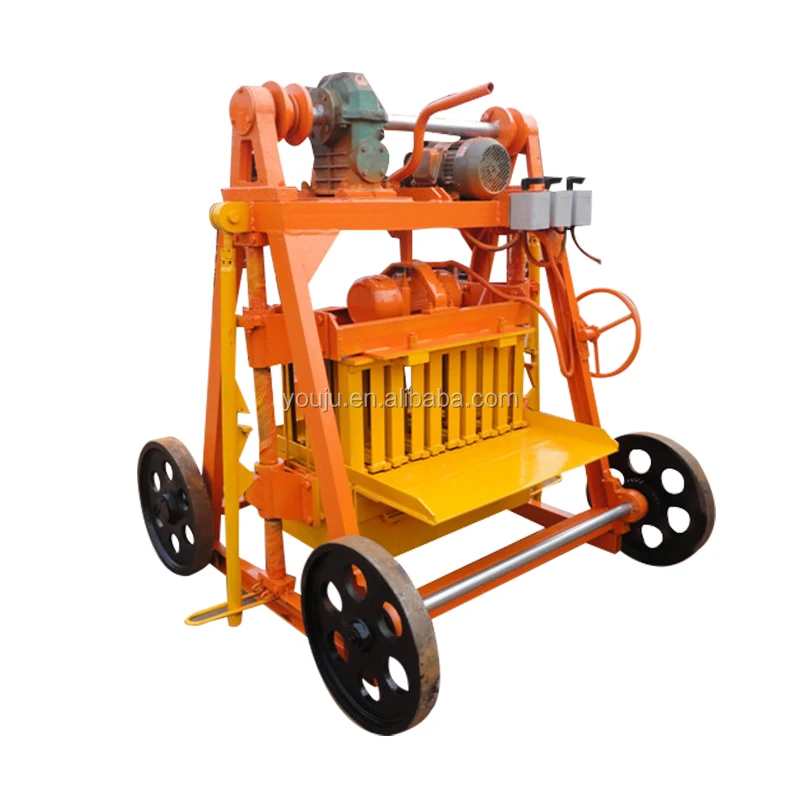
 Mobile block machine