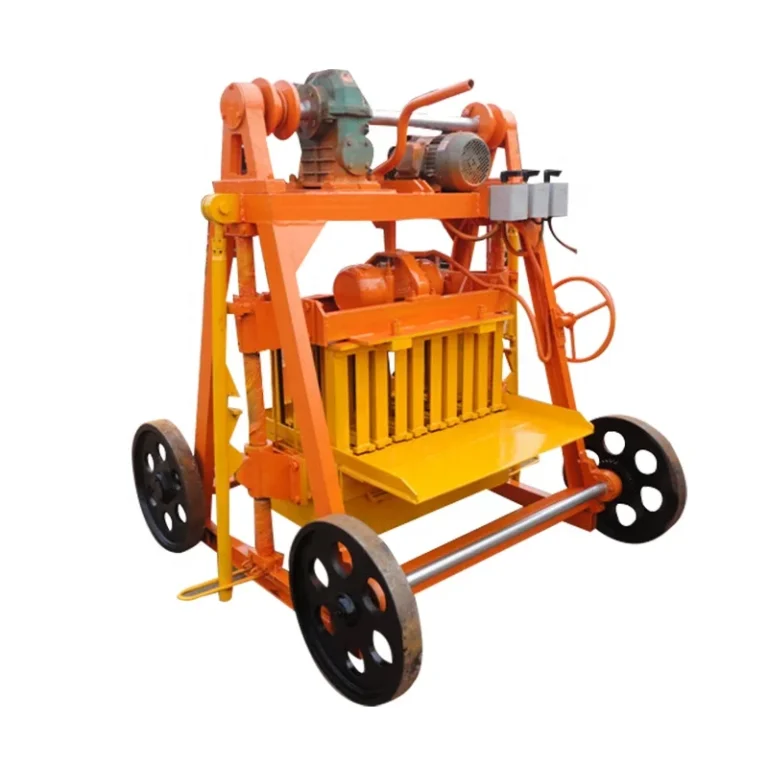
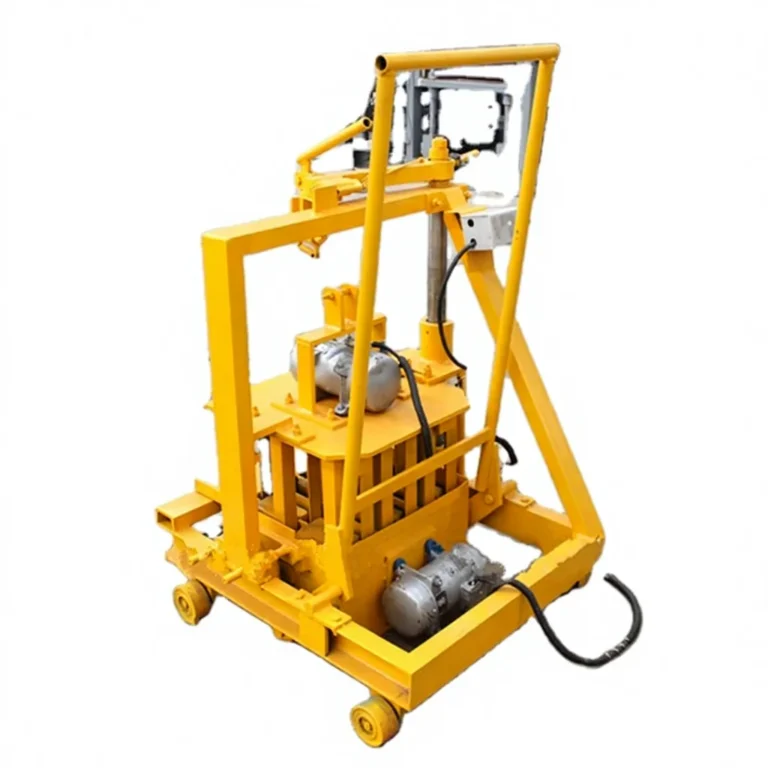
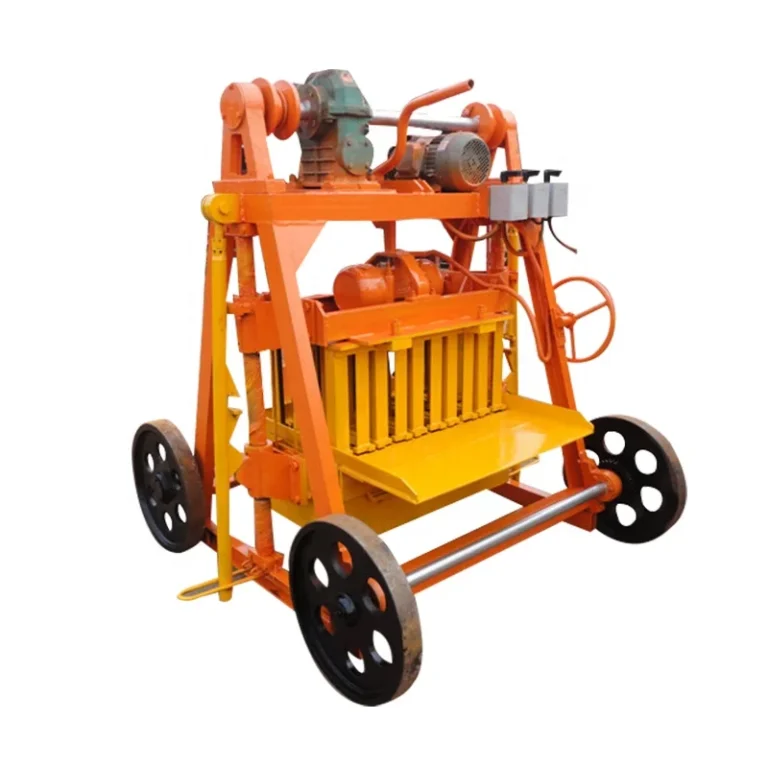
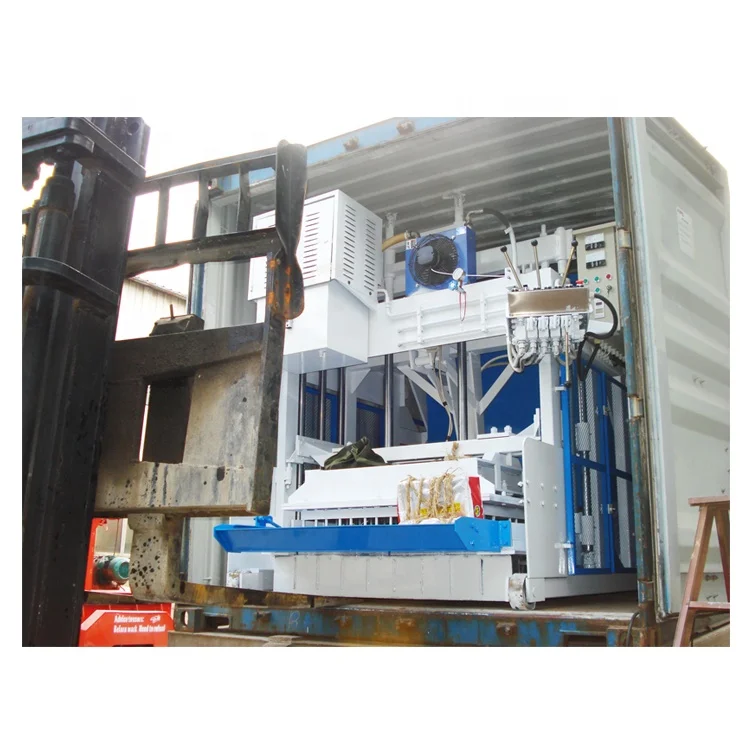
Palletless Production Focus — The QMJ2-45 eliminates the need for pallets by laying blocks directly on the ground, keeping capital outlay low for buyers entering block production for the first time.
Technical Specifications
| Parameter |
Value |
| Model |
QMJ2-45 |
| Product Type |
Mobile Concrete Block Making Machine |
| Machine Type |
Manual mobile egg-laying block machine |
| Automation Level |
Manual (hand-pushed, no pallet required) |
| Pallet Requirement |
None (palletless / egg-laying) |
| Labor Requirement |
1 to 3 workers |
| Mould Change |
Supported; different hollow brick formats via mould swap |
| Output Capacity (400×200×200mm) |
160 pcs/hour | 1,280 pcs/8hr (based on 2 pcs/mould, 25–30s cycle) |
| Output Capacity (400×150×200mm) |
240 pcs/hour | 4,800 pcs/8hr (based on 3 pcs/mould, 25–30s cycle) |
| Output Capacity (400×100×200mm) |
320 pcs/hour | 2,560 pcs/8hr (based on 4 pcs/mould, 25–30s cycle) |
| Molding Cycle |
25–30 seconds |
| Mould Formats Available |
400×200×200mm / 400×150×200mm / 400×100×200mm hollow brick |
| Control System |
Manual operation, no PLC |
| Assembly State |
Fully assembled, mobile |
| Certification |
ISO 9001:2000 / CE |
Application Suitability
| Application |
Material or Output |
| On-site hollow brick production for small-scale plants |
Crushed stone, river sand, and cement mixes for structural hollow blocks |
| Construction contractors producing blocks at project sites |
Local aggregate and sand for immediate wall construction needs |
| Entrepreneurs launching a first block plant |
Standard masonry sand and cement for 400×200×200mm and smaller formats |
| Mobile production without fixed plant infrastructure |
Cement-bound mixes laid directly on prepared ground surfaces |
Why Headline Output Figures Mislead Small Plant Buyers
Real daily output depends entirely on which block format the machine is running and the cycle time tied to that specific mould.
Many buyers receive a single capacity number in a quotation, only to find their actual production falls far short once the machine arrives. A mobile block making machine for sale might be advertised with its highest possible output, but that figure typically assumes the smallest, lightest mould in the range. When you switch to the larger hollow block format your market actually demands, the pieces per mould drop and the cycle may lengthen. The result is a daily tally that never matches the brochure. I have watched contractors plan their entire project timeline around a number that was never realistic for the block size they needed [NEED_CITE: capacity calculation standards for block making machinery].

Where This Machine Sits in the Full Range
The QMJ2-45 occupies the entry tier of a complete block machine lineup. It is a manual, hand-pushed mobile block making machine for sale to buyers who need production capability without investing in fixed plant infrastructure, pallets, or automated handling systems. Above it sit semi-automatic stationary machines that use pallets and require a dedicated curing area, and further up are fully automatic lines with batching, stacking, and cubing. This unit is the starting point for a buyer who wants to produce on-site today and may scale to a higher tier later.
Palletless Egg-Laying Operation Explained
The egg-laying design means the machine moves forward across a prepared ground surface, depositing each moulded block directly behind it as it advances. No pallets are required, which removes an entire cost category from the initial investment. The trade-off is that the ground must be level, clean, and firm enough to support freshly moulded blocks without settling. Curing happens in place, so the production area doubles as the curing area. This mobile block making machine for sale suits sites where space is available but capital for pallets and racks is not [NEED_CITE: ground preparation requirements for egg-laying block machines].
Reading the Cycle Time and Mould Configuration
The 25–30 second molding cycle applies across all three available hollow brick formats, but the output per cycle varies because each mould produces a different number of pieces. The 400×200×200mm mould yields 2 blocks per cycle, the 400×150×200mm yields 3, and the 400×100×200mm yields 4. The vibration force and manual compaction determine whether each block holds its shape when the mould lifts. A mix that is too wet will slump; too dry and the corners break. Vibration force rating is not stated in the source documentation and should be confirmed with the manufacturer before matching the machine to a specific local aggregate.
What Happens When Site Conditions Are Overlooked
A palletless machine depends entirely on the ground it sits on. If the surface is uneven, blocks will crack under their own weight before curing begins. If the curing area is too small, workers must move blocks prematurely, causing edge damage. In one project I supported, the local river sand had a high clay content that the buyer had not disclosed during specification. The blocks came out with poor density and a full courtyard of rejects accumulated before we adjusted the mix ratio and vibration duration. The machine was not at fault — the input material was never matched to the process [NEED_CITE: effect of clay content in sand on block compressive strength].
Why Source From a Single-Focus Block Machinery Supplier
Block machinery is the sole product line here, so the machine, mould, and any supporting handling are specified as a matched system. The QMJ2-45 configuration is set against the buyer’s actual mix design and target block format rather than shipped as a catalogue default. Mould design covers the formats the buyer’s market sells, with custom drawings available for non-standard sizes. The automation level is selectable — a buyer can begin with this manual mobile unit and transition to a semi-automatic stationary line as demand grows. Installation support includes operator training on mix adjustment and cycle technique.
Documentation & Verification
- Factory test record confirming cycle time on your specified hollow brick format before dispatch
- Mould drawing and format list showing dimensions for all three hollow brick sizes
- Machine specification sheet with power source and motor rating confirmed for your voltage
- Operation and maintenance manual covering mix adjustment and mould change procedure
- CE declaration documentation for import clearance in your destination market
Installation, Commissioning & Support
- Level ground surface required across the full production and curing area for palletless operation
- Electric motor voltage and frequency to be confirmed against local supply before production begins
- Machine arrives fully assembled and mobile, requiring no foundation work on site
- First-run commissioning includes mix proportioning test with your local sand and aggregate
- Operator training covers mould swap technique and cycle timing for each block format
- Wear parts list provided with recommended mould replacement intervals based on production volume
What to Include in Your Inquiry
To size this mobile block making machine for sale correctly for your project, provide the block format your market demands, the daily output you need to hit, and the source of your raw sand and aggregate. Include your site’s available ground area for production and curing, and confirm the local voltage and frequency if an electric motor is fitted. Note whether you plan to run a single format or switch between mould sizes during the workday.
Frequently Asked Questions
Q: How is the QMJ2-45 daily output calculated for each block format?
A: Each output figure is tied to a specific mould size and assumes a 25–30 second cycle. The 400×200×200mm mould produces 2 pieces per cycle, the 400×150×200mm produces 3, and the 400×100×200mm produces 4. An eight-hour shift calculation is provided for each, so buyers can plan against the format they will actually sell rather than a single headline number.
Q: Where does this mobile machine sit in the full range compared to other tiers?
A: The QMJ2-45 is the entry point — a manual, palletless unit for on-site production with minimal investment. Semi-automatic machines above it use pallets and stationary presses, while fully automatic lines add batching, stacking, and cubing. Buyers can start here and move up as output requirements grow.
Q: What site conditions are needed to run a palletless egg-laying machine?
A: The ground must be level, firm, and clean across the entire production and curing area, since blocks are laid directly on the surface. Sufficient space is needed for the machine to advance and for blocks to cure in place without being moved prematurely. No fixed plant structure is required.
Q: Can I upgrade from this manual mobile unit to a semi-automatic line later?
A: Yes. The supplier offers semi-automatic and fully automatic tiers within the same product range. Mould formats and block specifications can carry over, and the transition planning covers pallet sizing, curing rack layout, and automation level to match your growing output.
Q: What voltage and motor specification applies to this machine?
A: The source documentation does not state a specific motor voltage or frequency, noting only that no diesel engine or external power limit is specified. Buyers must confirm with the manufacturer whether an electric vibrator motor is fitted and verify its rating against local supply before shipment.

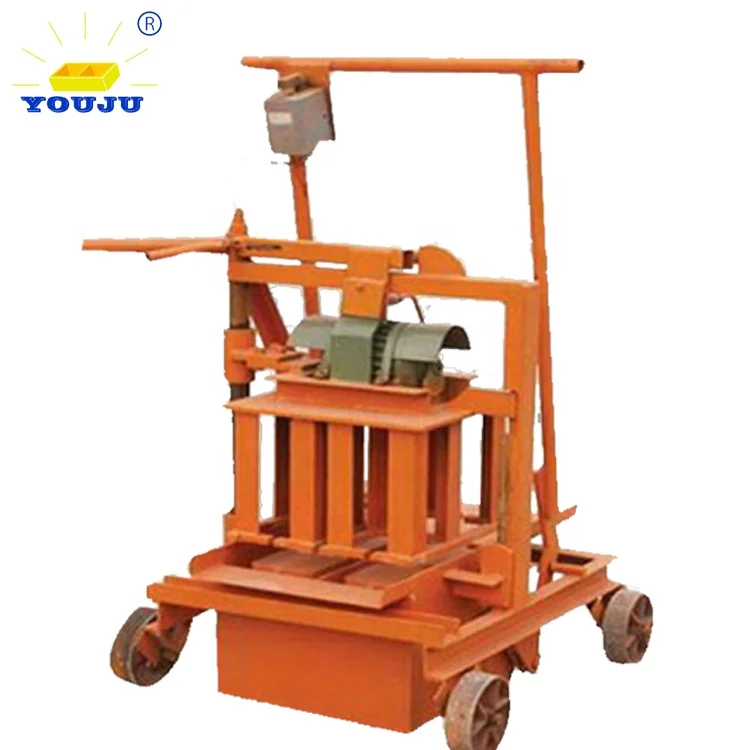
 Mobile block machine