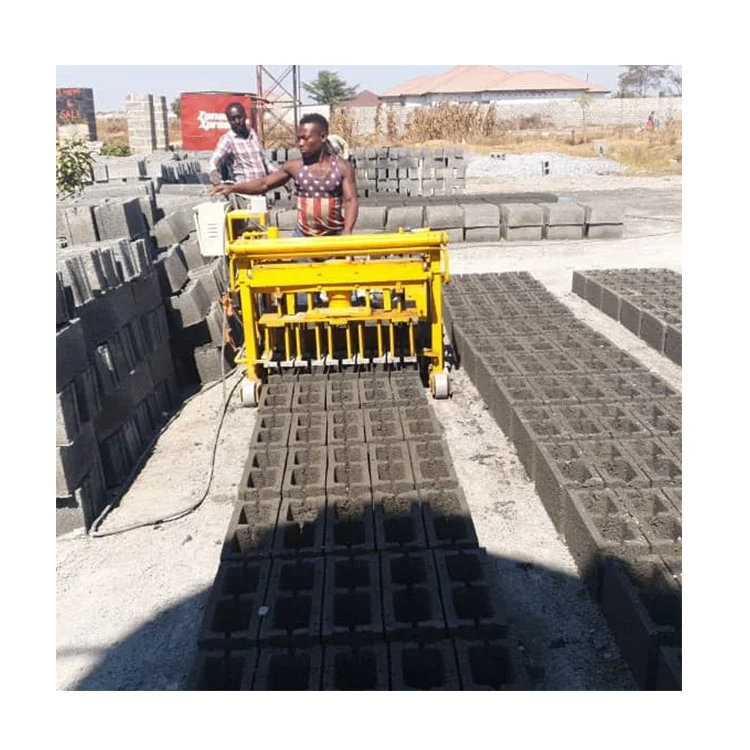
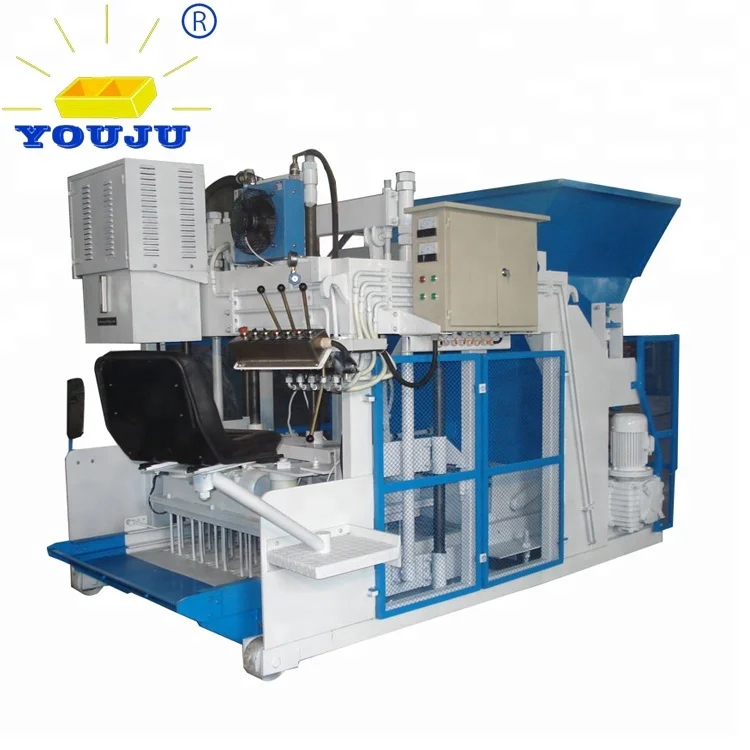
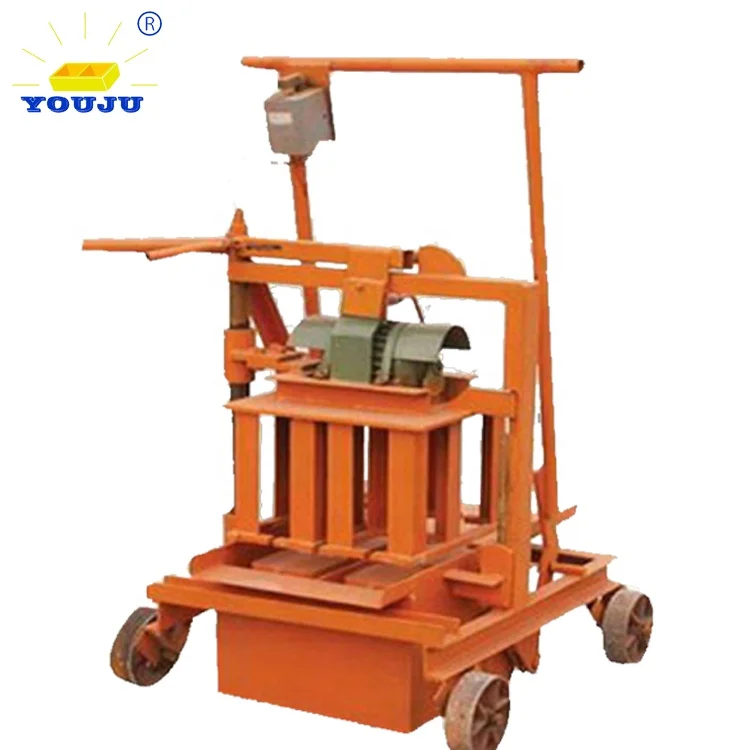
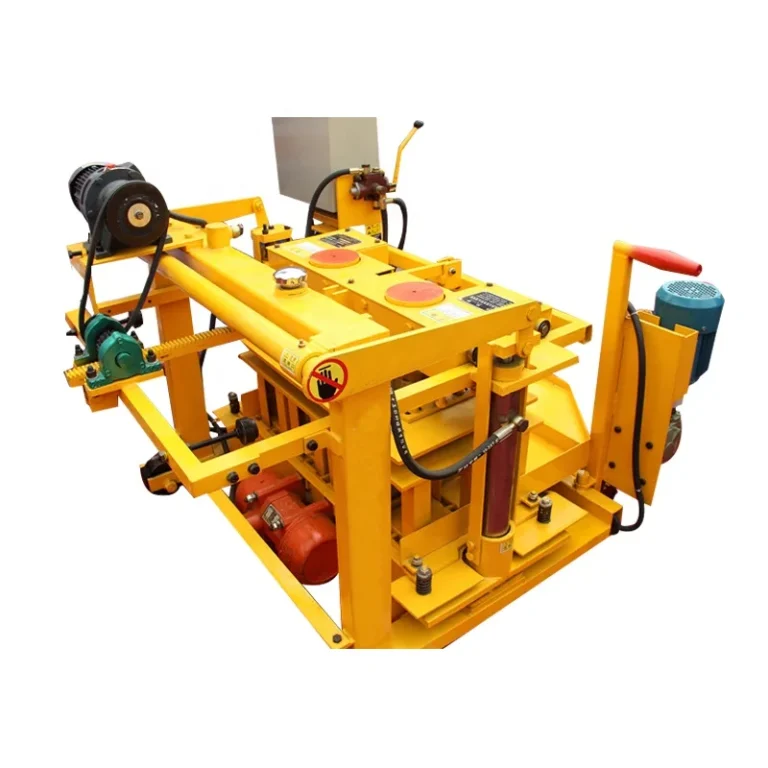
Matched system specification — the QMJ2-45 mobile block making machine is configured with its mould, power source and labour plan as one unit, so the buyer knows the complete operating requirement before the machine leaves the factory.
Technical Specifications
| Parameter |
Value |
| Model |
QMJ2-45 |
| Product Type |
Mobile Block Making Machine |
| Machine Class |
Manual mobile, egg-laying type |
| Mould Change |
Manual swap for supported hollow brick formats |
| Pallet Requirement |
None (pallet-free egg-laying operation) |
| Power Source |
Electric motor |
| Labour Requirement |
1 to 3 workers |
| Cycle Time |
25–30 seconds |
| Output (400×200×200mm hollow block) |
2 pcs/mould, 160 pcs/hour, 1280 pcs/8hr |
| Output (400×150×200mm hollow block) |
240 pcs/hour (basis not stated in source — confirm block format / material / thickness) |
| Output (400×100×200mm hollow block) |
4 pcs/mould, 320 pcs/hour, 2560 pcs/8hr |
| Supported Mould Formats |
400×200×200mm / 400×150×200mm / 400×100×200mm hollow brick |
| Mobility |
Free-moving on prepared ground surface |
| Standards |
ISO9001:2000, CE |
Application Suitability
| Application |
Material or Output |
| On-site housing project block production |
Hollow blocks from local sand, crushed stone and cement |
| Small-scale block yard for local market supply |
Hollow blocks in three standard formats from river sand or crusher dust |
| Contractor self-supply at infrastructure sites |
Hollow blocks produced directly where walls are being built |
| First-time entrepreneur block plant |
Low-footprint hollow block production with minimal capital outlay |
What "Pieces per Hour" Actually Means for a Mobile Block Making Machine
Capacity figures only hold weight when the block format behind them is named.
I have seen buyers compare two mobile block making machine quotations side by side, pick the one with the higher hourly number, and then discover on site that the quoted figure assumed the smallest block in the mould range. The larger format they actually sell cuts real output to a fraction of what they budgeted. With the QMJ2-45, every capacity line in the table above is tied to a specific hollow brick dimension so the daily throughput calculation starts from an honest baseline. [NEED_CITE: block format assumptions in machine capacity quotations]

Where the QMJ2-45 Sits in the Full Shiyue Range
The QMJ2-45 occupies the entry tier of the Shiyue mobile block making machine for sale line-up, aimed at buyers who need block production without building a fixed plant. It sits below the semi-automatic stationary models that require pallets, conveyors and a dedicated curing area, and well below the fully automatic lines with PLC-controlled batching and stacking. Its role is to let a contractor or first-time producer start making blocks on a cleared floor with nothing more than a power supply and raw material piles.
Pallet-Free Operation and What It Removes from the Site
Egg-laying design means the QMJ2-45 deposits each block directly onto the ground and moves forward, eliminating the entire pallet loop. There are no pallets to purchase, no pallet return conveyor, no curing rack system and no forklift shifting wet blocks to a separate yard. For a project site where floor space is whatever ground has been cleared this week, removing that logistics chain is often the deciding factor. The trade-off is a prepared, level surface — the machine will follow the contours of uneven ground, so site levelling is part of the production cost. [NEED_CITE: site preparation requirements for mobile egg-laying block machines]
Reading the Specification Sheet Against Real Site Conditions
Cycle time of 25–30 seconds governs how many moulds the QMJ2-45 completes per hour, but the actual block count depends on how many cavities each mould carries — two for the 200mm-wide format, four for the 100mm. Buyers comparing machines must therefore multiply cavities by cycles, not just read the headline figure. The electric-only power source removes diesel fuel logistics but makes voltage confirmation essential before dispatch; a machine wired for 380V/50Hz arriving at a 440V/60Hz site will not commission without a transformer or motor swap. Mould change is manual, so the time a crew spends swapping from 200mm to 100mm format should be factored into any plan that calls for multiple formats in one shift.
When a Low-Cost Machine Becomes an Expensive Mistake
The most common failure I see with entry-tier mobile machines is not mechanical — it is a mismatch between the quoted output and the block the buyer’s market actually buys. A contractor who budgets for 2,500 blocks a day based on the 100mm figure, then receives orders predominantly for 200mm hollow blocks, will run two shifts to hit what one shift was supposed to deliver. Labour costs, cement consumption and project timelines all shift as a result. Confirming the target format mix before the purchase order is signed avoids this recalculation on site. [NEED_CITE: impact of block format mix on daily plant output]
Why Source the QMJ2-45 Through Shiyue
Block machinery is the single product focus at Shandong Shiyue Intelligent Machinery, which means the QMJ2-45 is not bundled with unrelated equipment from separate supply chains. Moulds are designed and matched to the machine in-house, so cavity dimensions and vibration transfer are validated together rather than adapted after delivery. The configuration is set against the buyer’s local aggregate and mix design, not pulled from a catalogue default. Automation level is selectable across the wider range, so a buyer who starts with a QMJ2-45 today can move to a semi-automatic or automatic tier later without changing suppliers. Installation support and operator training are included, along with mould and wear-part supply for the first replacement cycle.
Documentation & Verification
- Capacity calculation sheet stating output per hollow brick format
- Mould drawing and supported format list for the QMJ2-45
- Voltage, frequency and control language confirmation before dispatch
- Factory test record run on buyer’s target block dimension
- Operation and maintenance manual with wear parts schedule
- CE declaration and ISO9001:2000 documentation where applicable
Installation, Commissioning & Support
- Level ground preparation across the full production path for pallet-free egg-laying travel
- Dedicated electrical circuit matching confirmed voltage and frequency for the QMJ2-45 motor
- Mould fitted and vibration alignment verified during first commissioning run
- Operator training on cycle timing, mould swap and daily greasing points
- Wear parts list with lead times for first mould and mechanical spares order
- Routine inspection schedule for vibration components and electrical connections
Before You Send the Inquiry
Tell us which hollow block format your market buys most — 200mm, 150mm or 100mm width — and what daily volume you need to sustain. Share your local sand or aggregate type and any recent sieve analysis if available, so the mix can be evaluated before the machine is configured. Confirm your site voltage, frequency and the language your operators will read on any control labels, so dispatch is not delayed by a specification mismatch.
Frequently Asked Questions
Q: How is the QMJ2-45 hourly output calculated, and which block format does each figure assume?
A: Each capacity line in the specification table states the block dimension, cavity count per mould and cycle time used for the calculation. The 160-piece figure assumes the 400×200×200mm hollow block at two pieces per mould; the 320-piece figure assumes the 400×100×200mm format at four pieces per mould. Buyers should match these to their actual product mix rather than using a single headline number.
Q: What voltage and frequency options are available, and can the control language be set before shipment?
A: The QMJ2-45 is configured to the buyer’s site voltage and frequency before production, and any control labelling or documentation language is confirmed at the quotation stage. This step is built into the sales process specifically to prevent commissioning delays once the machine arrives on site.
Q: How does the QMJ2-45 compare to semi-automatic and automatic tiers in the Shiyue range?
A: The QMJ2-45 is a pallet-free mobile machine requiring one to three workers and no fixed plant infrastructure. Semi-automatic models add pallet handling and a stationary press layout for higher output, while automatic tiers introduce PLC batching, stacking and cubing. The range is structured so a buyer can enter at mobile level and progress without changing equipment suppliers.
Q: What mould formats are included as standard, and can custom moulds be designed?
A: Standard moulds cover 400×200×200mm, 400×150×200mm and 400×100×200mm hollow brick formats. Custom mould design is available from buyer-supplied drawings when the target block falls outside these three dimensions, with cavity count and vibration transfer validated against the QMJ2-45 press before production.
Q: What equipment is included in the shipment besides the machine itself?
A: The QMJ2-45 is quoted as a mobile block making machine with its mould and power unit. Supporting items such as a raw material mixer, feeding equipment or curing-area tools are listed separately so the buyer can see exactly what is included and add only what the site does not already have.

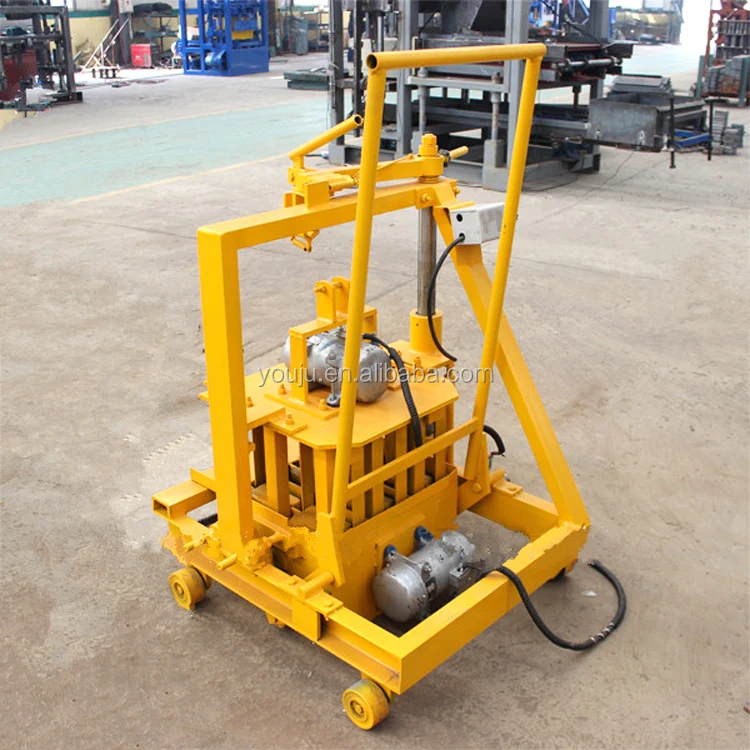
 Mobile block machine