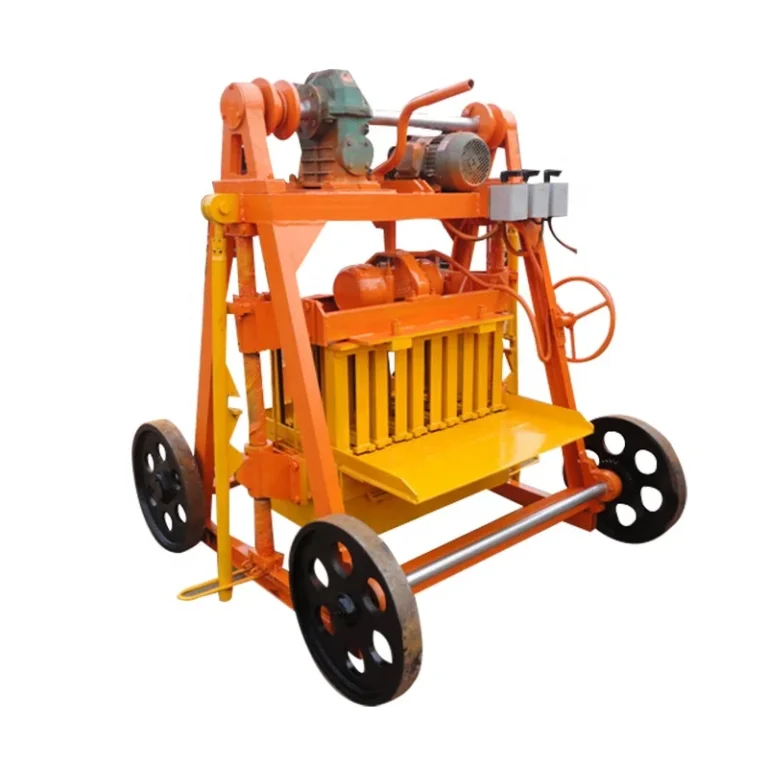
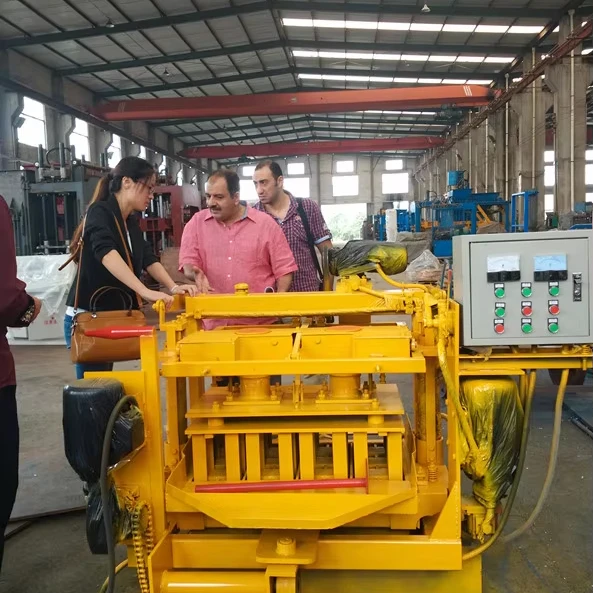
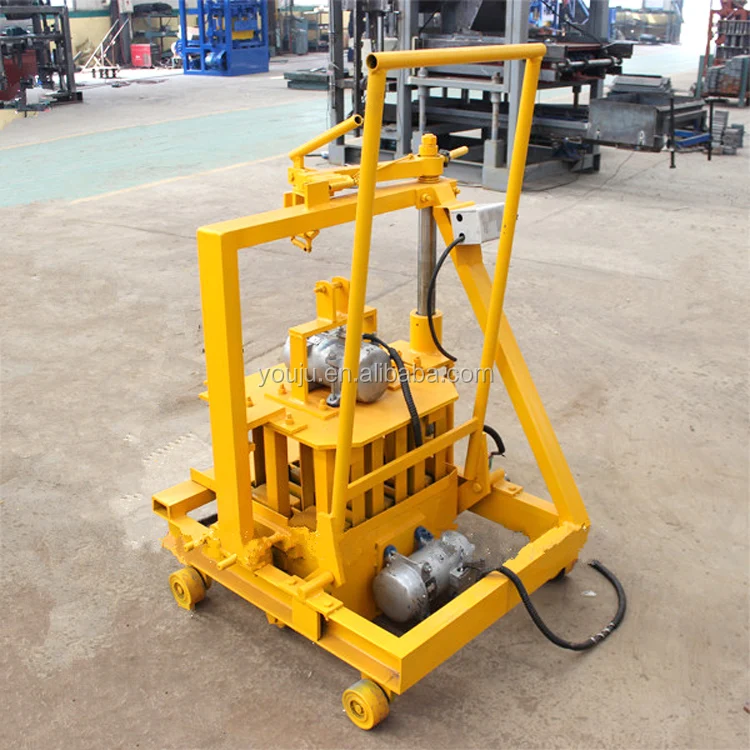
Matched System Approach — The QMJ2-45 mobile block making machine for sale is specified as one complete unit with mould, vibration, and manual operation balanced to local aggregate rather than assembled from catalogue defaults.
Technical Specifications
| Parameter |
Value |
| Model |
QMJ2-45 |
| Product Type |
Mobile Block Making Machine |
| Operation Type |
Manual egg-laying (pallet-free) |
| Mould Change |
Quick change across multiple hollow brick formats |
| Labor Requirement |
1 to 3 workers |
| Portability |
Free-moving on-site, no fixed foundation |
| Output Capacity (400×200×200mm) |
160 pcs/hour, 1280 pcs/8hr (basis: 2 pcs/mould, 25-30s cycle) |
| Output Capacity (400×150×200mm) |
240 pcs/hour, 4800 pcs/8hr (basis: 3 pcs/mould, 25-30s cycle) |
| Output Capacity (400×100×200mm) |
320 pcs/hour, 2560 pcs/8hr (basis: 4 pcs/mould, 25-30s cycle) |
| Molding Cycle |
25-30 seconds per format |
| Standards |
ISO9001:2000, CE |
Application Suitability
| Application |
Material or Output |
| Small-scale on-site hollow brick production |
Local sand, crushed stone, cement mixes |
| Construction sites with limited space |
Direct placement on concrete floor |
| Entrepreneurs starting block production |
Low investment entry without pallet system |
| Building material distributors |
Adding hollow brick formats to existing range |
What Capacity Quotations Leave Out When Format Is Not Stated
Real daily output depends on which hollow brick size the machine is actually running.
Catalogue figures often quote pieces per hour without stating which block format that number assumes, so buyers find their real production falls far short of expectations once the machine arrives. I have seen contractors order based on a single headline number, only to discover their primary market format yields significantly less. The QMJ2-45 mobile block making machine for sale lists output tied directly to specific hollow brick dimensions and a 25-30 second cycle, so you can calculate actual daily production against your local demand [NEED_CITE: importance of format-specific capacity calculations].

Where This Mobile Machine Sits Within the Range
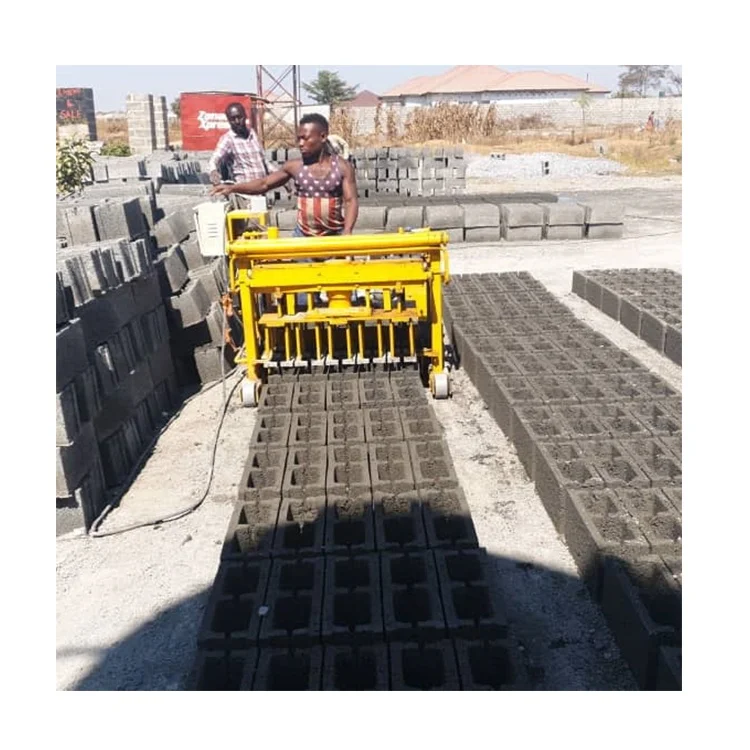
The QMJ2-45 occupies the entry tier of the mobile block machine lineup, designed for contractors who need hollow brick production without fixed plant infrastructure. Unlike automatic and semi-automatic tiers that require pallet systems and curing racks, this egg-laying type places blocks directly onto the ground as it moves forward. The manual operation keeps labor requirements between one and three workers depending on how material feeding and block retrieval are organized on your site.
Eliminating Pallet Investment From Your First Block Plant
Pallet-free operation removes one of the largest hidden costs in block production. Traditional stationary machines require pallets for every block position, plus the curing racks and handling equipment to move them. The QMJ2-45 eliminates this entire system by laying blocks directly on a prepared concrete floor. For first-time plant buyers or contractors producing blocks on their own construction site, this means lower initial investment and no pallet replacement costs as production continues [NEED_CITE: pallet lifecycle and replacement frequency in block plants].
Reading the Specifications Against Your Local Conditions
The 25-30 second molding cycle stated across all three hollow brick formats determines your actual throughput. The 400×200×200mm format yields 2 pieces per mould, while the 400×100×200mm format yields 4 pieces per mould in the same cycle time—this is why capacity must always be read against the format you will actually produce. Quick mould change between these three hollow brick sizes gives format flexibility without extended downtime. Labor requirement of 1 to 3 workers covers the range from minimal operation with one person handling both feeding and machine movement, to a three-person team separating material preparation, machine operation, and finished block quality inspection.
The Cost of Ignoring Local Aggregate Before Purchase
Machines configured for a standard mix design often fail when they meet local raw materials. I have worked on sites where high clay content in sand caused vibration force to produce weak, inconsistent blocks that crumbled during handling. The QMJ2-45 mobile block making machine for sale must be matched to your actual aggregate characteristics before configuration is finalized. Without this verification, you face the choice of importing suitable materials at unsustainable cost or producing blocks that fail strength requirements on your construction site [NEED_CITE: aggregate testing protocols for block production].
Configuration Based on Actual Mix Design
Block machinery is a single focus here, so the machine, mould, and operation method are specified as one matched system. Configuration is set against your actual mix design and target block format rather than a catalogue default. Mould design covers the hollow brick formats your market sells, with custom drawings available for non-standard sizes. The manual operation level means you can start with the QMJ2-45 and later add semi-automatic or automatic machines to your range as demand grows, with the mobile unit continuing to serve site-specific projects.
Documentation & Verification
- Line layout showing QMJ2-45 movement path and curing area dimensions
- Capacity calculation stating block format assumed for each output figure
- Mould drawing and format list for all three hollow brick sizes included
- Factory test record on your specified hollow brick format before dispatch
- Operation manual with mould change procedure and cycle time guidance
- CE declaration where applicable for your target market
Installation, Commissioning & Support
- Concrete floor surface preparation for egg-laying operation without pallet system
- Voltage and frequency confirmation matching your local power supply before shipment
- Machine delivery in operational state requiring minimal on-site assembly
- First production run with your local mix design to verify block strength
- Operator training covering mould change, cycle timing, and manual movement technique
- Mould and wear parts list with replacement intervals for ongoing production
- Daily maintenance schedule for vibration system and moving components
Information Needed to Match Your Project
To determine if this mobile block making machine for sale fits your requirements, provide the hollow brick formats your market demands and your target daily output per format. Share your local raw material characteristics including sand source and aggregate grading, plus the concrete floor area available for block placement and curing. State your local voltage and frequency so electrical configuration can be confirmed before production begins.
Frequently Asked Questions
Q: How is output capacity verified per block format and what are the stated cycle times?
A: Output is stated per format with the mould configuration and cycle time clearly linked. The 400×200×200mm format produces 2 pieces per mould at 160 pieces per hour, while the 400×100×200mm format produces 4 pieces per mould at 320 pieces per hour, both based on a 25-30 second molding cycle. This format-specific approach means you calculate daily production against the sizes you actually sell.
Q: What voltage and frequency options are available for different target markets?
A: Voltage and frequency are confirmed with you before production to match your local power supply standards. This prevents commissioning delays after the machine arrives. You should specify your exact voltage, phase configuration, and frequency when requesting a quotation so the electrical system can be configured correctly from the start.
Q: Which block formats can the QMJ2-45 produce and can custom moulds be supplied?
A: Standard formats include 400×200×200mm, 400×150×200mm, and 400×100×200mm hollow bricks with quick mould change between them. Custom mould design is available to buyer drawings for non-standard hollow brick sizes your local market requires. Mould drawings and format lists are provided so you can verify dimensions match your construction standards before production.
Q: Where does this mobile machine sit within the full range?
A: The QMJ2-45 sits at the entry tier as a manual, pallet-free egg-laying machine for contractors and first-time buyers. Semi-automatic and automatic tiers above it add pallet systems, automated stacking, and higher throughput for fixed plant operations. This mobile unit serves projects where fixed infrastructure is impractical or where blocks must be produced directly on a construction site.
Q: What site conditions and space are needed to operate the QMJ2-45 on-site?
A: You need a level concrete floor surface for the machine to move across while laying blocks, plus adequate area for blocks to cure in place before collection. The egg-laying operation requires no pallet storage or curing rack space. Site access must allow the machine to be positioned and material delivered to the production area throughout the working day.

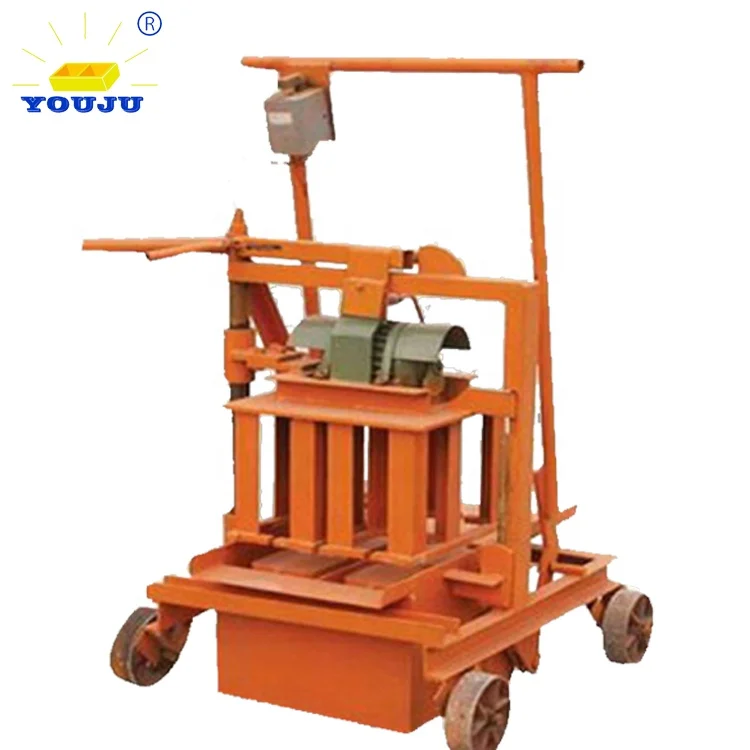
 Mobile block machine