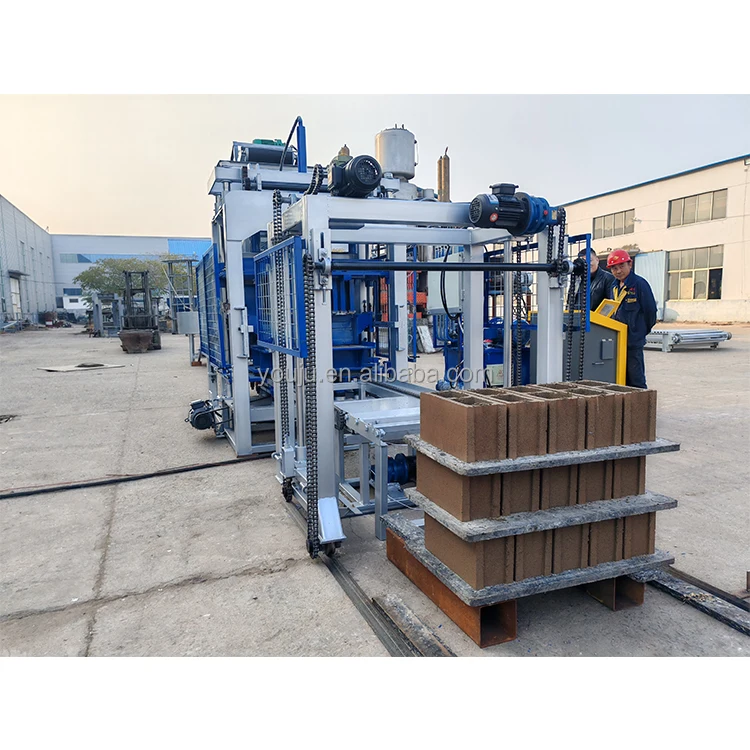
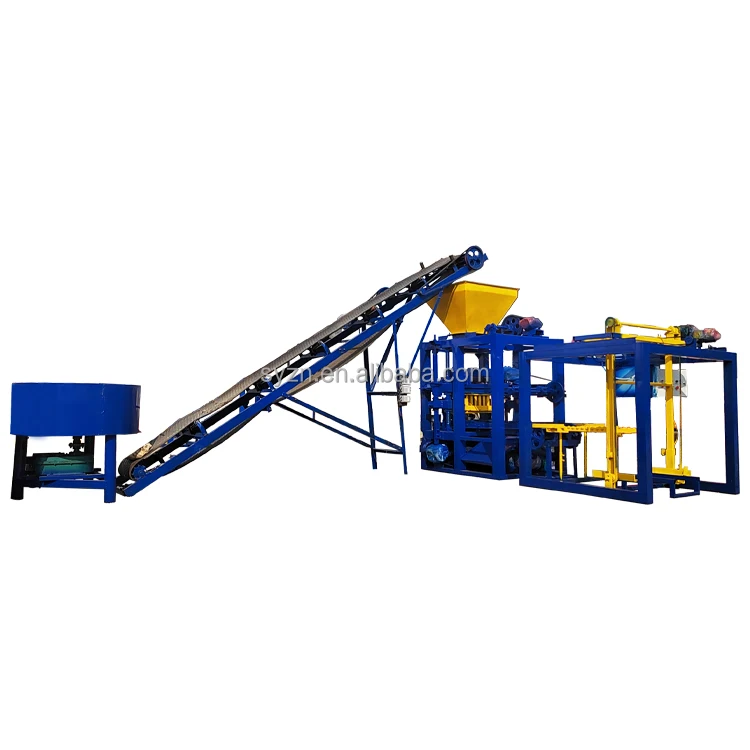
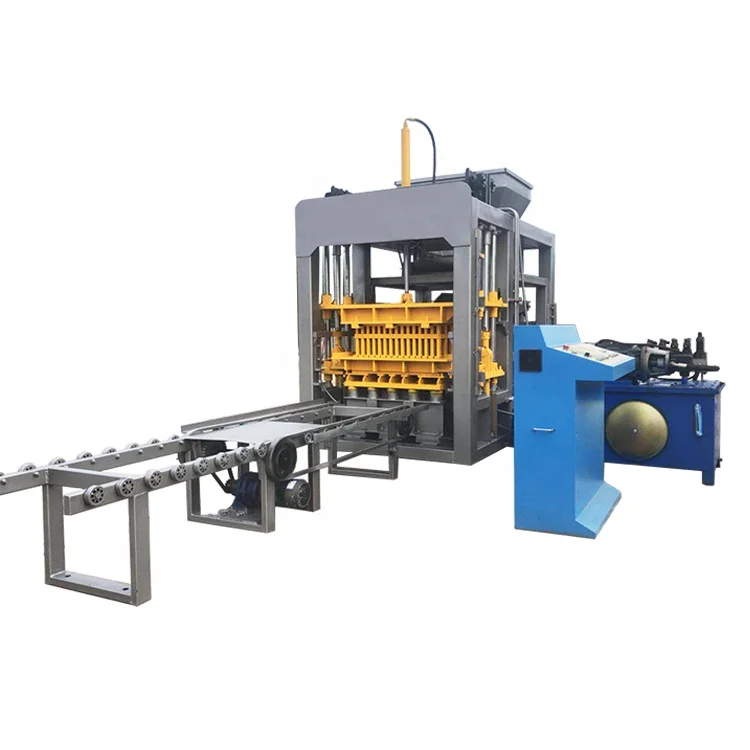
Single-Focus System Match — the QT4-20 stationary block machine is specified as a coordinated set of press, mould, pallet, and handling rather than a catalogue default, so every component works toward the same cycle time.
Technical Specifications
| Parameter |
Value |
| Model |
QT4-20 |
| Product Type |
Stationary Hydraulic Block Making Machine |
| Overall Dimensions (L×W×H) |
7100×1600×2610 mm |
| Molding Area |
400×800 mm |
| Pallet Size |
1020×570 mm |
| Rated Pressure |
16-21 MPa |
| Main Vibration Form |
Platform Vibration |
| Vibration Frequency |
4600 r/min |
| Vibration Force |
40 kN |
| Molding Cycle |
15-25 s |
| Overall Power |
27.5 kW |
| Total Mass |
5 T |
| Demolding Method |
Hydraulic |
| Control System |
PLC (brand and language to be confirmed) |
| Voltage & Frequency |
Configurable per destination market (to be confirmed) |
| Automation Level |
Semi-automatic or fully automatic options available |
| Recommended Factory Area |
500 m² |
| Raw Materials |
Crushed stone, sand, cement, fly ash, gravel, slag |
| Output — Hollow Brick 400×200×200 mm |
4 pcs/mold, 15-20 s cycle, 7200-9600 pcs/day |
| Output — Porous Brick 240×115×90 mm |
14 pcs/mold, 15-20 s cycle, 20200-26800 pcs/day |
| Output — Standard Brick 240×115×53 mm |
28 pcs/mold, 15-17 s cycle, 47400-53700 pcs/day |
| Standards |
CE (issuing body and validity to be confirmed) |
| Warranty |
One year, whole machine |
Application Suitability
| Application |
Material or Output |
| Hollow block production for building construction |
Crushed stone, sand, cement mix; 400×200×200 mm format at 4 pcs/mold |
| Solid block and standard brick production |
Local aggregate with fly ash or slag; 240×115×53 mm format at 28 pcs/mold |
| Porous brick and paving brick production |
Sand, cement, dust blends; 240×115×90 mm format at 14 pcs/mold |
| Small-to-medium block plant startup |
Locally sourced aggregates within a 500 m² plant footprint |
What "7200 Blocks a Day" Actually Means on a QT4-20
Every output figure here is tied to a specific brick size, mould cavity count, and cycle time — no format-free hourly claims.
When a stationary block machine manufacturer quotes capacity without naming the block format, the number is essentially meaningless. I once watched a buyer in Colombia plan staffing around a "10,000 per day" figure, only to discover the quote assumed a paving block format his market never ordered. The real daily volume for his 8-inch hollow block was barely half that. With the QT4-20 block machine for sale, each output row in the table above names the exact format, cavity count, and cycle range, so the daily projection you budget against is the daily projection the machine actually delivers on site [NEED_CITE: honest capacity quoting standards in block machinery].

Where the QT4-20 Fits in the Full Range
The QT4-20 occupies the mid-tier position in a complete stationary block machine lineup that stretches from small workshop models to high-capacity automatic lines. It is designed for buyers who have moved beyond manual egg-laying machines and need consistent daily volume, but who are not yet ready to invest in a fully automatic stacking and cubing system. The 500 m² recommended factory area keeps the footprint manageable for a first dedicated block plant.
Choosing the Right Automation Tier
Automation is selectable, meaning a buyer can start with semi-automatic pallet handling and upgrade to fully automatic stacking later as market demand grows. This path avoids the common mistake of over-investing in automation on day one while still leaving a clear upgrade corridor. The PLC control system is configurable in display language, which is a detail that gets overlooked until the first commissioning morning [NEED_CITE: PLC language configuration requirements for export machinery].
Pressure, Vibration, and What They Mean for Block Strength
The 16-21 MPa hydraulic pressure and 40 kN vibration force at 4600 r/min work together to compact the mix into a dense, consistent block. Vibration alone cannot achieve target strength — it is the hydraulic clamping pressure that holds the mould rigid while the vibration settles the aggregate. The platform vibration form transmits energy through the pallet into the bottom of the cavity, which is the standard approach for a stationary block machine manufacturer building for hollow and porous formats. Matching these two forces to the buyer’s actual mix design and local aggregate gradation is what separates blocks that pass a compressive strength test from blocks that crumble at the curing rack.
The Hidden Cost of Skipping Pallet and Voltage Confirmation
When pallet size and material are chosen without checking the buyer’s existing curing area and forklift, pallets arrive too long for the rack spacing or too heavy for the lift capacity. The 1020×570 mm pallet on the QT4-20 can be specified in wood, bamboo, or composite, but only after the buyer confirms the curing layout. Similarly, when voltage and frequency are assumed rather than confirmed, a machine arrives at site and the main motor simply will not start — I have seen a four-day commissioning delay caused entirely by a PLC panel defaulting to the wrong language and a voltage mismatch that required a local transformer rental [NEED_CITE: voltage and frequency standards by export market].
Why Buyers Specify Through This Range
Block machinery is the single product focus here, so the QT4-20 is sold as a matched system: press, mould, pallet, and handling equipment are all specified together rather than assembled from separate quotes. Each configuration is set against the buyer’s actual mix design and target block format, not a catalogue default. Moulds are available for every format the buyer’s market sells, including custom drawings when a non-standard size is required. The automation level is selectable, allowing a semi-automatic start with a defined upgrade path. Installation and commissioning support includes operator training so the plant is running within the first week on site.
Documentation & Verification
- Line layout and capacity calculation stating the block format assumed for each output figure
- Machine specification sheet confirming hydraulic pressure, vibration force, pallet size, and 27.5 kW overall power
- Mould drawing and format list for every block type the buyer intends to produce
- Voltage, frequency, and PLC display language confirmation document before production begins
- Factory test record covering molding cycle and demolding on the buyer’s chosen format
Installation, Commissioning & Support
- 500 m² recommended factory area with level concrete foundation to support the 5 T total mass
- Dedicated power circuit sized for 27.5 kW overall power with confirmed voltage and frequency
- Machine arrives dismantled for container loading; reassembly guided by hydraulic and electrical schematics
- First-run commissioning includes molding cycle tuning across the 15-25 s range for the confirmed block format
- Operator training covers PLC navigation, mould change procedure, and daily vibration platform inspection
- Wear parts list and mould spring inventory provided to cover the first replacement cycle without downtime
Starting the Configuration Conversation
Before requesting a quotation, it helps to share the specific block formats your market demands, the local aggregate you plan to use, and your available plant area. Voltage, frequency, and preferred PLC display language should be confirmed early — these are small details that cause disproportionate delays if left until shipment. If you are currently running an existing line and adding capacity, note your pallet size and forklift specs so the handling equipment aligns with what is already on the floor.
Frequently Asked Questions
Q: How is daily output verified for each block format, and what cycle time is assumed?
A: Each output row names the exact brick dimensions, mould cavity count, and a cycle range. For the 400×200×200 mm hollow block, the cycle is 15-20 seconds with 4 cavities, producing 7,200-9,600 pieces per day. A signed capacity calculation document accompanies the proposal so the assumed format is clear before production begins.
Q: Where does the QT4-20 sit on the range, and when should a buyer step up?
A: The QT4-20 is the mid-tier option, suited for buyers beyond workshop volume but not yet requiring high-capacity automatic lines. If daily demand exceeds the 9,600 hollow block figure or the product mix requires more than three format changes per shift, stepping to the next tier with faster cycle times and automatic stacking is worth evaluating.
Q: How are pallet size and material selected to match the curing area?
A: The standard pallet is 1020×570 mm, available in wood, bamboo, or composite. The buyer provides curing rack dimensions and forklift capacity so the pallet material and weight are chosen to fit the existing layout without modification.
Q: What voltage, frequency, and PLC language options are confirmed before shipment?
A: Voltage and frequency are confirmed to match the destination market’s grid. The PLC display language is set to the buyer’s preference — this is verified in writing before production starts to avoid commissioning delays on site.
Q: Can the automation level start semi-automatic and be upgraded later?
A: Yes. The QT4-20 is available as semi-automatic with manual pallet handling, and the upgrade path to fully automatic stacking and cubing is defined at the quotation stage. Retrofitting is planned into the initial machine layout so no structural changes are needed later.

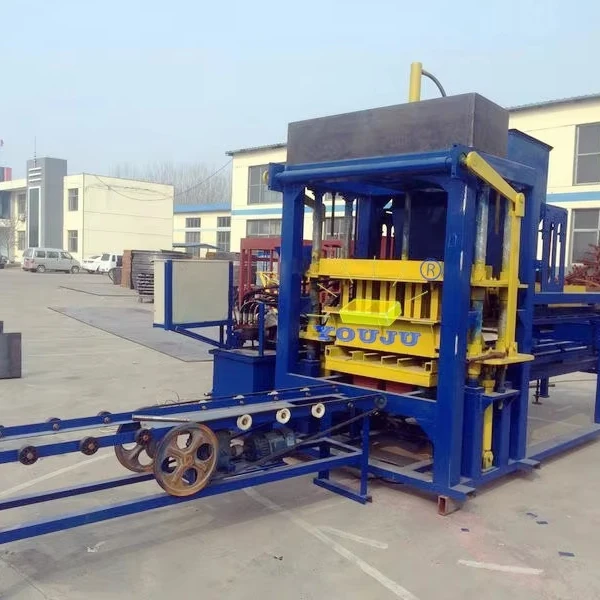
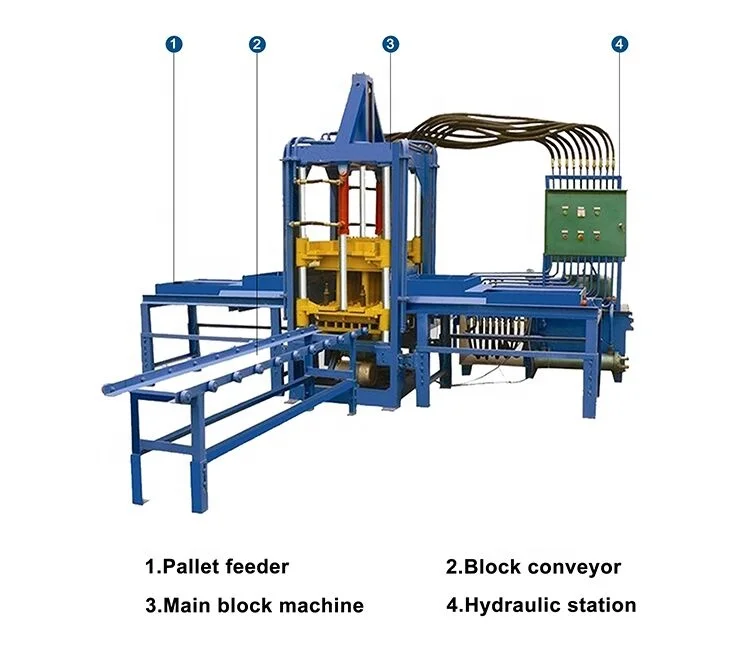 Stationary block machine