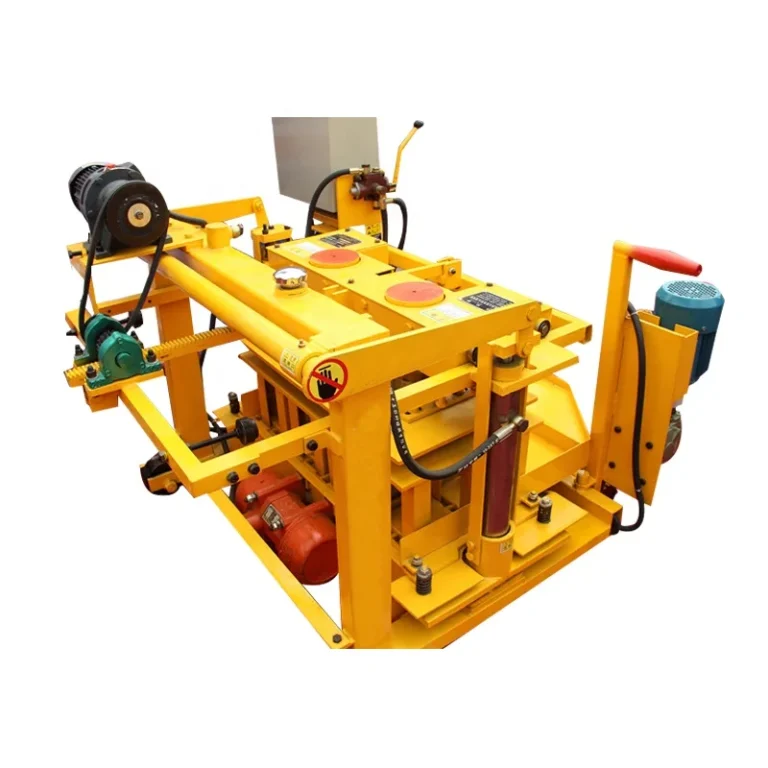
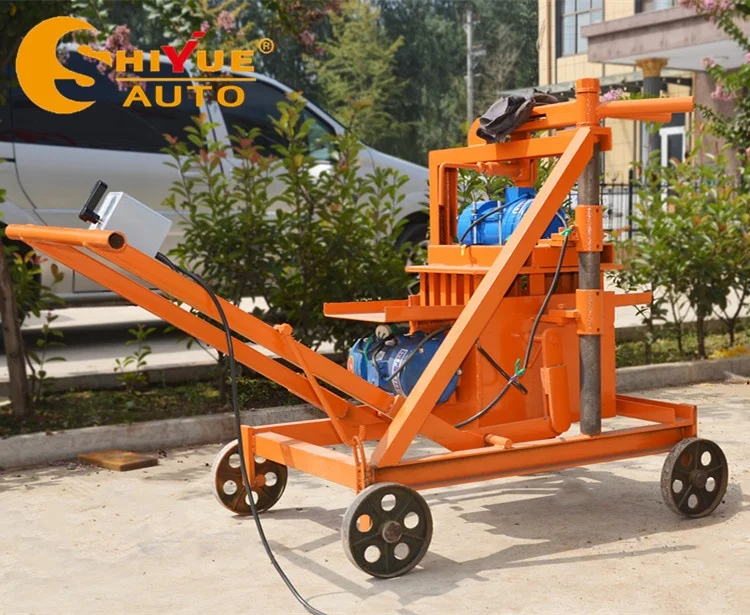
Matched System Supply — The QMR4-45 is specified as a complete egg-laying platform where the machine, mould, and optional diesel powertrain are sourced and tested together, eliminating interface gaps that arise when buyers assemble components from separate suppliers.
Technical Specifications
| Parameter |
Value |
| Model |
QMR4-45 |
| Product Type |
Mobile Egg-Laying Block Making Machine |
| Overall Dimensions (L×W×H) |
2420 × 1320 × 1650 mm |
| Net Weight |
810 kg |
| Moulding Cycle |
40–45 s |
| Pallet Requirement |
No pallet required (egg-laying type) |
| Rated Power |
6 kW |
| Power Source Options |
Electric motor (220 V / 380 V) or Diesel Engine (6–8 HP) |
| Output Capacity |
3000 pcs/day based on 400×200×200 mm hollow blocks (4 pcs/mould, 8-hour shift) |
| Output Capacity |
3500 pcs/day based on 400×150×200 mm hollow blocks (5 pcs/mould, 8-hour shift) |
| Output Capacity |
4500 pcs/day based on 400×120×200 mm hollow blocks (6 pcs/mould, 8-hour shift) |
| Automation Level |
Manual / Low Automation |
| Assembly State |
Fully assembled mobile unit |
| Warranty |
One year guarantee for the whole machine |
Application Suitability
| Application |
Material or Output |
| Remote construction sites |
Hollow block production using locally sourced crushed stone, sand, and cement without grid power reliance. |
| Small-scale contractor operations |
Daily masonry supply for housing projects where fixed plant infrastructure is not feasible. |
| Rural infrastructure development |
Mobile production of varying block thicknesses (120mm to 200mm) for walls and foundations. |
| Entrepreneurial block plants |
Low-investment entry into concrete product manufacturing with minimal site preparation. |
What "Output Capacity" Actually Means for Mobile Block Production
Daily figures are meaningless unless tied to a specific block format and shift length.
Many suppliers quote a single "pieces per hour" number that assumes an ideal, often unstated, product size. In my time servicing sites across Africa, I found that a machine rated for "high output" often failed to meet project deadlines because the buyer assumed that figure applied to the large hollow blocks they needed, while the manufacturer based it on small solid pavers. The QMR4-45 mobile block machine manufacturer documentation explicitly links output to the 400×200×200 mm format (3000 pcs/day), the 400×150×200 mm format (3500 pcs/day), and the 400×120×200 mm format (4500 pcs/day). This transparency prevents the common scenario where a contractor’s real-world daily output falls far short of expectation simply because the block format was never clarified during the inquiry stage [NEED_CITE: capacity calculation standards for block machinery].

Defining the Full Machine Range
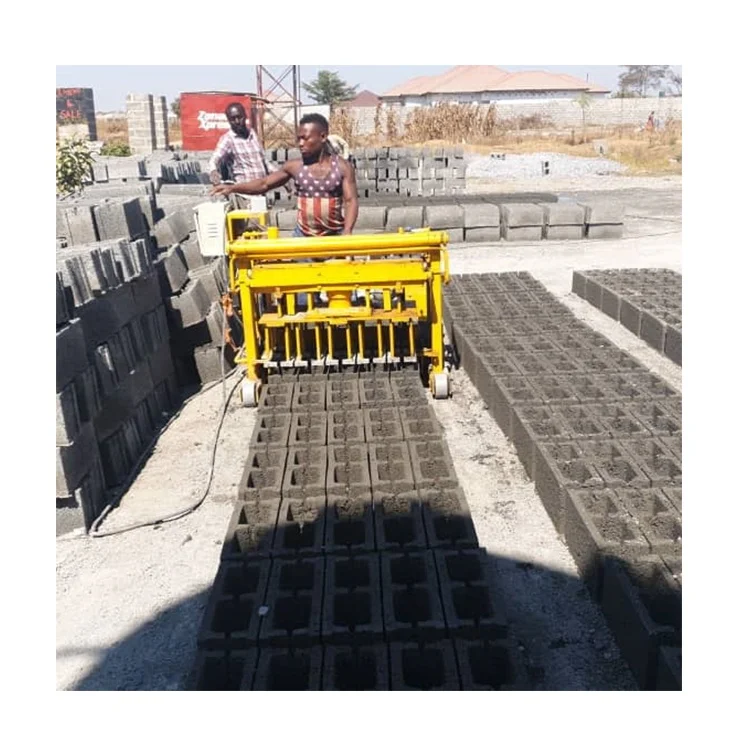
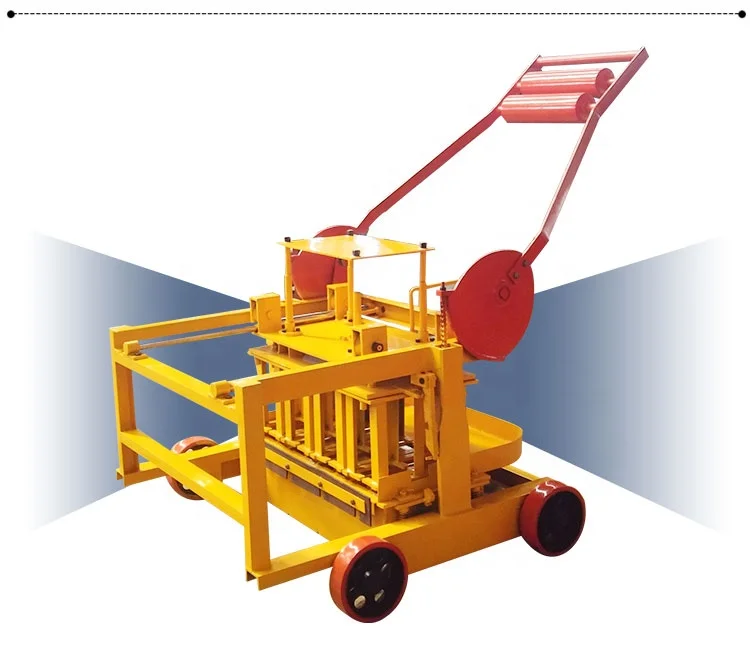
This mobile block machine manufacturer offers a tiered approach to block production, starting with the entry-level QMR4-45 and scaling up to fully automatic lines. The QMR4-45 sits at the foundation of this range, designed for buyers who need immediate, on-site production without the capital expenditure of a fixed plant. It is an egg-laying model, meaning it moves forward after each cycle, leaving the blocks directly on the ground. This design choice fundamentally shapes the investment level and plant footprint: there are no pallets to purchase, no curing racks to build, and no complex handling systems to maintain. For a buyer surveying options, this unit represents the lowest barrier to entry while still providing the flexibility to change moulds for different wall thicknesses.
Site Conditions and Power Configuration
The decision between the 6 kW electric motor and the 6–8 HP diesel engine is not merely a preference but a site-critical constraint. I have visited project sites where the local grid could not support the starting current of an electric motor, causing voltage drops that damaged control components within the first week. The diesel option on the QMR4-45 ensures that production continues in these environments, making it a viable solution for remote infrastructure projects. However, the trade-off is the operational cost of fuel and the maintenance of an internal combustion engine versus the simpler, quieter operation of the electric variant. Buyers must assess their site’s energy reliability before finalizing the configuration [NEED_CITE: industrial power stability in developing regions].
Interpreting the Cycle Time and Dimensions
The 40–45 second moulding cycle is a realistic figure for a manual-feed, egg-laying machine of this weight class (810 kg). This cycle time includes the manual loading of the hopper, the vibration and pressing sequence, and the physical movement of the machine to the next position. The overall dimensions of 2420×1320×1650 mm dictate the minimum aisle width required on your production floor; you cannot operate this machine in a confined space without restricting the operator’s ability to feed material and move the unit. The absence of a pallet system means your curing area must be a flat, hardened concrete surface. If the ground is soft or uneven, the blocks will sink or tilt immediately after demoulding, leading to high rejection rates regardless of the machine’s vibration force.
The Hidden Cost of Ignoring Ground Preparation
The most frequent cause of failure with mobile block machines is not mechanical breakdown but poor site preparation. An egg-laying machine requires a perfectly level, hardened concrete slab. If a contractor attempts to run the QMR4-45 on compacted soil or asphalt that softens in the heat, the machine will settle unevenly during the vibration cycle. This results in blocks that are dimensionally inaccurate or structurally weak on one side. The cost of pouring a proper concrete floor is often overlooked in the initial budget, yet it is the single most important factor in achieving the stated output capacity and block quality. Skipping this step turns a productive asset into a source of wasted material and labor [NEED_CITE: civil engineering requirements for mobile machinery].
Why Buyers Specify This Machine Here
We approach the QMR4-45 not as a standalone item but as part of a matched system. While this is a manual machine, the moulds are designed to match the specific shrinkage characteristics of the buyer’s local aggregate, ensuring that the final cured dimensions meet market standards. The configuration is set against the buyer’s actual mix design rather than a catalogue default, which is critical for achieving block strength. Furthermore, the documentation provided includes a factory test record using the buyer’s target block format, verifying that the cycle time and output figures are achievable before the machine leaves the facility. This level of verification is rare for entry-level mobile units.
Documentation & Verification
- Line layout drawing showing the required curing area footprint for the QMR4-45.
- Machine specification sheet confirming the chosen power source (diesel or electric).
- Mould drawing and format list detailing available hollow block thicknesses.
- Factory test record demonstrating cycle times on the specified block format.
- Operation manual covering ground preparation and manual feeding procedures.
Installation, Commissioning & Support
- Verify the concrete floor is level within 5mm over 3 meters before uncrating the 810 kg unit.
- Confirm voltage matches the 220V/380V motor rating or ensure diesel fuel is available on-site.
- The machine arrives fully assembled; only the hopper and handle require simple bolting.
- Initial commissioning includes adjusting the vibration time to suit the local sand/cement mix.
- Training covers the manual mould change procedure to switch between 120mm and 200mm blocks.
- Spare parts list focuses on wear items like vibration motor mounts and mould liner plates.
Next Steps for Specification
To ensure the QMR4-45 matches your project needs, please provide details on your target block dimensions, the specific type of aggregate available locally (e.g., river sand, crushed stone, fly ash), and the condition of your production site surface. We also need to know if your site has reliable 3-phase electricity or if the diesel engine configuration is required. This information allows us to confirm the mould configuration and power setup before quotation.
Frequently Asked Questions
Q: How is daily output calculated and which block format does each figure assume?
A: The output figures are based on an 8-hour shift with a 40–45 second cycle time per mould. specifically, 3000 pieces per day assumes the 400×200×200 mm hollow block (4 cavities); 3500 pieces assumes the 400×150×200 mm block (5 cavities); and 4500 pieces assumes the 400×120×200 mm block (6 cavities). These figures do not account for downtime or operator fatigue.
Q: Diesel engine versus electric motor — which configuration fits my site conditions?
A: Choose the diesel engine (6–8 HP) if your site lacks stable grid power or if you are working in remote locations where voltage fluctuations could damage electric motors. The electric option (6 kW) is preferable for established sites with reliable 3-phase power, offering lower noise levels and reduced maintenance compared to the internal combustion engine.
Q: What installation footprint and ground preparation does an egg-laying machine require?
A: The machine itself is compact (2.4m x 1.3m), but it requires a large, flat, hardened concrete floor to lay the blocks directly. Soft ground or asphalt is unsuitable as the blocks will deform under their own weight before curing. You must also allow space for the machine to travel forward and for workers to move around it safely.
Q: How do I place myself on the full mobile block machine range if I outgrow the QMR4-45?
A: The QMR4-45 is the entry-level manual unit. If your daily volume requirements exceed the 3000–4500 piece range, or if you require consistent block quality with less manual labor, the next step is a semi-automatic mobile line that includes a mixer and conveyor. For high-volume production, the range extends to fully automatic stationary plants with pallet systems and stackers.

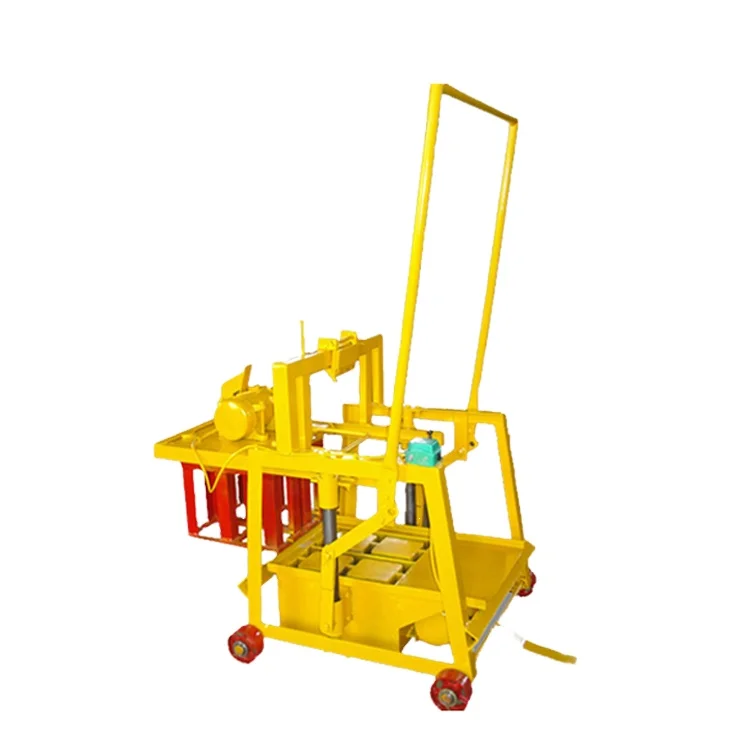 Mobile block machine