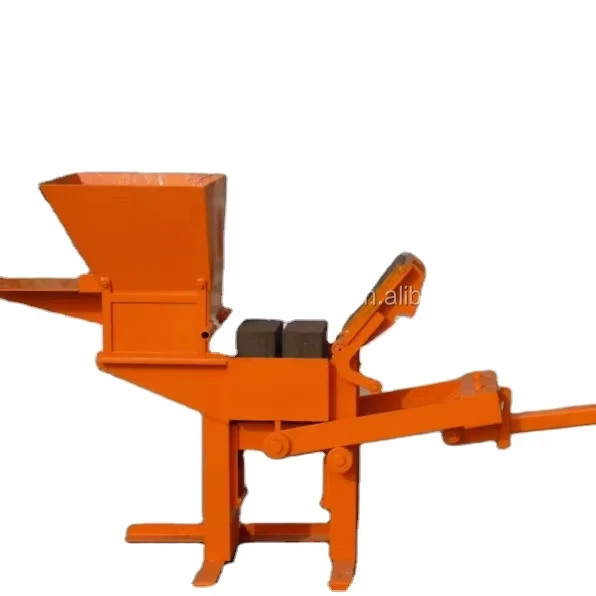
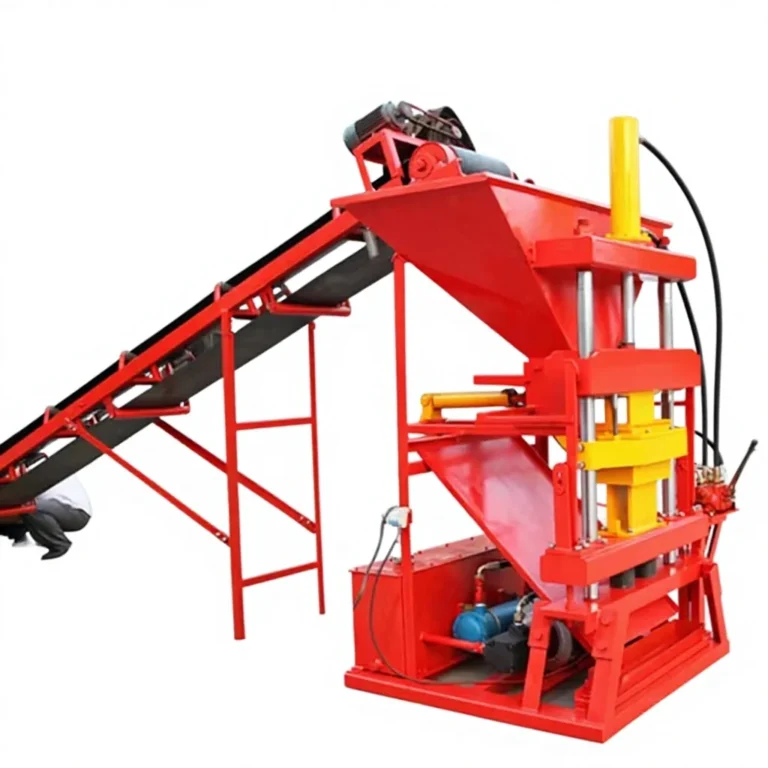
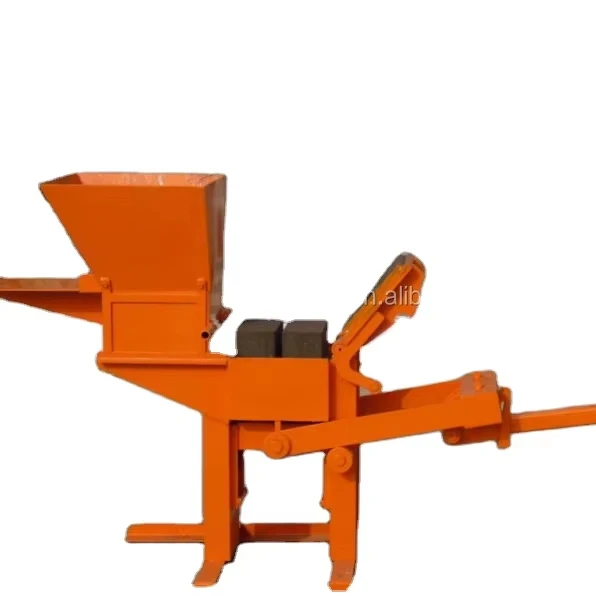
Single Focus System — the LY7-10 operates as a matched unit where hydraulic pressure, mould format and automatic cycling are specified together rather than assembled from disconnected components.
Technical Specifications
| Parameter |
Value |
| Model |
LY7-10 |
| Product Type |
Automatic Clay Interlocking Brick Making Machine |
| Machine Power |
18.5 kW |
| Hydraulic Pressure |
25-32.5 MPa |
| Molding Cycle |
10-15 s |
| Output Capacity |
20,160 pcs/day (basis: 300×150×100 mm interlocking block, 7 pcs/mould) |
| Mould Format |
300×150×100 mm interlocking block (7 pcs/mould); other formats by mould change |
| Raw Material Compatibility |
Laterite, yellow or red soil, sand, cement, water |
| Mix Design Option 1 |
Water 3%, Cement 6-8%, Clay 80-90% |
| Mix Design Option 2 |
Water 3%, Clay 90-95% |
| Automation Level |
Automatic (material feeding, mould pressing, mould lifting) |
| Labor Requirement |
1-2 workers |
| Machine Weight |
1,600 kg |
| Overall Dimensions (L×W×H) |
2260 × 1500 × 2380 mm |
Application Suitability
| Application |
Material or Output |
| Housing project on-site production |
Laterite or red soil mixed with 6-8% cement for structural interlocking bricks |
| Building material distributor expanding range |
Clay and sand blends for standard interlocking formats alongside existing product lines |
| First clay brick plant setup |
Full clay mix (90-95% clay, 3% water) or cement-stabilised soil depending on local aggregate |
| Construction contractor self-supply |
Site-sourced yellow or red soil with cement addition for project-specific block dimensions |
What "20,160 Pieces per Day" Actually Means for Your Project
The daily output figure is tied to one specific block format — change the mould and the number changes with it.
Capacity claims that omit the block format assumption cause more buyer disappointment than any other specification gap in this industry. When a quotation states a daily figure without naming the exact mould and cycle time behind it, real production almost always falls short once the machine arrives on site. The LY7-10 automatic clay interlocking brick making machine for sale achieves its rated 20,160 pieces per day only when running the 300×150×100 mm interlocking block at seven pieces per mould, with cycle times held between 10 and 15 seconds across an eight-hour shift [NEED_CITE: standard shift assumptions in block capacity calculations]. If your market demands a different interlocking profile — one with deeper shear keys or a larger overall footprint — the per-cycle yield and mould fill time shift, and daily output must be recalculated against that new format before you sign off on the order.

Where the LY7-10 Sits Across the Machine Range
This model occupies the mid-tier of our clay interlocking brick lineup. Below it, semi-automatic units require manual pallet handling and suit buyers testing market demand with lower capital. Above it, high-capacity lines add separate batching, automatic stacking and curing rack systems for continuous three-shift operation. The LY7-10 automatic clay interlocking brick making machine for sale bridges the gap for buyers who have confirmed demand and need steady volume from a single integrated press without investing in a full plant layout from day one.
Automation That Removes the Operator from the Press Cycle
Automatic material feeding, mould pressing and mould lifting mean the operator monitors the cycle rather than physically driving each stage. This reduces variation between the first brick of a shift and the last, because hydraulic pressure and dwell time stay consistent regardless of operator fatigue. For a one or two-person crew running interlocking bricks on a housing site, the practical result is that block strength and dimensional tolerance hold steady throughout the production day [NEED_CITE: consistency gains from automated hydraulic cycling in soil block presses].
Pressure, Cycle Time and the Mix They Must Match
The 25–32.5 MPa hydraulic pressure range is not an arbitrary specification — it defines the density the machine can achieve from a given clay mix. Laterite with a high iron oxide content compacts differently from alluvial red soil, and the pressure must be set to match the plasticity index of your actual material. A cycle time of 10–15 seconds allows sufficient dwell for the clay particles to consolidate under pressure, but if your soil has a higher sand fraction, the shorter end of that range may not produce adequate green strength for safe pallet handling. The seven-piece mould format at 300×150×100 mm was chosen as the capacity basis because it represents the most widely traded interlocking brick dimension in the markets this machine serves [NEED_CITE: common interlocking brick dimensions in West African and South American housing programs]. Adjusting the mould is possible, but each format change requires its own capacity recalculation.
When the Wrong Configuration Choice Costs You Later
A buyer who selects a mould format without first confirming that the interlocking profile matches local building codes may find the bricks are rejected on site, leaving thousands of unusable units stacked in the yard. Equally, specifying the machine for a full-clay mix when local clay lacks sufficient cohesion forces a switch to cement-stabilised production, raising material cost per brick beyond what was budgeted. Voltage and frequency mismatches discovered after the machine arrives can delay commissioning by weeks while transformers or panel components are sourced locally [NEED_CITE: export machinery voltage and frequency standards]. These are not hypothetical failures — they recur across the industry when specification conversations are rushed past to reach a price.
Why Buyers Source This Machine Here
Block machinery is our single focus, so the LY7-10 is specified as one system — press, mould and pallet compatibility — rather than assembled from separate supplier quotations. Machine configuration is set against your actual mix design and target block format, not pulled from a catalogue default. Mould design covers the interlocking profiles your market sells, with custom drawings available when a standard format does not match local building practice. Automation level is selectable, meaning a buyer can start with the LY7-10 automatic clay interlocking brick making machine for sale and add stacking or cubing modules as production volume justifies. Installation support includes on-site commissioning and operator training so your crew can run the machine independently from the first week.
Documentation & Verification
- Line layout showing the LY7-10 footprint with material feed and curing area positions
- Machine specification sheet confirming hydraulic pressure range and mould format
- Capacity calculation stating the 300×150×100 mm block format assumed for output
- Mould drawing and interlocking profile list for buyer verification
- Voltage, frequency and PLC display language confirmation before production
- Factory test record on buyer’s specified mix design before dispatch
Installation, Commissioning & Support
- Foundation pad sized to the 2260 × 1500 mm machine footprint with level tolerance specified
- Electrical supply confirmed for 18.5 kW motor load with dedicated circuit breaker rating
- Machine arrives assembled; hydraulic lines and control panel connected on-site
- First-run commissioning includes pressure adjustment to match your local clay sample
- Operator training covers mould change procedure and daily hydraulic fluid checks
- Wear parts list provided with mould and hydraulic seal replacement intervals
What We Need Before Quoting Your Configuration
To size the LY7-10 correctly for your project, share the interlocking brick format your market requires, a soil sample or description of your local clay type, and your target daily output based on that specific block dimension. Confirm your site voltage and frequency, the language needed for the control panel display, and whether existing pallets or curing racks will be reused with this machine.
Frequently Asked Questions
Q: How is the 20,160 pcs/day capacity verified, and what changes if I run a different block format?
A: The figure assumes the 300×150×100 mm interlocking block at seven pieces per mould with a 10–15 second cycle across a standard shift. Switching to a larger format or a mould with fewer cavities reduces pieces per cycle, and daily output must be recalculated accordingly. We provide a format-specific capacity sheet with every quotation.
Q: What voltage and frequency options are available, and is the control panel language configurable?
A: Voltage and frequency are configured to match your site supply before the machine enters production. The PLC display language is confirmed during the order process so that operators can read cycle parameters and fault codes in their working language from the first day of commissioning.
Q: Can the hydraulic pressure be adjusted to match my local clay or laterite mix design?
A: The 25–32.5 MPa range is adjustable within those limits. We request a soil sample or geotechnical description before production so the pressure setting and dwell time can be matched to your material’s plasticity index, ensuring consistent green strength without over-compacting or under-pressing the clay.
Q: Where does the LY7-10 sit in the full machine range, and when should a buyer move up to a higher tier?
A: It occupies the mid-tier, suited to buyers who have confirmed interlocking brick demand and need steady output from a single press. A higher-tier line becomes appropriate when volume requires separate batching, automatic stacking and multi-shift continuous operation beyond what a single integrated unit supports.

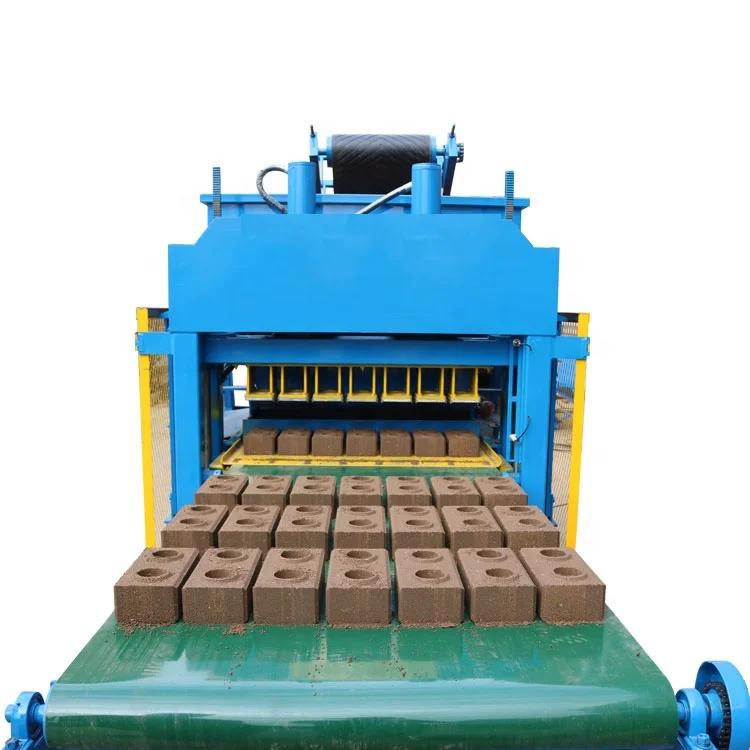
 Clay interlocking brick