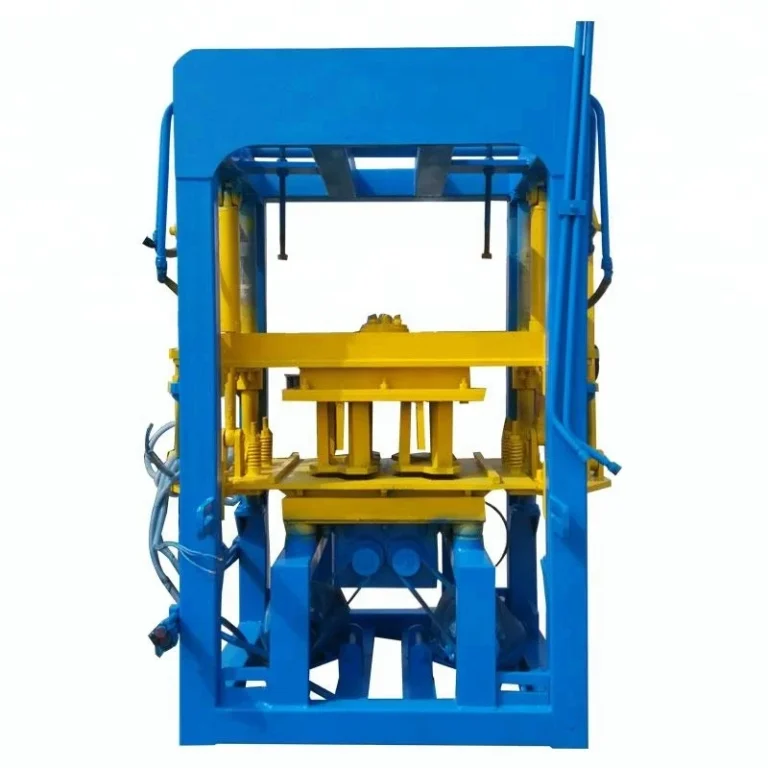
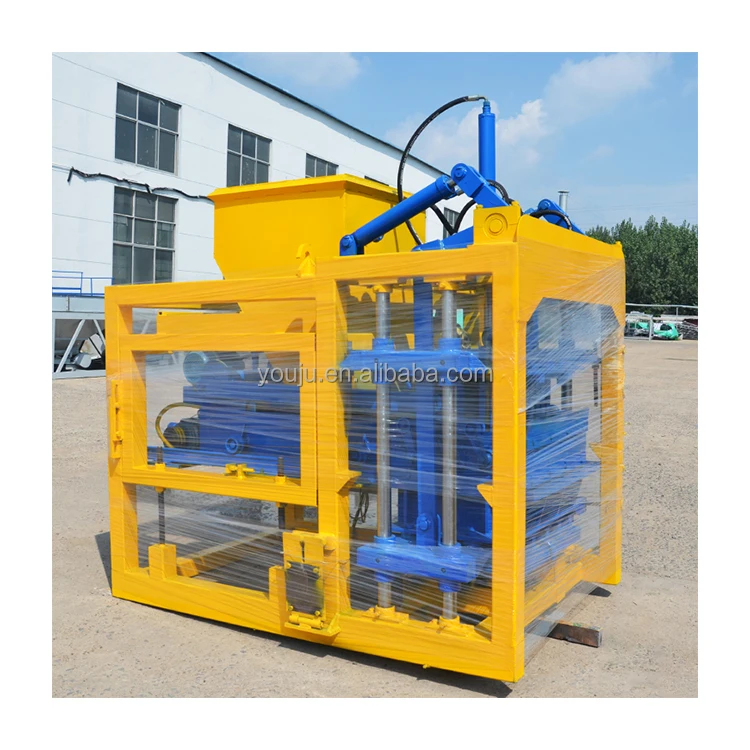
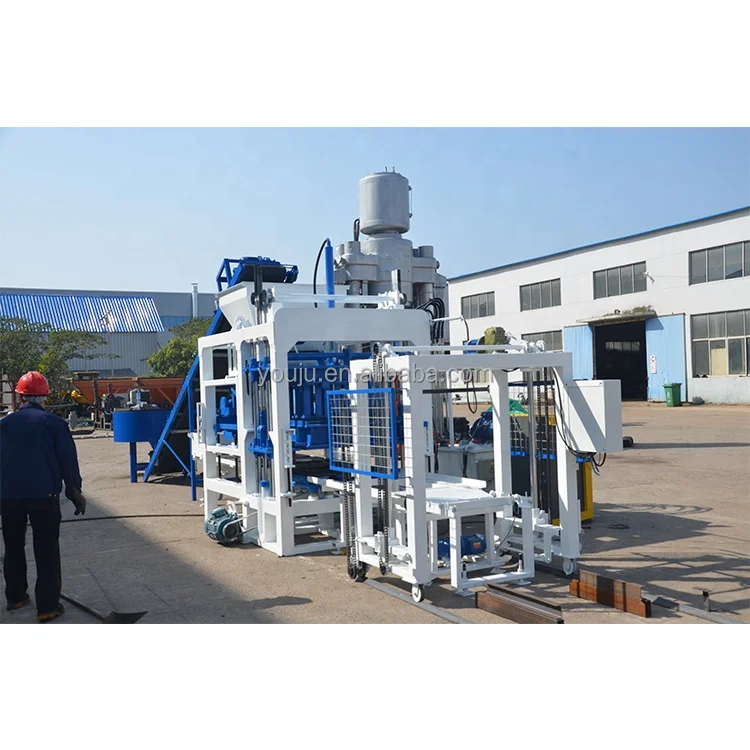
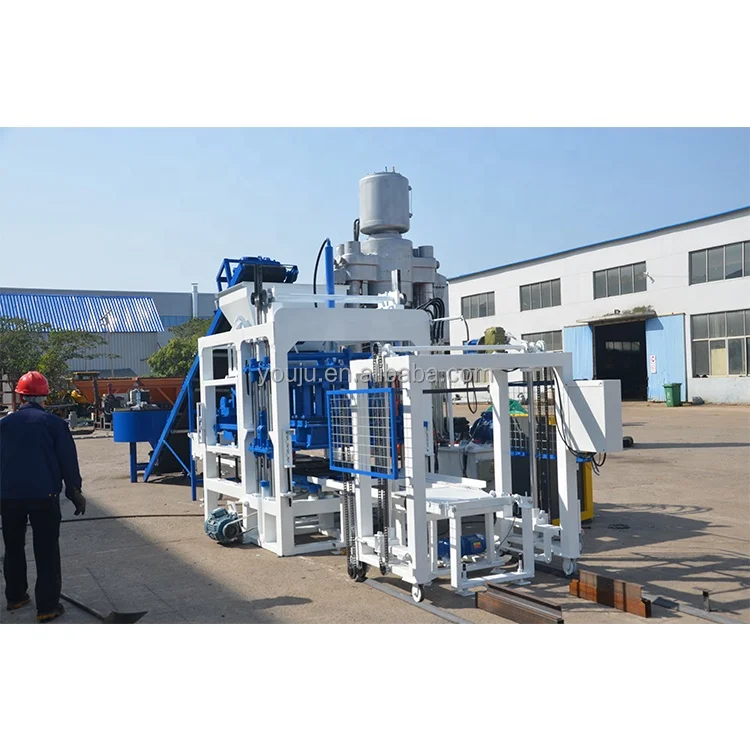
Block machinery as a single focus — the LY4-10 clay interlocking brick making machine is specified as part of a matched system including mould, pallet and handling, rather than a standalone press from a general equipment catalog.
Technical Specifications
| Parameter |
Value |
| Model |
LY4-10 |
| Product Type |
Clay Interlocking Brick Making Machine |
| Rated Power |
11 kW |
| Hydraulic Pressure |
25–32 MPa |
| Molding Cycle |
7–10 seconds (basis not stated in source — confirm block format / material / thickness) |
| Mould Output per Cycle |
4 pcs (basis not stated in source — confirm block format) |
| Overall Dimensions (L×W×H) |
2260 × 1500 × 2380 mm |
| Machine Weight |
1500 kg |
| Automation Level |
Automatic material feeding, mould pressing, and mould lifting |
| Voltage & Frequency |
Customized to buyer’s local voltage (basis to be confirmed) |
| Warranty |
1 year (excluding wearing parts) |
Application Suitability
| Application |
Material or Output |
| Interlocking clay brick production |
Local clay mixed with cement binder |
| Compressed earth block manufacturing |
Sieved laterite or red soil with stabilizer |
| Ecological brick for small-investment plants |
Clay-cement blends, fly ash amended earth |
| On-site block production for housing projects |
Locally sourced soil meeting compression criteria |
What "4 Pieces per Cycle" Actually Means for Your Daily Output
A cycle figure only matters once you know which brick format and material it assumes.
Quoting mould output without the block format is a recurring problem in this equipment category. A 4-piece cycle on a thin interlocking tile is a very different daily throughput than 4 pieces of a thick-walled structural block. I have seen buyers in Southeast Asia commit to a machine based on a headline number, only to find their actual format cuts that figure substantially once mould fill time, material settling, and manual pallet handling are factored in. The LY4-10 Clay Interlocking Brick Making Machine manufacturer documentation should always state the assumed format alongside any capacity claim [NEED_CITE: block machine capacity calculation standards].

Where the LY4-10 Sits in the Full Machine Range
The LY4-10 occupies the workshop-to-small-plant tier within the Shiyue block machine lineup. Its 11 kW rated power and 1500 kg weight place it below the high-capacity automatic lines that demand dedicated transformer capacity and reinforced foundations. Buyers evaluating their first clay interlocking brick making machine often start here because the investment and plant footprint remain manageable, while the automatic material feeding, mould pressing, and mould lifting sequence removes the heaviest manual steps from the cycle.
Scaling from Semi-Automatic to Higher Tiers
This tier is configured with automatic feeding and pressing but still requires manual or semi-manual pallet handling downstream. That positioning is deliberate: a buyer can establish production, learn the local material behaviour, and add automatic stacking or cubing later without replacing the press itself. For buyers comparing tiers, the key question is whether the daily volume justifies the additional investment in pallet circulation and curing rack handling at the outset, or whether a phased approach better matches cash flow and market development [NEED_CITE: phased automation adoption in small block plants].
Reading the Pressure and Cycle Numbers
Hydraulic pressure in the 25–32 MPa range determines how densely the clay-cement mix is compacted before the mould lifts. Higher pressure generally produces a stronger interlocking brick, but only if the vibration force and mix moisture are matched to it — an area where local aggregate variation frequently causes problems. The 7–10 second moulding cycle covers the press stroke and initial compression; total cycle time including material feed and mould return will be longer. The 2260 × 1500 × 2380 mm footprint means the machine fits within a standard bay, but clearance for pallet movement and mould change access must be planned around it. Voltage customization is available and must be confirmed before production, as a mismatch delays commissioning on arrival.
The Hidden Cost of Skipping Configuration Dialogue
When voltage, control language, and pallet size are left unspecified at order stage, the machine arrives and sits while the buyer sources step-down transformers or reprogrammes panels. I have watched a brick line in Java lose its first week because the PLC display language was not confirmed, and the operator could not interpret fault codes. Pallet dimensions chosen without regard to the curing area layout force double-handling of every brick produced. These are not machine defects; they are configuration gaps that a thorough pre-order dialogue prevents [NEED_CITE: common commissioning delays in exported block machinery].
Why Buyers Source This Tier Through Shiyue
Block machinery is the single focus here, so the LY4-10 is not bundled from unrelated suppliers — the press, mould, and pallet are specified as one system. Configuration is set against the buyer’s actual clay source and target interlocking format, not a catalogue default. Mould design covers the formats the buyer’s market sells, with custom drawings available when standard options do not match. The automation level is selectable, meaning a buyer can begin with the LY4-10’s semi-automatic sequence and add pallet automation as volume grows. Installation support includes on-site commissioning and operator training tied to the buyer’s specific mix.
Documentation & Verification
- Line layout and capacity calculation stating the interlocking brick format assumed
- Machine specification sheet with hydraulic and electrical schematics
- Mould drawing and format list matched to buyer’s product range
- Voltage and control language confirmation record before production
- Factory test record and packing photographs before container loading
Installation, Commissioning & Support
- Foundation plan sized to the 2260 × 1500 mm footprint and 1500 kg static load
- Dedicated 11 kW circuit with voltage and frequency confirmed to local supply
- Machine arrives assembled; mould and hopper components secured for transit
- First-run parameter setting against buyer’s clay source and stabilizer ratio
- Operator training covering mould change procedure and daily maintenance checkpoints
- Wear parts list and mould reorder schedule provided at commissioning
What to Prepare Before Requesting a Quotation
Share your target interlocking brick format with dimensions, the daily output you need to meet market commitments, and a sample analysis of your local clay including moisture and sand content. Confirm your site voltage and frequency, the control panel language your operators require, and whether pallet handling and curing rack systems should be included in the scope. This information allows a capacity calculation that reflects your actual production conditions rather than a generic benchmark.
Frequently Asked Questions
Q: How is the LY4-10’s daily output calculated, and which block format is assumed?
A: Output depends on the specific interlocking brick format, material density, and whether pallet handling is manual or assisted. Any capacity figure should state the assumed block dimensions and cycle breakdown. Request a format-specific calculation before committing, so the daily target reflects your actual product rather than a generic test block.
Q: Where does the LY4-10 sit compared to higher-capacity automatic tiers?
A: It occupies the workshop-to-small-plant tier, with automatic feeding and pressing but typically manual pallet handling. Higher tiers add pallet circulation, stacking, and cubing for continuous operation. The LY4-10 suits buyers establishing production before scaling automation to match growing market demand.
Q: What plant footprint and investment level should I plan for at this tier?
A: The machine itself measures 2260 × 1500 × 2380 mm, but you must add space for raw material storage, pallet movement, curing area, and finished brick staging. Investment at this tier is lower than full automatic lines, making it a practical entry point for entrepreneurs and small producers evaluating clay interlocking brick markets.
Q: Can I start at this tier and upgrade to higher automation later?
A: Yes. The LY4-10’s press and mould platform can integrate automatic pallet feeding and stacking systems as your volume justifies the investment. Starting semi-automatic lets you validate your clay source and market before committing to a fully continuous line configuration.
Q: What voltage and control options are available for my market?
A: Voltage and frequency are customized to the buyer’s local supply, and PLC display language is confirmed before production. Providing these details at inquiry stage avoids commissioning delays when the machine arrives on site.

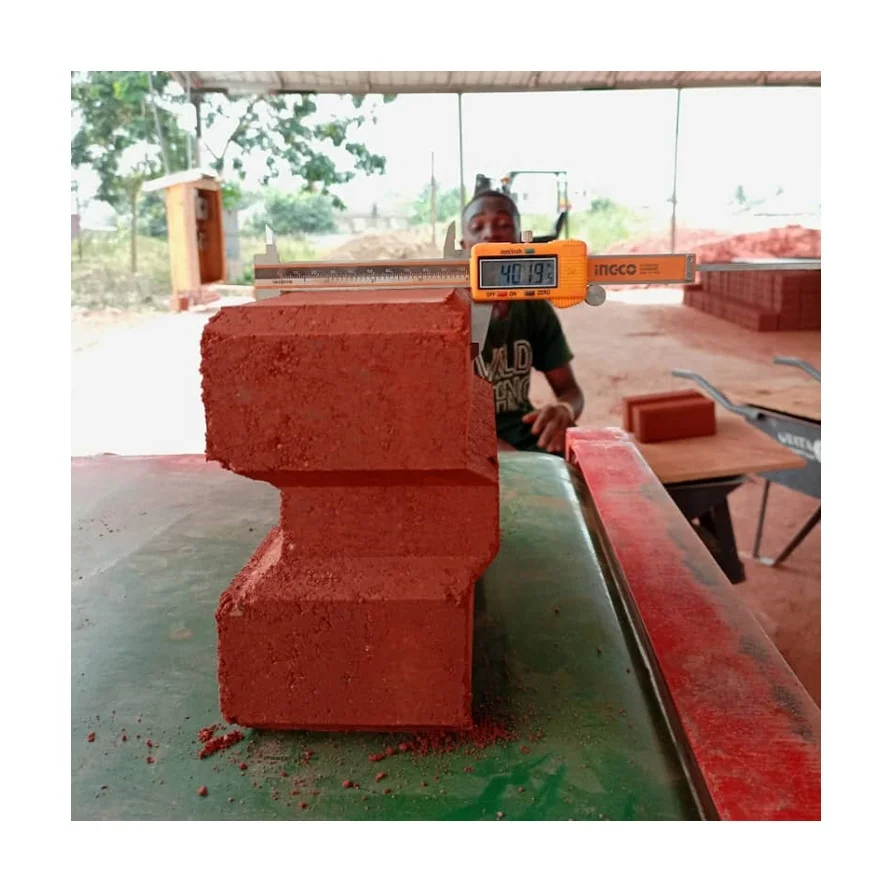
 Semi automatic block